 Tina ModottiUSA, 1896–1942
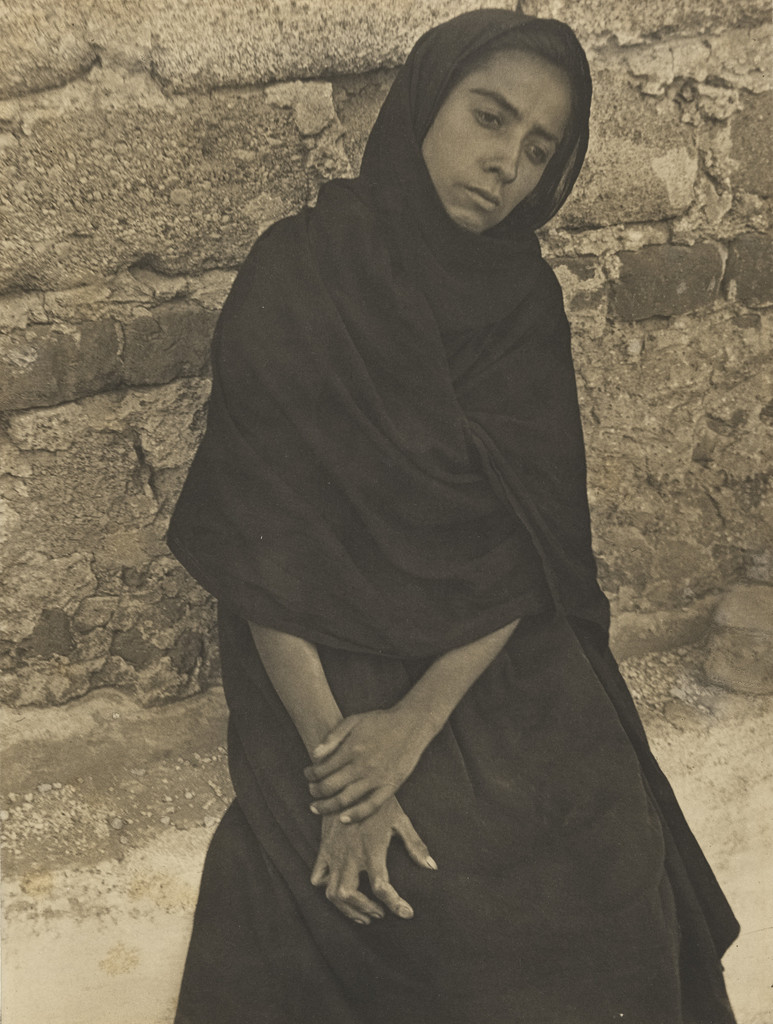
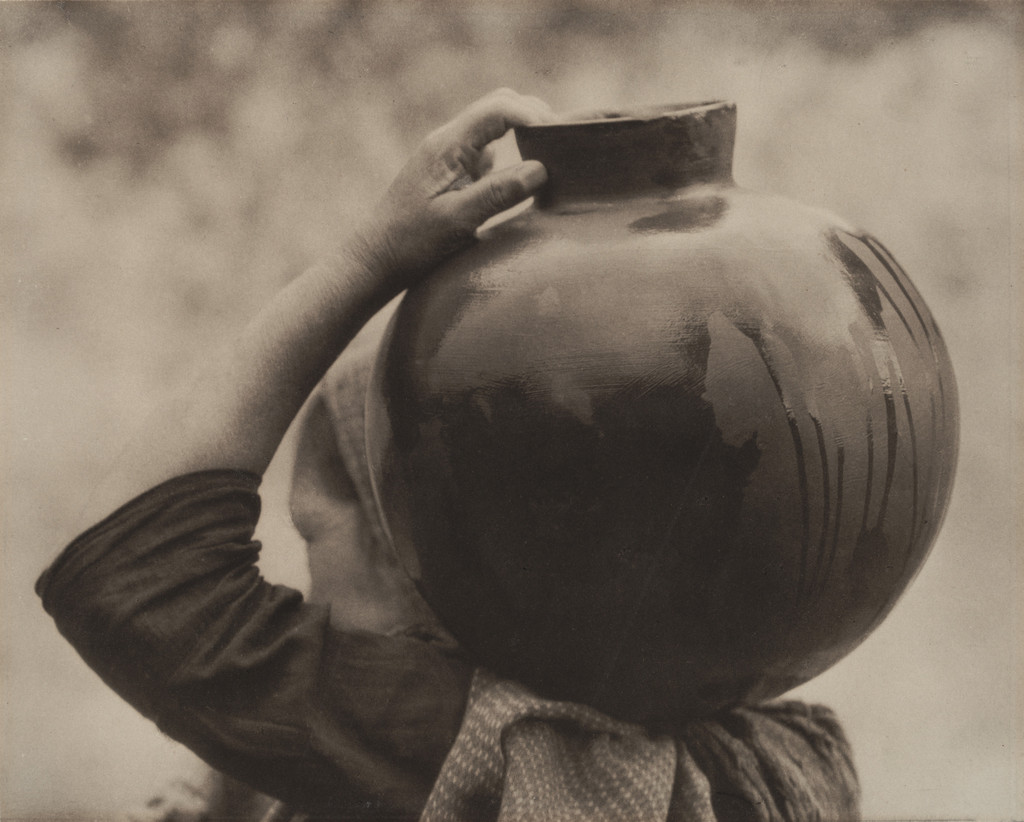
Woman with Olla
Kan det ses?
Ikke udstillet lige nu
Hvor er »Woman with Olla« i dag? Samling: Museum of Modern Art, New York City. Ikke udstillet lige nu. Kontrolleret 22. september 2026.

New York City, USA
Det hører til samlingen, men er ikke udstillet for tiden.
- Kontrolleret
- Kilde
- Museet
Oplysninger
- Inventarnummer
- 337.1965
I kataloget
Kilder
- Museum of Modern Art
- Billede: Museum of Modern Art — © the artist or rights holder
Imens i livet hos Tina Modotti
Hele livet1923–1926
Studio with Weston and Mexico City's bohemia
With Weston, Modotti opens a portrait studio in Mexico City and quickly gravitates toward the capital's bohemian scene, and through it into a community of cultural and political avant-gardists — Frida Kahlo, Lupe Marín, Diego Rivera, Jean Charlot; she also befriends Siqueiros. Weston, moved by the landscape and folk art of Mexico, creates abstract works, while Modotti is captivated by the country's people and blends this human interest with a modernist aesthetic.
1924
Joint exhibition with Weston
A joint exhibition of Modotti's and Weston's work is held in Mexico and attracts enormous attention.
1924–1928
Photographer of the murals of Rivera and Orozco
Modotti becomes the photographer of choice for the blossoming Mexican mural movement: between 1924 and 1928 she takes hundreds of photographs of Rivera's murals at the Secretariat of Public Education and also documents the work of José Clemente Orozco.
1925
Joins International Red Aid
Modotti joins International Red Aid, a Communist organization that offered relief to and defended victims of political repression.
1926
Weston leaves Mexico; meeting the Communists
Weston leaves Mexico and returns to California. During this time Modotti meets political radicals and Communists, among them three Mexican Communist Party leaders — Xavier Guerrero, Julio Antonio Mella and Vittorio Vidali — who would all eventually become romantically linked with her.
1927
Joins the Mexican Communist Party
Modotti joins the Mexican Communist Party and becomes far more politically active: her focus shifts, and more and more of her work becomes politically motivated. The Mexican photographer Manuel Álvarez Bravo divided her photographic career into two categories, “Romantic” and “Revolutionary”.