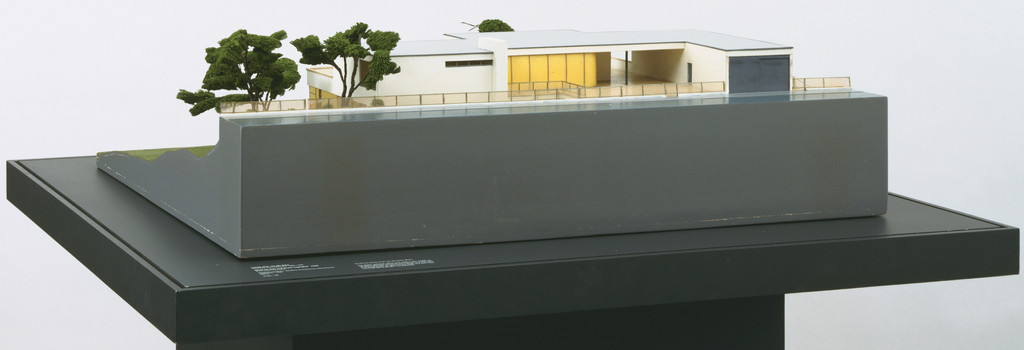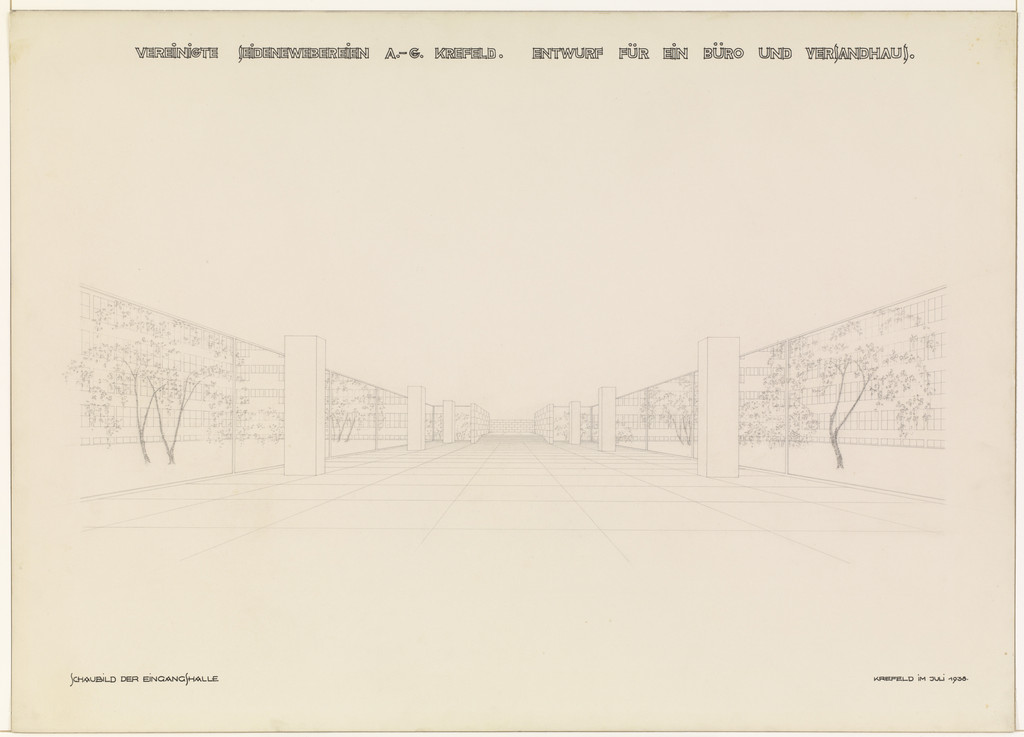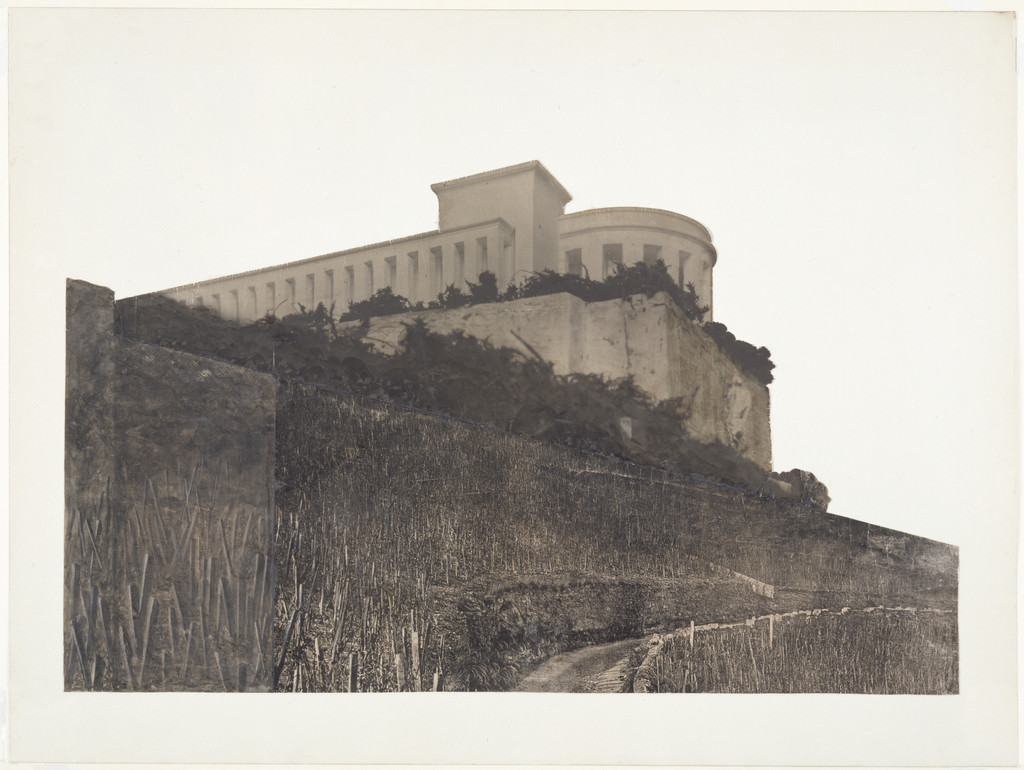
 Ludwig Mies van der RoheUSA, 1886–1969
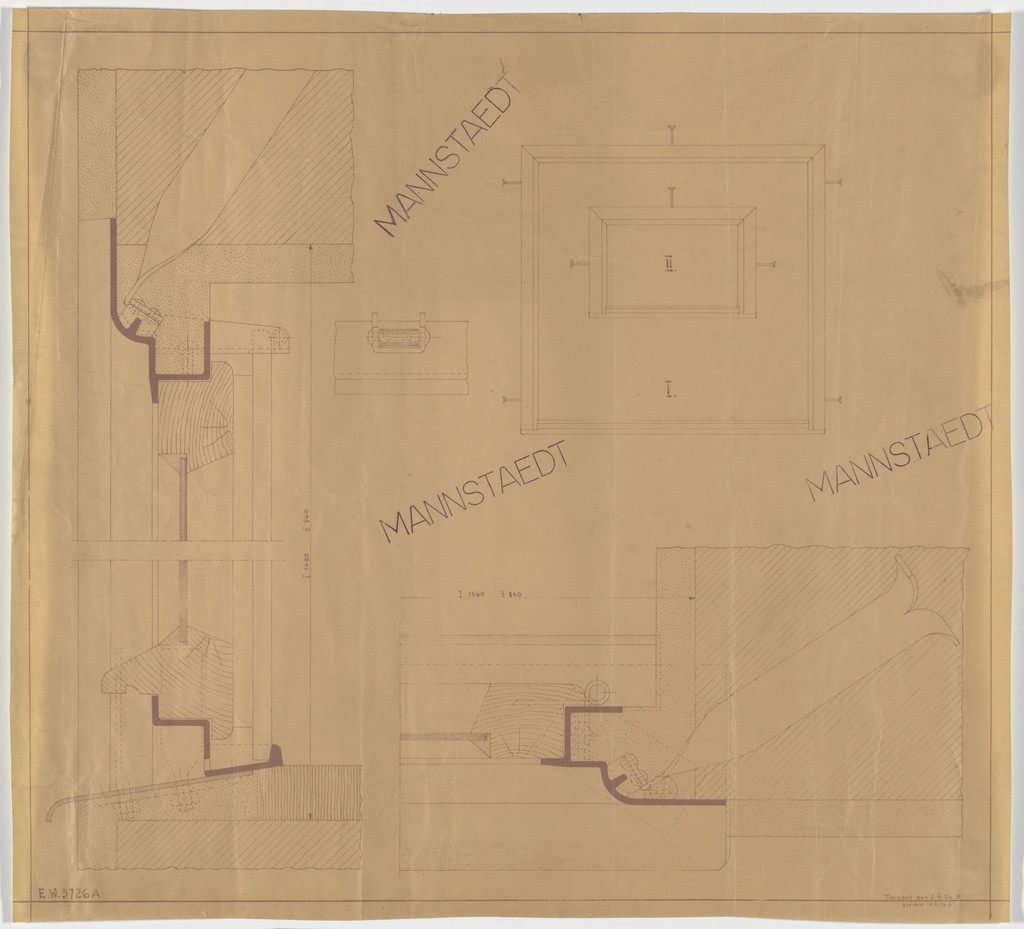
Wolf House, Gubin, Poland (Sections and elevation: window frames)
Kan det ses?
Ikke udstillet lige nu
Hvor er »Wolf House, Gubin, Poland (Sections and elevation: window frames)« i dag? Samling: Museum of Modern Art, New York City. Ikke udstillet lige nu. Kontrolleret 22. september 2026.

New York City, USA
Det hører til samlingen, men er ikke udstillet for tiden.
- Kontrolleret
- Kilde
- Museet
Oplysninger
- Inventarnummer
- MR30.94
I kataloget
Kilder
- Museum of Modern Art
- Billede: Museum of Modern Art — © the artist or rights holder
Imens i livet hos Ludwig Mies van der Rohe
Hele livet1923
Working with the magazine “G”
He joined the German avant-garde, working with the progressive design magazine G, which started in July 1923.
1924–1926
The driving force of the group Der Ring in Berlin
In 1924–1926 he was the “main driving force” of the Berlin architectural group Der Ring.
1925
The beginning of his relationship with Lilly Reich
The designer Lilly Reich became his companion and closest collaborator: the relationship, begun in 1925, ended when he moved to the United States, and they worked together from 1927 to 1937, creating modern furniture that became popular classics.
1926
Second chairman of the German Werkbund
From 1926 he was second chairman of the German Werkbund (the Art and Industry Union).
1927
Directs the housing exhibition in Stuttgart
He directed the International Housing Exhibition in Stuttgart and drew up the master plan of the model Weissenhof Estate; his own contribution was a three-storey apartment building with a “free plan”: kitchens and bathrooms in a fixed core, the rest of the space divided by movable partitions.
1929
The German Pavilion at the Barcelona exposition
He directed the construction of the German Pavilion at the international exposition — at once a pavilion and an exhibit in its own right: in place of ornament it relied on clear geometry and the reflective properties of polished travertine, onyx, glass and water, and the load was carried not by walls but by freestanding steel supports, so that the space flowed freely. He also created the “Barcelona” furniture collection for it; the project brought him worldwide fame.