after Jean-Antoine HoudonFrankrig
Voltaire
Må man se det?
Ja, det tager imod

Udstillet for publikum. Hvem der står inde for det, står nedenfor.
- Kontrolleret
- Uændret siden
- Kilde
- Museet
Om skulpturen
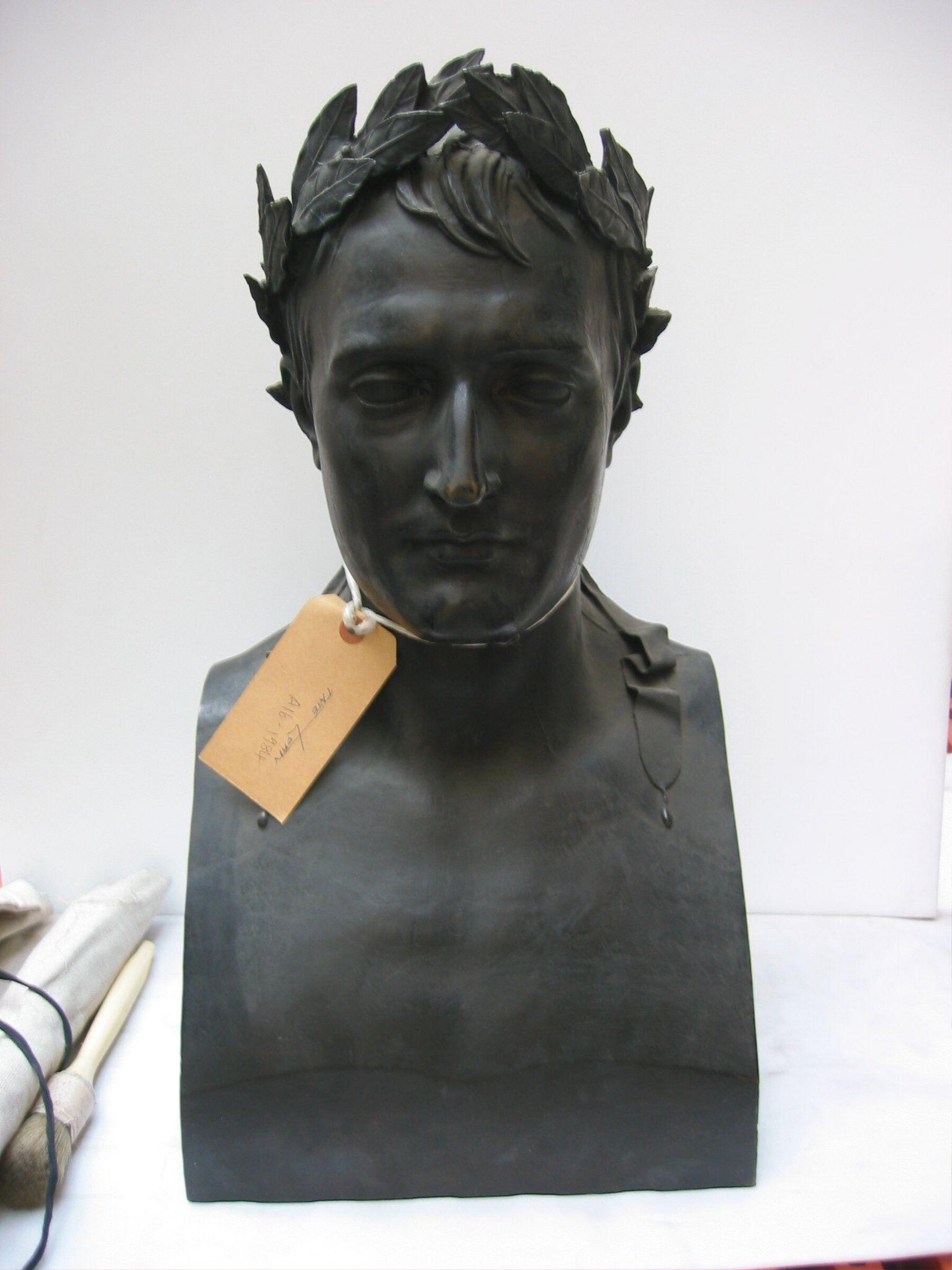
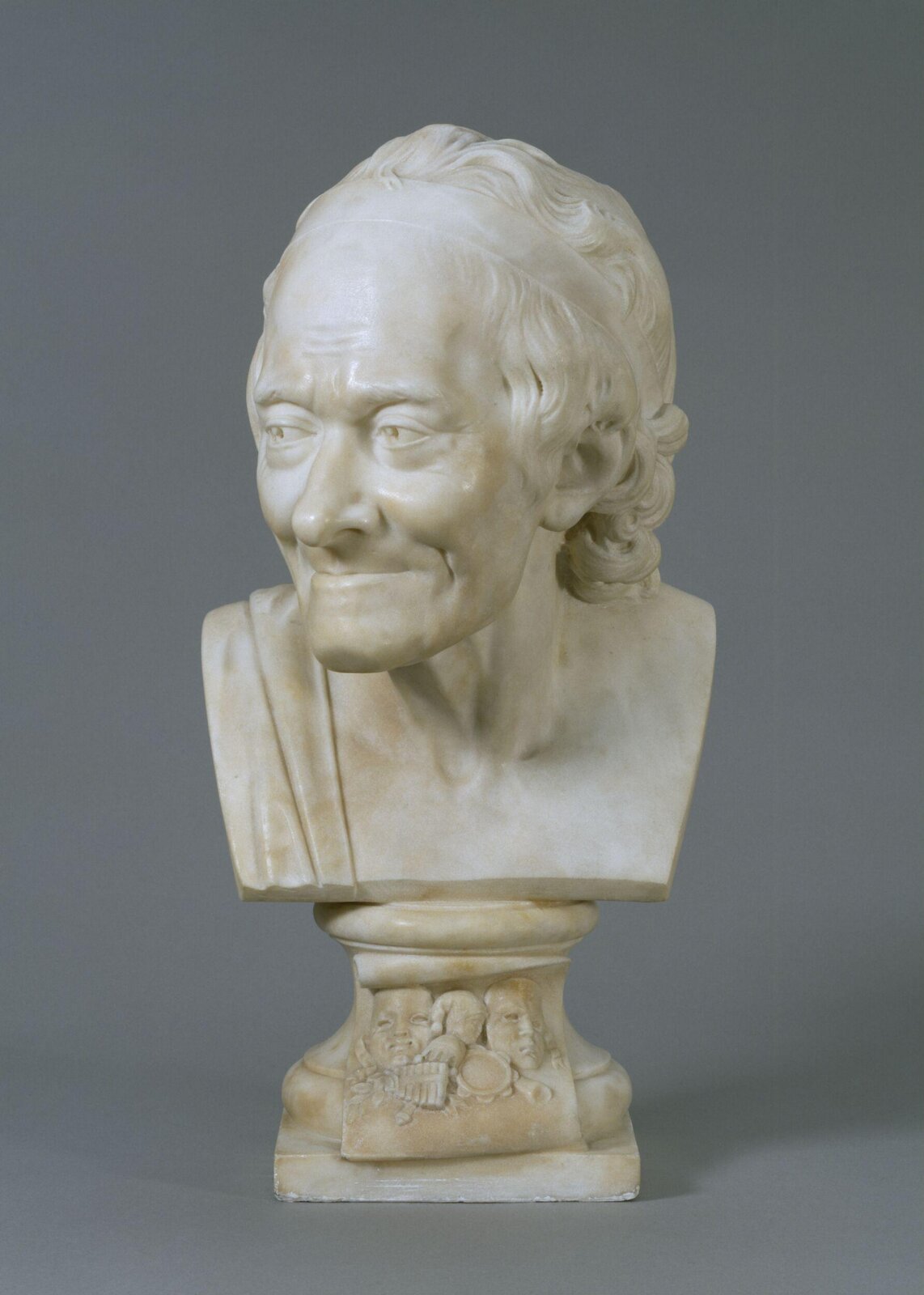
Voltaire was a highly influential philosopher, champion of tolerance and social justice, dramatist, poet and historian, and a key figure in the French Enlightenment. This bust is a 19th century copy of a much-reproduced and famous image of him. It is derived from ‘Voltaire Seated’, a full-length statue by Houdon, the leading portrait sculptor in France in the eighteenth century. Houdon's statue was commissioned by Voltaire's niece, Mme Denis, and presented to the Comédie Française (the state theatre in Paris). A second version was made by Houdon for Catherine the Great of Russia.
Læs videre
Voltaire was 83 when he sat for Houdon, shortly after his triumphant return to Paris on 10th February 1778 after several years in self-imposed exile at his country retreat near Geneva, Switzerland. During his lifetime there was already debate about how to depict Voltaire. Some busts are in ‘antique’ style, virtually bald; others in contemporary dress and a wig. This portrait is a combination of the two 'looks'. It clearly captures Voltaire's great intellect but also humour.
The V&A bust is a very careful copy of Houdon’s work, but some aspects more obviously date it to the 19th century: the socle with its rather crowded and confusing iconography, and fanciful, historicising inscriptions on the reverse of the bust. Houdon’s original portrait of Voltaire has been very widely reproduced, including in the twentieth century, clearly indicating the enduring influence and popularity of the subject.
Victoria and Albert Museum
Oplysninger
- Inventarnummer
- A.24-1948
I kataloget
Kilder
- Victoria and Albert Museum
- Billede: Victoria and Albert Museum — © Victoria and Albert Museum, London