 DonatelloItalien, 1386–1466
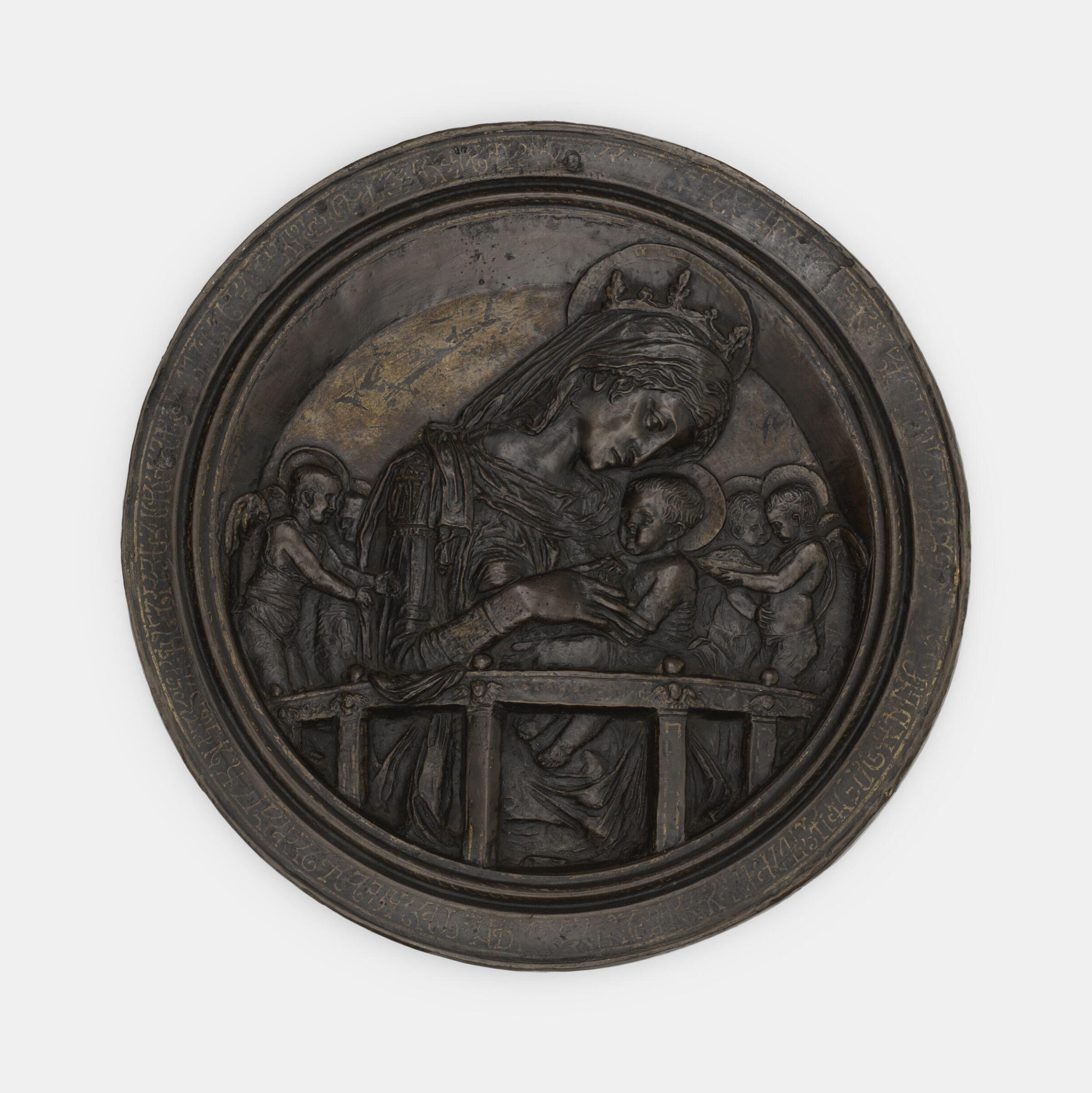
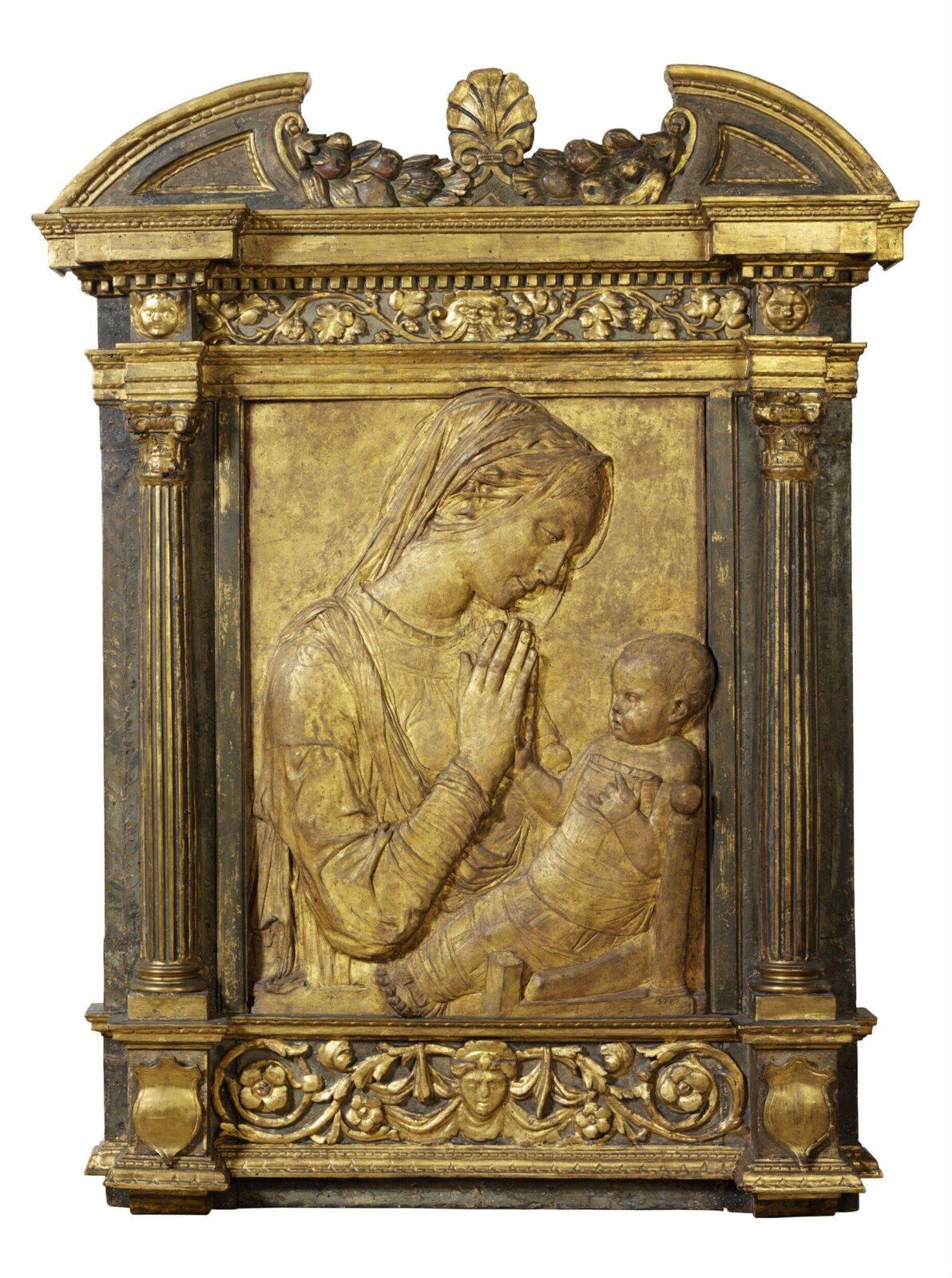
Virgin and Child
Må man se det?
Ja, det tager imod

Victoria and Albert Museum
London, Storbritannien
SalMedieval & Renaissance, Room 64, The Wolfson Gallery
Udstillet for publikum. Hvem der står inde for det, står nedenfor.
- Kontrolleret
- Uændret siden
- Kilde
- Museets egne samlingsdata
About the sculpture
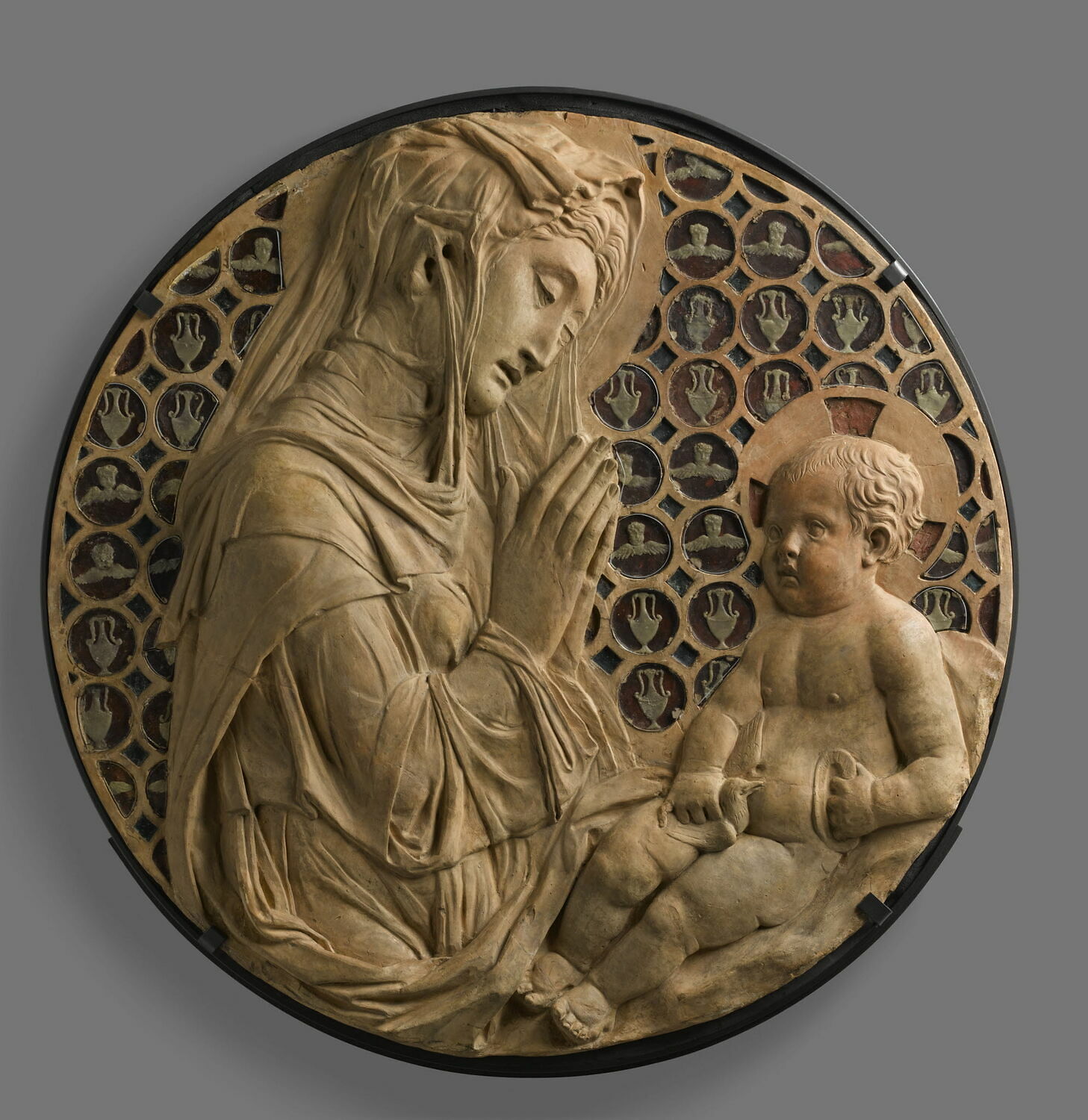
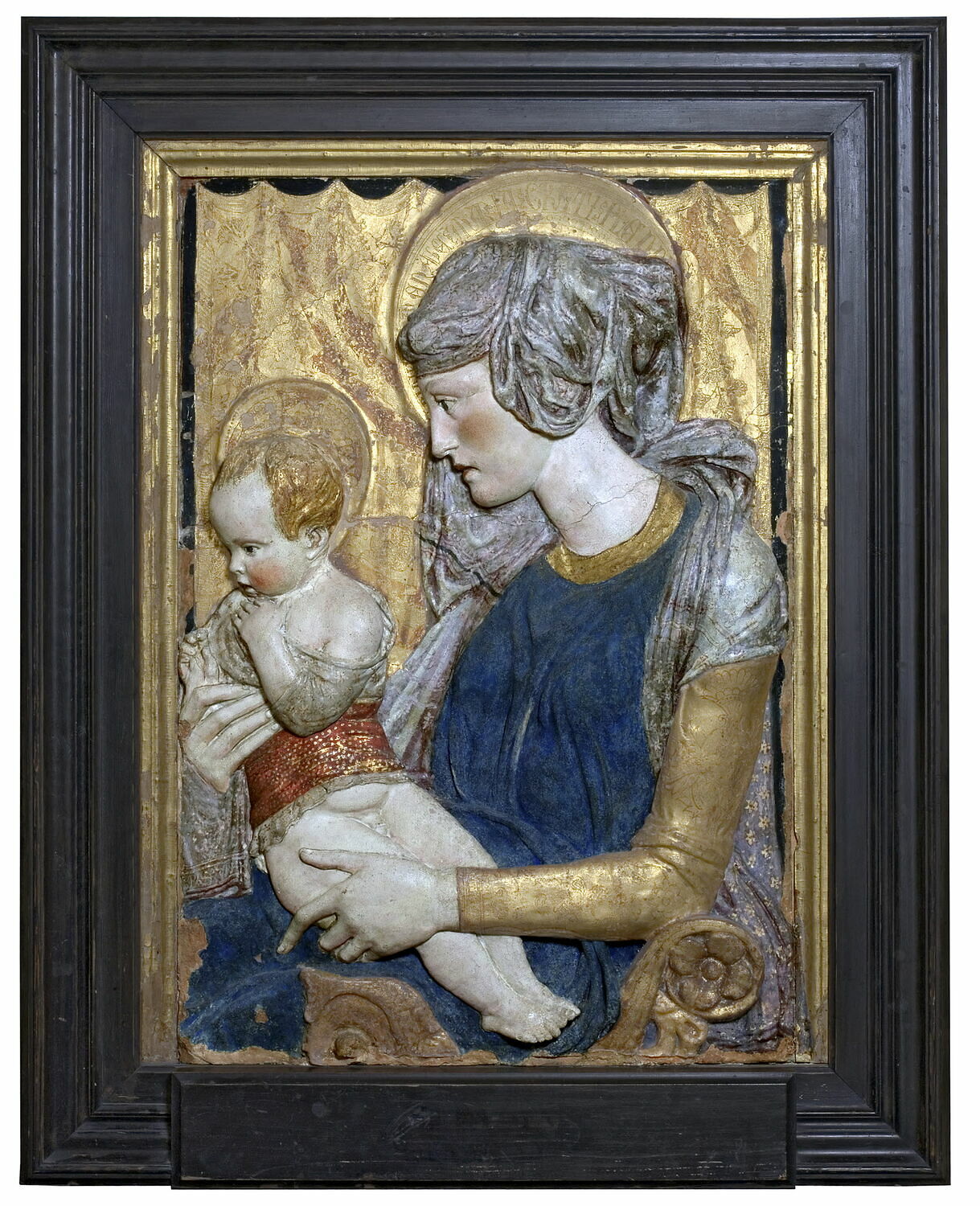
In the course of his long career, Donatello carved and modelled several Madonna reliefs and designed a great number of other compositions which were reproduced in an extensive series of casts.
This large terracotta relief is very likely to be Donatello's original model for a series of casts. The relatively formal relation of the praying Virgin to the Child, the serious expression on her face and the tightly wound headdress place this design in the years after Donatello's return from Padua, around the time of the Chellini Madonna (1456).
Some details of this particular relief also feature in other Madonna designs of the same period, showing how Donatello, once interested in this particular kind of composition, explored it in several variations.
Read on
Dontello (b. ca. 1386 - 1466) was an early Renaissance sculptor and artist from Florence, who became well known for his bas-relief works, which already incorporated perspective illusionism. He was the most imaginative and versatile of the early Renaissance artists, famous for his rendering of human character and for his dramatic narratives.
Victoria and Albert Museum
Oplysninger
- Inventarnummer
- 57:1-1867
What it shows
I kataloget
Kilder
- Victoria and Albert Museum: the museum's own open data · hentet for 11 dage siden
- Billede: Victoria and Albert Museum — © Victoria and Albert Museum, London
Imens i livet hos Donatello
Hele livet1453–1454
Return to Florence and a house by the Duomo
Leaving Padua at the end of 1453, Donatello returned to Florence, but the tastes of the Florentines had changed in his absence, and the return was not easy. On 15 November 1454 he rented a house on Piazza del Duomo, at the corner of Via dei Servi.
1457
Moves to Siena
In 1457 Donatello moved to Siena, probably intending to settle there for the rest of his life; there he worked on a sculpture of John the Baptist, the patron saint of Florence.
1457–1461
Work in Siena: cathedral doors, “John the Baptist”
Between 1457 and 1461 Donatello, now ageing, was active in and for Siena, perhaps contributing mostly designs and modelli rather than carving himself. The bronze doors for the cathedral were never realised, the bronze “John the Baptist” was delivered minus a forearm, and the relief “Madonna delle Grazie” (1459) was largely made by another sculptor, perhaps Urbano da Cortona.