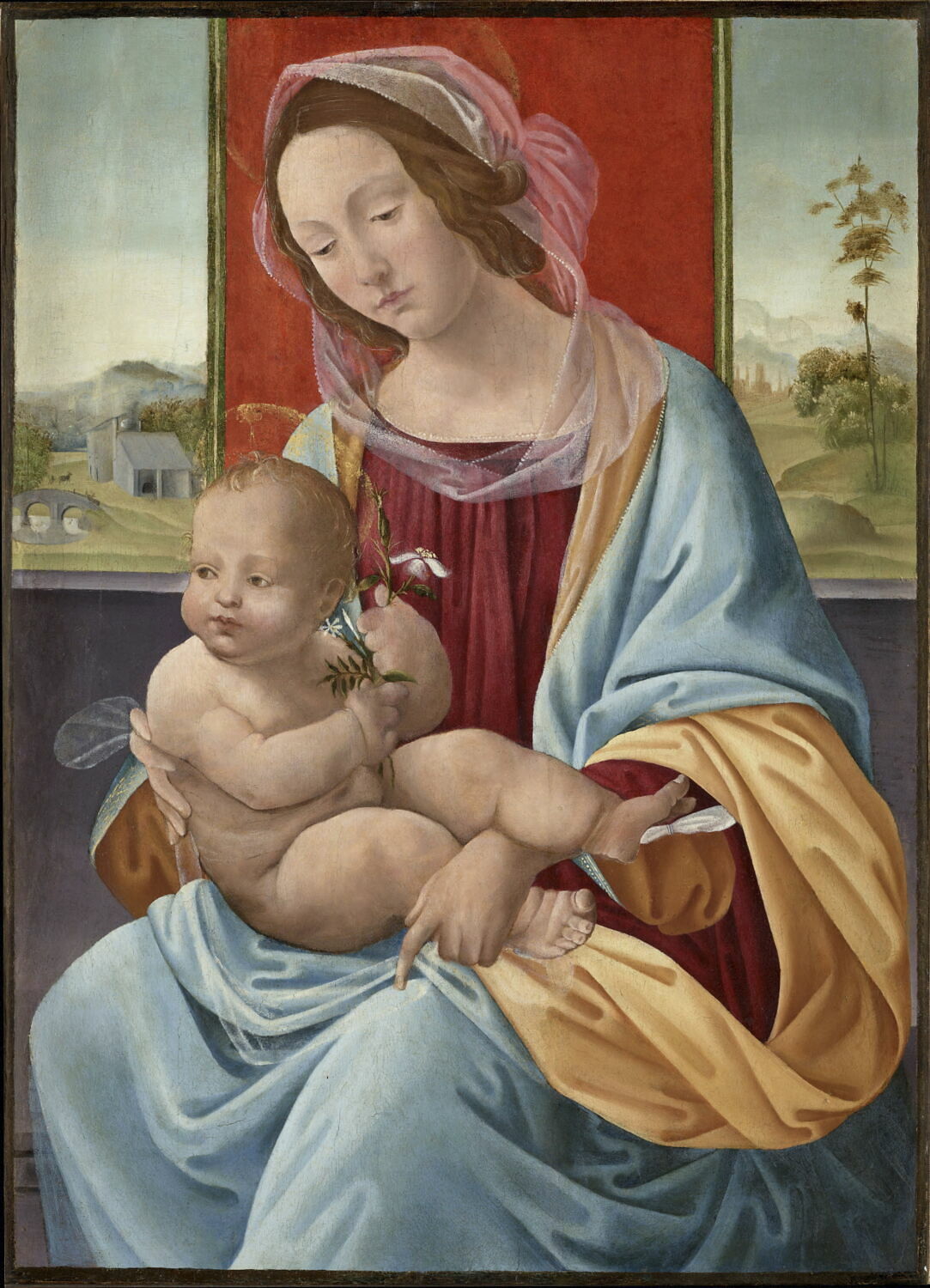
 Lorenzo di CrediItalien, 1459–1537
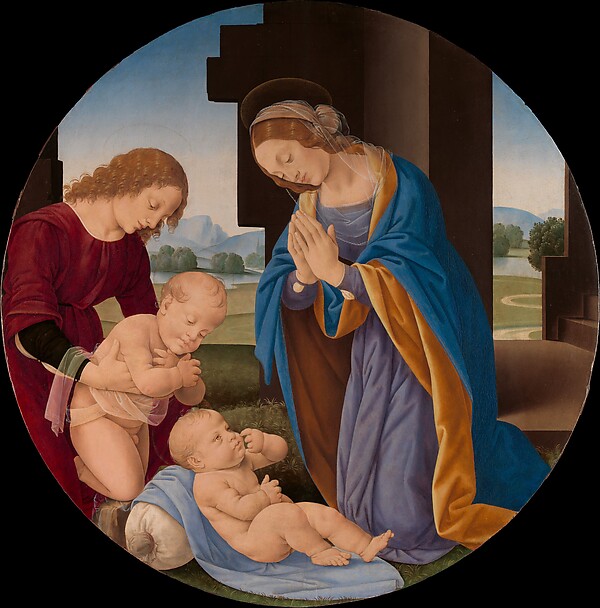
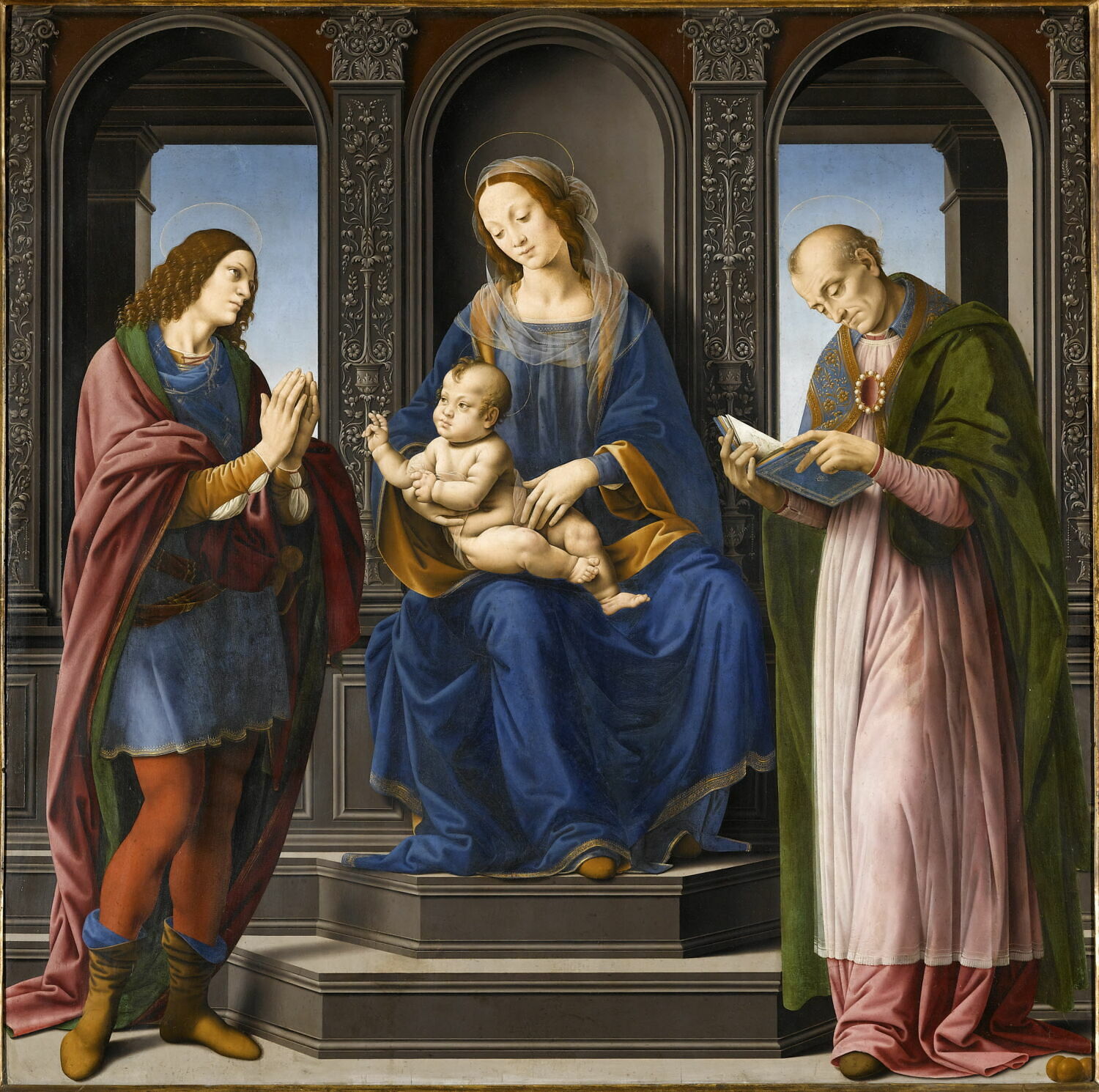
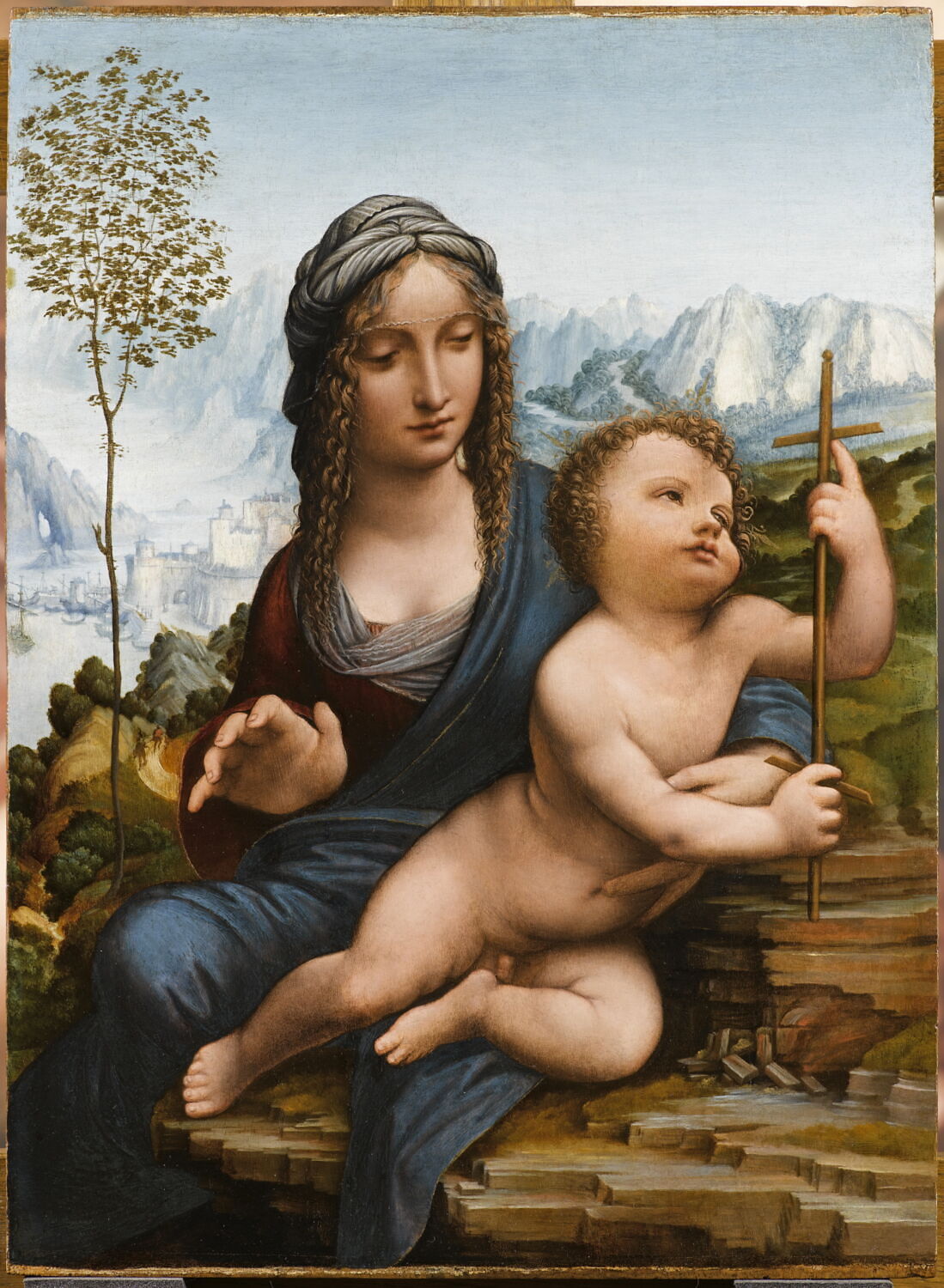
Vierge à l'Enfant
Kan det ses?
Ukendt
Hvor er »Vierge à l'Enfant« i dag? Samling: Louvre, Paris. Ukendt.

Paris, Frankrig
Ejeren er kendt; om værket er udstillet i dag, vides ikke.
- Uændret siden
- Kilde
- Museet
Oplysninger
- Inventarnummer
- MNR 281
I kataloget
Kilder
- Louvre
- Billede: Louvre — © 2024 GrandPalaisRmn (musée du Louvre) / Mathieu Rabeau
Imens i livet hos Lorenzo di Credi
Hele livetc. 1459
Born
1480/81
First recorded in Verrocchio's workshop
Having been taught first by his father, the goldsmith Andrea d'Oderigo, and then by Andrea del Verrocchio, he is first recorded in his master's workshop in 1480/81, on low wages. His fellow pupil in that workshop was Leonardo da Vinci, who considerably influenced his work.
1482–1483
Runs Verrocchio's workshop in the master's absence
Gradually becoming Verrocchio's principal assistant, he runs the workshop in 1482–1483 while the master is away.
1488
Verrocchio dies and Lorenzo inherits the workshop
Having become his master's principal assistant, he inherits Verrocchio's workshop on his death, when Lorenzo is still in his twenties. He largely continues Verrocchio's style and, according to Vasari, avoids large paintings, preferring smaller works with a meticulous finish.
1488
Venice: Verrocchio's body and the Colleoni statue
He brings his master's body from Venice, where Verrocchio died, back to Florence. Verrocchio's will recommends Lorenzo to the Venetian authorities to finish the equestrian statue of Bartolomeo Colleoni, which then existed only in clay; he transfers his rights to another artist, apparently a bronze technician, and several years later the statue is completed by the Venetian sculptor Alessandro Leopardi. By other accounts Lorenzo helped to finish the statue.
after 1497
A follower of Savonarola: turning away from worldly subjects
After 1497 he becomes a follower of the fiery monk Girolamo Savonarola and rejects worldly subjects: apart from portraits, there are no mythological subjects among his known works, except for a nearly nude Venus for the Medici family. In his mature years he also turns to the manner of Fra Bartolommeo, Perugino and the young Raphael, as the “Crucifixion” in Göttingen and the “Annunciation” in Cambridge show.