 Francesco FanelliItalien, 1577
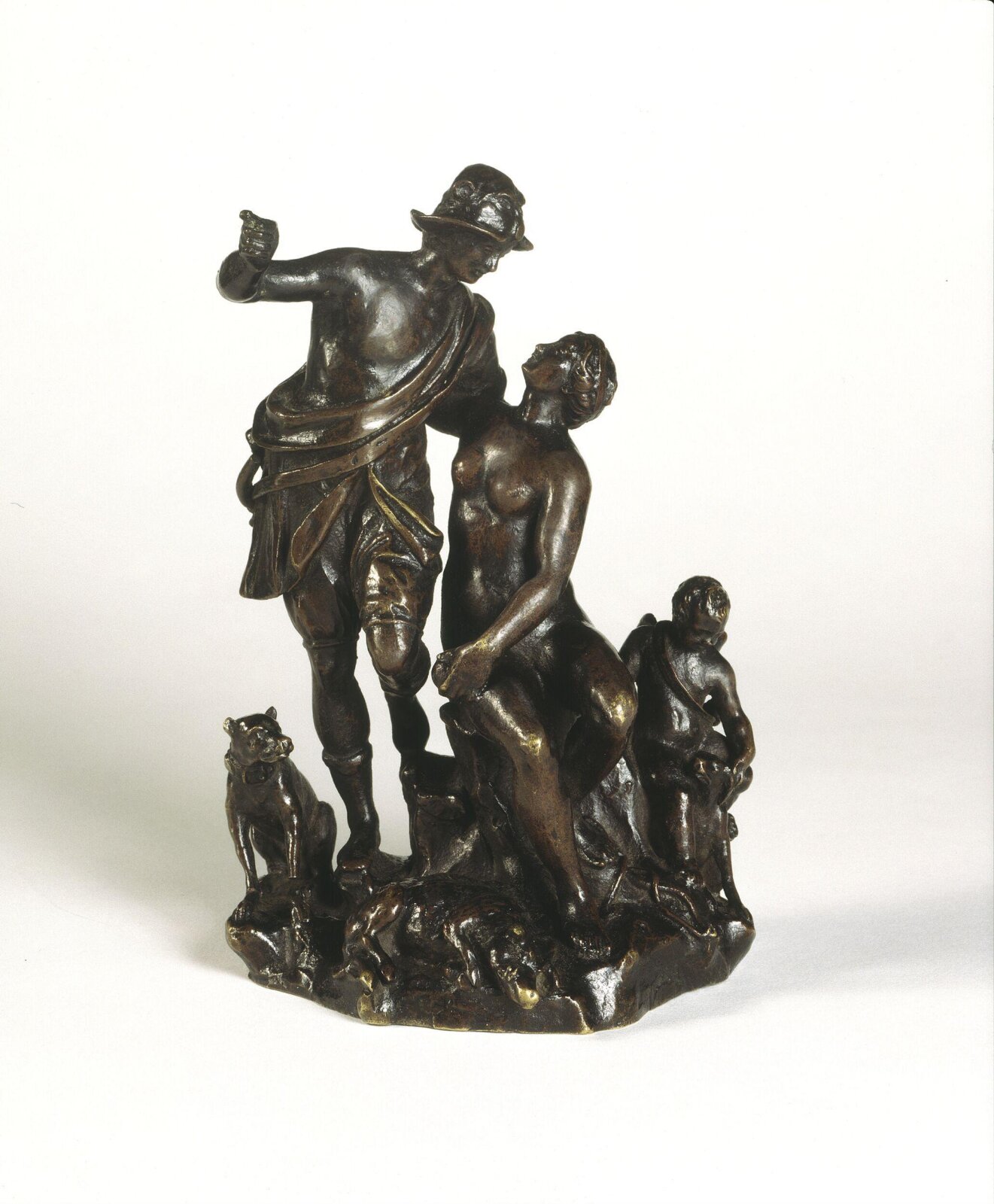
Venus, Adonis and Cupid
Kan det ses?
Ja, udstillet nu
Hvor er »Venus, Adonis and Cupid« i dag? Victoria and Albert Museum, British Galleries, Room 56, The Djanogly Gallery, London. Ja, udstillet nu. Kontrolleret 25. september 2026.

Lukket· åbner kl. 10.00
Udstillet for publikum.
- Kontrolleret
- Uændret siden
- Kilde
- Museet
Om skulpturen
In this bronze, Venus is embraced by Adonis, with whom she falls madly in love after being accidentally wounded by one of Cupid's arrows. This love will arouse the jealousy of Mars, who, once transformed into a boar, would kill Adonis during a hunt. Venus, holding her lover, tries to dissuade Adonis, accompanied by his faithful dog, from going hunting, warning him of the ferocious beasts he might encounter.
In the past, some versions of this group have appeared at auction as 'Atalanta and Meleager' or 'Diana and Actaeon'. However, as is often seen in both paintings and sculptures, this composition is typical of the representation of Venus and Adonis.
Læs videre
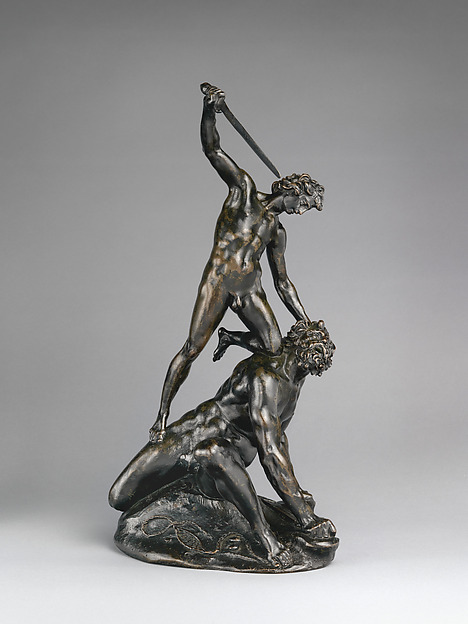
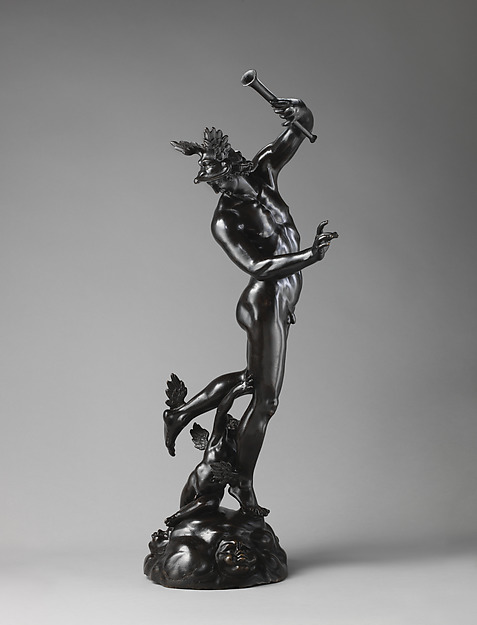
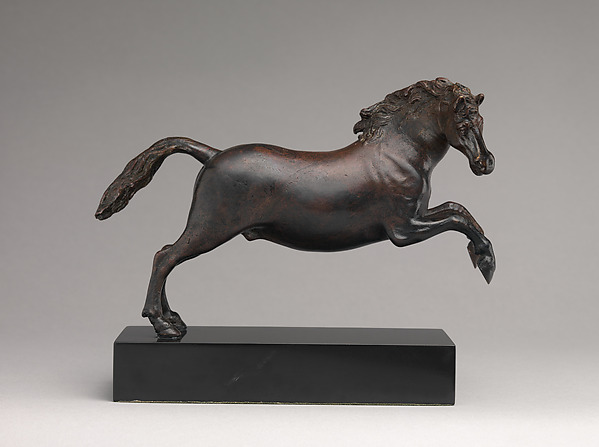
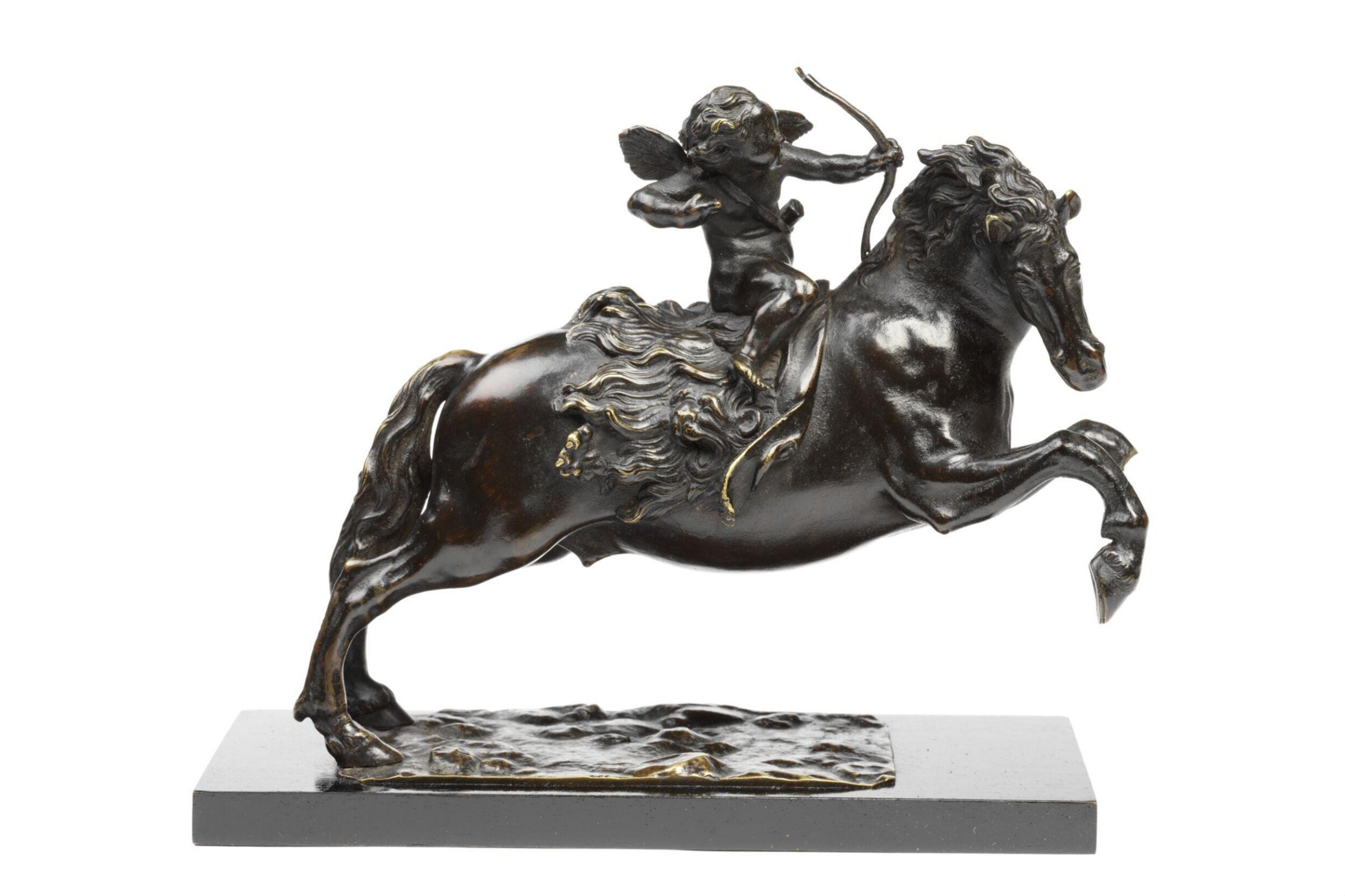
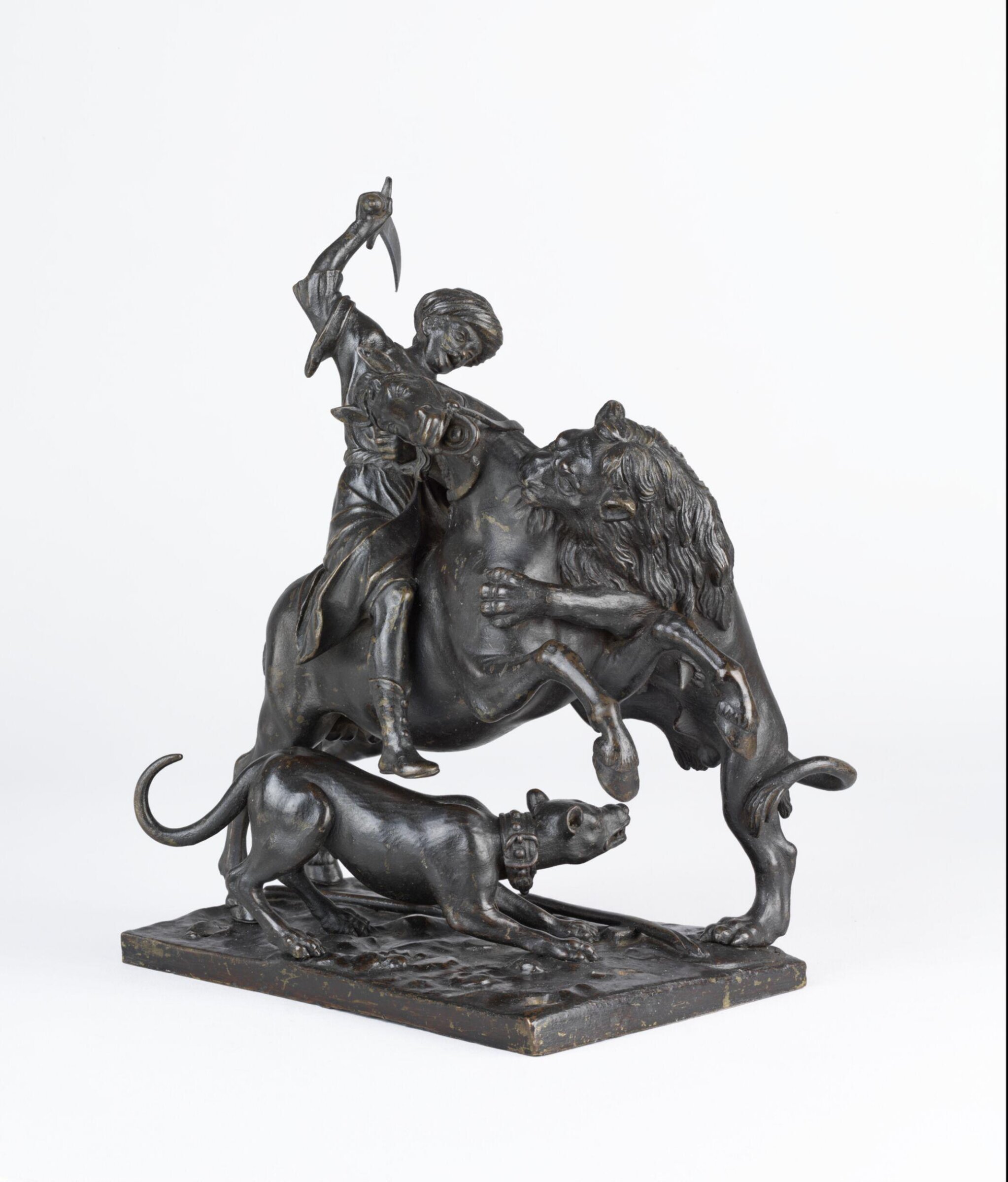
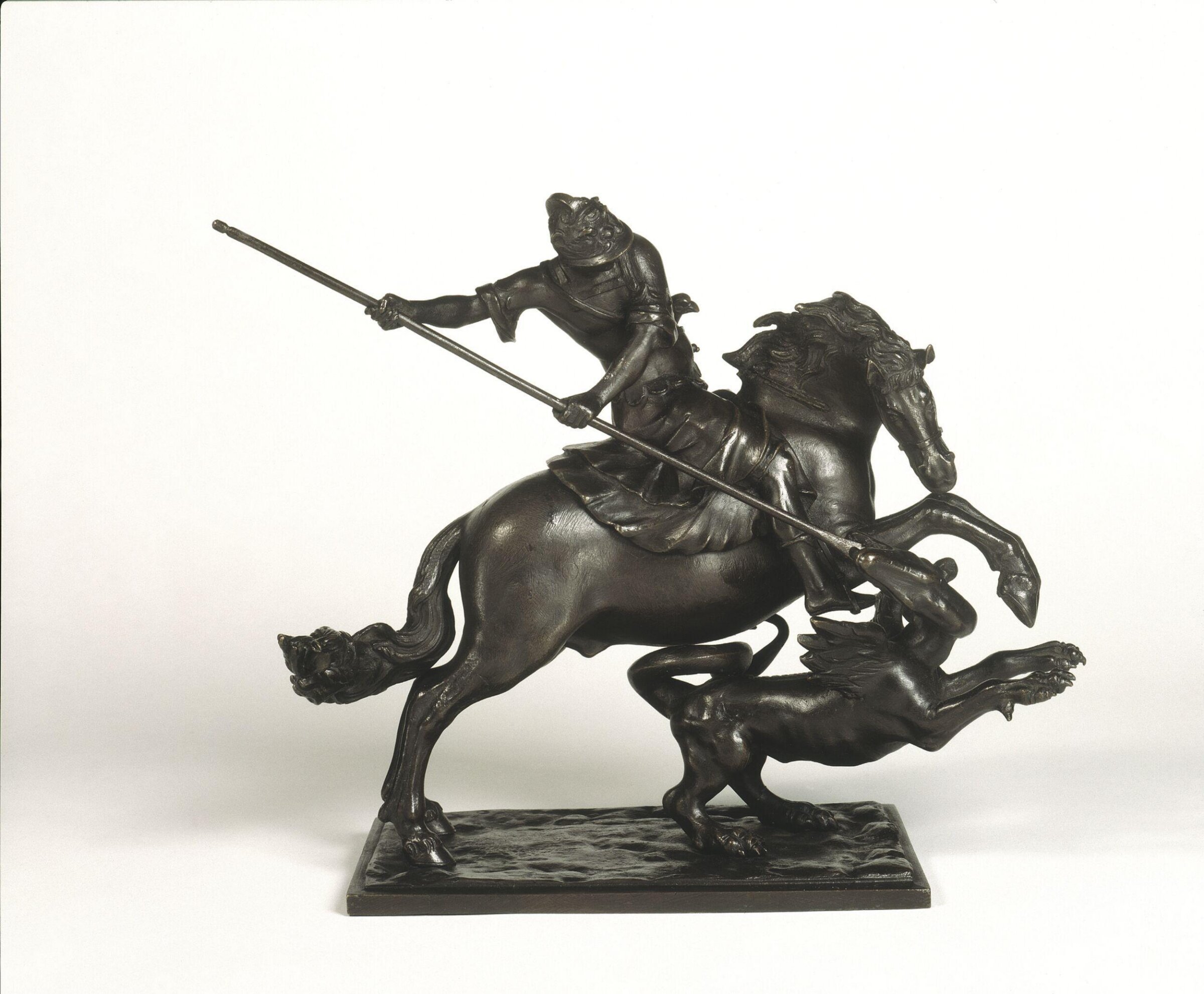
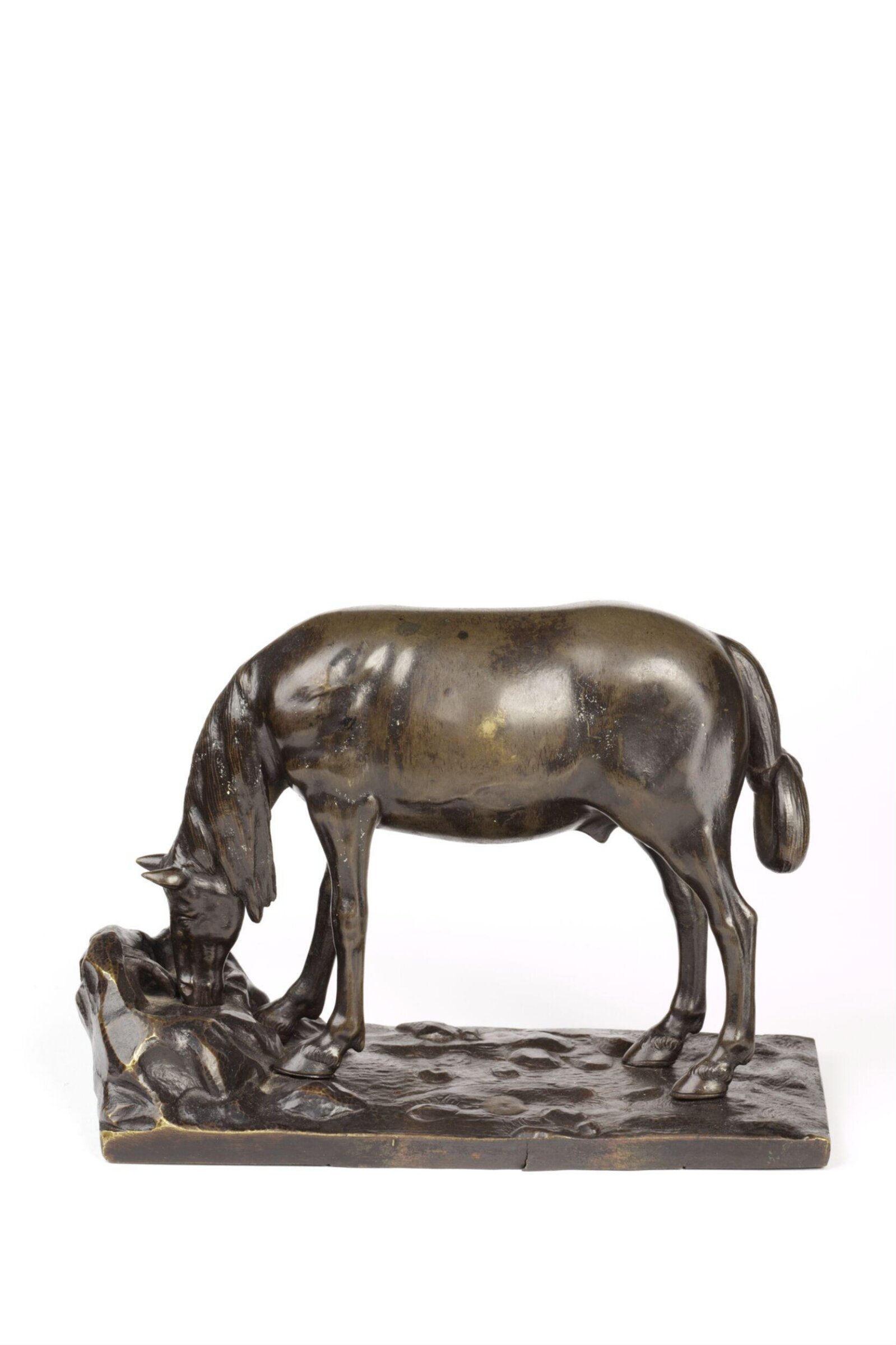
There are many versions of this bronze. One of these, now in the British Museum (SLMisc.168), was acquired by Sir Hans Sloane (1660-1753) at the end of the 17th century and was then considered to be by Francois Duquesnoy, a suggestion that was later completely overturned. Bode had included it among the Italian sculptures of the 16th century. The correct attribution to Francesco Fanelli comes from the auction catalogues and is confirmed by the composition with the seated figure of Venus, which is similar in other Fanelli bronzes, as well as the way certain details, such as the hair, are worked in the wax model that served to cast the bronze. Furthermore, some elements, such as Adonis's boots, the dog or the boar at the bottom, are found in other of his bronzes, such as the bronze of Adonis seated (A.117-1910).
There are no bronzes of this subject documented by Fanelli, but a 'certaine little brazen statue being Adonis Venus & Cupid sett upon a black wooden peddistall' was recorded in the Chair Room at Whitehall Palace around 1640, in the same inventory in which other Fanelli bronzes were named. There are many variations of this bronze, most of which have passed through auctions or private collections; the V&A has three (the others are A.118-1910 and A.58-1956). None is the same, sometimes the basic type changes; sometimes Adonis has a hat, sometimes not. The base of this version, for example, is more elaborate than the other two. It consists of a very naturalistic rocky terrain, in harmony with the scene. This compositional idea of the base as an integral part of the bronze group is lacking in the other two versions, which instead present a polygonal or square base that loses the sense of ensemble seen in the A.96-1956 version. For this reason, and because the bronze scene is very elaborate, it can be considered a work by Francesco Fanelli himself.
These bronzes all derived from the same composition, but all show minor variations, making each of them a unique cast. This practice is typical of the bronzes coming from the workshop of Francesco Fanelli who specialized in small bronzes made as collectable items. Like most sculptors of his time, Fanelli used the indirect lost wax technique for casting his bronzes which allowed him to keep the original model and to create replicas. However, these were never identical to another, and each had its own characteristics.
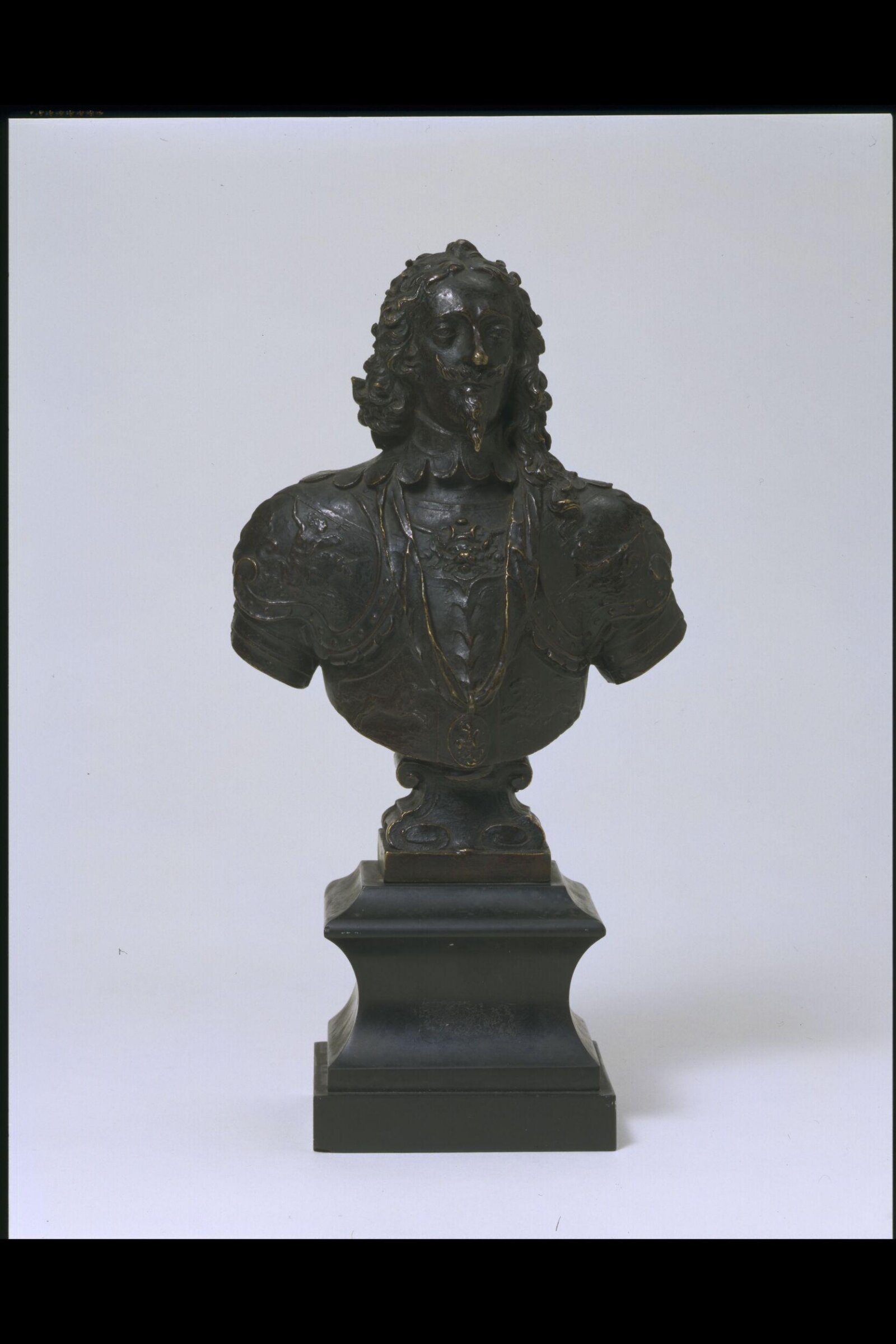
Francesco Fanelli was an Italian sculptor born in Florence on 17 December 1577. In the early years of the 17th century, he was in Genoa where he executed bronzes as well as large-scale marble sculptures, most probably with the assistance of his sons who pursued the same career as their father. Moving to England in 1632, Francesco became court sculptor to Charles I and worked for several private English patrons, among them the Duke of Newcastle. He was last recorded in 1641.
Small bronzes of different subjects were collected in Europe from the early Renaissance. Those collected in 17th century Britain were almost all secular subjects and mainly related to mythology themes. Arranged on shelves, consoles or tables, these small bronzes were displayed in the collectors' studios, rooms or galleries containing other works of art, such as paintings, sculptures or cabinets. Depending on the subject and size of the bronzes, collectors were delighted to view them from different perspectives, often admiring their shine when bathed in light.
In addition to King Charles I and the Duke of Newcastle, Fanelli received other commissions from wealthy people, even if only few are recorded in the documents. Fanelli’s bronzes had a long lasting legacy. Despite the absence of information, it is believed that he bequeathed his models to his workshop as hundreds of bronzes made from those models were likely cast after his death and lack the refinement of those made by Fanelli himself.
In the 18th century, collectors' interest in bronzes was supplemented by their taste for porcelain. Some of Fanelli's models were then translated into this material, sometimes even polychromed.
Victoria and Albert Museum
Oplysninger
- Inventarnummer
- A.96-1956
Hvad det viser
I kataloget
Kilder
- Victoria and Albert Museum
- Billede: Victoria and Albert Museum — © Victoria and Albert Museum, London