John Singer SargentUSA, 1856–1925
Venetian Glass Workers
Må man se det?
Ja, det tager imod

Art Institute of Chicago
Sal273Chicago, USA
Udstillet for publikum. Hvem der står inde for det, står nedenfor.
- Kontrolleret
- Uændret siden
- Kilde
- Museet
Om maleriet
Trained in Paris, John Singer Sargent traveled to Spain, the Netherlands, and Italy early in his career in order to study how painters such as Diego Velázquez and Frans Hals captured the effects of light and rendered figures in space. Venetian Glass Workers is one of several genre scenes featuring glass-bead workers that Sargent executed in the early 1880s. This backlit view of a shop in Venice is dark and atmospheric except for the brilliant strokes of light green and silvery white paint that describe the canes of glass as tradespeople prepare to cut them into bead-sized pieces, which will then be polished and strung into jewelry.
Art Institute of ChicagoCC BY 4.0
Oplysninger
- Inventarnummer
- 1933.1217
Hvad det viser
I kataloget
Ankomster og afgange
Udstillet · Sal 273
Art Institute of Chicago · 28. sep. 2026 — nu · Kontrolleret
Udstillet · Sal 175
Art Institute of Chicago · 19. aug. 2026 — 28. sep. 2026 · Kontrolleret
Kilder
- Art Institute of Chicago
- Billede: Art Institute of Chicago — CC0
Imens i livet hos John Singer Sargent
Hele livet1874–1878
Carolus-Duran's atelier and the alla prima method
Sargent studies with the young portraitist Carolus-Duran, whose influence is pivotal for him from 1874 to 1878: instead of the traditional underdrawing, the atelier teaches the alla prima method of working directly on the canvas with a loaded brush, derived from Velázquez. Sargent is the star student in short order, and one of his paintings in this manner prompts the remark “the student has surpassed the teacher”.
after 1878
A trip to Spain: Velázquez, music and dance
After leaving Carolus-Duran's atelier Sargent visits Spain: he studies the paintings of Velázquez with passion, absorbing his technique, and is entranced with Spanish music and dance; the trip re-awakens his own talent for music, which finds visual expression in his early masterpiece “El Jaleo” (1882).
early 1880s
Full-length portraits of women at the Salon, year after year
Upon his return to Paris Sargent quickly receives several portrait commissions and his career is launched: in the early 1880s he regularly exhibits portraits at the Salon, mostly full-length portrayals of women such as “Madame Edouard Pailleron” (1880, done en plein air) and “Madame Ramón Subercaseaux” (1881), continuing to receive positive critical notice.
1881–1883
First works at the Royal Academy exhibitions
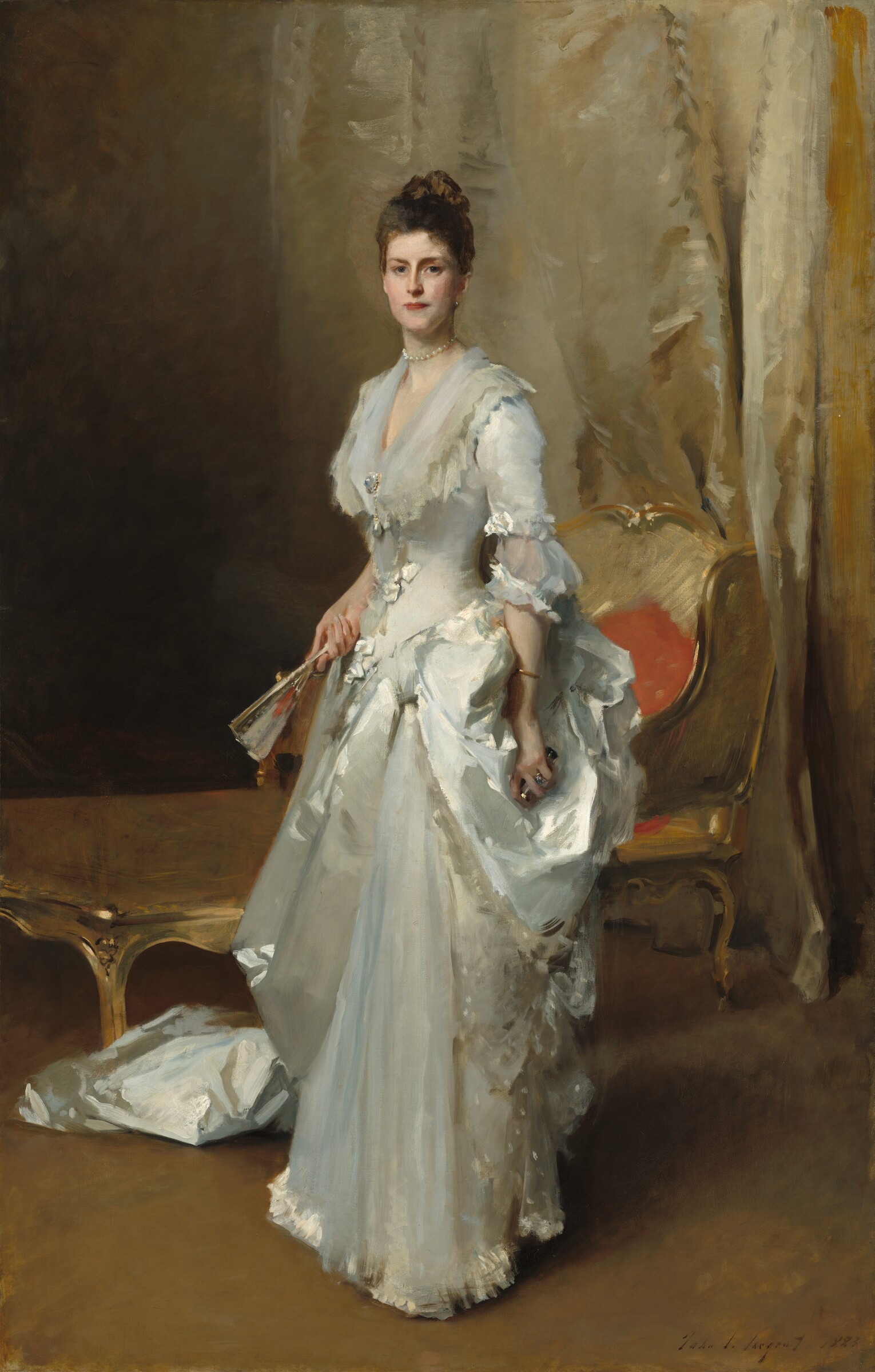
Even before arriving in England Sargent begins sending paintings for exhibition at the Royal Academy: “Dr. Pozzi at Home” (1881), a flamboyant essay in red and his first full-length male portrait, and the more traditional “Mrs. Henry White” (1883).
1882
The start of a long friendship with Albert de Belleroche
In 1882 Sargent meets the aristocratic artist Albert de Belleroche, with whom he later travels frequently; scholars regard him as Sargent's likely lover.
1882
Henry James urges him to move to London
As early as 1882 Sargent considers moving to London, repeatedly urged to do so by his new friend, the novelist Henry James, who had praised the artist's early work.