
 Mark RothkoUSA, 1903–1970
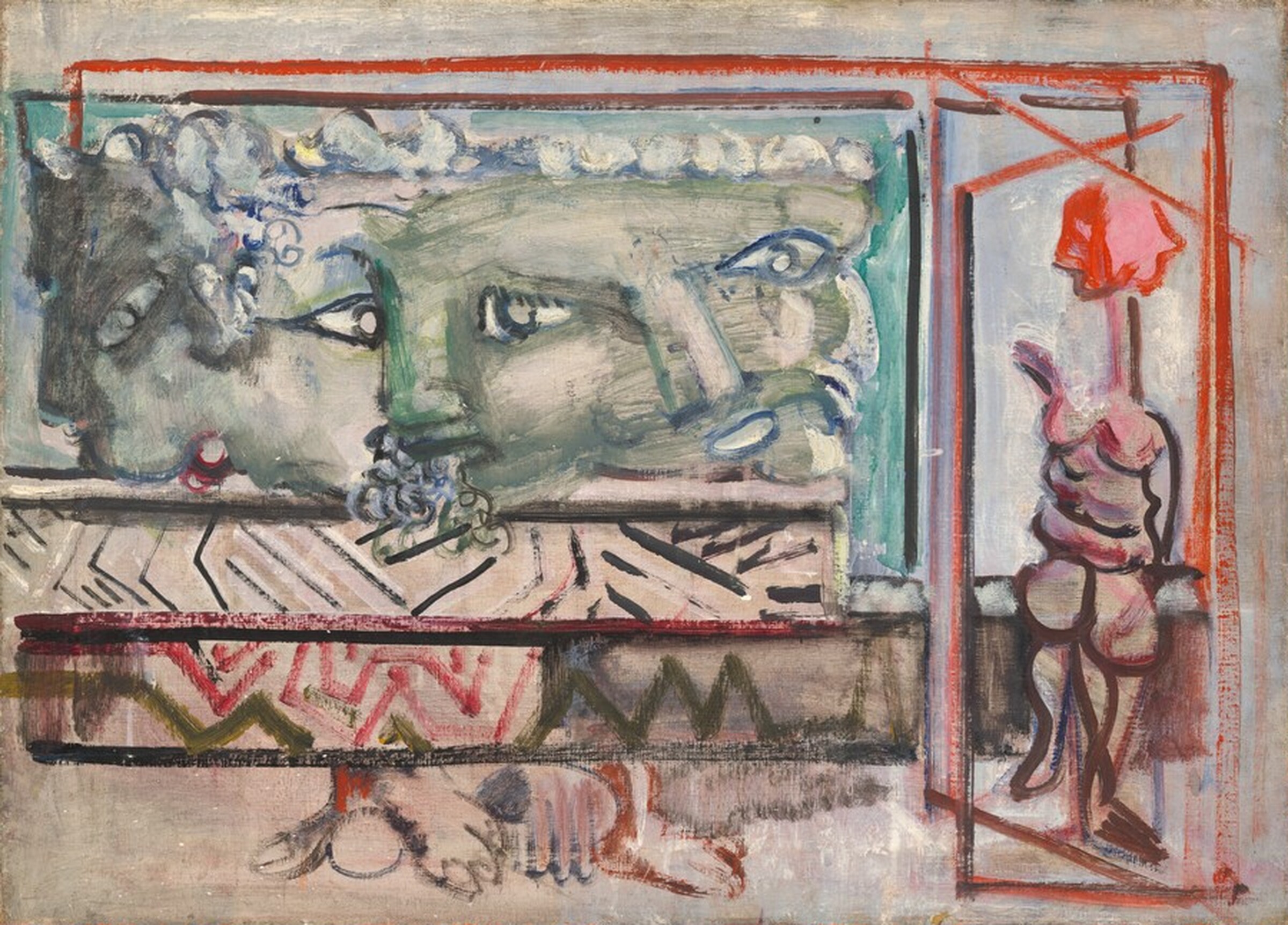
Untitled
Må man se det?
Tager ikke imod for tiden

National Gallery of Art
Washington, D.C., USA
Det hører til samlingen, men er ikke udstillet for tiden.
- Kontrolleret
- i forgårs
- Uændret siden
- 19. aug. 2026
- Kilde
- Museets egne samlingsdata
Oplysninger
- Inventarnummer
- 1986.43.135
What it shows
I kataloget
Kilder
- National Gallery of Art: the museum's own open data · hentet for 5 dage siden
- Billede: National Gallery of Art — © the artist or rights holder
Imens i livet hos Mark Rothko
Hele livet1929–1952
Teaching children at the Brooklyn Jewish Center
From 1929 Rothko taught drawing, painting and clay sculpture part-time to schoolchildren at the Center Academy of the Brooklyn Jewish Center, where he remained until 1952.
1949–1956
Large vertical canvases: being “inside” the picture
For seven years Rothko painted in oil only on large vertical canvases so that the viewer would feel “enveloped within” the painting. Critics saw this as compensating for a lack of substance; he replied that he painted large because he wanted to be intimate, and advised viewers to stand as close as eighteen inches away.
1950s
The poet Stanley Kunitz
The critic Dore Ashton saw Rothko’s acquaintance with the poet Stanley Kunitz as a significant bond of these years, their conversations feeding Rothko’s enterprise; Kunitz saw him as a primitive and a shaman who finds the magic formula.
1952
“Fifteen Americans” and a quarrel with Newman
Dorothy Canning Miller’s Fifteen Americans at MoMA formally heralded the abstract artists, but it also set Rothko against Barnett Newman, who accused him of trying to exclude him from the show.
1954
A Chicago show and a meeting with Sidney Janis
At a solo show at the Art Institute of Chicago in 1954 Rothko met the dealer Sidney Janis, who represented Pollock and Franz Kline; the relationship proved mutually beneficial.
1955
Branded a “sell-out”: the quarrel with Newman and Still
When Fortune magazine named a Rothko painting a good investment in 1955, Newman and Clyfford Still branded him a sell-out with bourgeois aspirations. Still asked for the paintings he had given Rothko over the years to be returned, and Rothko was deeply depressed by his former friends’ jealousy.




![Ginevra de' Benci [obverse], Leonardo da Vinci, c. 1474/1478](https://api.nga.gov/iiif/8f29e3c9-a289-4d53-abf0-31a66e9e98fa/full/!2400,2400/0/default.jpg)
![Wreath of Laurel, Palm, and Juniper with a Scroll inscribed Virtutem Forma Decorat [reverse], Leonardo da Vinci, c. 1474/1478](https://api.nga.gov/iiif/ff62e8d0-45c4-498f-ad36-6358de827e04/full/!2400,2400/0/default.jpg)


