 Perino del VagaItalien, 1501–1547
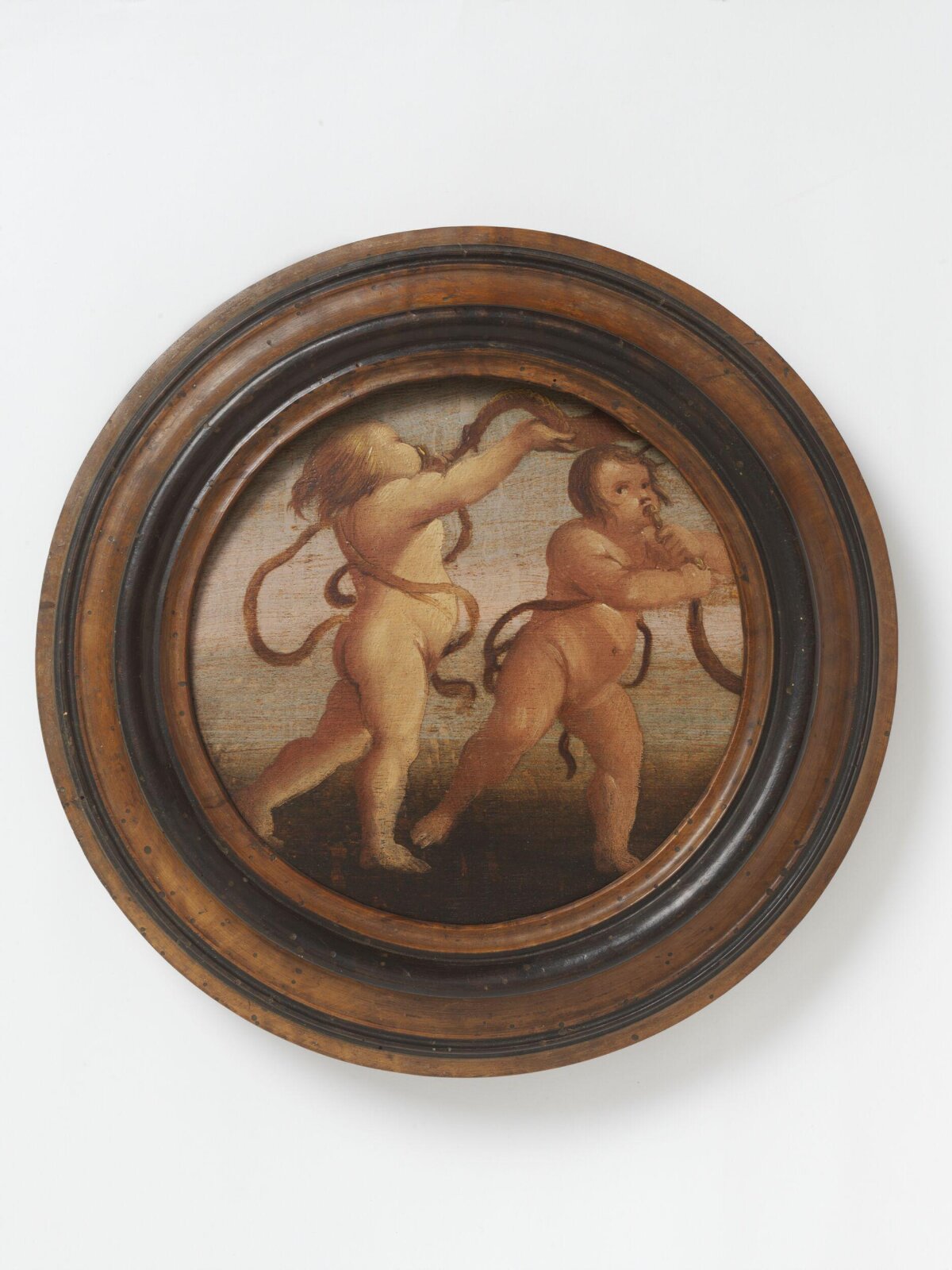
Two Putti blowing horns
Kan det ses?
Ikke udstillet lige nu
Hvor er »Two Putti blowing horns« i dag? Samling: Victoria and Albert Museum, London. Ikke udstillet lige nu. Kontrolleret 25. september 2026.

London, Storbritannien
Det hører til samlingen, men er ikke udstillet for tiden.
- Kontrolleret
- Uændret siden
- Kilde
- Museet
Om maleriet
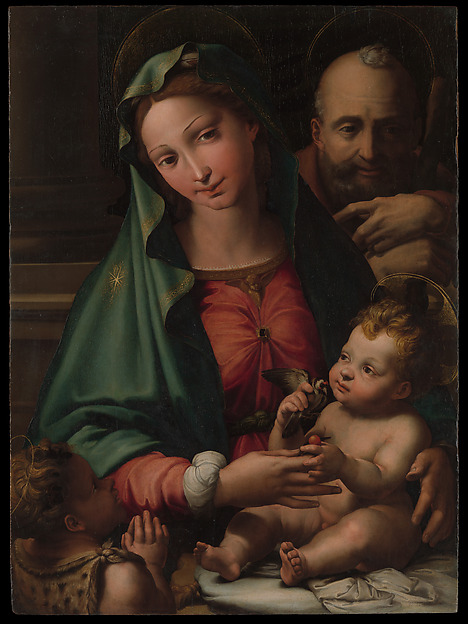
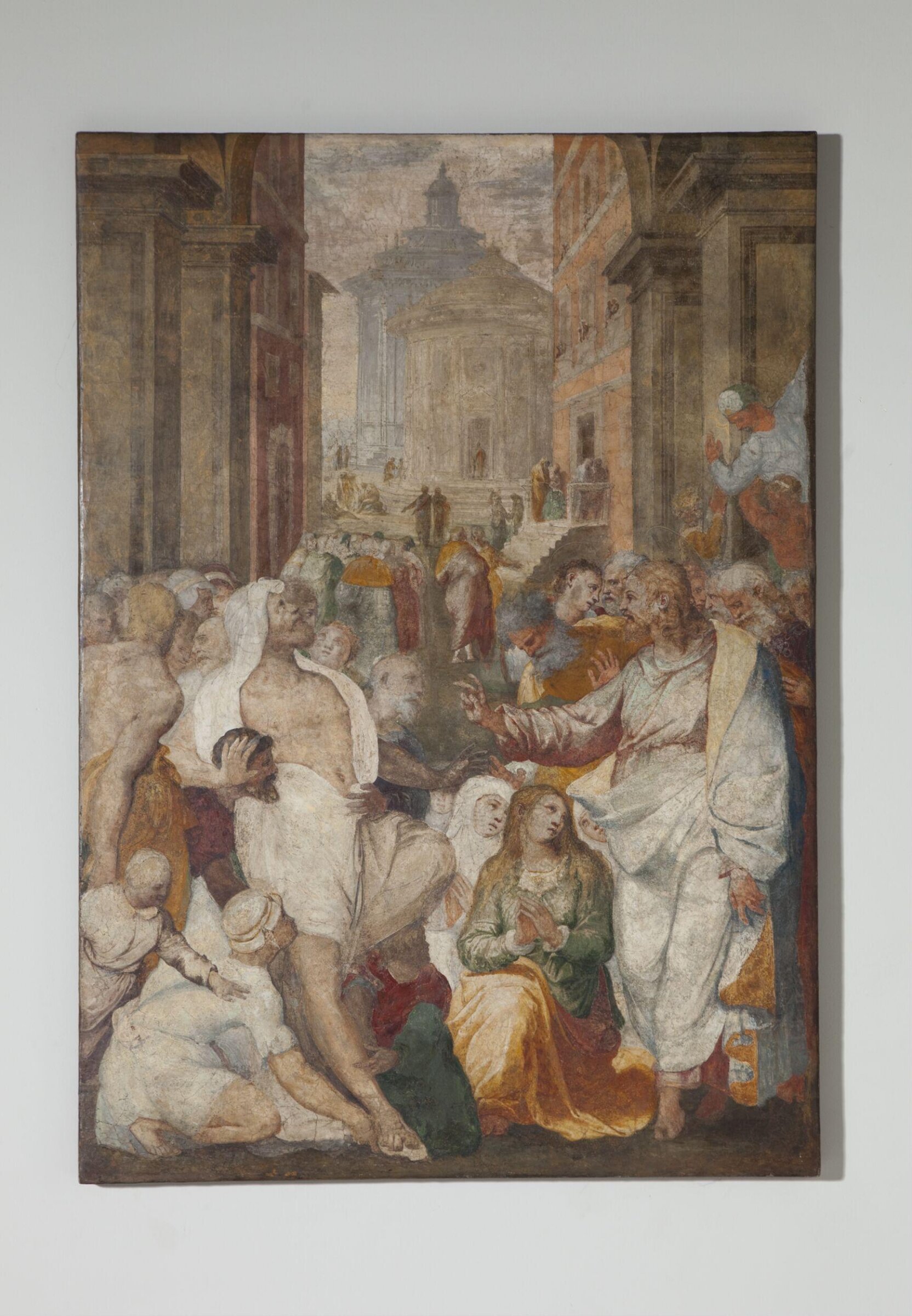
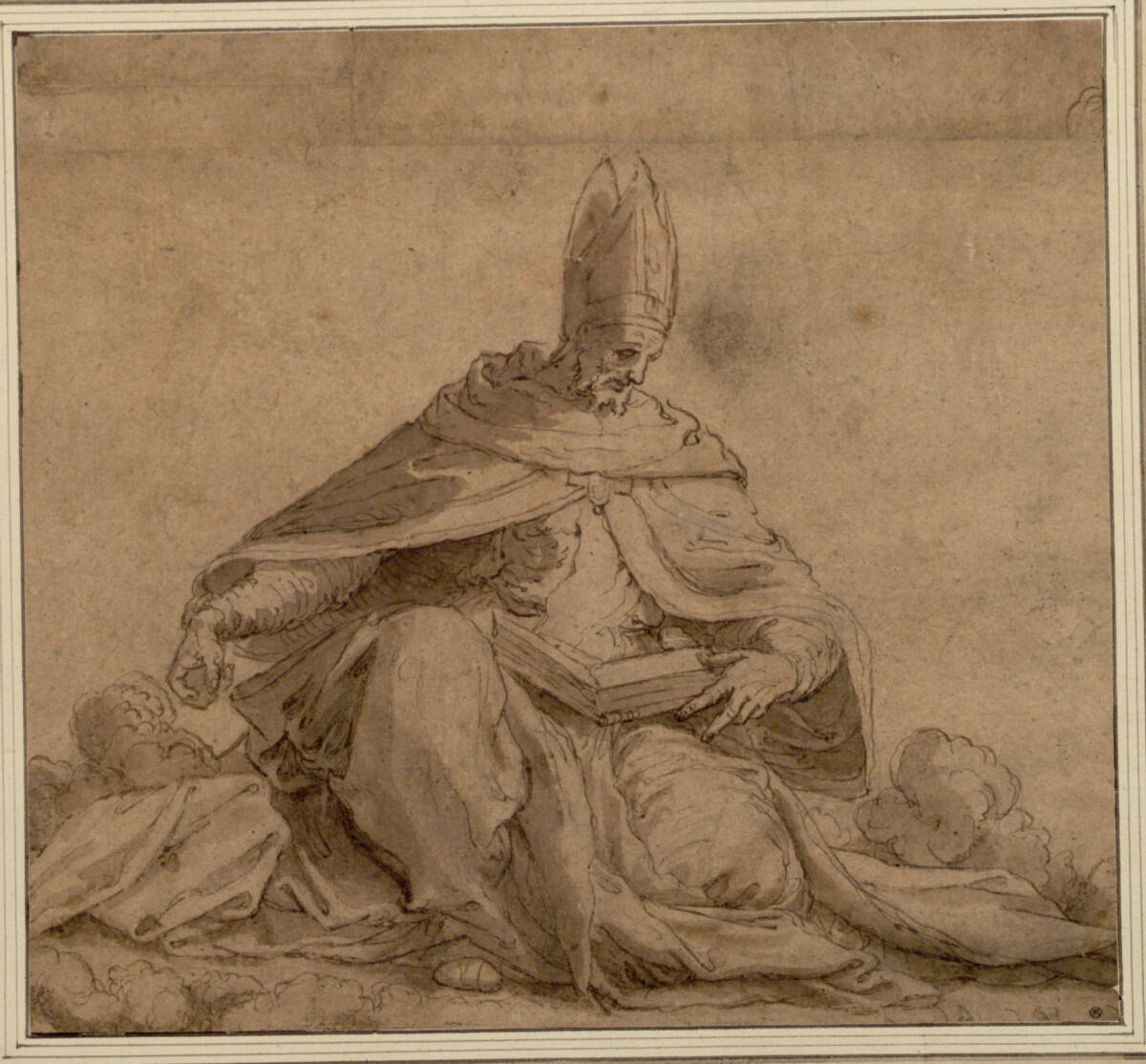
Perino del Vaga (1501-1547) was an Italian painter and draughtsman trained in Florence. Around 1515 he moved to Rome where he drew from works of antiquity and Michelangelo’s ceiling in the Sistine Chapel and joined Raphael’s workshop, where he learnt stucco work and how to design grotesques, through assisting Giovanni da Udine in the Vatican Logge (ca. 1518-19)
W.161-1919 recalls Perino's 'grotesque' decorations, small motifs, including scrollwork, architectural elements and whimsical human figures inspired by the recent discovery of the Domus Aurea of Nero in Rome, which Perino frescoed in the Vatican Logge and in the Palazzo Doria, Genoa ca. 1520-30.
Læs videre
The ancient motif of dancing and music playing putti became increasingly popular following the success of Donatello's Prato Pulpit (1483) and his Cantoria (1439) or 'Singers Gallery' for the Cathedral of Florence. Both monuments were decorated with reliefs depicting animated music playing putti or spiritelli who were understood as embodiments of the very sound and music emmited from the structures they decorated. Dancing and scroll carrying putti also became popular with printmakers and appear for example in the so-called 'otto prints' attributed to Baccio Baldini (British Museum, 1852,0424.8). The V&A panel has been cut down on all sides and must have formed part of a series of decorations, perhaps inspired by such prints, for a domestic interior, probably a piece of furniture or set into wall panelling.
During the fifteenth and sixteenth centuries in Italy, artists were often commissioned to create painted wooden furnishings for the domestic interior, especially for the camera (bedchamber) of wealthy private palaces. The decoration often included subjects associated with fertility, maternity, childbirth, marriage and fidelity and could include references to the patrons through inclusion of their coat of arms and heraldic colours, or of their personal motto or device. Similar playful putti were also often depicted on friezes on the interior and exterior of palaces. In both composition and style W.161-1919 recalls the drawings for no longer extant friezes ca. 1530s of Perino del Vaga and the Sienese artist Domenico Beccafumi (1484?-1551) for the Palazzo of Admiral Andrea Doria in Genoa although the V&A panel was evidently executed swiftly and with less skill than either of these masters.
Victoria and Albert Museum
Oplysninger
- Inventarnummer
- W.161-1919
Hvad det viser
I kataloget
Kilder
- Victoria and Albert Museum
- Billede: Victoria and Albert Museum — © Victoria and Albert Museum, London