ART WIKI32.963 udstillet
KortSamlingKunstnereMuseerUdstillingerJournal
Log ind

ART WIKI

Hvor mesterværket hænger, og hvornår man bliver lukket ind.

Samlinger: Art Institute of Chicago, Det Russiske Museum, Eremitagen, Getty Villa, Harvard Art Museums, Hirshhorn Museum and Sculpture Garden, J. Paul Getty Museum, Louvre, Metropolitan Museum of Art, Minneapolis Institute of Art, Museum of Modern Art, National Gallery of Art, National Museum of Asian Art, National Portrait Gallery (Smithsonian), Pusjkinmuseet, Rijksmuseum Amsterdam, Smithsonian American Art Museum, Statens Museum for Kunst, The Cleveland Museum of Art, Tretjakovgalleriet, Victoria and Albert Museum, Whitney Museum of American Art, Ruslands statskatalog over museumsfonden (274 museer), Europeana (19 museer), Wikidata (6 museer), Paris Musées (12 museer) og Joconde, det franske kulturministeriums museumsdatabase (495 museer). Billederne tilhører deres rettighedshavere.

Afsnit

  • Kort
  • Søgning
  • Samling
  • Mesterværker
  • Udstillet nu
  • Kunstnere

Mere

  • Museer & gallerier
  • Udstillinger
  • Journal
  • Hvor data kommer fra
  • Privatliv & cookies
ForsideKortKatalog
  1. Samling/
  2. Art Institute of Chicago/
  3. Two Plant Specimens
Two Plant Specimens, William Henry Fox Talbot, 1839
William Henry Fox Talbot, portrætWilliam Henry Fox TalbotEngland, 1800–1877

Two Plant Specimens

1839 · Photograph

Må man se det?

Tager ikke imod for tiden

Art Institute of Chicago

Chicago, USA

Det hører til samlingen, men er ikke udstillet for tiden.

Kontrolleret
for 3 dage siden
Uændret siden
19. aug. 2026
Kilde
Museet
På kortetMuseets side

Om værket

Contained within this haunting and poetic image is the seed of photography: the possibility of creating a negative from which an unlimited number of positives can be made. William Henry Fox Talbot produced this image by placing botanical specimens on sensitized paper and exposing them to light. He made this groundbreaking discovery after his 1833 honeymoon on the shores of Lake Como, in Lombardy, Italy. Frustrated by his inability to draw his Italian surroundings accurately, Talbot recalled the fleeting images of external objects that appeared within a camera lucida (an optical prism that creates a superimposed image on an artist’s drawing surface) and wondered how he could make them “imprint themselves durably, and remain fixed upon the paper.” What resulted, two years later, were the first camera negatives.

Læs videre

Unveiled in 1839 and called photogenic drawing, Talbot’s process was perfected two years later into the calotype (from the Greek word kalos, meaning “beautiful”). By the end of his life, Talbot—whose far-ranging interests included mathematics, botany, etymology, and ancient Assyria—had also discovered the basis of halftone printing, obtained twelve patents, and authored seven books, including one of the first photographically illustrated books, The Pencil of Nature (1844).

Art Institute of Chicago · CC BY 4.0

Oplysninger

1839 · 39 år gammel
18001877
Inventarnummer
1972.325

Hvad det viser

FlowersPlants

I kataloget

FotografierRomantikken1800-tallet19. århundredeEngland

Kilder

  • Art Institute of Chicago
  • Billede: Art Institute of Chicago — CC0

Imens i livet hos William Henry Fox Talbot

Hele livet
  1. 1837 · Udmærkelse

    Royal Society Bakerian Medal

  2. 16. marts 1837

    Daughter born: Rosamond Constance Talbot

  3. 25 January 1839

    First showing of photographs at the Royal Institution

    Shortly after Louis Daguerre’s daguerreotype was announced in early January, Talbot asserted his priority and, at a Friday Evening Discourse at the Royal Institution, exhibited several paper photographs he had made in 1835. Within a fortnight he described the nature of his process to the Royal Society, while Daguerre revealed no useful details of his own until mid-August.

  4. 1840

    Invents the calotype

    Talbot found a way to print any number of positives on salted paper from a paper negative; new chemicals cut the exposure to a minute in bright sunlight. He called the method the “calotype” (from kalos, beautiful), informally the “talbotype”: unlike the daguerreotype with its single positive, it effectively created modern photography.

  5. 1840–1841

    Post: High Sheriff of Wiltshire

  6. February 1841

    Patents the calotype

    Talbot obtained an English patent for the calotype process and sold licences at £20 each, later lowering the fee for amateurs to £4 while professionals paid up to £300 a year; scientists saw it as a hindrance to scientific freedom. He justified his rigour by the roughly £5,000 he had spent on photography; for science the method was free, and Talbot himself published the first known photomicrograph of a mineral crystal.
Mere af William Henry Fox Talbot

Alle værker
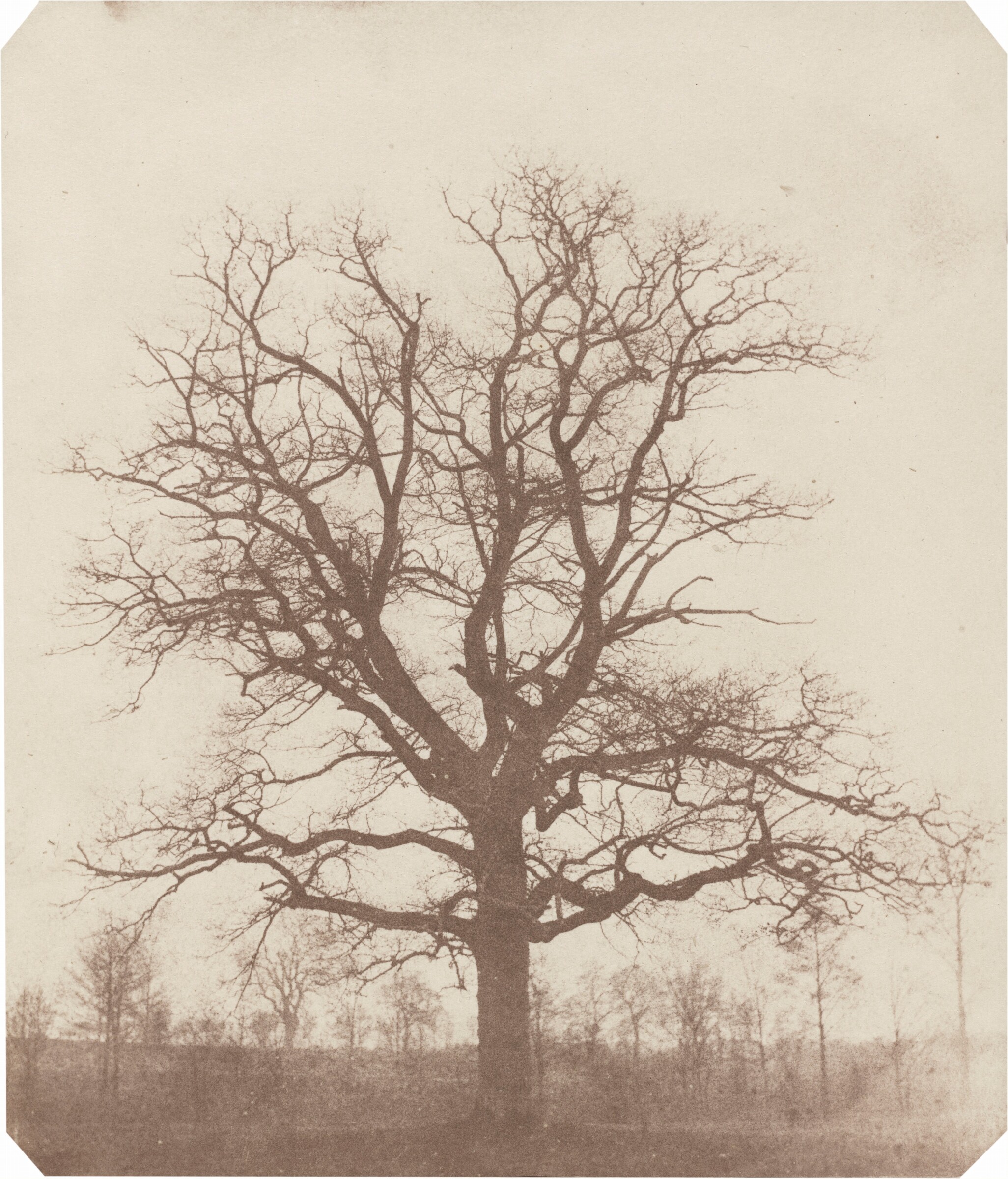
Oak Tree, William Henry Fox Talbot, mid-1840s

Oak Tree

mid-1840s · Ikke udstillet · National Gallery of Art

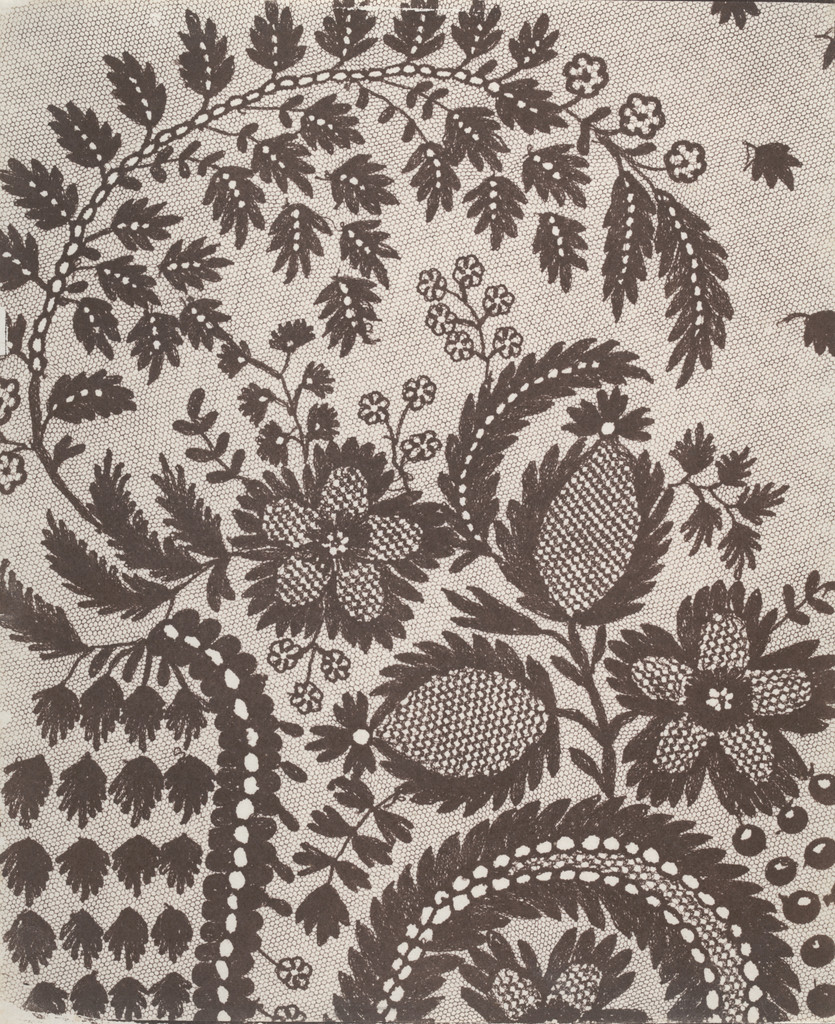
Lace, William Henry Fox Talbot, 1840s

Lace

1840s · Ikke udstillet · Museum of Modern Art

Leaf Study, William Henry Fox Talbot, 1839/1840

Leaf Study

1839/1840 · Ikke udstillet · National Gallery of Art

Lace, William Henry Fox Talbot, 1839-1844

Lace

1839-1844 · Ikke udstillet · National Gallery of Art

Porseleinen beeld naar Giambologna, voorstellende de Sabijnse maagdenroof, William Henry Fox Talbot, in or after 1839-04 - in or before 1840-04

Porseleinen beeld naar Giambologna, voorstellende de Sabijnse maagdenroof

in or after 1839-04 - in or before 1840-04 · Rijksmuseum Amsterdam

Entrée van de Magdalen College Chapel in Oxford, William Henry Fox Talbot, c. 1840 - c. 1850

Entrée van de Magdalen College Chapel in Oxford

c. 1840 - c. 1850 · Rijksmuseum Amsterdam

[Group of Trees from the American Walnut], William Henry Fox Talbot, June 1, 1840

[Group of Trees from the American Walnut]

June 1, 1840 · Ikke udstillet · J. Paul Getty Museum

Winter Trees, Reflected in a Pond, William Henry Fox Talbot, 1841-1842

Winter Trees, Reflected in a Pond

1841-1842 · Ikke udstillet · National Gallery of Art

Naboer på Art Institute of Chicago

Museets side
The Bedroom, Vincent van Gogh, 1889

Vincent van Gogh

The Bedroom, 1889

A Sunday on La Grande Jatte — 1884, Georges Seurat, 1884–86, border added 1888–89

Georges Seurat

En søndag eftermiddag på øen La Grande Jatte, 1884–86, border added 1888–89

Paris Street; Rainy Day, Gustave Caillebotte, 1877

Gustave Caillebotte

Gade i Paris på en regnvejrsdag, 1877

Two Sisters (On the Terrace), Pierre-Auguste Renoir, 1881

Pierre-Auguste Renoir

To søstre, 1881

The Basket of Apples, Paul Cézanne, c. 1893

Paul Cézanne

The Basket of Apples, c. 1893

Stacks of Wheat (End of Summer), Claude Monet, 1890–91

Claude Monet

Stacks of Wheat (End of Summer), 1890–91

American Gothic, Grant Wood, 1930

Grant Wood

American Gothic, 1930

Nighthawks, Edward Hopper, 1942

Edward Hopper

Nighthawks, 1942

Om samme emne · Flowers

Alle værker om emnet
Irises, Vincent van Gogh, 1890

Vincent van Gogh

Irises, 1890

Metropolitan Museum of Art

Nasturtiums, Ansel Adams, 1951

Ansel Adams

Nasturtiums, 1951

Ikke udstillet · National Gallery of Art

Desert Flower, Ansel Adams, 1937

Ansel Adams

Desert Flower, 1937

Ikke udstillet · Museum of Modern Art

A Sunday on La Grande Jatte — 1884, Georges Seurat, 1884–86, border added 1888–89

Georges Seurat

En søndag eftermiddag på øen La Grande Jatte, 1884–86, border added 1888–89

Art Institute of Chicago

Flower Beds in Holland, Vincent van Gogh, c. 1883

Vincent van Gogh

Flower Beds in Holland, c. 1883

Ikke udstillet · National Gallery of Art

Roses, Vincent van Gogh, 1890

Vincent van Gogh

Roses, 1890

National Gallery of Art

Oleanders, Vincent van Gogh, 1888

Vincent van Gogh

Oleanders, 1888

Metropolitan Museum of Art

Bouquet of Flowers in a Vase, Vincent van Gogh, 1890

Vincent van Gogh

Bouquet of Flowers in a Vase, 1890

Metropolitan Museum of Art