 Antonio CanovaItalien, 1757–1822
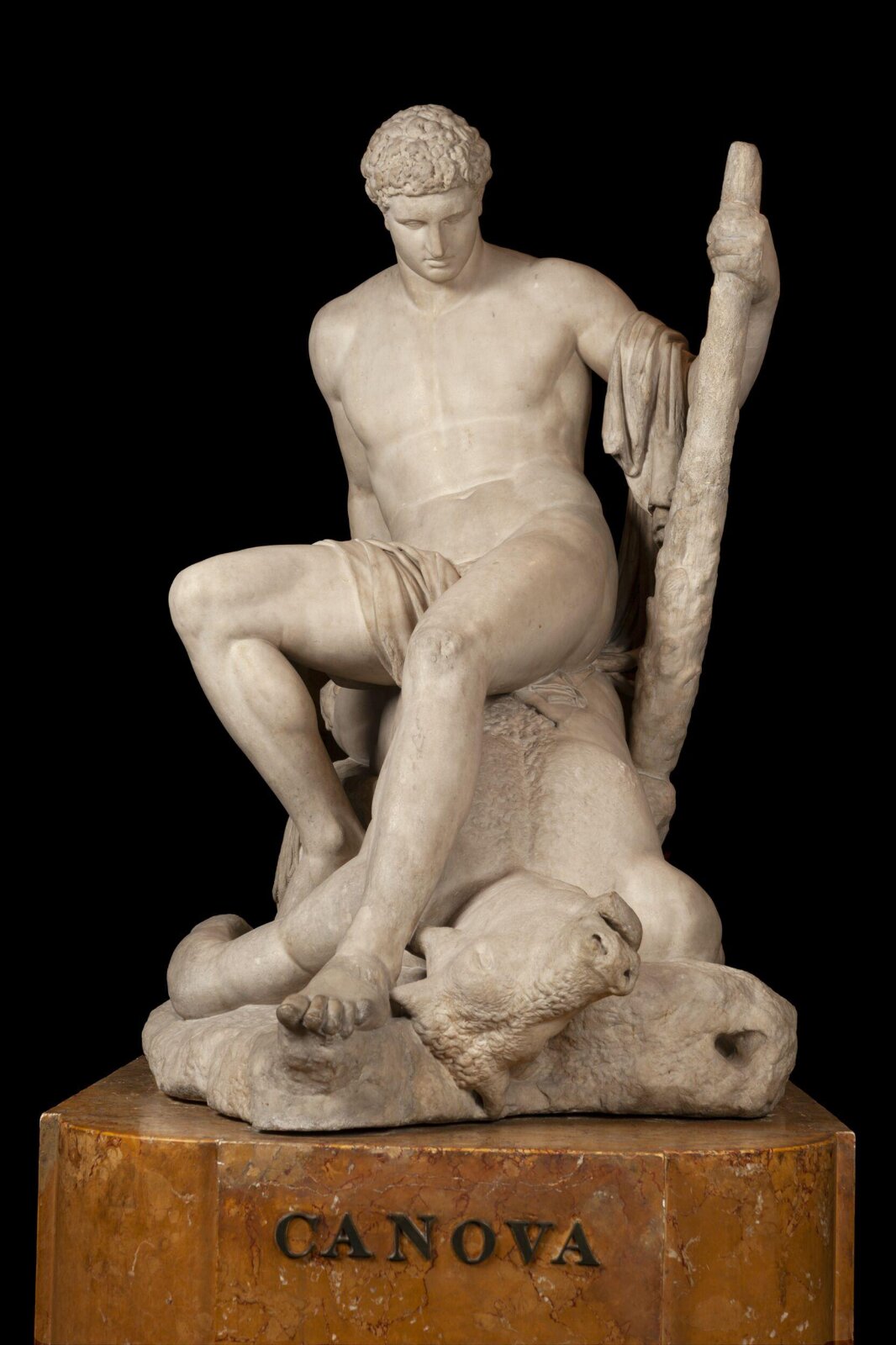
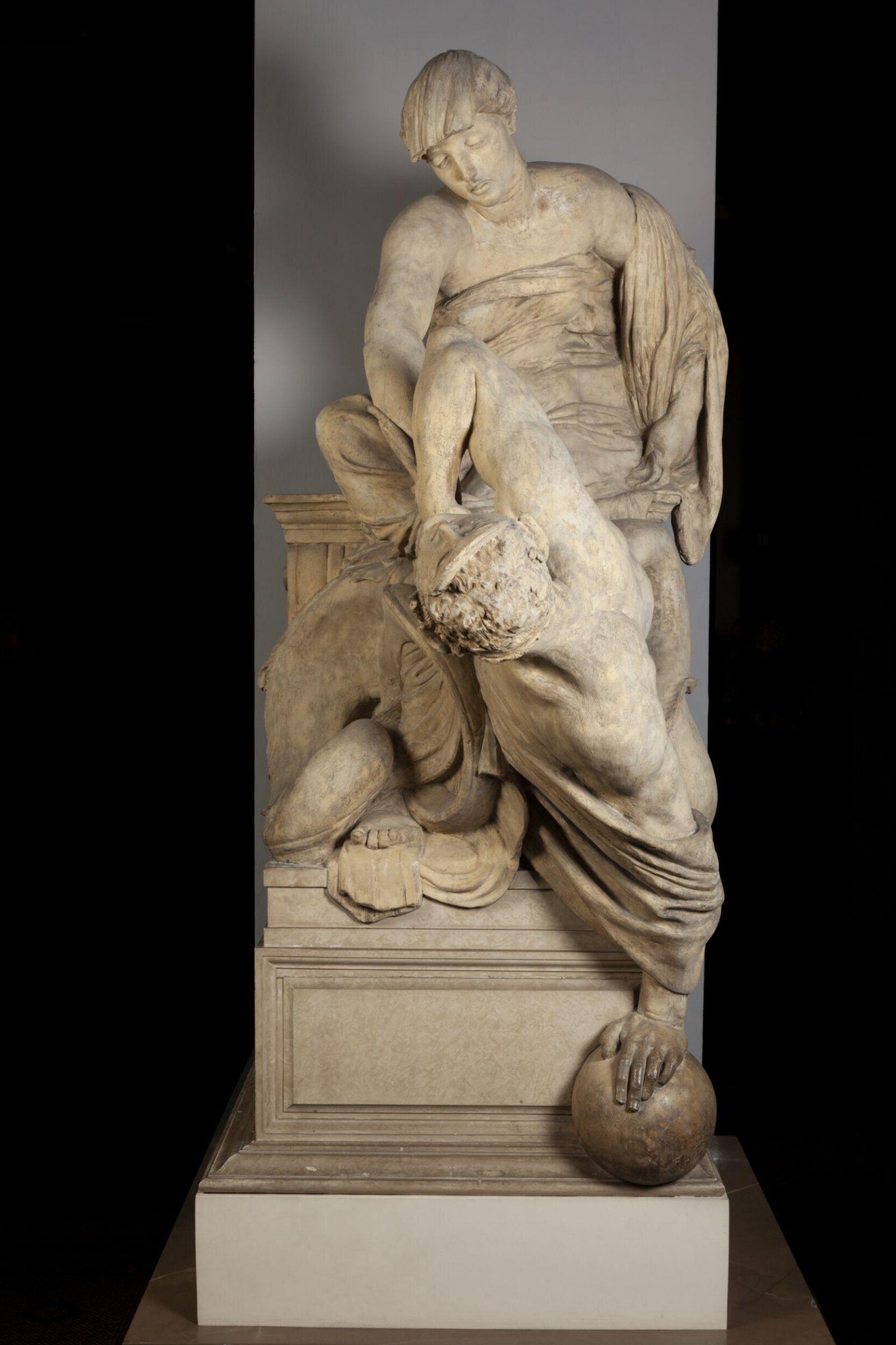
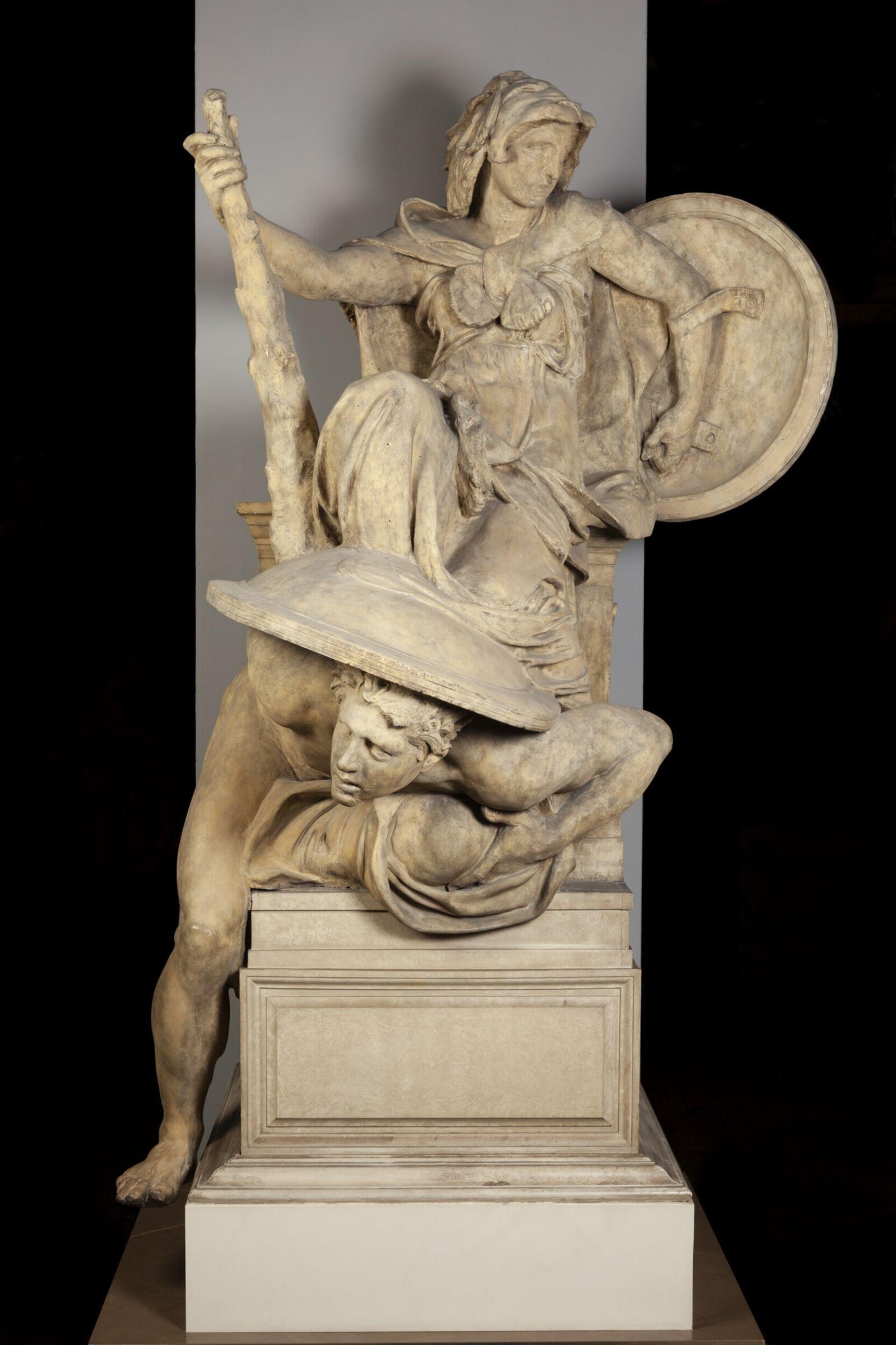
Theseus and the Minotaur
Kan det ses?
Ja, udstillet nu
Hvor er »Theseus and the Minotaur« i dag? Victoria and Albert Museum, Sculpture, Room 22, The Dorothy and Michael Hintze Galleries, London. Ja, udstillet nu. Kontrolleret 25. september 2026.

London, Storbritannien
SalSculpture, Room 22, The Dorothy and Michael Hintze Galleries
Åbent nu· til kl. 17.45
Udstillet for publikum.
- Kontrolleret
- Uændret siden
- Kilde
- Museet
Om skulpturen
The legendary Greek hero Theseus sits astride the minotaur whom he has just killed. Coils of thread used by Theseus to retrace his steps from the minotaur's lair can be seen by the minotaur's left leg. This was one of Canova's earliest completed works after he left Venice to settle in Rome in 1780. The massive block of marble from which this group was carved was given to Canova by his patron Girolamo Zulian, who was Venetian ambassador in Rome in 1781. Zulian gave Canova the choice of subject for the work, and he decided on one of the stories from Ovid's Metamorphoses.
Læs videre
The Scottish painter, archaeologist and dealer, Gavin Hamilton (1723-1798), who was a friend of Canova, advised that he should portray Theseus and the Minotaur after their struggle. He considered that Canova would gain more favour and critical acclaim if he were to create a static group rather than a violent one. The sculpture did indeed receive widespread acclaim, and helped establish Canova's reputation as the leading European sculptor of his day. By the time Canova finished the work in 1782, his patron Zulian had moved to Constantinople, and he therefore allowed Canova to keep it. Canova sold it to an Austrian nobleman and collector, Count Johann Josef Graf von Fries (1765-1788), and it was transported to Vienna. Later it was acquired by the 3rd Marquis of Londonderry and was installed in Londonderry House, probably during the 1820s. The contents of the house were sold in the 1960s prior to its demolition, when the Museum acquired the sculpture.
Victoria and Albert Museum
Oplysninger
- Inventarnummer
- A.5&A-1962
Hvad det viser
I kataloget
Kilder
- Victoria and Albert Museum
- Billede: Victoria and Albert Museum — © Victoria and Albert Museum, London
Imens i livet hos Antonio Canova
Hele livet1775–1800
Viser sine statuer i stearinlysenes skær
I sidste fjerdedel af det 18. århundrede blev det moderne at besøge gallerier om natten ved fakkellys, og Canova tog moden til sig: han viste sine værker i værkstedet ved levende lys og færdiggjorde også statuerne ved levende lys med særlige redskaber, som blødgjorde overgangene mellem den nøgne krops dele. Derefter gned han marmoret med pimpsten, undertiden i uger og måneder, og om nødvendigt med tripel og bly.
1779–1780
Flytter fra Venedig til Rom
Med drømmen om at leve og arbejde i Rom, »kunstens hovedstad«, forlod Canova Venedig i oktober 1779 og ankom ledsaget af arkitekten Giannantonio Selva efter ophold i Bologna og Firenze til Rom den 4. november 1779 eller ifølge andre oplysninger den 28. december 1780. Han studerede antiksamlingerne og tegnede skitser efter Michelangelos værker, men hans første romerske arbejder blev køligt modtaget.
22 January – 28 February 1780
Napoli: Sanmartinos »Khristos pod plashchanitsey«
Fra 22. januar til 28. februar 1780 var han gæst hos Contarina Barbarigo i Napoli og besøgte Farnese-samlingen og Sansevero-kapellet. Her beundrede han Giuseppe Sanmartinos »Христос под плащаницей« så højt, at han forsøgte at købe den, og han beundrede også de tilslørede figurer af venetianeren Antonio Corradini.



![Blue Club [working proof 8], Richard Diebenkorn, 1981](https://api.nga.gov/iiif/ca004a41-d32e-4561-9425-2045d02033f4/full/!2400,2400/0/default.jpg)
![Blue Club [working proof 7], Richard Diebenkorn, 1981](https://api.nga.gov/iiif/f21849ef-d631-4ceb-b579-d8c665572d01/full/!2400,2400/0/default.jpg)