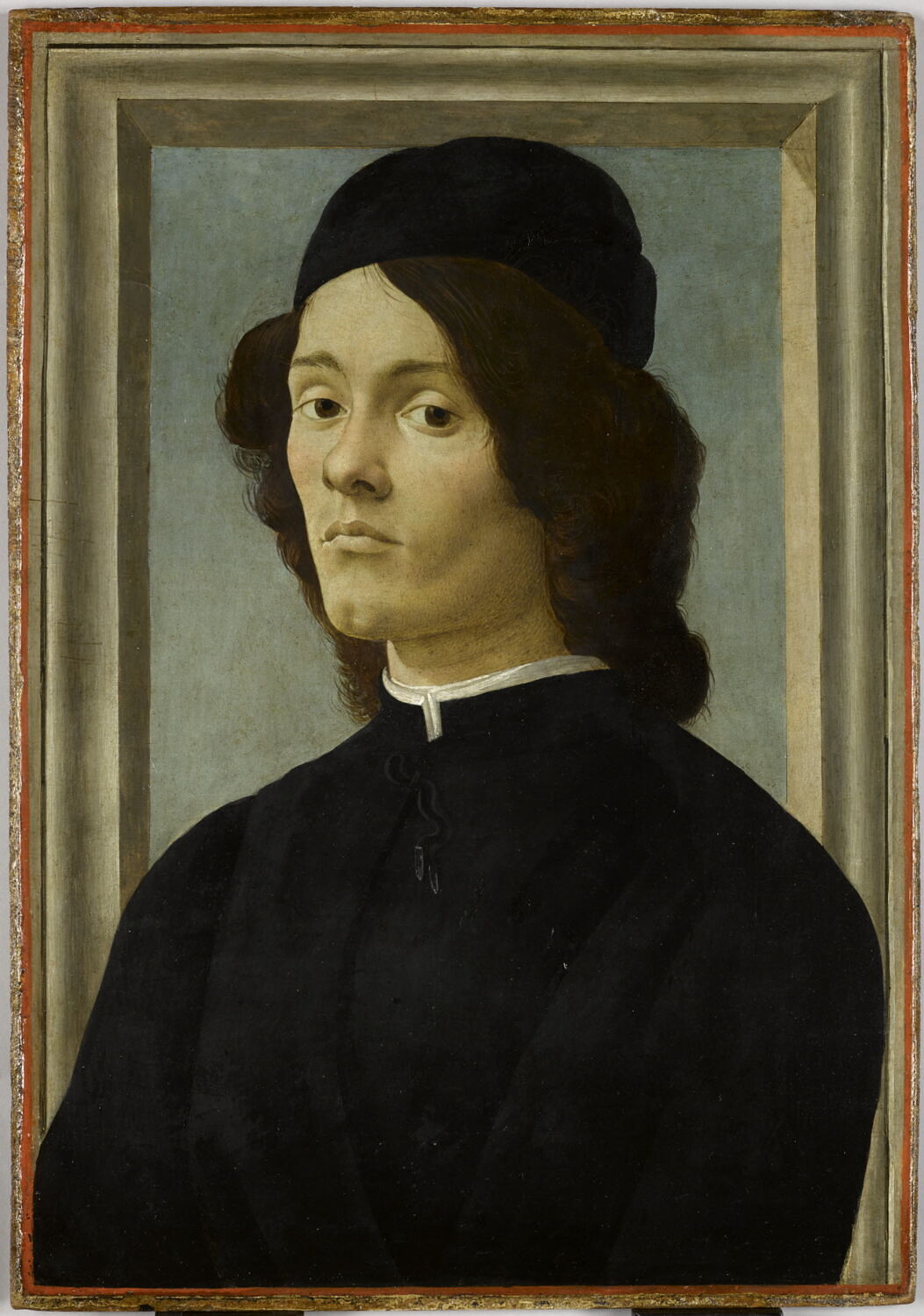
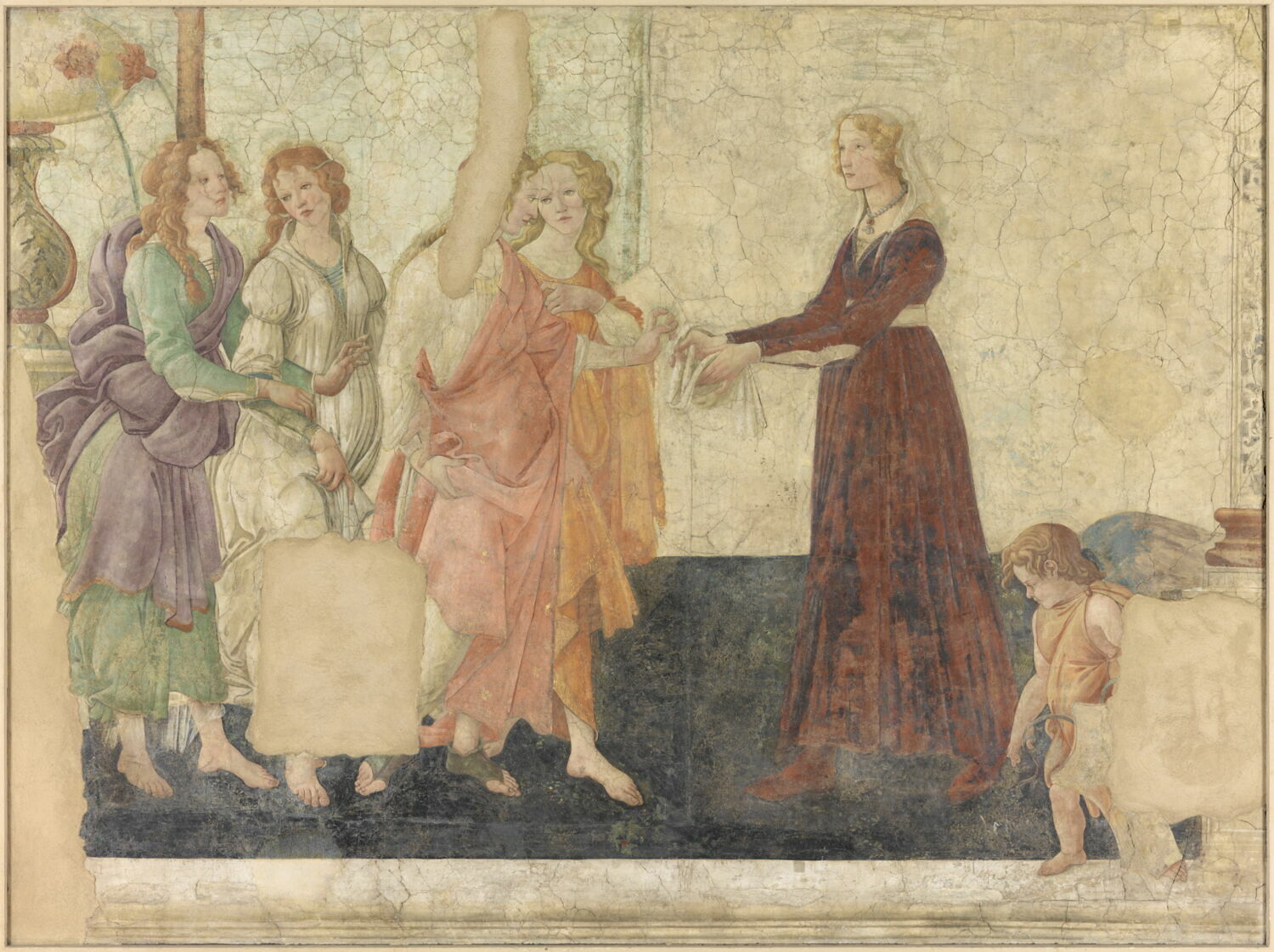
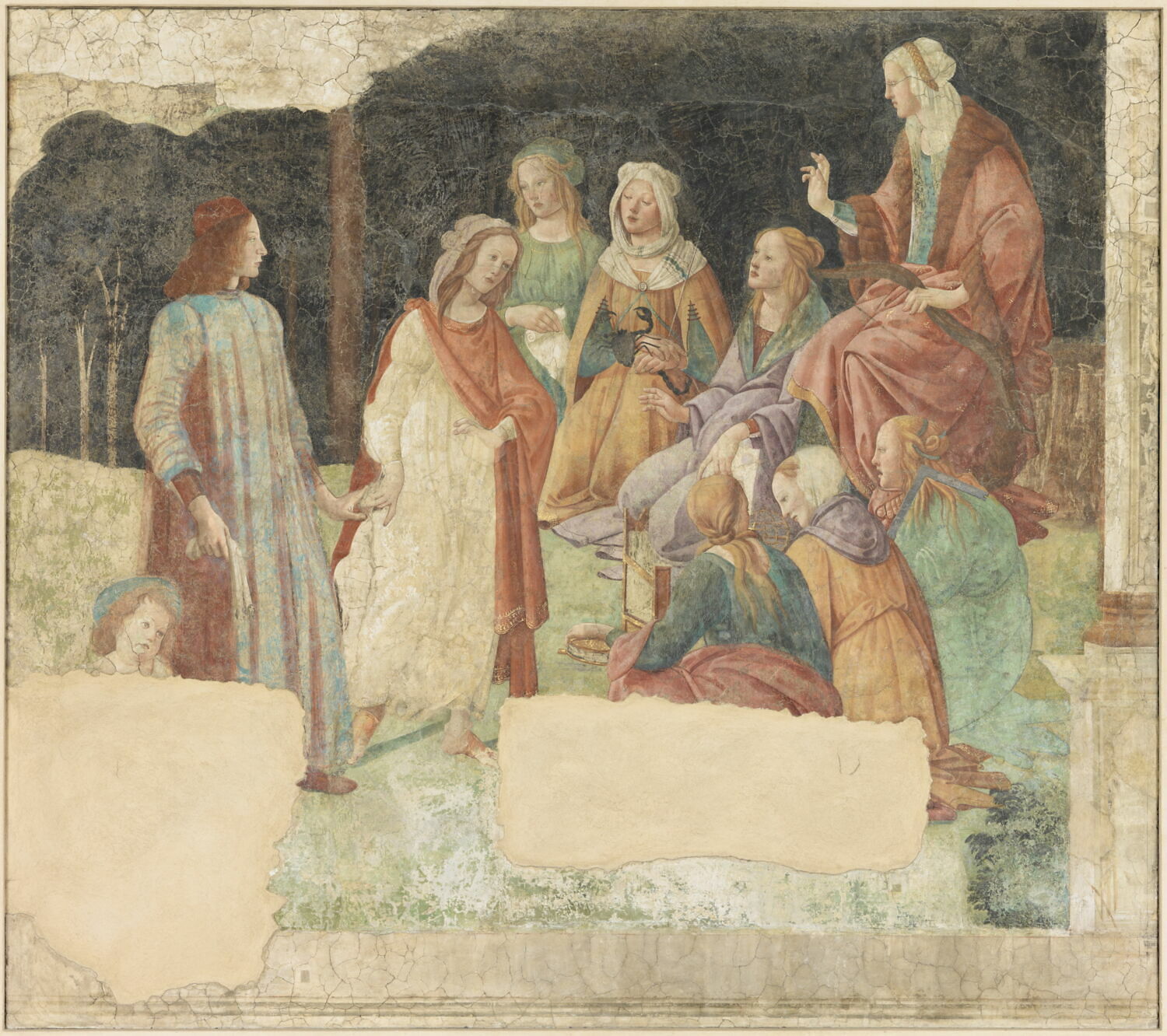
Sandro BotticelliItalien, 1445–1510
The Virgin and Child
Om maleriet
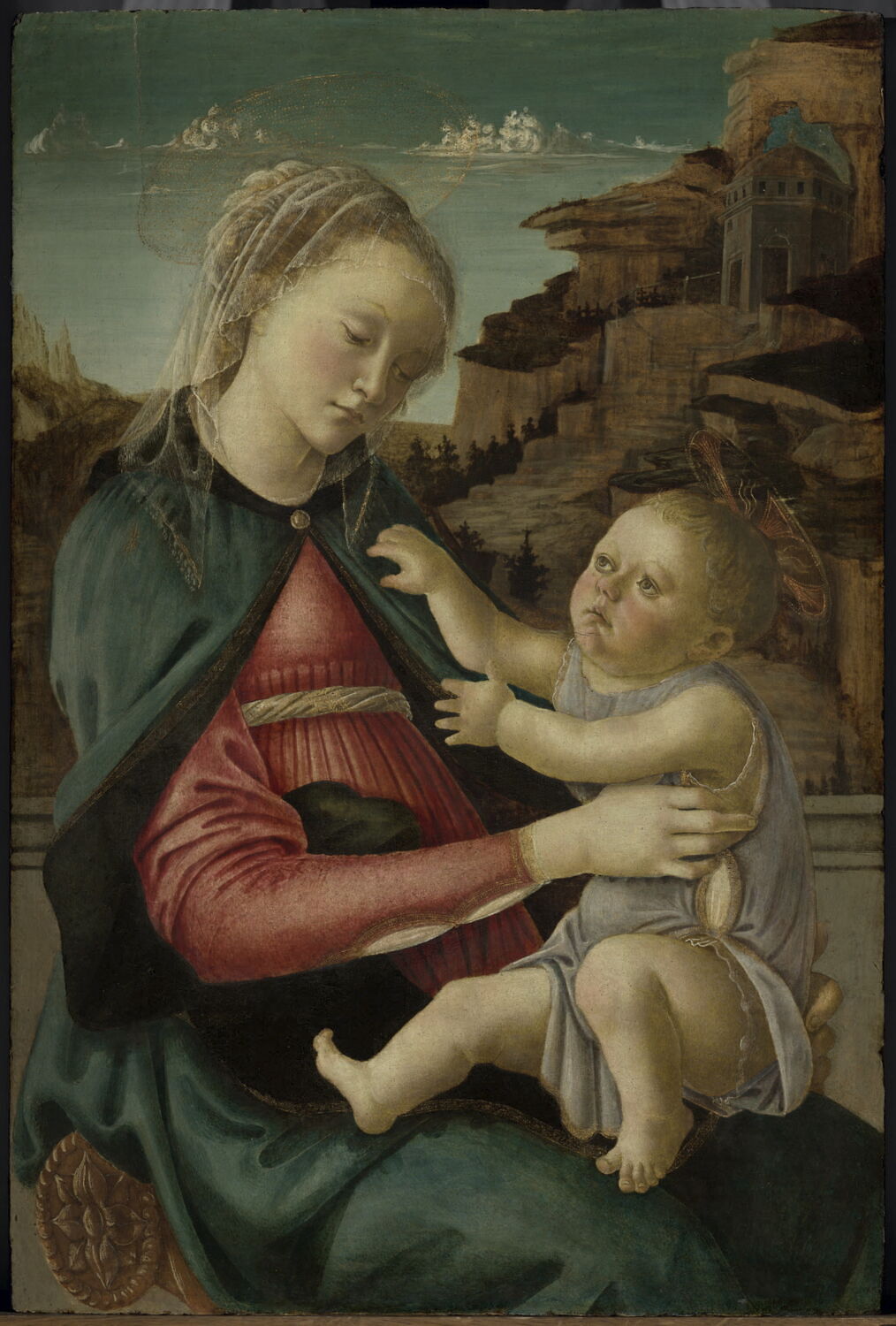
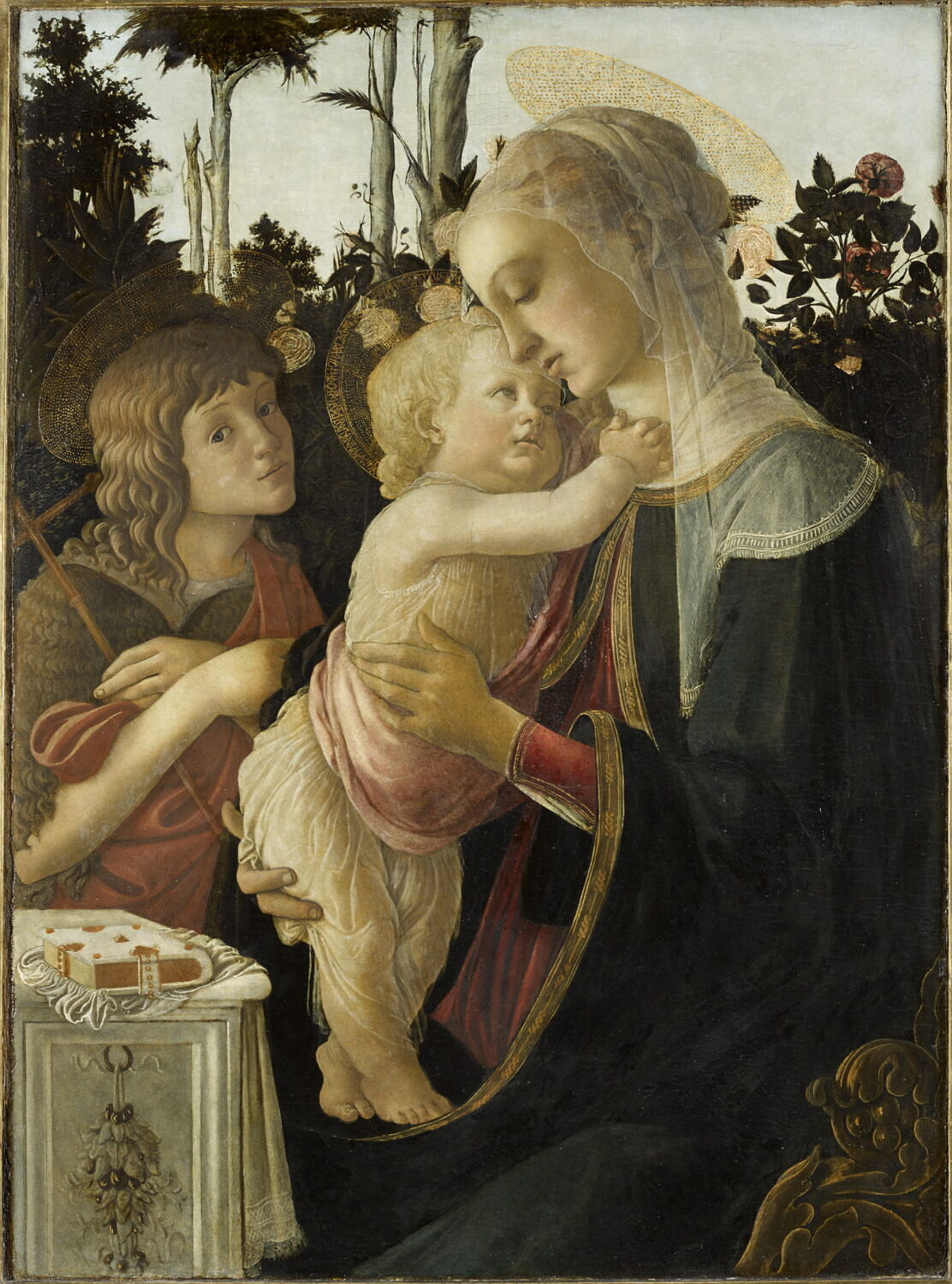
Botticelli oversaw an active workshop that produced multiple versions of the same composition. The central figures in this painting are a reworking of the Virgin and Child from the San Barnaba altarpiece, one of the most important commissions of Botticelli’s mature period in Florence. They are framed in a pavilion whose perspective is carefully rendered, while in the background, a townscape rises beneath a blue sky. The crisp linearity, idealized facial features, foreshortened halos, and geometric organization of space are characteristically Florentine. The architecture of the buildings, however, is Netherlandish — evidence of the vibrant cultural exchange between Florence and the North during the fifteenth century. Technical studies show that the Christ child originally held a recorder, an unusual attribute that was apparently rejected and painted over with the pomegranate, a symbol of the Passion because of its blood-red seeds.
Harvard Art Museums

Oplysninger
- Inventarnummer
- 1943.105
Imens i livet hos Sandro Botticelli
Hele livet1480s
Lorenzo's circle: Ficino, Pico, Poliziano
Botticelli frequented Lorenzo the Magnificent's Platonic Academy, where he met the humanists, poets and philosophers Marsilio Ficino, Pico della Mirandola and Angelo Poliziano; the influence of Neoplatonism shows in his secular paintings.
1490–1498
Savonarola's preaching and Botticelli
From 1490 Savonarola preached in Florence; according to Vasari, Botticelli became his follower, gave up painting and fell into hardship. Modern historians reject this, and the extent of the preacher's influence remains uncertain — Botticelli's brother Simone was the clearer follower.
1491
The committee on the cathedral façade
In 1491 Botticelli served on the committee deciding on a façade for the Cathedral of Florence; the next year he received three payments for a design, eventually abortive, to put mosaics on some of the cathedral's interior vaults.