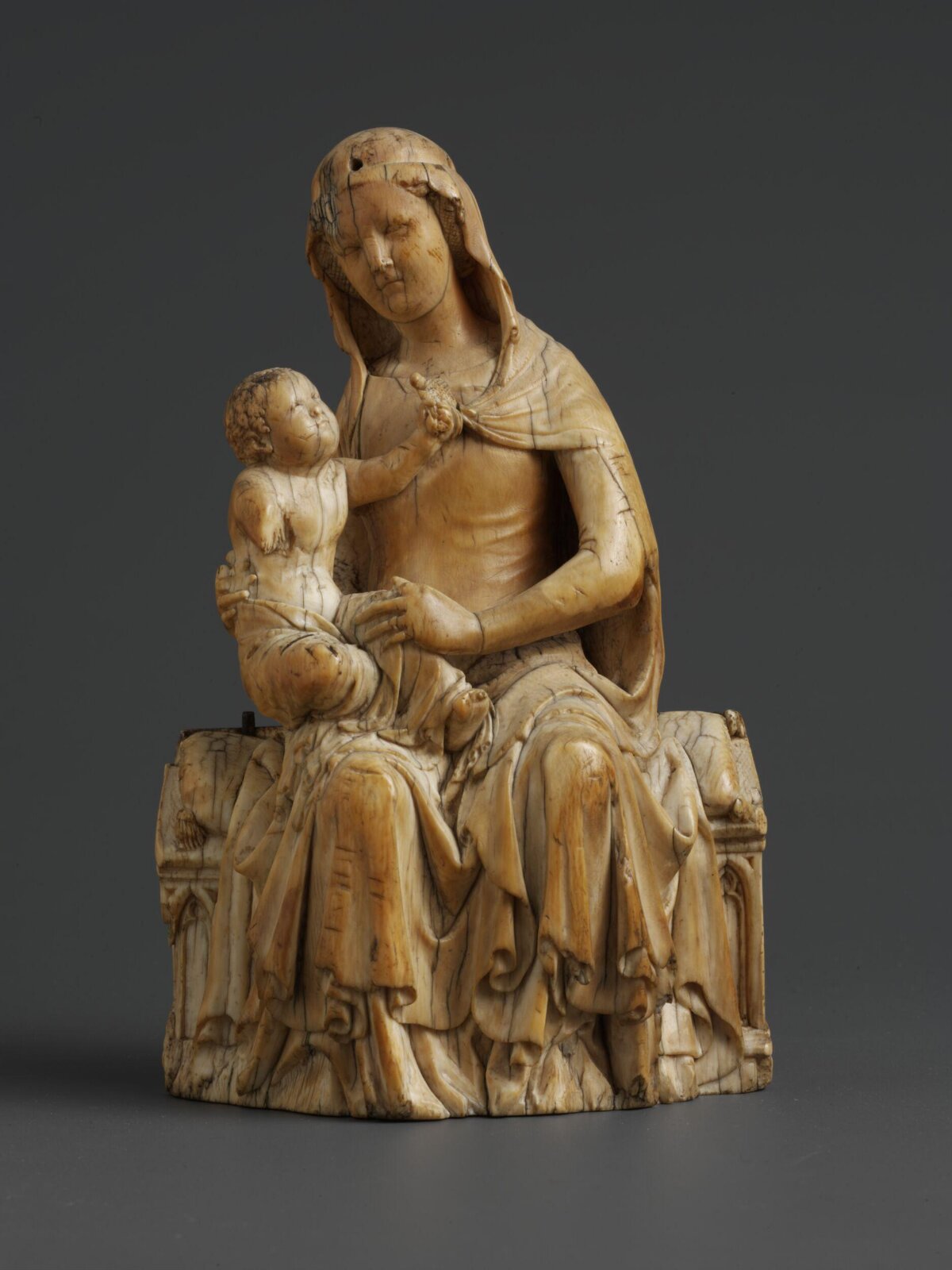
The Virgin and Child
Må man se det?
Ja, det tager imod

Udstillet for publikum. Hvem der står inde for det, står nedenfor.
- Kontrolleret
- Uændret siden
- Kilde
- Museets egne samlingsdata
About the sculpture
This ivory statuette representing the Virgin and Child is made in France (Paris) or England (probably Westminster), in about 1360-1380. The group has an inherent quality and was apparently set in a silver or gilt-copper tabernacle shrine which suggests that it was an especially revered image, perhaps originally kept in a private oratory or chapel.
Three dimensional images of the Virgin and Child were ubiquitous from the twelfth to the fifteenth centuries, produced in a wide range of materials and sizes and testifying the overwhelming devotion to th Virgin. Together with the Crucifixion, statues and statuettes of the Virgin and Child were the pricipal objects of devotion in the Christian Church, and vast numbers were made for ecclesisastical, monastic and private worship.
Read on
Throughout the ages artists and craftsmen have made virtuoso carvings as a display of their skill and ingenuity. Although ivory, wood and stone are relatively easy to carve, other materials such as gemstones are much more demanding. Most of these carvings were made for wealthy patrons and collectors, who delighted in the rarity of the material and quality of the carving. Parisian workshops made Gothic ivories of the Virgin and Child in large numbers for private devotional use.
Victoria and Albert Museum
Oplysninger
- Inventarnummer
- 202-1867
What it shows
I kataloget
Kilder
- Victoria and Albert Museum: the museum's own open data · hentet for 10 dage siden
- Billede: Victoria and Albert Museum — © Victoria and Albert Museum, London







