 Jean François MilletFrankrig, 1814–1875
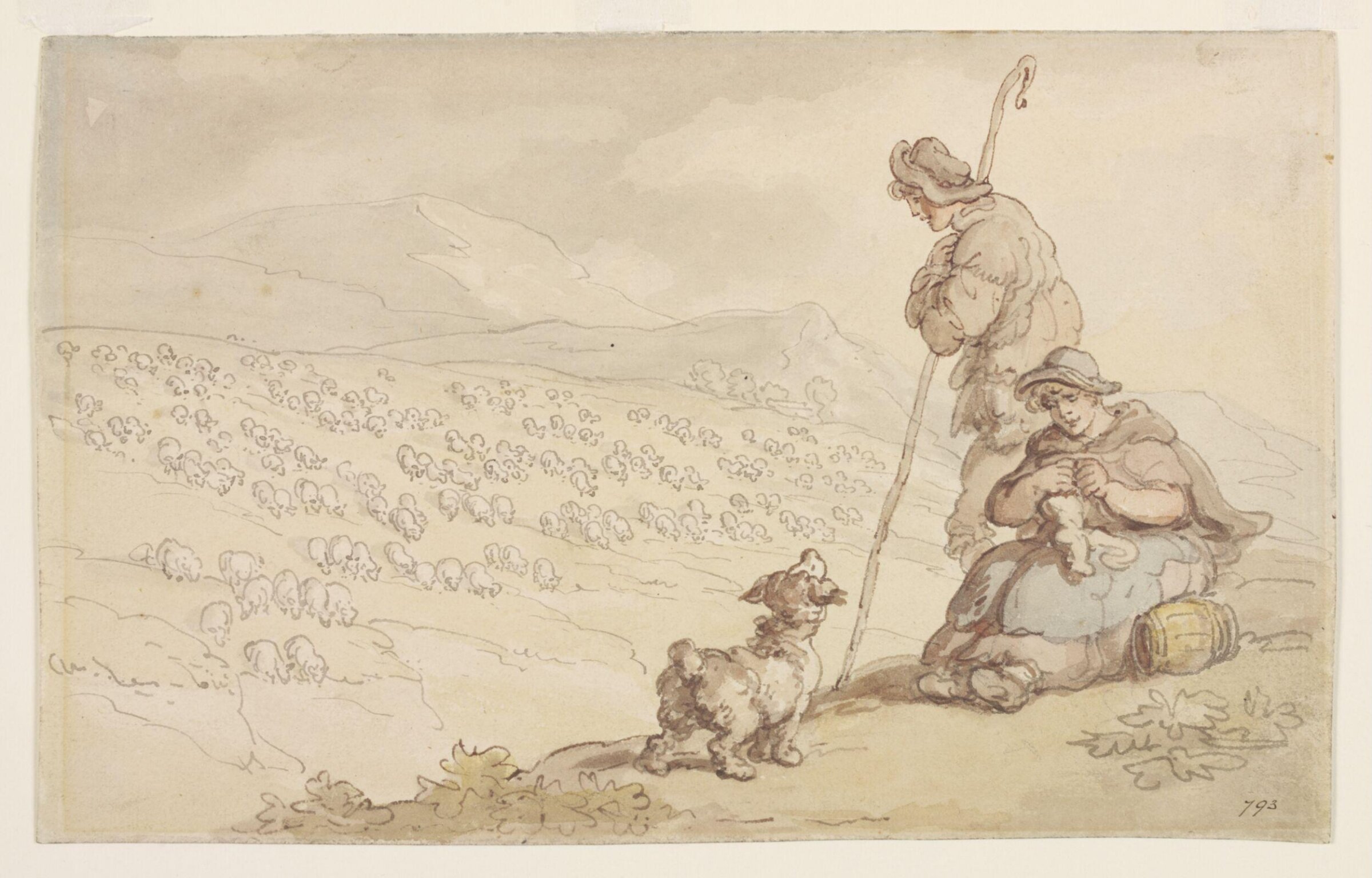
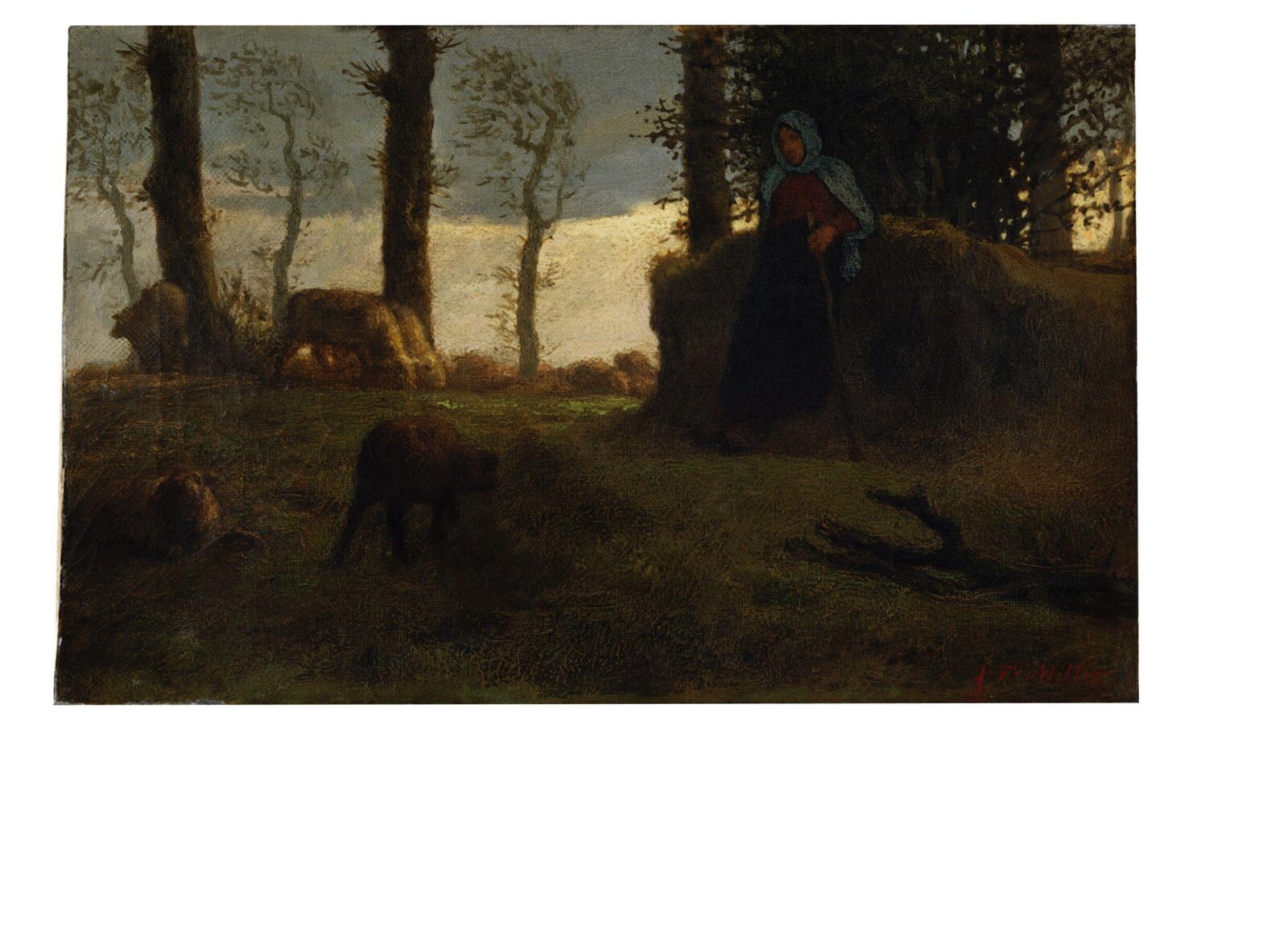
The Shepherdess
Kan det ses?
Ja, udstillet nu
Hvor er »The Shepherdess« i dag? Victoria and Albert Museum, Paintings, Room 81, The Edwin and Susan Davies Galleries, London. Ja, udstillet nu. Kontrolleret 25. september 2026.

London, Storbritannien
SalPaintings, Room 81, The Edwin and Susan Davies Galleries
Lukket· åbner kl. 10.00
Udstillet for publikum.
- Kontrolleret
- Uændret siden
- Kilde
- Museet
Om maleriet
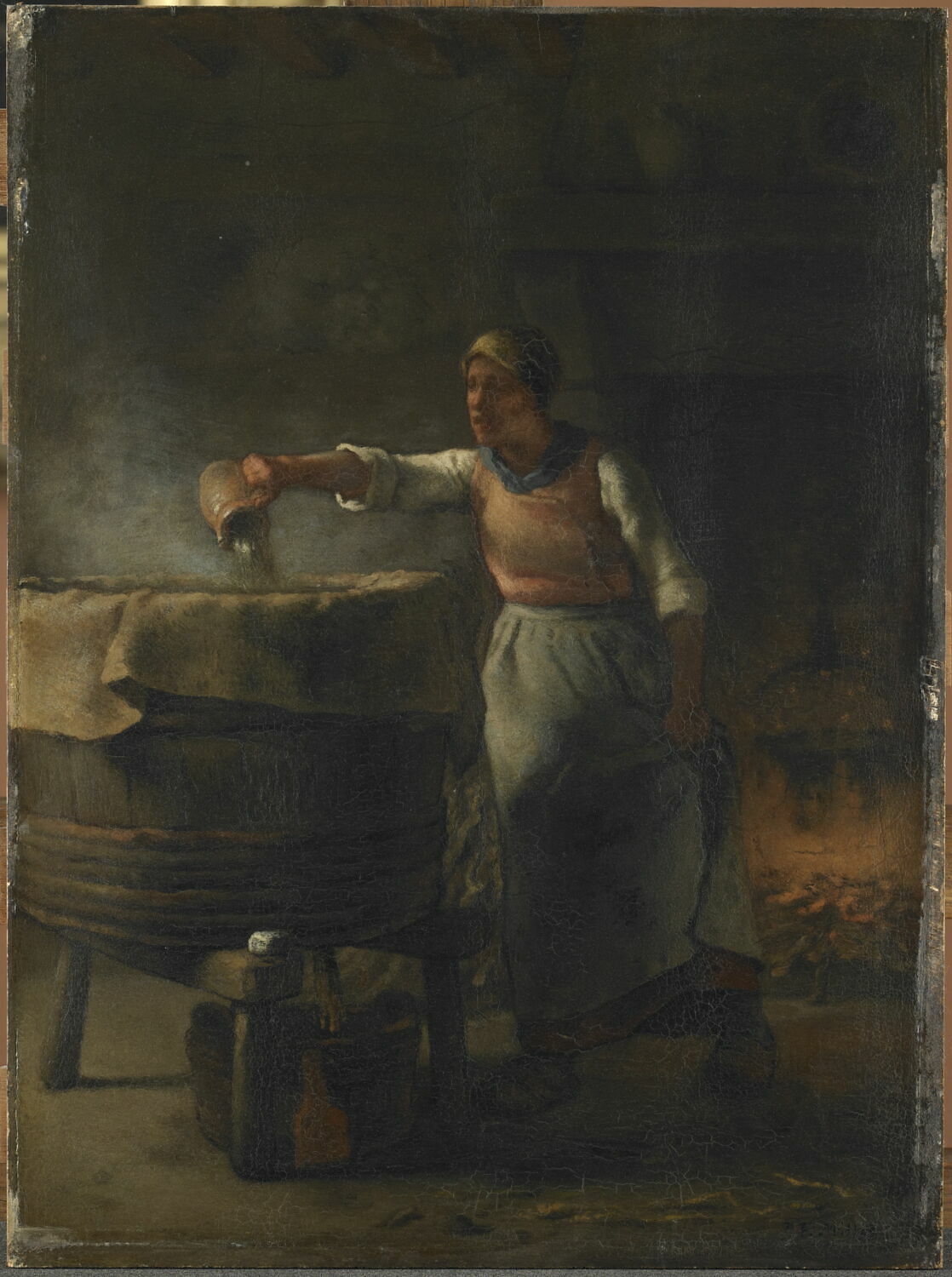
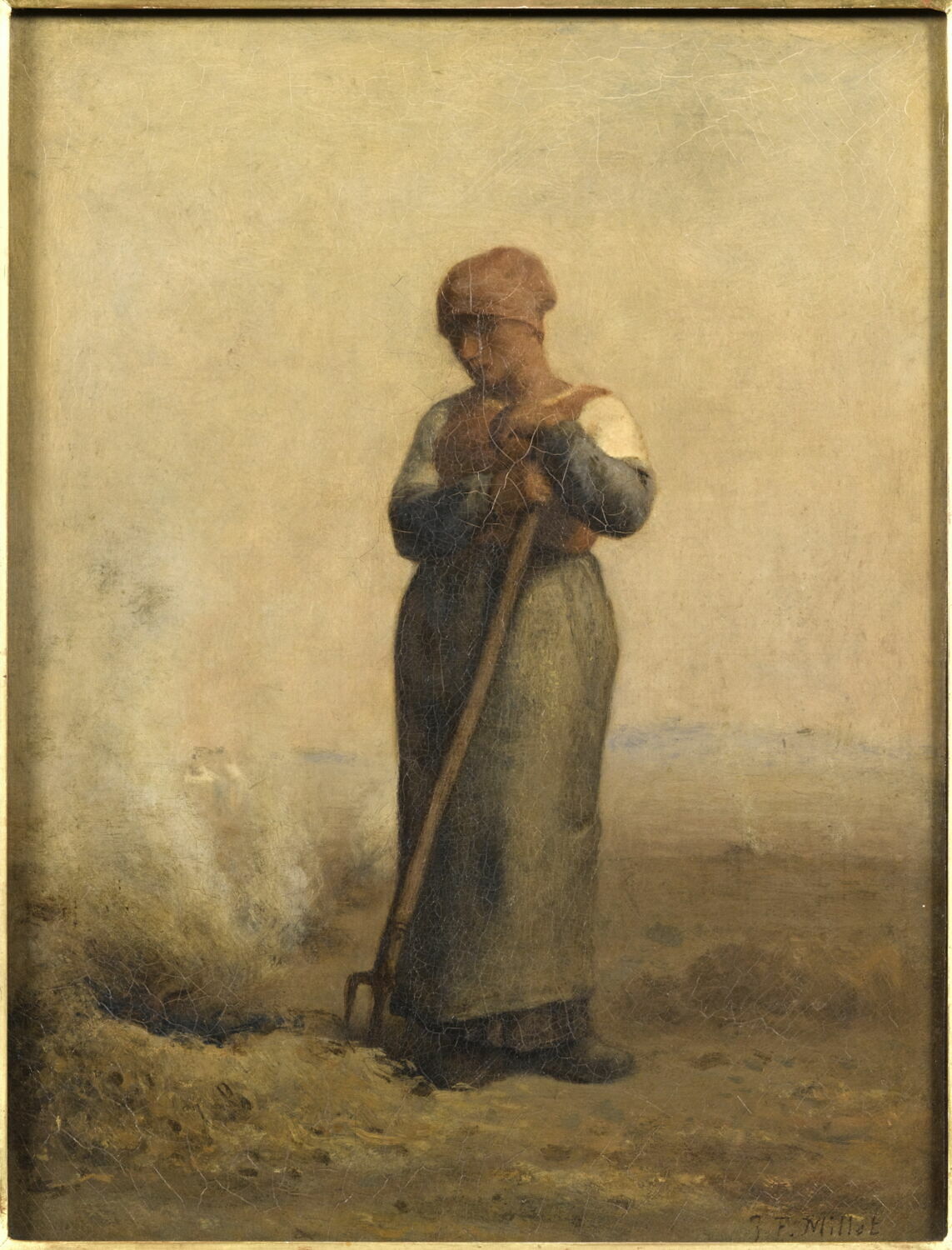
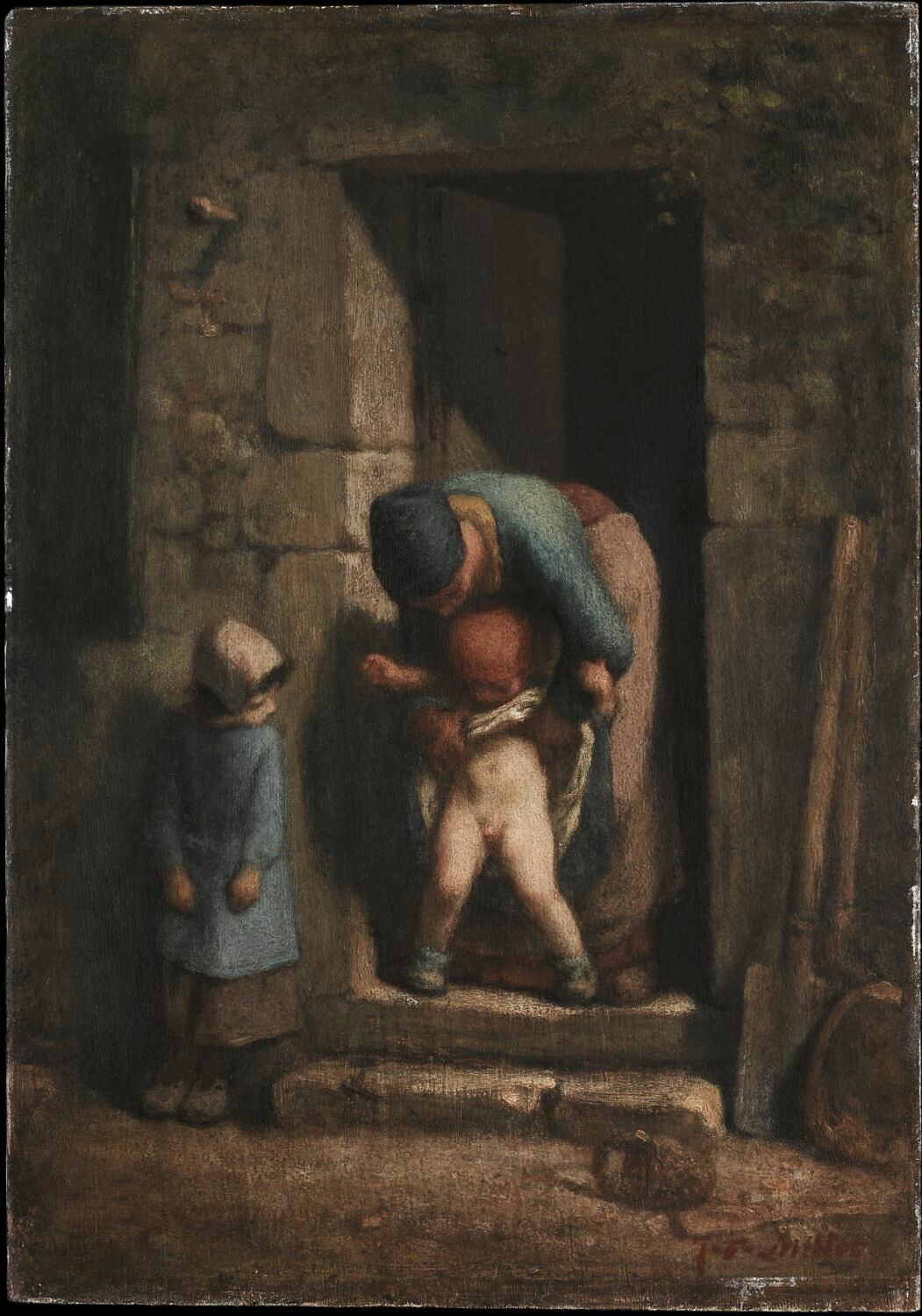
Jean-François Millet (1814-1875) was born in Normandy and first trained with a local portrait painter, Bon Du Mouchel (1807-1846), and later in Cherbourg with Lucien-Théophile Langlois (1803-1845), a pupil of Antoine-Jean Gros (1771-1835). In Paris, he then entered the atelier of the history painter Paul Delaroche (1797-1856). He first specialised in portraiture and then moved towards the naturalistic style with peasant scenes for which he became best known.
Læs videre
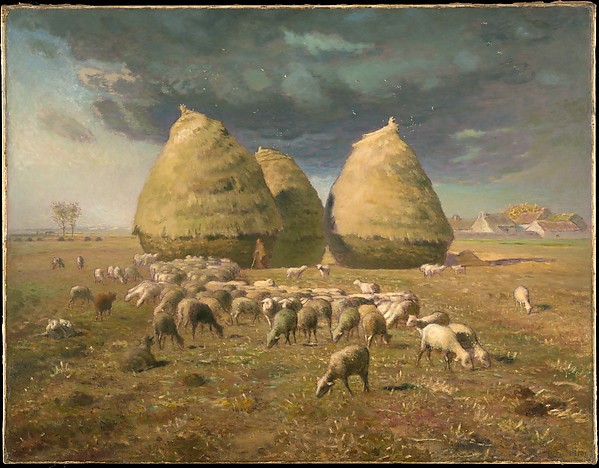
This painting is a fine example of Millet's early output. It depicts a shepherdess looking after her flock, a recurrent subject matter in the artist's oeuvre. Although he also executed a number of portraits, Millet is best known for his scene of the contemporary rural life often interpreted as a reaction against the industrial revolution and the rural depopulation which started as soon as the 1840s. His free brushwork made him one of the most authoritative exponents of the Barbizon school.
Victoria and Albert Museum
Oplysninger
- Inventarnummer
- CAI.48
Hvad det viser
I kataloget
Kilder
- Victoria and Albert Museum
- Billede: Victoria and Albert Museum — © Victoria and Albert Museum, London
Imens i livet hos Jean François Millet
Hele livet1848
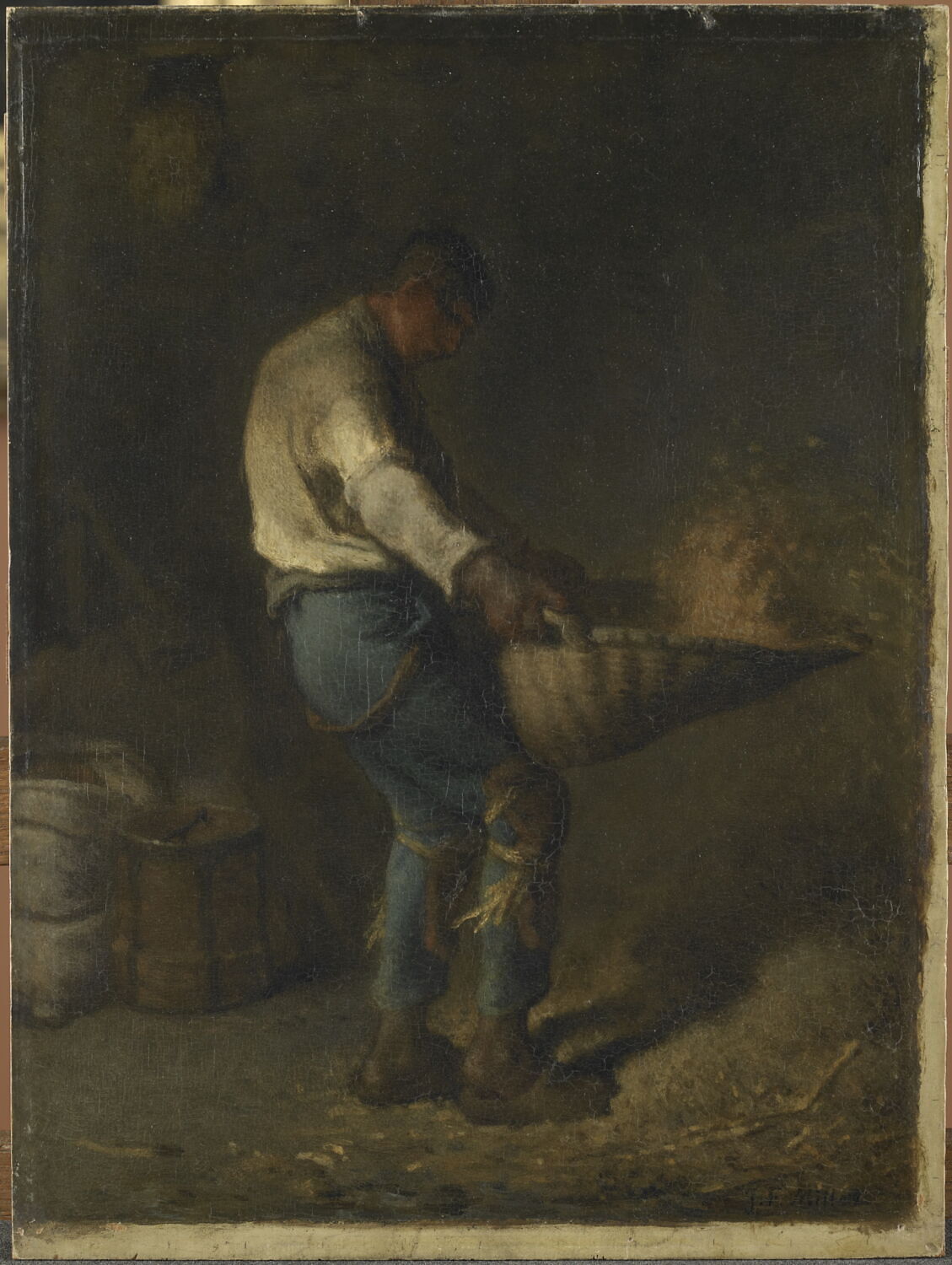
The government buys “The Winnower”
In 1848 his “Winnower” was bought by the government.
1849
“Shepherdess Sitting at the Edge of the Forest”
At the Salon of 1849 he exhibited “Shepherdess Sitting at the Edge of the Forest”, a very small oil painting that marked a turning away from earlier idealised pastoral subjects in favour of a more realistic and personal approach.
1849
The move to Barbizon
In June 1849 Millet settled in Barbizon with Catherine and their children.
1850
An arrangement with Alfred Sensier
In 1850 Millet entered into an arrangement with Sensier, who provided the artist with materials and money in return for drawings and paintings, while Millet remained free to sell work to other buyers.
1850
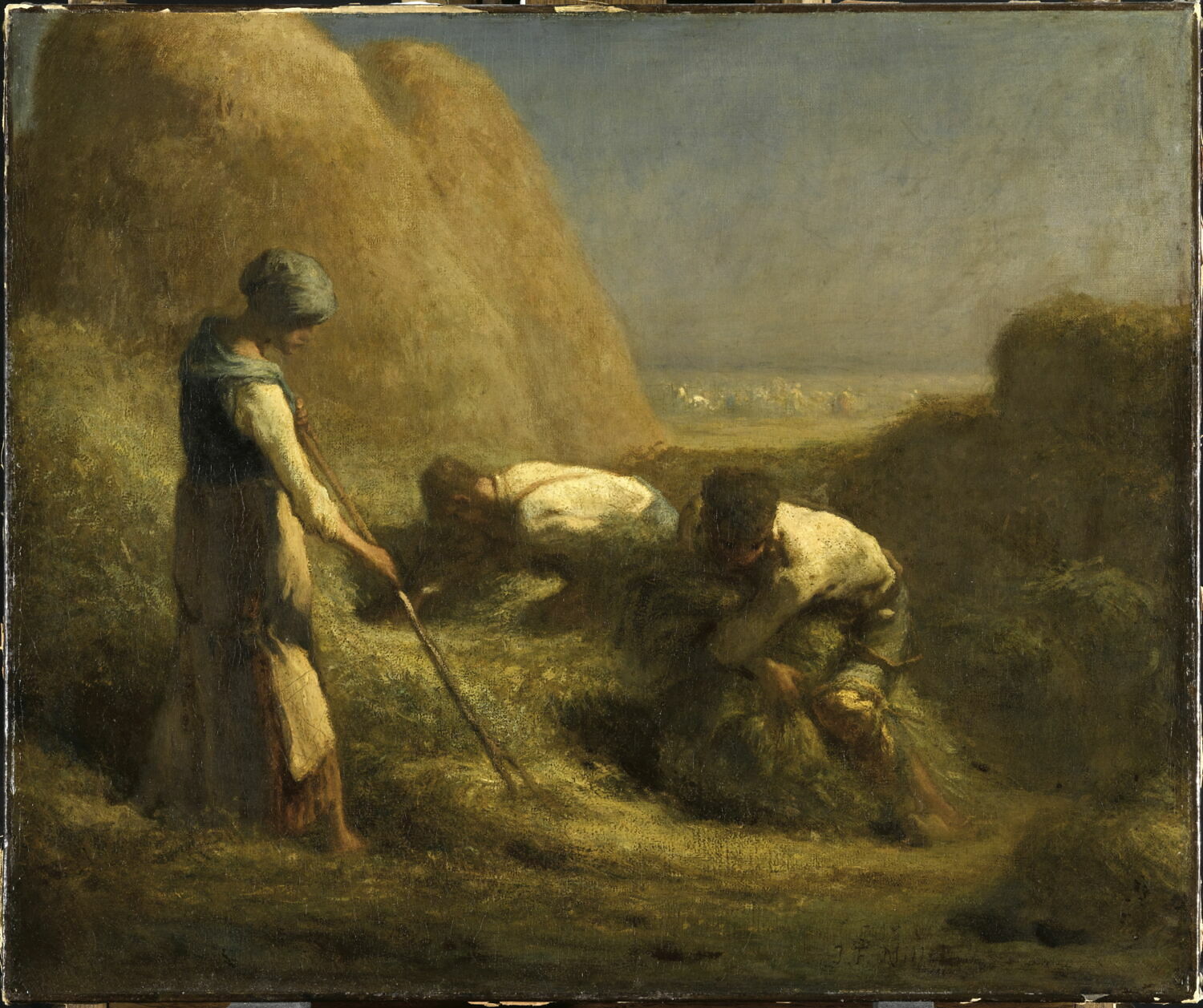
The Salon of 1850: “The Sower” and “Haymakers”
At that year’s Salon he exhibited “Haymakers” and “The Sower”, his first major masterpiece and the earliest of the iconic trio of paintings that also included “The Gleaners” and “The Angelus”.
1853
First official recognition: a Salon medal in 1853
“Harvesters Resting” was the first work to garner him official recognition, a second-class medal at the Salon of 1853.