ART WIKI32.963 udstillet
KortSamlingKunstnereMuseerUdstillingerJournal
Log ind

ART WIKI

Hvor mesterværket hænger, og hvornår man bliver lukket ind.

Samlinger: Art Institute of Chicago, Det Russiske Museum, Eremitagen, Getty Villa, Harvard Art Museums, Hirshhorn Museum and Sculpture Garden, J. Paul Getty Museum, Louvre, Metropolitan Museum of Art, Minneapolis Institute of Art, Museum of Modern Art, National Gallery of Art, National Museum of Asian Art, National Portrait Gallery (Smithsonian), Pusjkinmuseet, Rijksmuseum Amsterdam, Smithsonian American Art Museum, Statens Museum for Kunst, The Cleveland Museum of Art, Tretjakovgalleriet, Victoria and Albert Museum, Whitney Museum of American Art, Ruslands statskatalog over museumsfonden (274 museer), Europeana (19 museer), Wikidata (6 museer), Paris Musées (12 museer) og Joconde, det franske kulturministeriums museumsdatabase (495 museer). Billederne tilhører deres rettighedshavere.

Afsnit

  • Kort
  • Søgning
  • Samling
  • Mesterværker
  • Udstillet nu
  • Kunstnere

Mere

  • Museer & gallerier
  • Udstillinger
  • Journal
  • Hvor data kommer fra
  • Privatliv & cookies
ForsideKortKatalog
  1. Samling/
  2. Art Institute of Chicago/
  3. The Philosopher's Conquest
The Philosopher's Conquest, Giorgio de Chirico, 1913–14
Giorgio de Chirico, portrætGiorgio de ChiricoItalien, 1888–1978

The Philosopher's Conquest

1913–14 · Painting

Må man se det?

Ja, det tager imod

Art Institute of Chicago

Chicago, USA

Sal396

Udstillet for publikum. Hvem der står inde for det, står nedenfor.

Kontrolleret
i forgårs
Uændret siden
19. aug. 2026
Kilde
Museet
På kortetMuseets side

Om maleriet

The work of Giorgio de Chirico represents an unexpected form of classicism in early avant-garde painting. This canvas, one of six in a series, combines a Mediterranean cityscape with still-life objects. Familiar elements appear in many of de Chirico’s paintings like pieces of a mysterious puzzle: a classical arcade, oddly oversize artichokes, a cannon and cannonballs, a clock, an industrial brick chimney, a monumental tower, a running train, and a square-rigged sailing ship. Here the stage set for this extraordinary juxtaposition of objects is an Italian piazza, virtually deserted except for the menacing shadowy figures outside the edge of the scene.

Læs videre

De Chirico represented objects with a matter-of-fact, though intentionally crude, precision. He painted his scenes flatly, in bright colors, and illuminated them with a cold white light. Rendered in this clear style, works like The Philosopher’s Conquest seem rife with meaning, though they remain resolutely enigmatic. Indeed, by juxtaposing incongruous objects, the artist sought to produce a metaphysical quality, what he called “art that in certain aspects resembles . . . the restlessness of myth.” De Chirico’s works would profoundly affect the Surrealists, who in the 1920s and 1930s attempted to portray dreams and images of the subconscious in their work.

This is one of thirty-five works that comprise the Winterbotham Collection. Click here to learn more about the collection.

Art Institute of Chicago · CC BY 4.0

Oplysninger

1913–14 · 25 år gammel
18881978
Inventarnummer
1939.405

Hvad det viser

ArtichokesClocksTrainsSmokestacksJoseph Winterbotham Collection

I kataloget

MalerierOlieItaliensk maleriModernisme1900-talletItalien

Kilder

  • Art Institute of Chicago
  • Billede: Art Institute of Chicago — © the artist or rights holder

Imens i livet hos Giorgio de Chirico

Hele livet
  1. July 1911

    Moving to Paris, to his brother Andrea

    In July 1911 de Chirico moves to Paris, where he joins his younger brother Andrea, who would become the writer, painter and composer known as Alberto Savinio. The move is sometimes dated to 1910.

  2. July 1911

    Turin: the city's “metaphysical aspect”

    In July 1911, on his way to Paris, de Chirico spends a few days in Turin; he is profoundly moved by what he calls the “metaphysical aspect” of the city, especially the architecture of its archways and piazzas.

  3. 1912

    First shows at the Salon d'Automne

    From 1912 de Chirico takes part in the exhibitions of the Salon d'Automne: through his brother he meets Pierre Laprade, a member of the jury, and shows three works, among them “The Enigma of the Oracle” and a self-portrait.

  4. 1913

    The first sale: “The Red Tower”

    In 1913 de Chirico exhibits at the Salon des Indépendants and the Salon d'Automne; his work is noticed by Pablo Picasso and Guillaume Apollinaire, and “The Red Tower” becomes the first painting he sells.

  5. 1914

    A contract with the dealer Paul Guillaume

    In 1914, through Apollinaire, de Chirico meets the art dealer Paul Guillaume, with whom he signs a contract for his artistic output.

  6. May 1915

    Return to Italy and the hospital at Ferrara

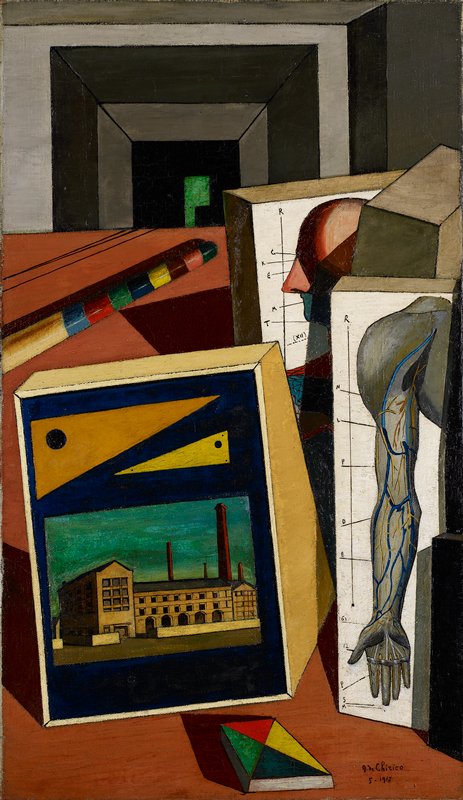
    At the outbreak of the First World War de Chirico returns to Italy; on his arrival in May 1915 he enlists in the army but is considered unfit for work and assigned to the hospital at Ferrara. The shop windows of the town inspire a series of paintings featuring biscuits, maps and geometric constructions in indoor settings.
Mere af Giorgio de Chirico

Alle værker
The Scholar's Playthings, Giorgio de Chirico, 1917

The Scholar's Playthings

1917 · Minneapolis Institute of Art

The Serenity of the Scholar, Giorgio de Chirico, Paris, April-May 1914

The Serenity of the Scholar

Paris, April-May 1914 · Museum of Modern Art

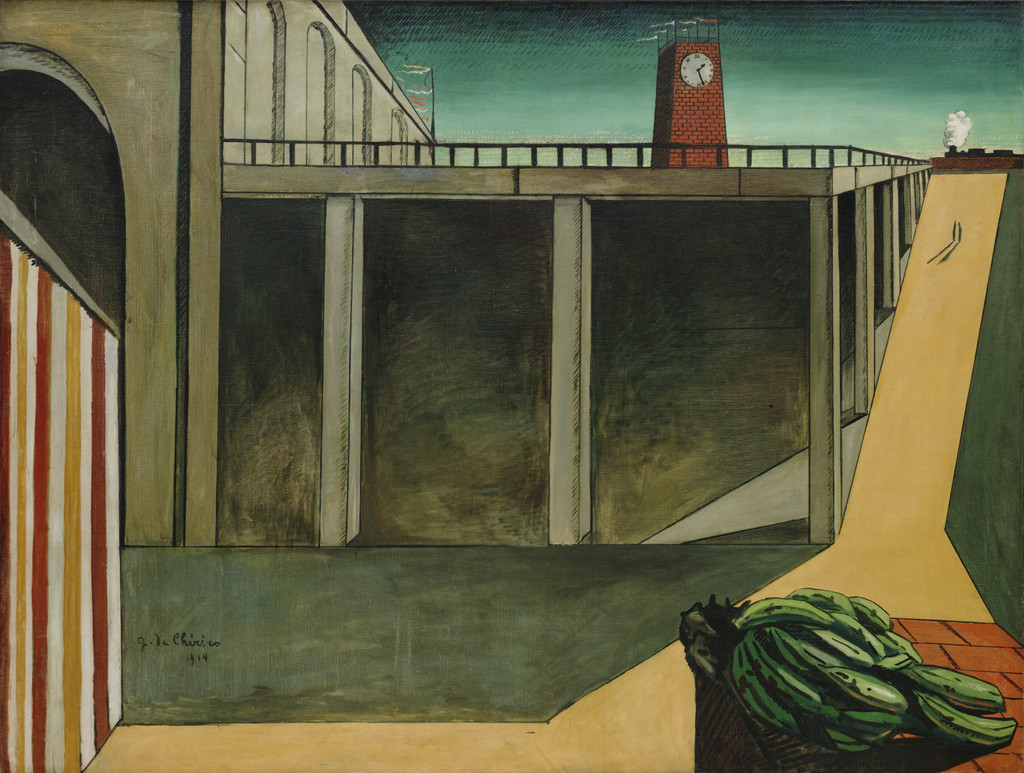
Gare Montparnasse (The Melancholy of Departure), Giorgio de Chirico, Paris, early 1914

Gare Montparnasse (The Melancholy of Departure)

Paris, early 1914 · Museum of Modern Art

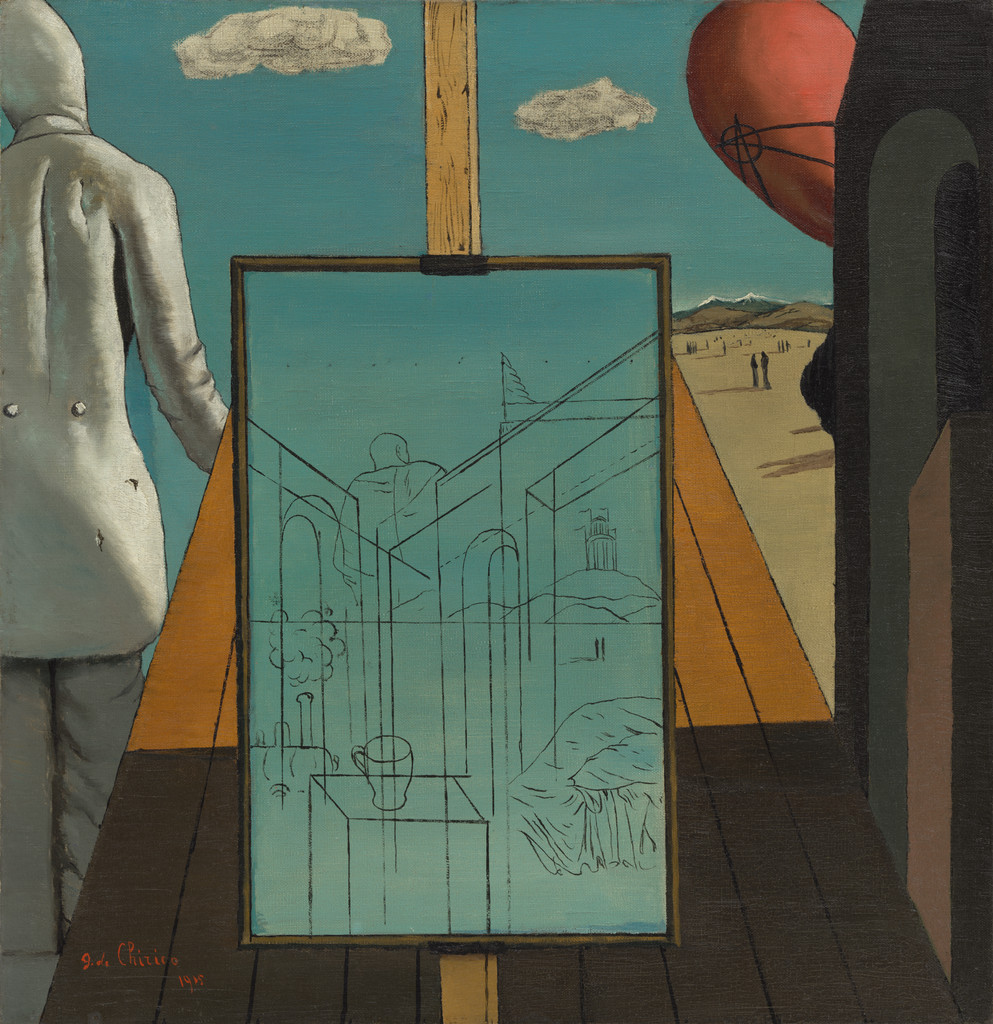
The Double Dream of Spring, Giorgio de Chirico, Paris, January-May 1915

The Double Dream of Spring

Paris, January-May 1915 · Museum of Modern Art

Untitled, Giorgio de Chirico, c. 1926

Untitled

c. 1926 · Art Institute of Chicago

Меланхолия поэта, Giorgio de Chirico, 20th century

Меланхолия поэта

20th century · Pusjkinmuseet

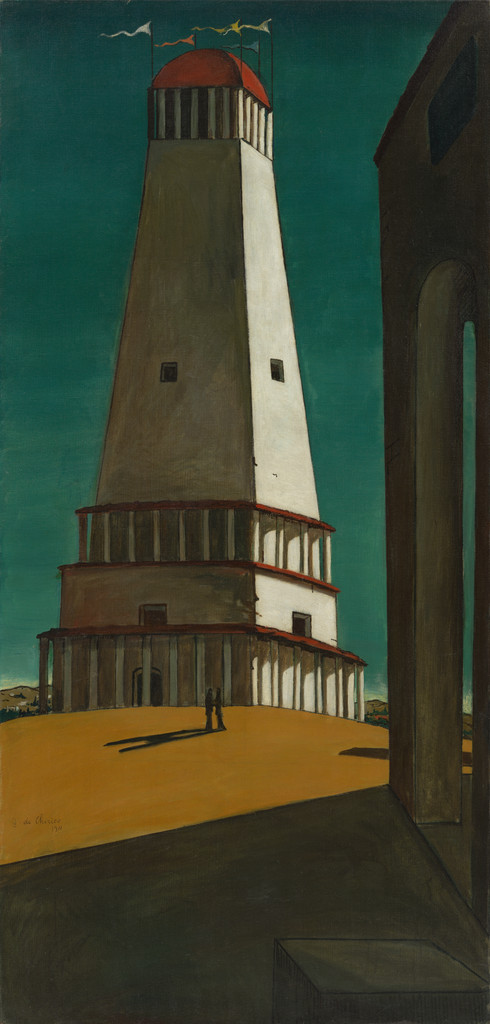
The Nostalgia of the Infinite, Giorgio de Chirico, Paris 1912-13? (dated on painting 1911)

The Nostalgia of the Infinite

Paris 1912-13? (dated on painting 1911) · Ikke udstillet · Museum of Modern Art

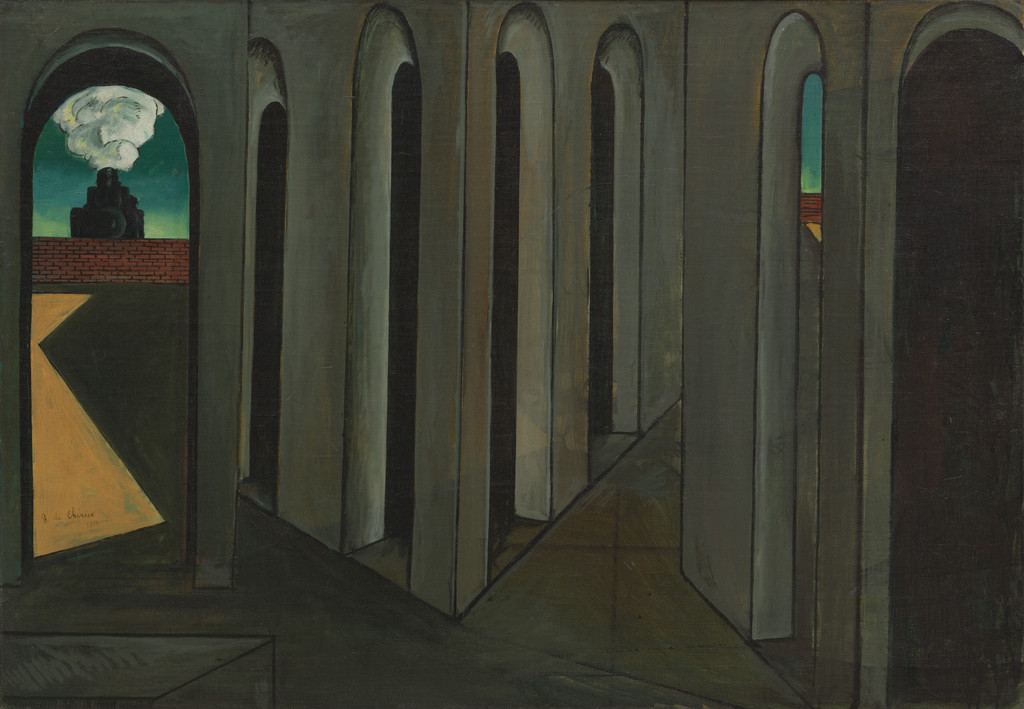
The Anxious Journey, Giorgio de Chirico, Paris, spring-summer 1913

The Anxious Journey

Paris, spring-summer 1913 · Ikke udstillet · Museum of Modern Art

Naboer på Art Institute of Chicago

Museets side
The Bedroom, Vincent van Gogh, 1889

Vincent van Gogh

The Bedroom, 1889

A Sunday on La Grande Jatte — 1884, Georges Seurat, 1884–86, border added 1888–89

Georges Seurat

En søndag eftermiddag på øen La Grande Jatte, 1884–86, border added 1888–89

Paris Street; Rainy Day, Gustave Caillebotte, 1877

Gustave Caillebotte

Gade i Paris på en regnvejrsdag, 1877

Two Sisters (On the Terrace), Pierre-Auguste Renoir, 1881

Pierre-Auguste Renoir

To søstre, 1881

The Basket of Apples, Paul Cézanne, c. 1893

Paul Cézanne

The Basket of Apples, c. 1893

Stacks of Wheat (End of Summer), Claude Monet, 1890–91

Claude Monet

Stacks of Wheat (End of Summer), 1890–91

American Gothic, Grant Wood, 1930

Grant Wood

American Gothic, 1930

Nighthawks, Edward Hopper, 1942

Edward Hopper

Nighthawks, 1942