 Jackson PollockUSA, 1912–1956
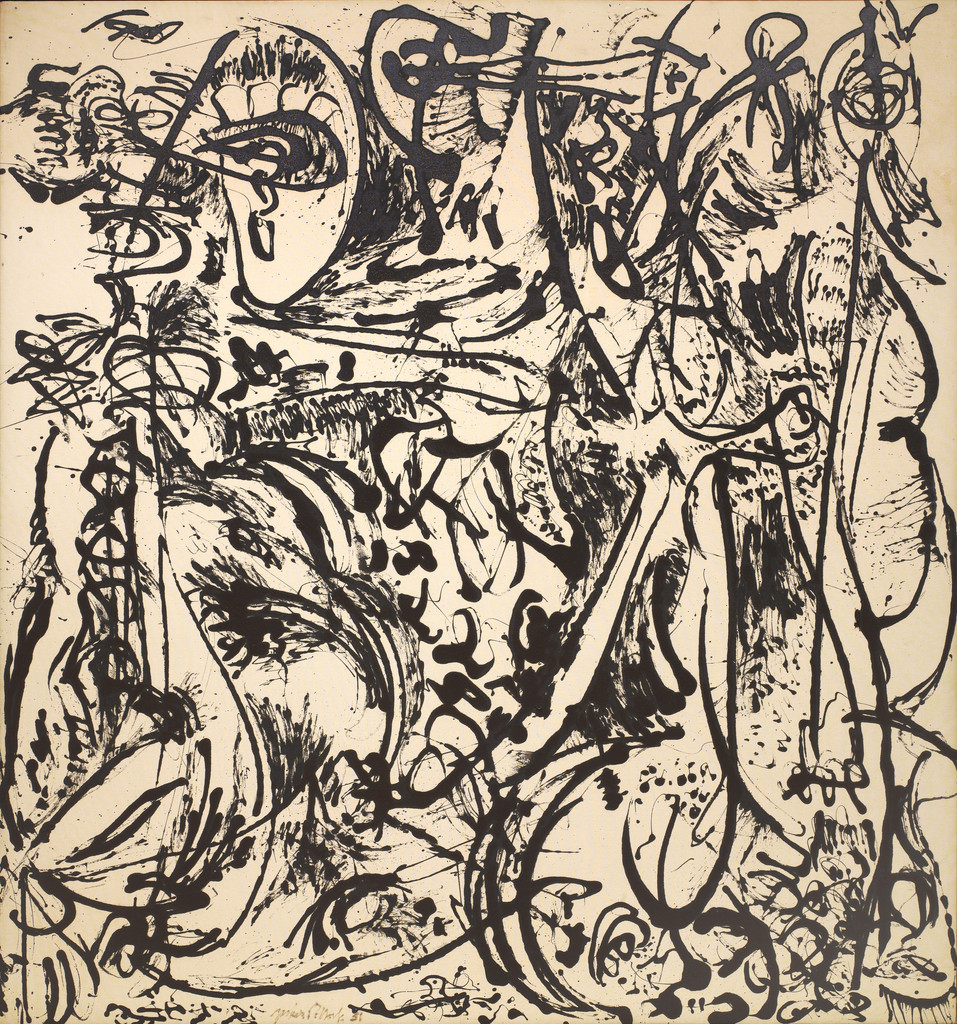
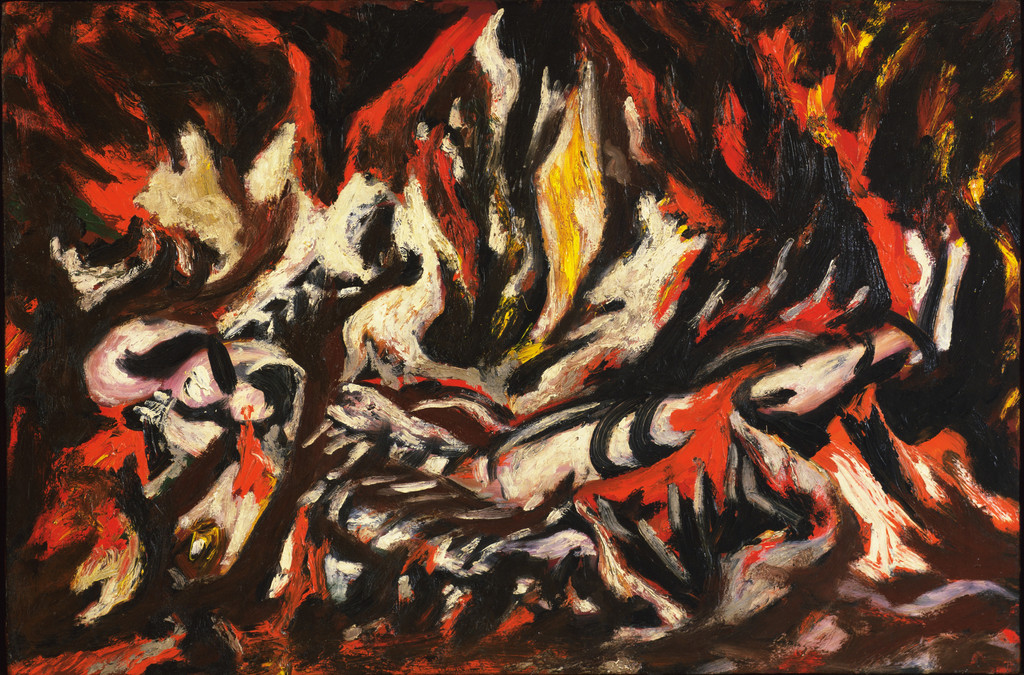
The Flame
Kan det ses?
Ikke udstillet lige nu
Hvor er »The Flame« i dag? Samling: Museum of Modern Art, New York City. Ikke udstillet lige nu. Kontrolleret 10. november 2026.

New York City, USA
Det hører til samlingen, men er ikke udstillet for tiden.
- Kontrolleret
- Kilde
- Museet
Om maleriet
Flammen, lavet af Jackson Pollock omkring 1934-1938, tilhører samlingen på Museum of Modern Art i New York. Flammer skjuler delvis det, der ligner et skelet nær forgrunden. Scenen bygger sandsynligvis på Orozcos vægmalerier på Dartmouth College, som Pollock besøgte i 1936. Oliemaling dækker lærred monteret på fiberplade, og sammenflettede former strækker sig gennem kompositionen.
Oplysninger
- Inventarnummer
- 426.1980
I kataloget
Kilder
- Museum of Modern Art
- Billede: Museum of Modern Art — © the artist or rights holder
Imens i livet hos Jackson Pollock
Hele livetearly 1930s
A summer touring the American West with Benton
In the early 1930s Pollock spent a summer touring the Western United States with a fellow art student, Glen Rounds, and their teacher, Benton.
1934
Settles in New York
After travelling widely across the United States in the 1930s, Pollock settled in New York in 1934.
1936
Siqueiros's workshop and liquid paint
In 1936, at an experimental workshop run in New York City by the Mexican muralist David Alfaro Siqueiros, Pollock was introduced to liquid paint. Later, asked how the drip technique came about, he disavowed any link with Siqueiros on several occasions.
summer 1936
Summer at Dartmouth: Orozco's mural
In the summer of 1936 Pollock went to Dartmouth College to study José Clemente Orozco's 3,200-square-foot mural “The Epic of American Civilization”.
1938–1942
Jungian psychotherapy
From 1938 to 1941 Pollock underwent Jungian psychotherapy with Dr. Joseph L. Henderson, and from 1941 to 1942 with Dr. Violet Staub de Laszlo. Henderson engaged him through his art by encouraging him to draw, and Jungian concepts and archetypes found expression in his paintings.
1938–1942
Works for the WPA Federal Art Project
From 1938 to 1942 Pollock worked for the WPA Federal Art Project. During these years he was trying to deal with his long-established alcoholism.