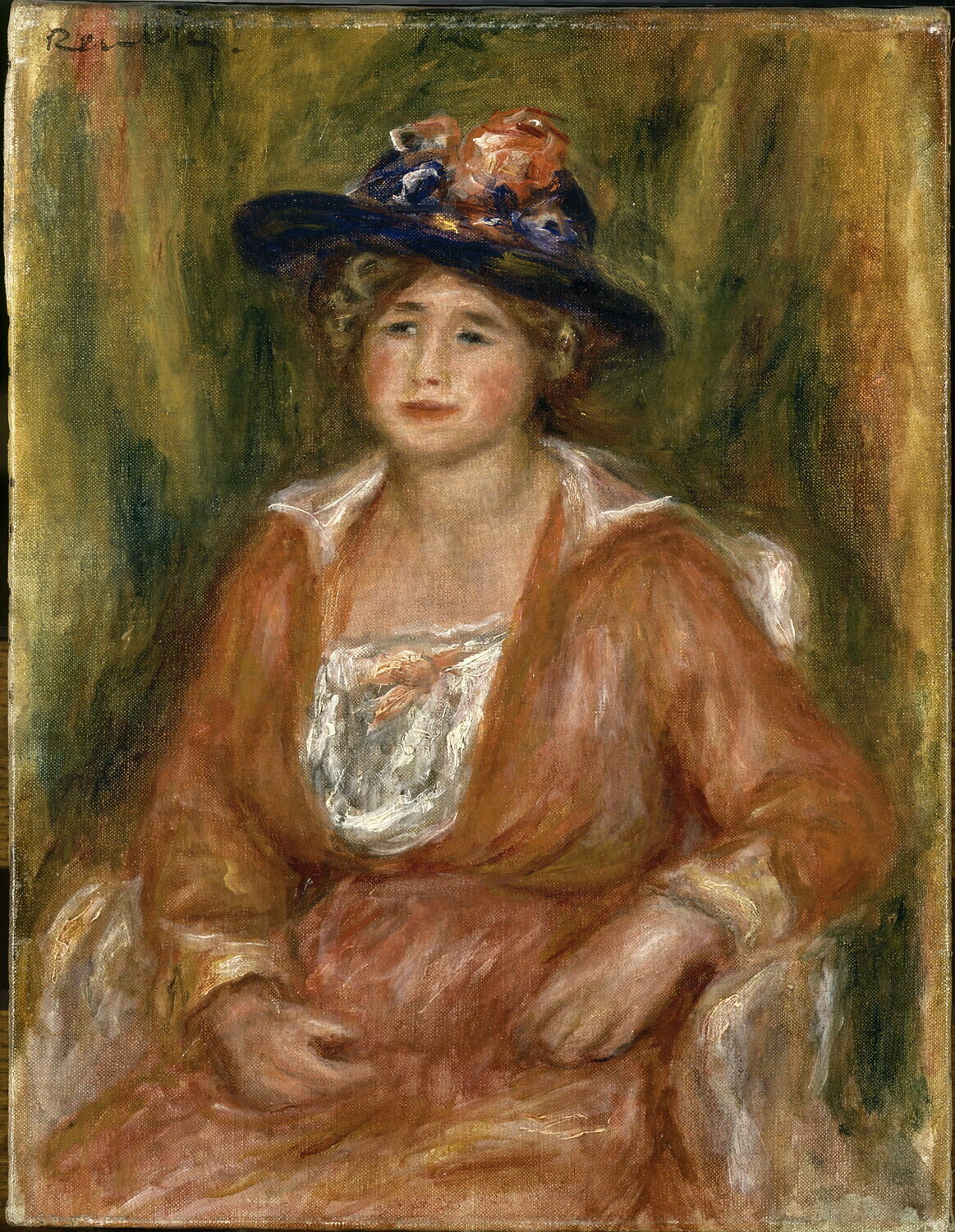
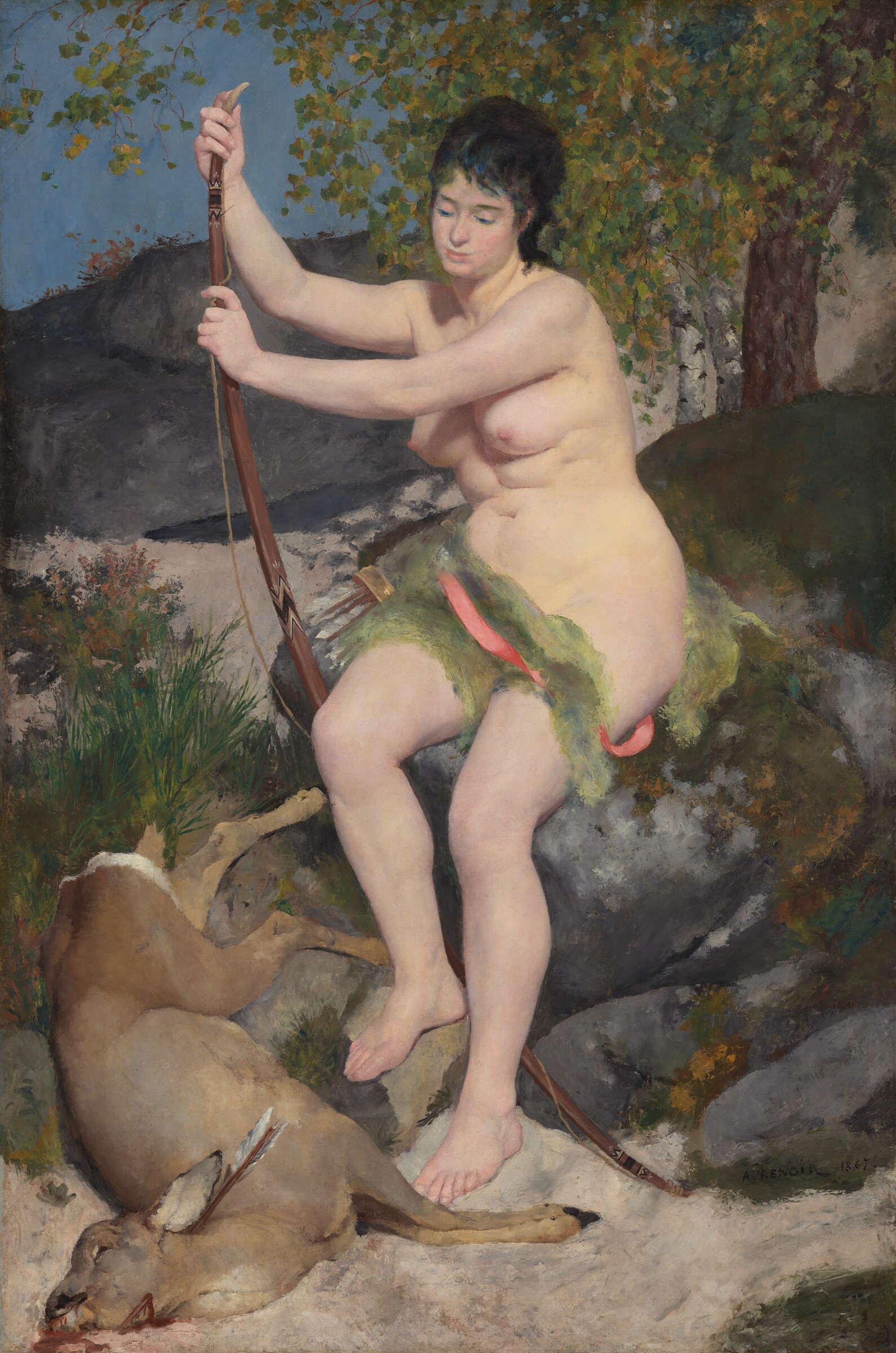
Pierre-Auguste RenoirFrankrig, 1841–1919
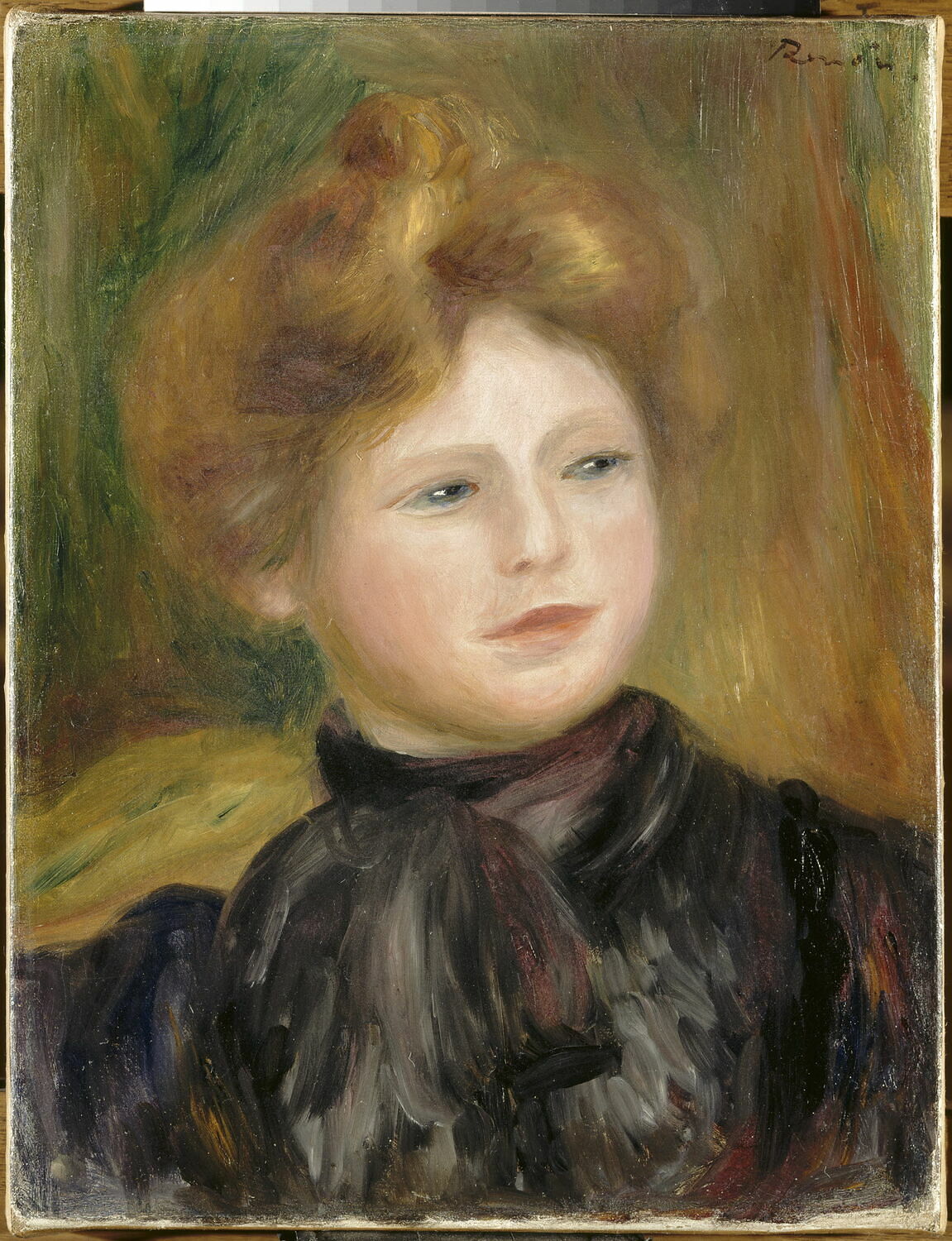
The England pear
Kan det ses?
Ukendt
Hvor er »The England pear« i dag? Samling: Musée d'Orsay, Paris. Ukendt.

Paris, Frankrig
Ejeren er kendt; om værket er udstillet i dag, vides ikke.
- Uændret siden
- Kilde
- Museet
Oplysninger
- Inventarnummer
- RF 2012 5
I kataloget
Kilder
- Wikidata
- Billede: Musée d'Orsay — Pierre-Auguste Renoir · Public domain · Wikimedia Commons
Imens i livet hos Pierre-Auguste Renoir
Hele livet1868
First success: "Lise with a Parasol"
Renoir's first success at the Salon came with the painting "Lise with a Parasol" (1867), for which Lise Tréhot posed.
1873
Founding the society of the future Impressionists
Renoir and his friends created the Anonymous Cooperative Society of Artists, Painters, Sculptors and Engravers — the future Impressionist group.
15 April – 15 May 1874
First Impressionist exhibition
Renoir took an active part in organizing the exhibition and showed a pastel and six paintings, among them "The Dancer" and "La Loge" (The Theater Box). It was at his suggestion that the catalogue carried the title of Monet's painting "Impression, Sunrise," which gave rise to the word "Impressionists."
1879
Triumph at the Salon of 1879
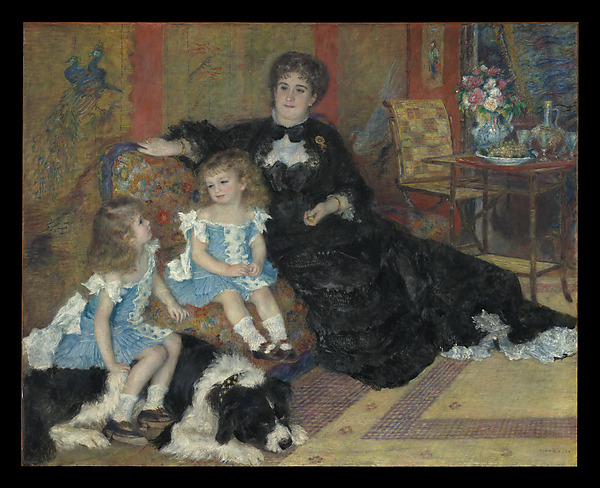
Presenting "Portrait of Madame Charpentier and Her Children" and the full-length "Portrait of the Actress Jeanne Samary," Renoir won universal recognition, and with it financial independence.
1880
Meeting Aline Charigot
Renoir met the young seamstress Aline Charigot — his future wife. His happiness with her colored the works of his so-called "Ingres" period.
1881
Algeria, Madrid, Italy
Renoir traveled to Algeria, the land of Delacroix, then to Madrid to see the works of Velázquez, and to Italy, where he saw Titian in Florence and Raphael in Rome. The journey convinced him that with Impressionism he had "reached the limit," and turned him toward classicism.