William HogarthEngland, 1697–1764
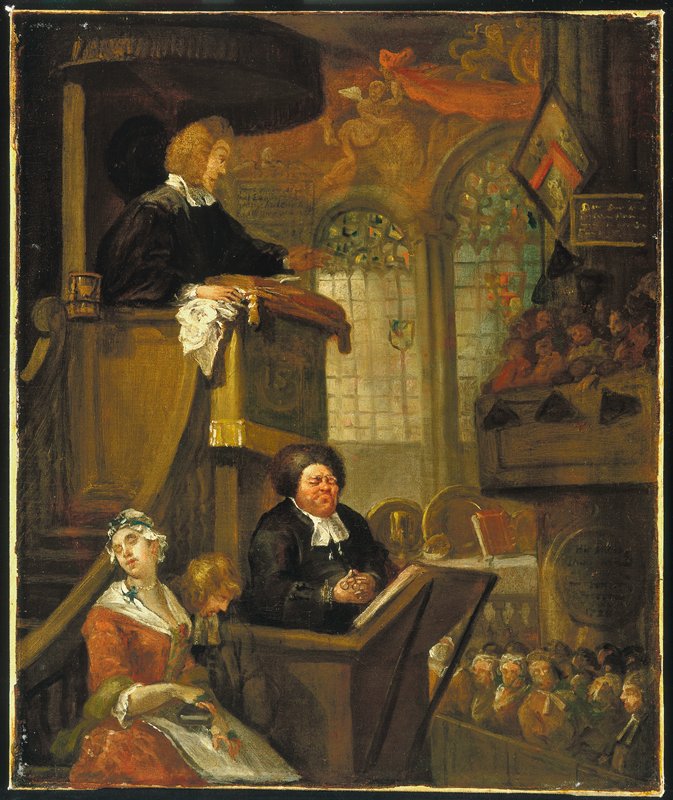
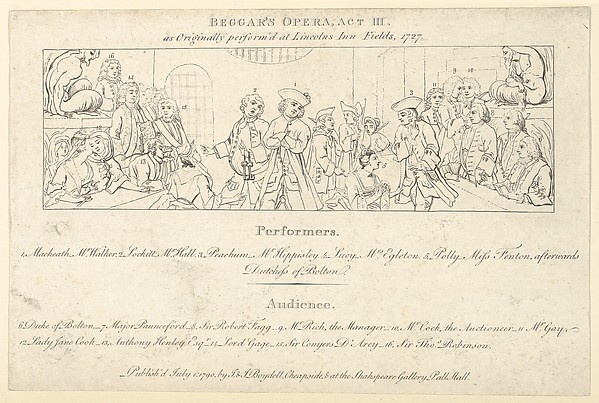
The Beggar's Opera
Kan det ses?
Ikke udstillet lige nu
Hvor er »The Beggar's Opera« i dag? Samling: Metropolitan Museum of Art, New York City. Ikke udstillet lige nu. Kontrolleret 11. november 2026.

New York City, USA
Det hører til samlingen, men er ikke udstillet for tiden.
- Kontrolleret
- Uændret siden
- Kilde
- Museet
Oplysninger
- Inventarnummer
- 32.35(74)
Hvad det viser
I kataloget
Kilder
- Metropolitan Museum of Art
- Billede: Metropolitan Museum of Art — Open Access (CC0)
Imens i livet hos William Hogarth
Hele livet1712–1764 · Virkested
London
1727 – 28 May 1728
A lawsuit against the weaver Morris: “an engraver, and no painter”
In 1727 the tapestry worker Joshua Morris commissioned from Hogarth a design for “The Element of Earth”, but on hearing that he was “an engraver, and no painter” refused the finished work. Hogarth sued him in the Westminster court and won: judgment was given in his favour on 28 May 1728.
until 1728
Initiated as a Freemason
Before 1728 Hogarth was initiated as a Freemason in the lodge at the Hand and Apple Tree Tavern in Little Queen Street, and later belonged to the Carrier Stone Lodge and the Grand Stewards’ Lodge; for the latter he designed the “Hogarth Jewel”, the badge of the Lodge’s Master (the original is now in storage and a replica is worn by the present Master). Freemasonry is also a theme of “Night”, the fourth print of the “Four Times of the Day”.
23 March 1729
A secret wedding to Jane Thornhill
Not hoping for Sir James’s consent — he saw the match as unequal, Hogarth being a rather obscure artist then — William and Jane married in secret at Paddington Church. Jane and her mother helped to reconcile him with his father-in-law: they hung the first paintings of “A Harlot’s Progress” in his house, and on learning the artist’s name Sir James admitted that a man who could produce such pictures could also keep a wife without a dowry.