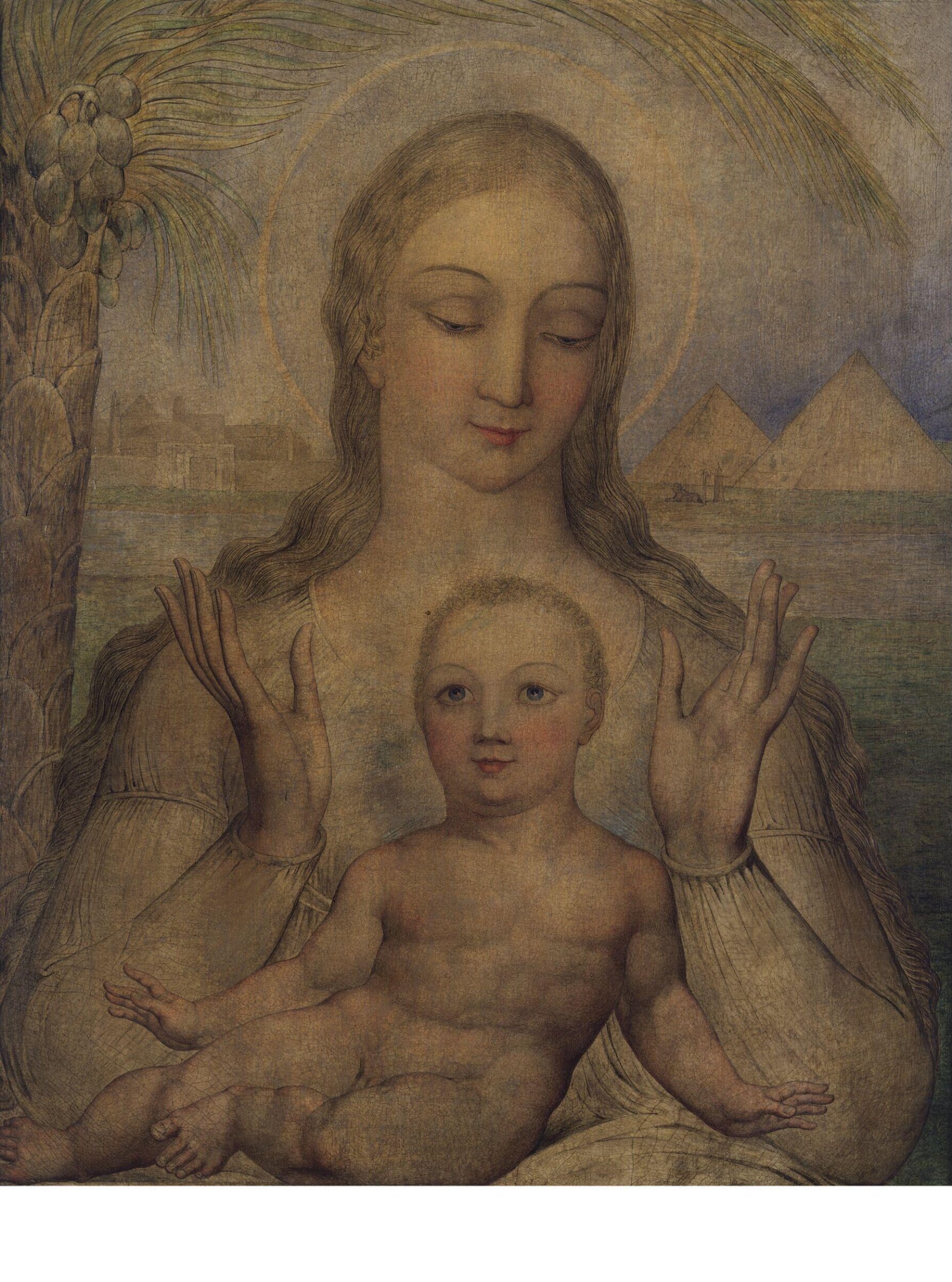
William BlakeStorbritannien, 1757–1827
The Bard, from Gray
Kan det ses?
Ukendt
Hvor er »The Bard, from Gray« i dag? Samling: Tate Gallery, City of Westminster. Om det er udstillet i dag, er ukendt.
City of Westminster, Storbritannien
Ejeren er kendt; om værket er udstillet i dag, vides ikke.
- Uændret siden
- Kilde
- Museet
Om maleriet
Barden, efter Gray, malet af William Blake sandsynligvis i 1809, tilhører Tate i London. En overlevende walisisk bard står over floden Conwy med spøgelserne af sine myrdede kammerater og trodser Edvard 1. Motivet stammer fra Thomas Grays digt. Blake arbejdede i tempera og guld på lærred. Senere konservering ændrede kridt- og limgrunden, mens selve malingen mørknede. Den røde blodstribe har holdt sig bedre end de blå partier.
Oplysninger
- Inventarnummer
- N03551
I kataloget
Udstillingshistorik
Om det er udstillet i dag, er ukendt
Tate Gallery · 13. okt. 2026 — nu · Ubekræftet
Om værket var udstillet, vides ikke
National Gallery · 29. sep. 2026 — 13. okt. 2026 · Ubekræftet
Kilder
- Wikidata
- Billede: Tate Gallery — William Blake · Public domain · Wikimedia Commons
Imens i livet hos William Blake
Hele livet1780–1808
Exhibits six times at the Royal Academy
Despite his antagonism towards Reynolds, Blake submitted works to the Royal Academy on six occasions between 1780 and 1808.
oktober 1803 – 1820 · Bopæl
South Molton Street
c. 1808
Polemical annotations to Reynolds's “Discourses”
Around 1808 Blake gave vigorous expression to his views on art in an extensive series of polemical annotations to Sir Joshua Reynolds's “Discourses”, denouncing the Royal Academy as a fraud and proclaiming that to generalise is to be an idiot.
1809
An exhibition in his brother's shop: nothing sold
Blake set up an independent exhibition in his brother's haberdashery shop at 27 Broad Street in Soho to market his version of “The Canterbury Pilgrims” along with other works. It was very poorly attended, sold none of the temperas or watercolours, and its only review, in The Examiner, was hostile.
1809
The “Descriptive Catalogue”: an analysis of Chaucer
For the exhibition Blake wrote his “Descriptive Catalogue” (1809), which contains what Anthony Blunt called a “brilliant analysis” of Chaucer and is regularly anthologised as a classic of Chaucer criticism; it also contains detailed explanations of his other paintings.