Alberto GiacomettiSchweiz, 1901–1966
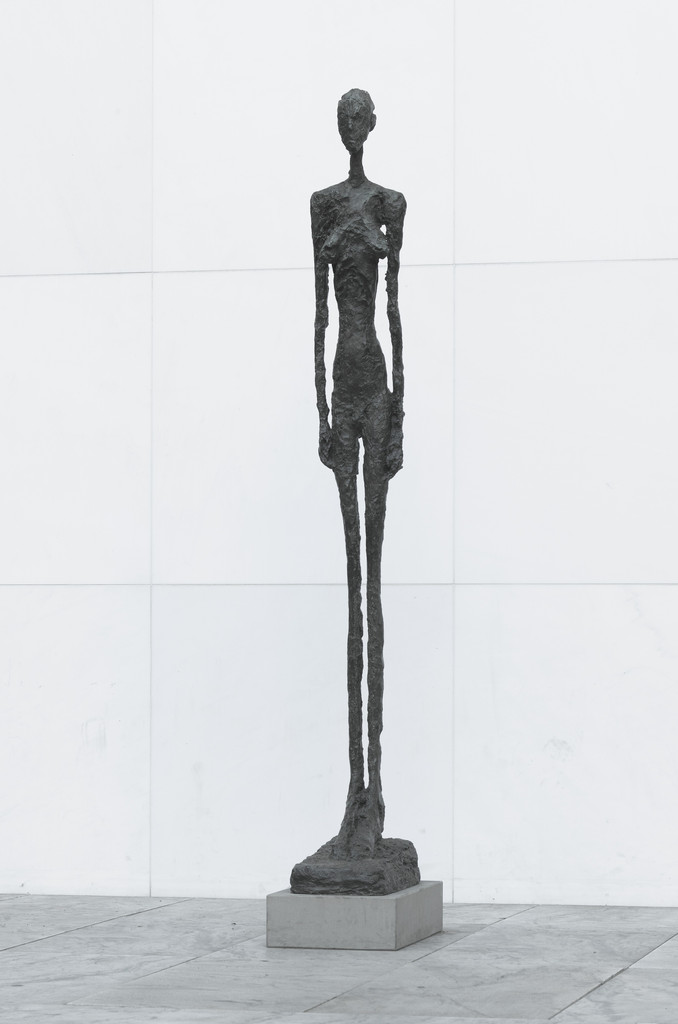
Tall Figure
Må man se det?
Ja, det tager imod

Art Institute of Chicago
Sal398Chicago, USA
Udstillet for publikum. Hvem der står inde for det, står nedenfor.
- Kontrolleret
- Uændret siden
- Kilde
- Museet
Om skulpturen
After first producing work associated with Surrealism, Alberto Giacometti began making his distinctive elongated, skeletal bronze sculptures in Paris in the late 1940s. His works struck a powerful chord with the Existentialist writer Jean-Paul Sartre, who saw the isolated figures as a visualization of his own ideas about the loneliness and ultimate absurdity of the human condition at the end of World War II. For his part, Giacometti insisted that he was simply attempting to convey his own experience of looking at people, though his method of working was sympathetic to Sartre’s response. The artist often reworked his sculptures over long periods of time, building up a clay model and then stripping it down, until he gradually eroded the figure’s body to its essential, fragile core.
Art Institute of ChicagoCC BY 4.0
Oplysninger
- Inventarnummer
- 1959.21
Hvad det viser
I kataloget
Kilder
- Art Institute of Chicago
- Billede: Art Institute of Chicago — © the artist or rights holder
Imens i livet hos Alberto Giacometti
Hele livet1940s
The war: refuge in Switzerland
He spent the years of the Second World War in Switzerland, living in Geneva.
1946
Meets Annette Arm
In Switzerland in 1946 Giacometti met Annette Arm, a secretary for the Red Cross; they married on 19 July 1949.
1949
Married: Annette Giacometti
c. 1949
After the wedding the figures grow, yet grow thinner
After his marriage his tiny sculptures became larger, but the larger they grew, the thinner they became; for the rest of his life Annette was his main female model. His paintings changed in parallel: continually reworked, the figures appear isolated and severely attenuated.