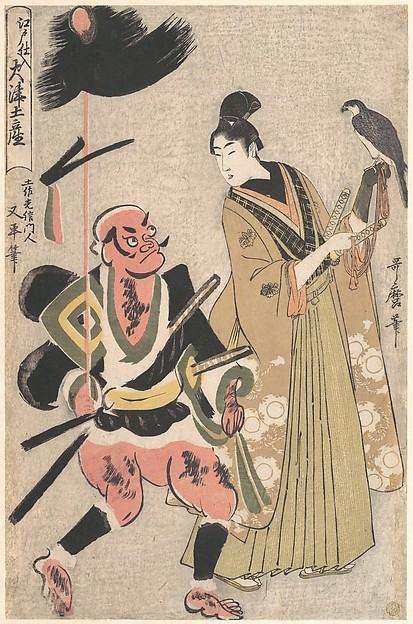
Kitagawa UtamaroJapan, 1754–1806
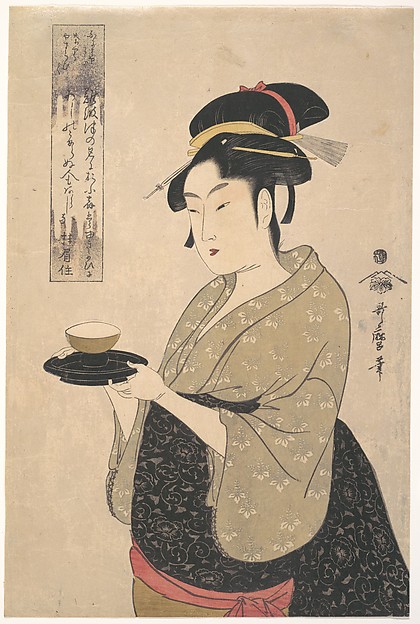
Takashima Ohisa
Kan det ses?
Ja, udstillet nu
Hvor er »Takashima Ohisa« i dag? Art Institute of Chicago, Sal 107, Chicago. Ja, udstillet nu. Kontrolleret 29. september 2026.

Chicago, USA
Åbent nu· til kl. 17.00
Udstillet for publikum.
- Kontrolleret
- Uændret siden
- Kilde
- Museet
Oplysninger
- Inventarnummer
- 1928.1038
I kataloget
Kilder
- Art Institute of Chicago
- Billede: Art Institute of Chicago — CC0
Imens i livet hos Kitagawa Utamaro
Hele livet1790–1801
Tightening censorship: seals on prints
From 1790 prints can be sold only with a censor's seal of approval; over the following decades censorship grows stricter, and violators can receive harsh punishments. From 1799 even preliminary drafts need approval, and in 1801 the works of a group of Utagawa-school offenders, including Toyokuni, are repressed.
c. 1791
Giving up book prints for half-length portraits of beauties
Around 1791 Utamaro gives up designing prints for books and concentrates on single portraits of women shown half-length, rather than the group scenes favoured by other ukiyo-e artists. He was the first in Japanese woodblock printing to use half-length compositions for women's portraits; none of his work from 1790–1792 has survived.
1793
Recognition and the end of the arrangement with Tsutaya
In 1793 Utamaro achieves recognition as an artist, and his semi-exclusive arrangement with the publisher Tsutaya Jūzaburō ends. He then goes on to produce several well-known series featuring women of the Yoshiwara district, and becomes one of the few ukiyo-e artists to win fame throughout Japan in his lifetime.