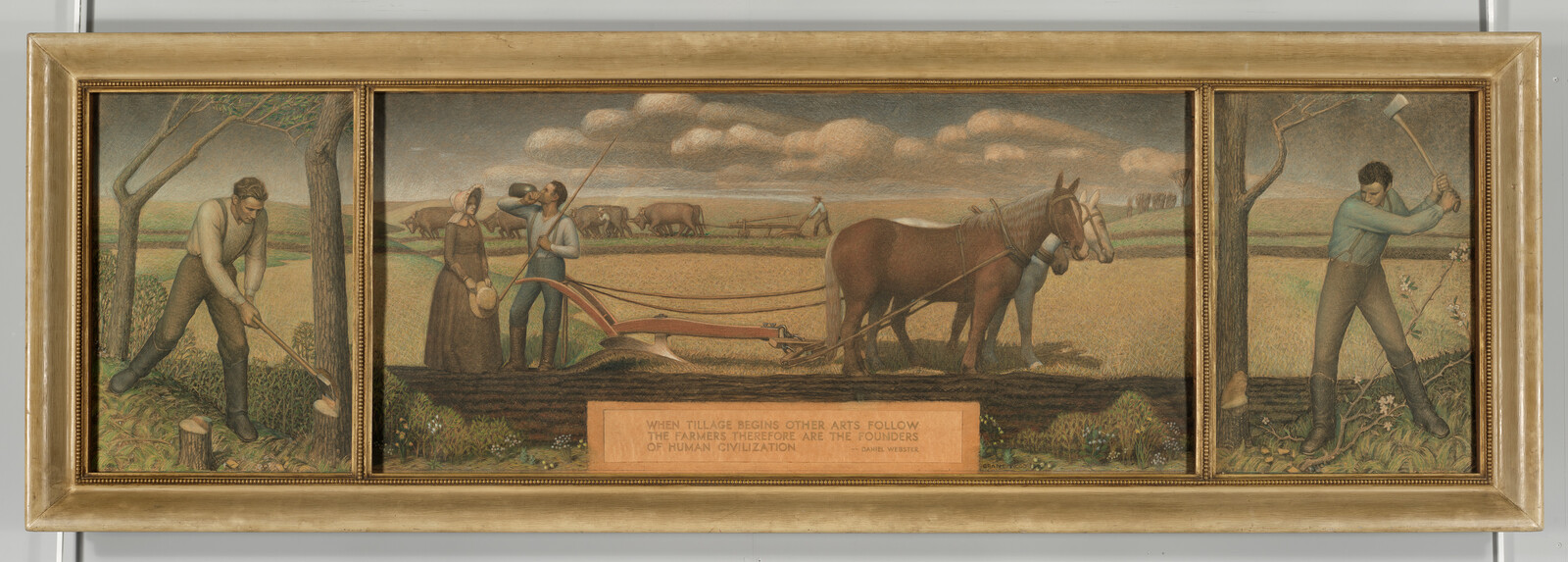
 Grant WoodUSA, 1891–1942
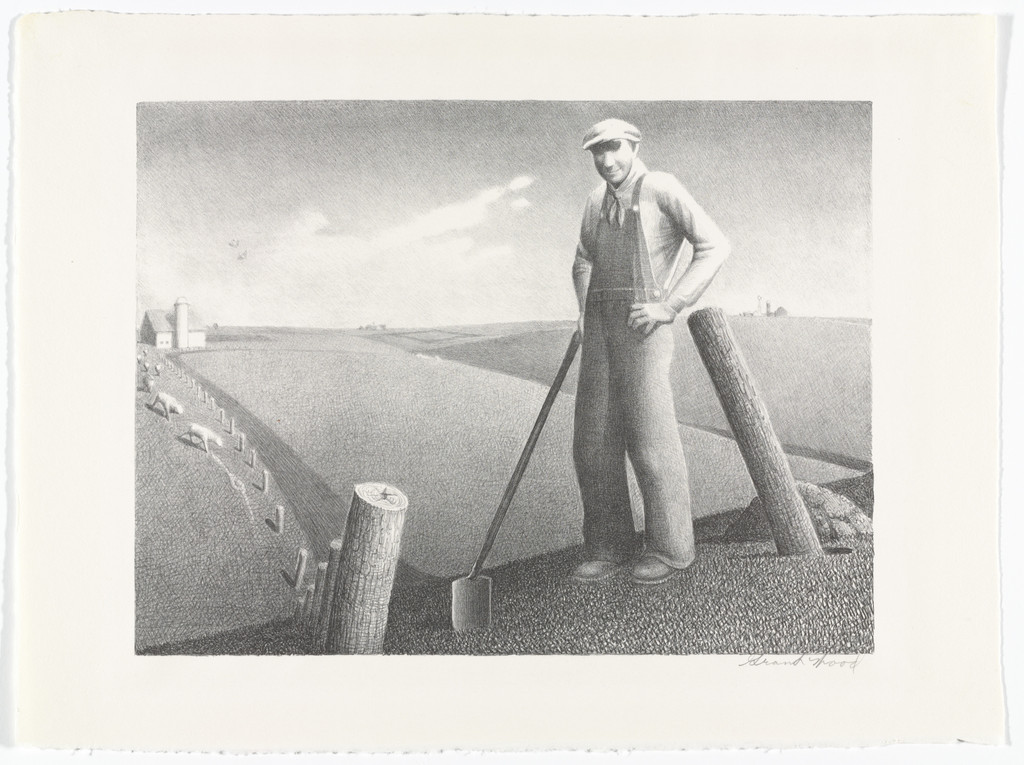
Study for Breaking the Prairie
Må man se det?
Tager ikke imod for tiden

New York City, USA
Det hører til samlingen, men er ikke udstillet for tiden.
- Kontrolleret
- Kilde
- Museet
Oplysninger
- Inventarnummer
- 81.33.2a-c
I kataloget
Kilder
- Whitney Museum of American Art
- Billede: Whitney Museum of American Art — © the artist or rights holder
Imens i livet hos Grant Wood
Hele livet1924–1935
“5 Turner Alley”: a studio in a carriage-house hayloft
From 1924 to 1935 Wood lived with his mother in the hayloft of a carriage house in Cedar Rapids that he had converted into his personal studio; it had no address until Wood made one up: “5 Turner Alley”.
1930s
Helps Curry and Benton return to the Midwest
John Steuart Curry and Thomas Hart Benton, who with Wood are the artists most associated with Regionalism, returned to the Midwest thanks to his encouragement; he helped them find teaching positions at colleges, Curry in Wisconsin and Benton in Missouri.
1934
Director of a New Deal PWAP project in Iowa City
In 1934 Wood was offered a position working and teaching in Iowa City as director of a New Deal Public Works of Art Project; there he assisted other artists and art students in producing a set of murals for Iowa State University in Ames.
1934
The University of Iowa offers him a three-year post
Once his PWAP project ended, the University of Iowa offered Wood a three-year term as Associate Professor of Fine Art; he taught painting at the university’s School of Art until 1941.
1934–1941
A colleague, Lester Longman, tries to get Wood fired
Wood was a closeted homosexual, and a colleague at the university, Lester Longman, made an unsuccessful attempt to have him fired on explicit moral grounds and for his advocacy of regionalism. The university administration dismissed the allegations.
1934–1941
Mentor to students, among them Elizabeth Catlett
At the university Wood supervised mural-painting projects, mentored students including Elizabeth Catlett, produced works of his own and became a key part of the university’s cultural community.

.jpg?width=1280)