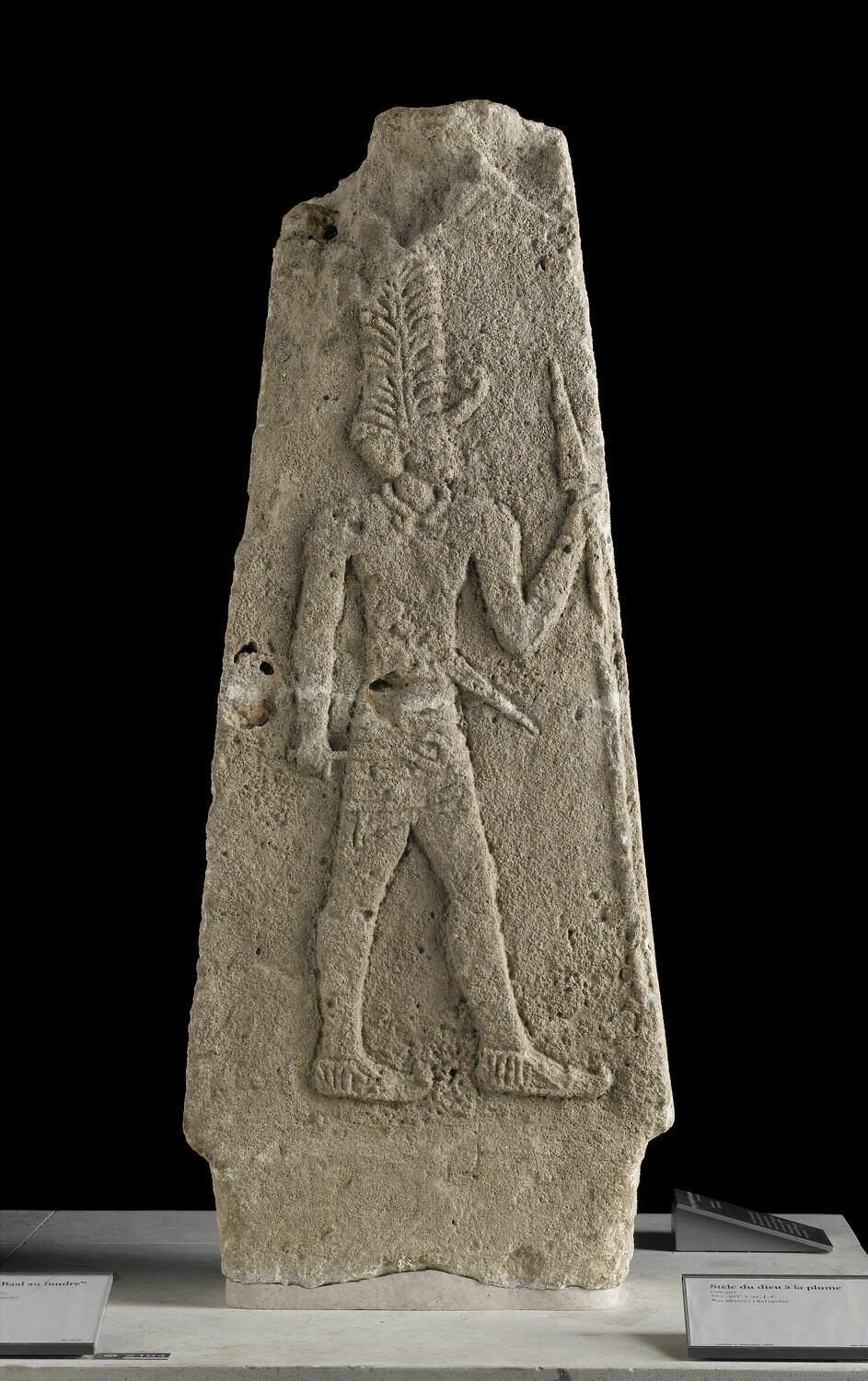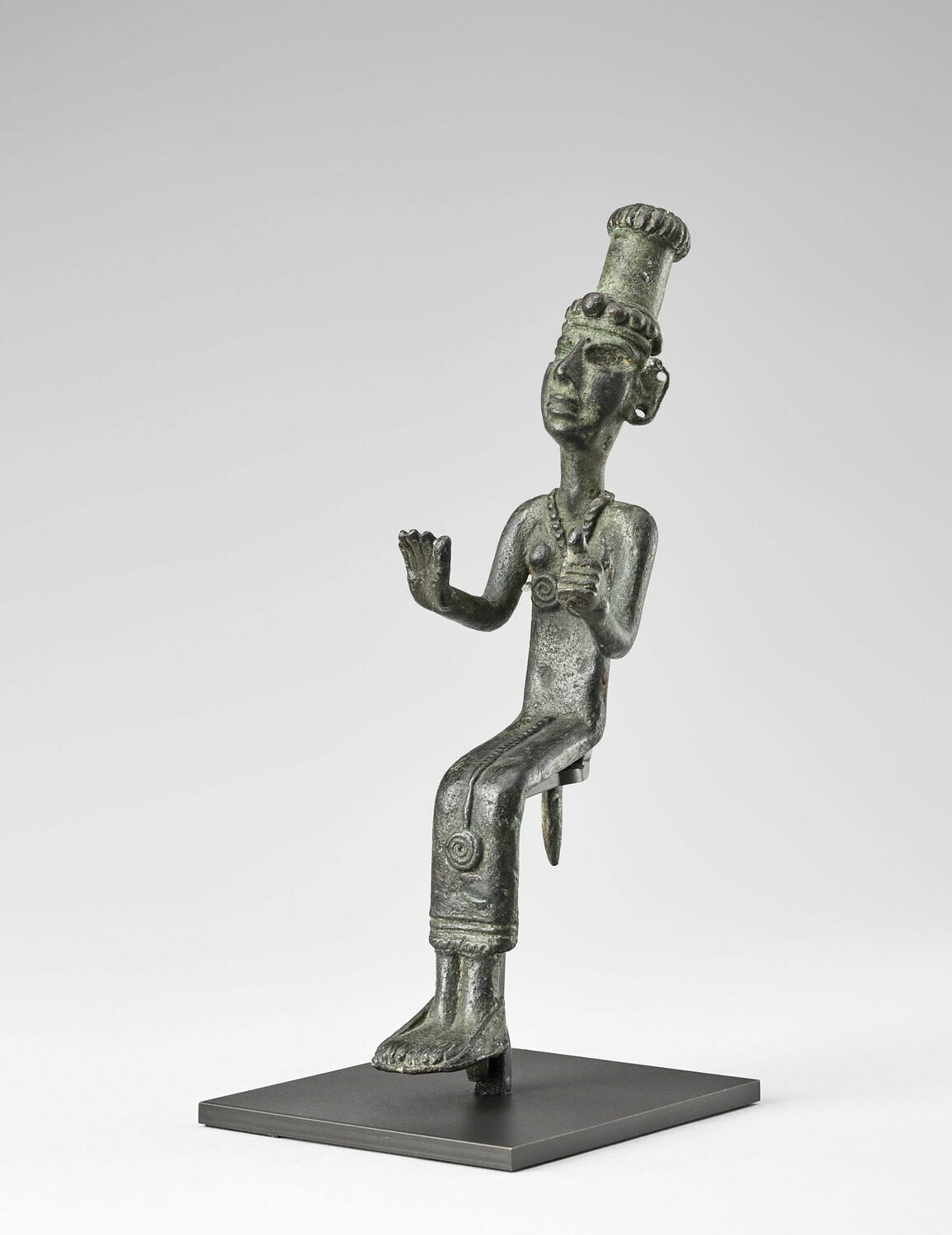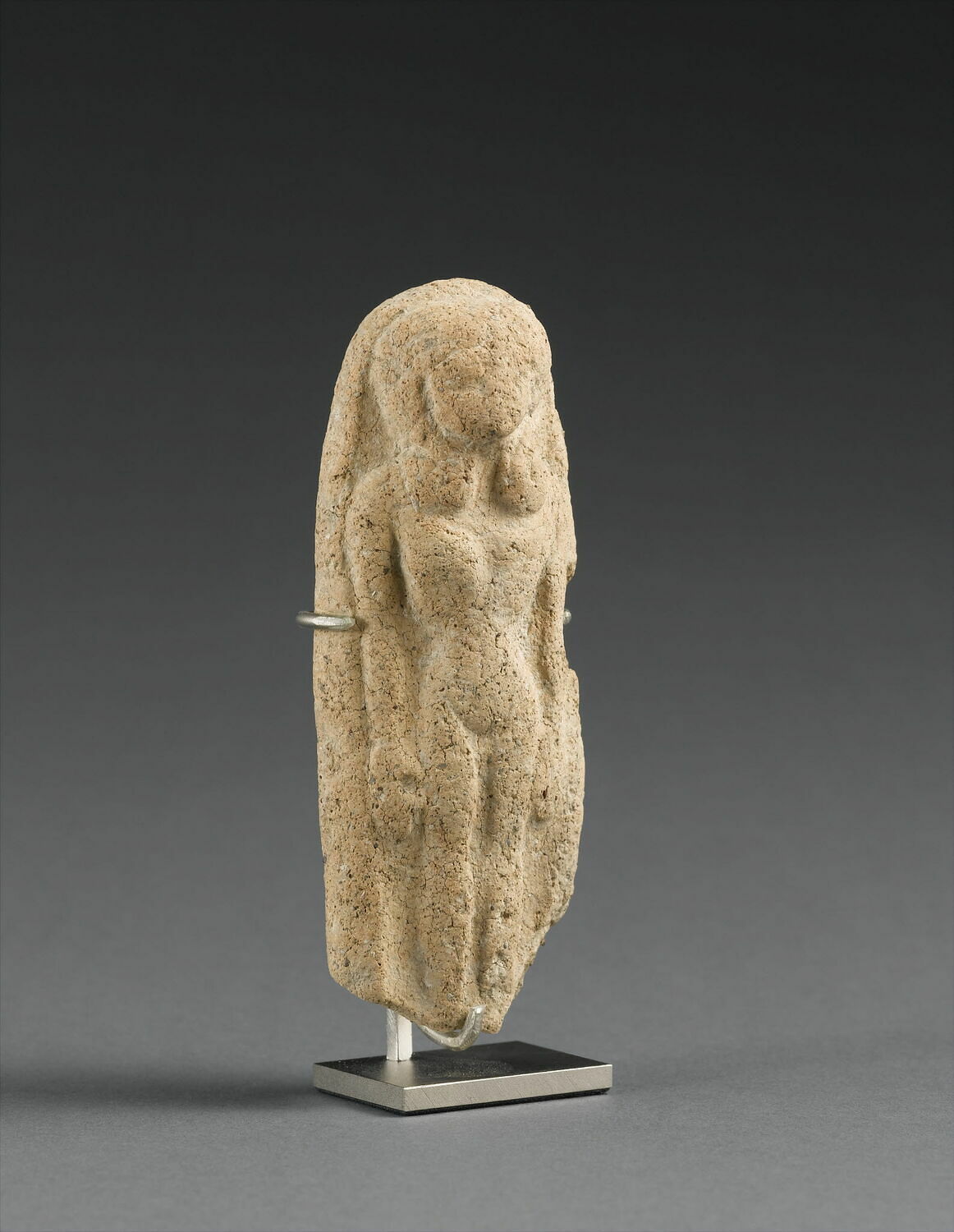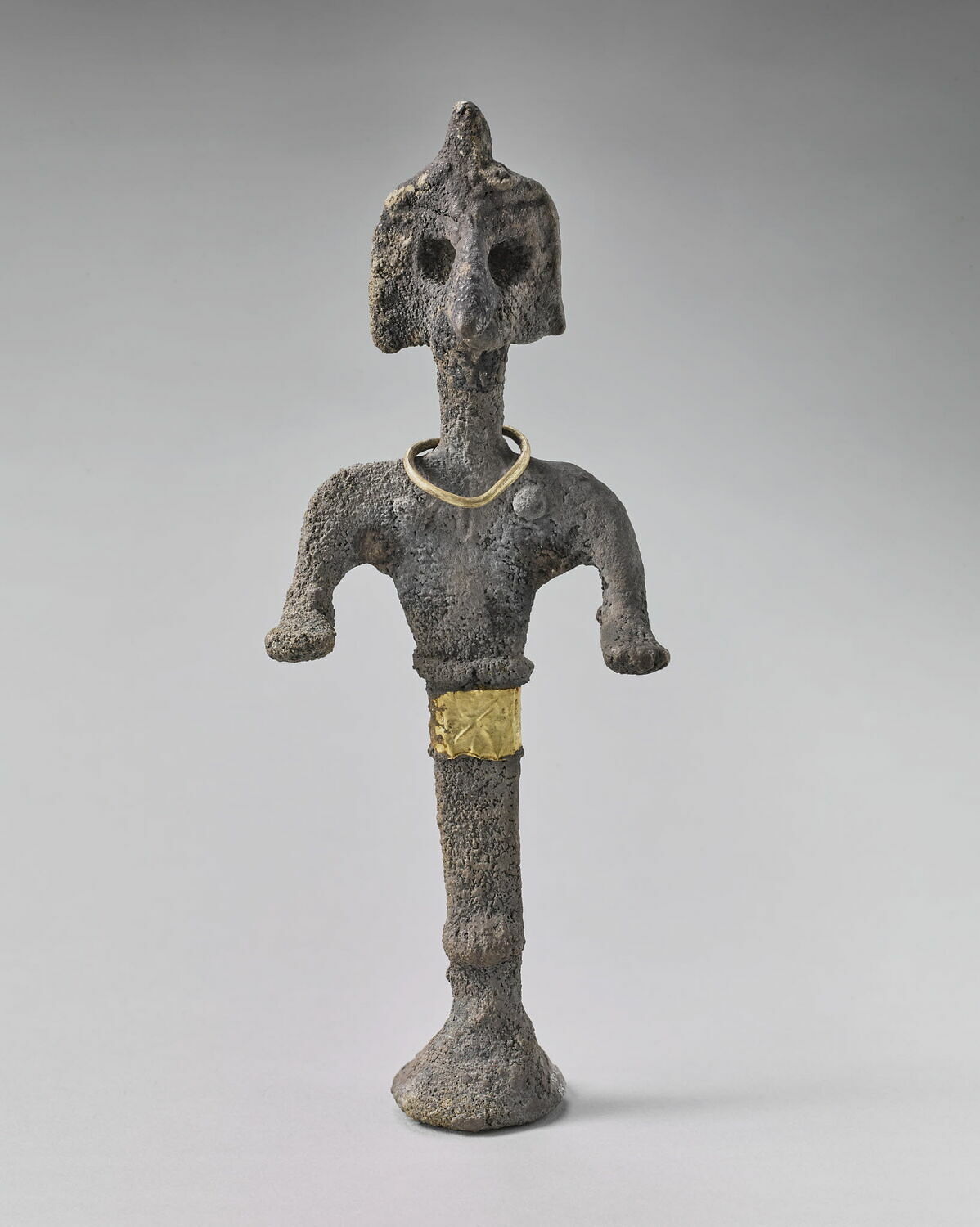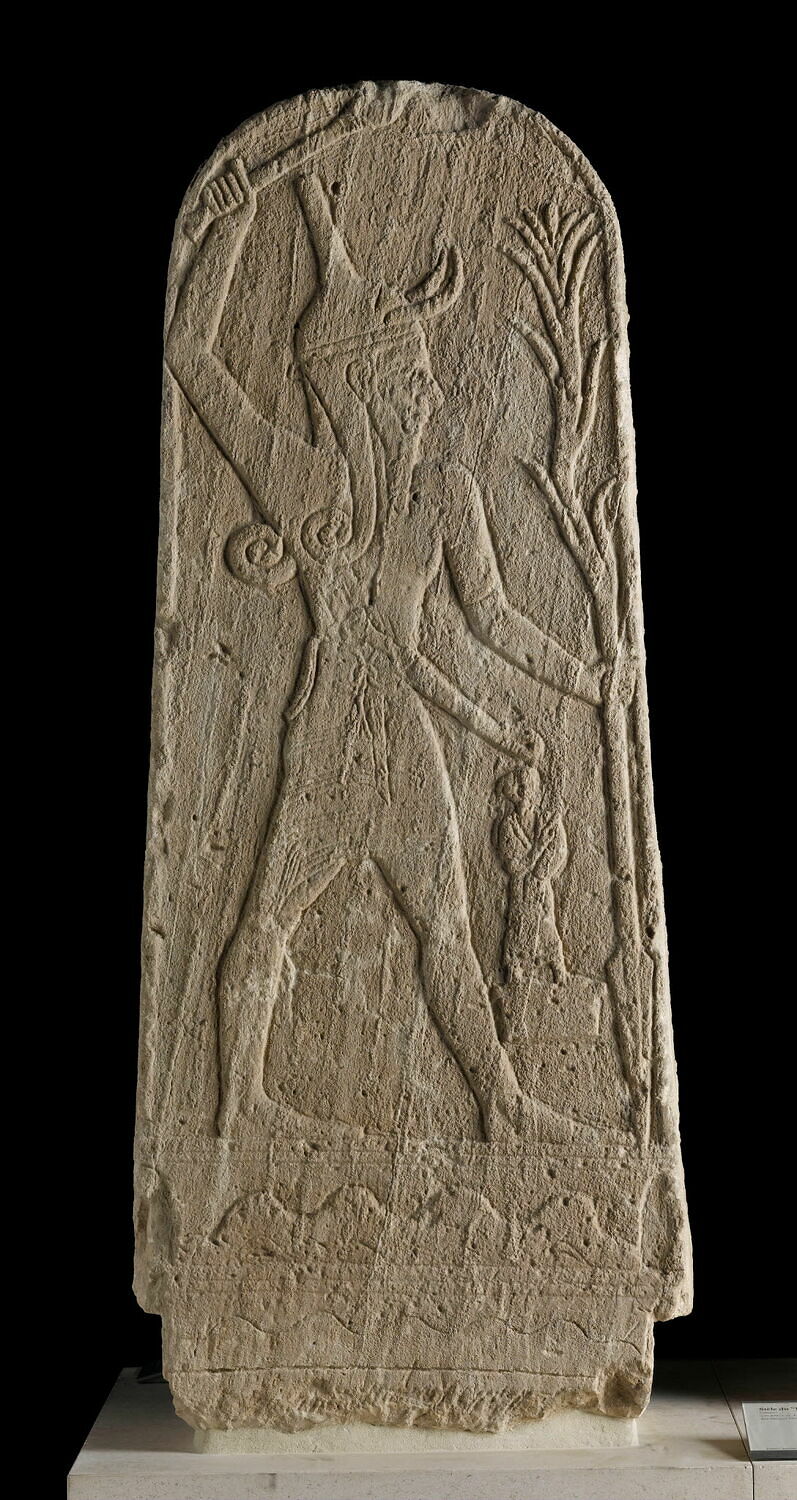
Stèle du Baal au foudre
Må man se det?
Ja, det tager imod

Udstillet for publikum.
- Kontrolleret
- Uændret siden
- Kilde
- Museet
Om skulpturen
Baal with Thunderbolt, Baal with Vegetation Spear, or simply the Baal stele are names given to a white limestone bas-relief stele from the ancient kingdom of Ugarit in northwestern Syria. It was discovered in 1932, about 20 metres (66 ft) from the Temple of Baal in the acropolis of Ugarit during excavations directed by French archæologist Claude Schaeffer. The stele depicts Baal (or Hadad), the god of storm and rain as well as that of agriculture, and a smaller male figure. The stele's artistic style has been described as blending Egyptian and Syrian artistic elements. Historian Nicolas Wyatt identified the work as illustrating the importance of Egyptian influence in Syrian art.
Considered the most important of the Ugaritic stelæ, it is displayed at the Louvre in Paris.
Oplysninger
- Inventarnummer
- AO 15775
I kataloget
Kilder
- Louvre
- Billede: Louvre — © 2006 GrandPalaisRmn (musée du Louvre) / Franck Raux