ART WIKI32.963 udstillet
KortSamlingKunstnereMuseerUdstillingerJournal
Log ind

ART WIKI

Hvor mesterværket hænger, og hvornår man bliver lukket ind.

Samlinger: Art Institute of Chicago, Det Russiske Museum, Eremitagen, Getty Villa, Harvard Art Museums, Hirshhorn Museum and Sculpture Garden, J. Paul Getty Museum, Louvre, Metropolitan Museum of Art, Minneapolis Institute of Art, Museum of Modern Art, National Gallery of Art, National Museum of Asian Art, National Portrait Gallery (Smithsonian), Pusjkinmuseet, Rijksmuseum Amsterdam, Smithsonian American Art Museum, Statens Museum for Kunst, The Cleveland Museum of Art, Tretjakovgalleriet, Victoria and Albert Museum, Whitney Museum of American Art, Ruslands statskatalog over museumsfonden (274 museer), Europeana (19 museer), Wikidata (6 museer), Paris Musées (12 museer) og Joconde, det franske kulturministeriums museumsdatabase (495 museer). Billederne tilhører deres rettighedshavere.

Afsnit

  • Kort
  • Søgning
  • Samling
  • Mesterværker
  • Udstillet nu
  • Kunstnere

Mere

  • Museer & gallerier
  • Udstillinger
  • Journal
  • Hvor data kommer fra
  • Privatliv & cookies
ForsideKortKatalog
  1. Samling/
  2. Rijksmuseum Amsterdam/
  3. Slapende cupido
Slapende cupido, Parmigianino, 1513 - 1540
Parmigianino, portrætParmigianinoItalien, 1503–1540

Slapende cupido

1513 - 1540 · Print

Må man se det?

Ukendt

Rijksmuseum Amsterdam

Amsterdam, Holland

Ejeren er kendt; om værket er udstillet i dag, vides ikke.

Kilde
Museet
På kortetMuseets side

Om værket

Med museets ord — på nederlandsk

Cupido slapend op de grond, zijn pijl en boog naast hem.

Rijksmuseum Amsterdam

Oplysninger

1513 - 1540
15031540
Inventarnummer
RP-P-1971-73

Hvad det viser

Sleeping CupidPossibly signifying a slackening of Love's influence

I kataloget

GrafikRenæssancen1500-tallet

Kilder

  • Rijksmuseum Amsterdam
  • Billede: Rijksmuseum Amsterdam — public domain

Imens i livet hos Parmigianino

Hele livet
  1. summer 1524

    Travels to Rome with his uncles

    According to Vasari, on hearing Raphael and Michelangelo praised, Francesco longed to see Rome; his uncles approved and advised him to take some of his works to open doors to the lords and artists there. They arrived in Rome in the summer of 1524, and Parmigianino presented several paintings to Pope Clement VII, among them the “Self-Portrait in a Convex Mirror” painted on a wooden hemisphere.

  2. 1527

    The Sack of Rome finds him at work

    During the Sack of Rome by the landsknechts of Emperor Charles V, soldiers burst into the studio where Parmigianino was painting “The Vision of Saint Jerome” but harmed neither the pictures nor the artist. Soon, however, he had to abandon his lodgings and Rome, and he left the altarpiece with the church of Santa Maria della Pace.

  3. May 1531

    Commissioned to decorate Santa Maria della Steccata

    In May 1531 Parmigianino was commissioned to fresco the church of Santa Maria della Steccata in praise of the Virgin, with the Coronation as the main scene, and undertook to finish within eighteen months; the work stalled again and again over irregular supplies and the church administration's dislike of his unusual design. Other accounts say the commission was for two altarpieces, of Saint Joseph and Saint John the Baptist. The confraternity advanced him a salary.

  4. 1539

    Jailed for breach of contract

    Absorbed in alchemy (Vasari says the elegant, handsome man turned into a bearded, unkempt, almost savage recluse), the artist did little work in the church, and the Steccata confraternity, which had paid him in advance, had him imprisoned for two months. Released on his promise to finish the work, he again failed to keep it and fled Parma for the small town of Casalmaggiore.

  5. 5 August 1540

    Illness and will at Casalmaggiore

    Falling ill, possibly with malaria, the artist made his will: he named as heirs three underage servants, perhaps also his studio assistants, left 100 scudi to his sister Ginevra, and asked to be buried in the Servite church of La Fontana near Casalmaggiore, naked with a cross on his chest. Vasari gives the cause of death now as a severe fever, now as poisoning by the mercury he used in his alchemical experiments.

  6. 24. august 1540

    Died

Mere af Parmigianino

Alle værker
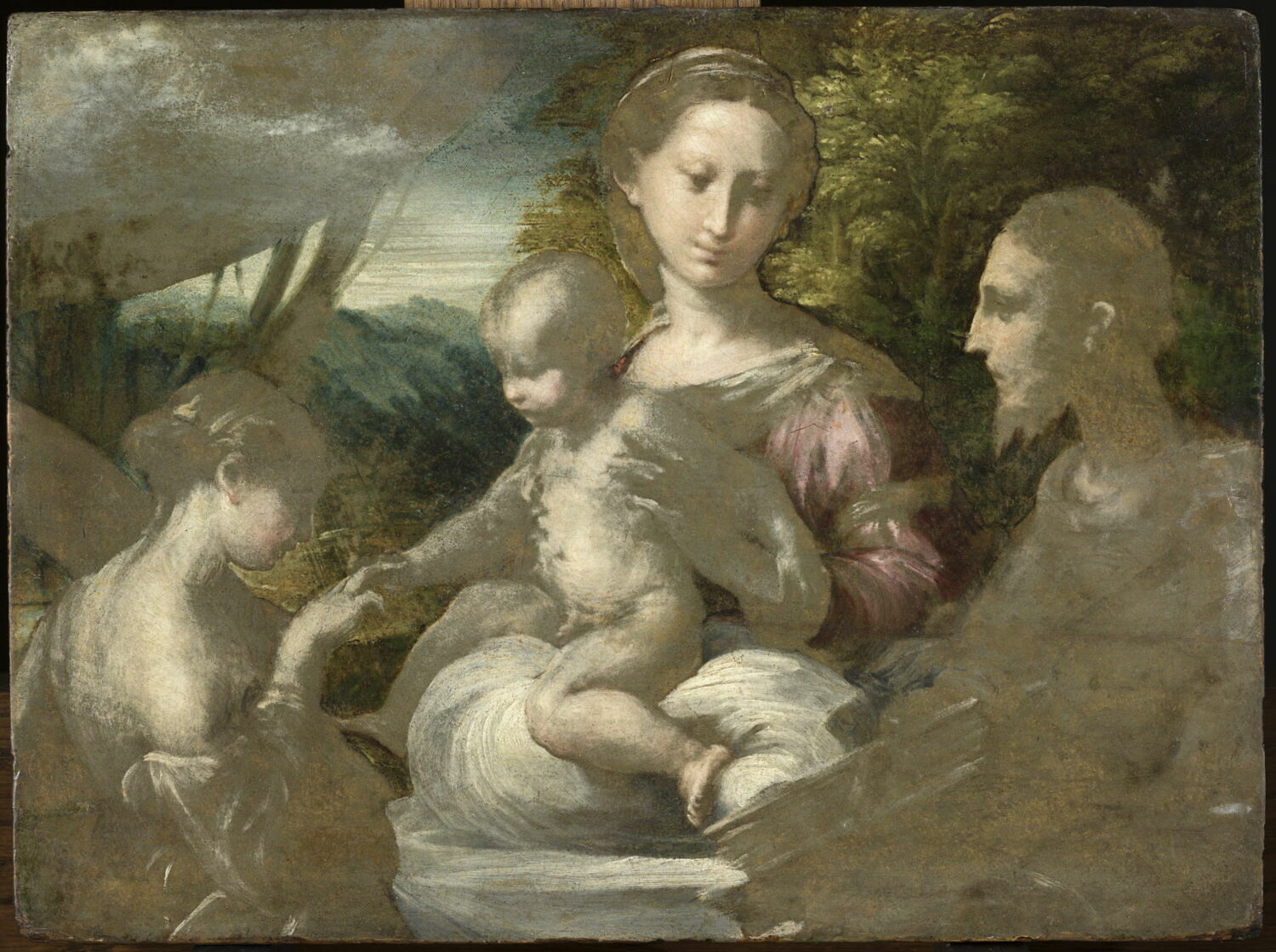
Le Mariage mystique de sainte Catherine, Parmesan, XVIe siècle (1500 - 1600)

Le Mariage mystique de sainte Catherine

XVIe siècle (1500 - 1600) · Louvre

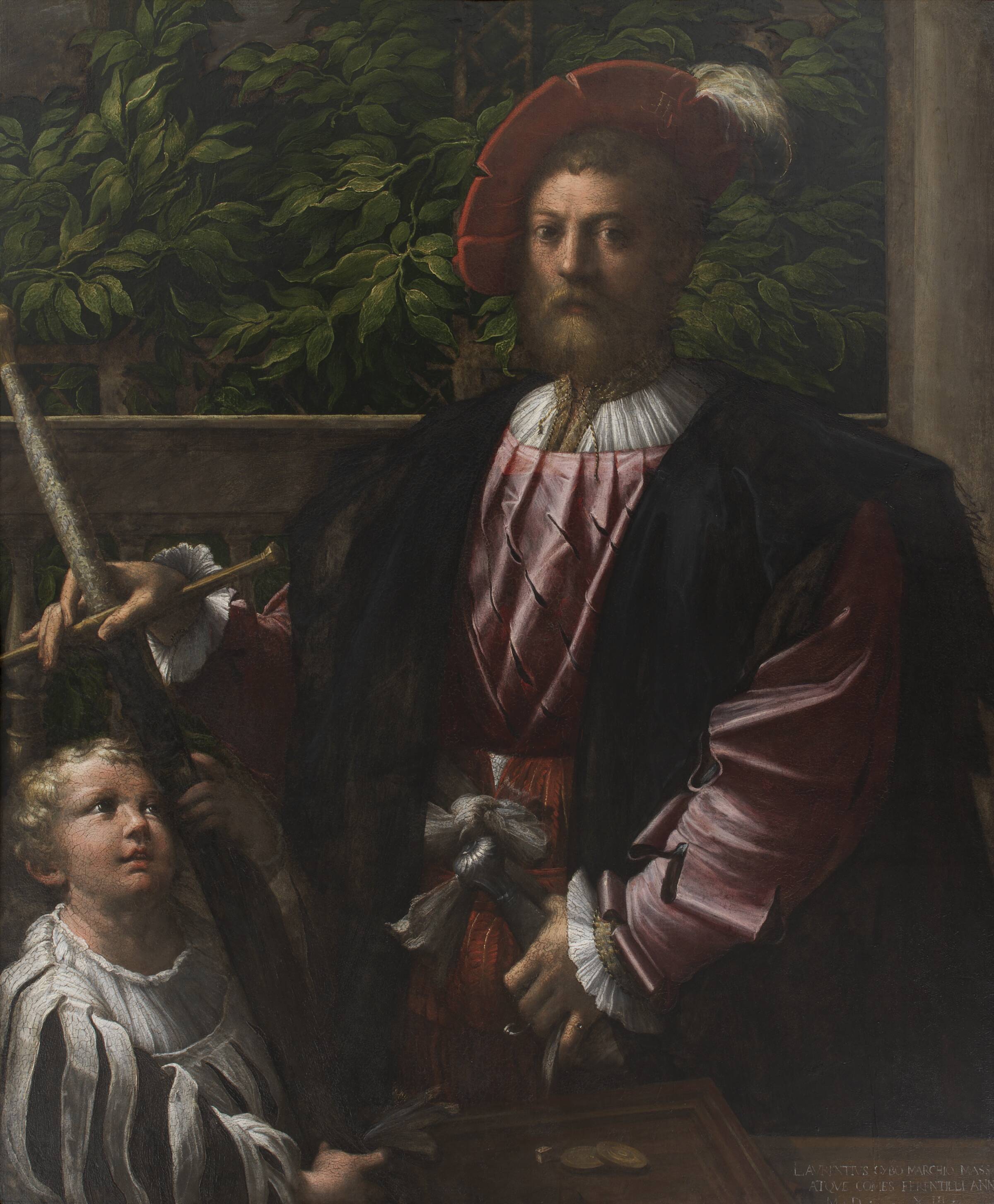
Portræt af Lorenzo Cybo, Parmigianino, 1523

Portræt af Lorenzo Cybo

1523 · Statens Museum for Kunst

The Entombment (copy), Parmigianino, c. 1523

The Entombment (copy)

c. 1523 · Eremitagen

The Boy and Two Old Men, Parmigianino

The Boy and Two Old Men

Ikke udstillet · National Gallery of Art

Saint Simon, Antonio da Trento after Parmigianino

Saint Simon

Ikke udstillet · National Gallery of Art

Saint Simon, Master F.P. after Parmigianino

Saint Simon

Ikke udstillet · National Gallery of Art

Virgin and Child, Parmigianino

Virgin and Child

Ikke udstillet · National Gallery of Art

The Presentation in the Temple, after Parmigianino after Giuseppe Porta

The Presentation in the Temple

Ikke udstillet · National Gallery of Art

Naboer på Rijksmuseum Amsterdam

Museets side
Self-portrait, Vincent van Gogh, 1887

Vincent van Gogh

Self-portrait, 1887

La Corniche near Monaco, Claude Monet, 1884

Claude Monet

La Corniche bij Monaco, 1884

De Nachtwacht, Rembrandt van Rijn, 1642

Rembrandt van Rijn

Nattevagten, 1642

Portrait of a Woman, Probably Maria Trip (1619-1683), Rembrandt van Rijn, 1639

Rembrandt van Rijn

Portrait of a Woman, Probably Maria Trip (1619-1683), 1639

Still Life with Peacocks, Rembrandt van Rijn, c. 1639

Rembrandt van Rijn

Still Life with Peacocks, c. 1639

Landscape with a Stone Bridge, Rembrandt van Rijn, c. 1638

Rembrandt van Rijn

Landscape with a Stone Bridge, c. 1638

Man in Oriental Dress, Rembrandt van Rijn, 1635

Rembrandt van Rijn

Man in Oriental Dress, 1635

Portrait of Haesje Jacobsdr van Cleyburg, Rembrandt van Rijn, 1634

Rembrandt van Rijn

Portrait of Haesje Jacobsdr van Cleyburg, 1634