 Aubrey BeardsleyStorbritannien, 1872–1898
Siegfried, Act II
Må man se det?
Tager ikke imod for tiden

Victoria and Albert Museum
London, Storbritannien
Det hører til samlingen, men er ikke udstillet for tiden.
- Kontrolleret
- Uændret siden
- Kilde
- Museets egne samlingsdata
Om værket
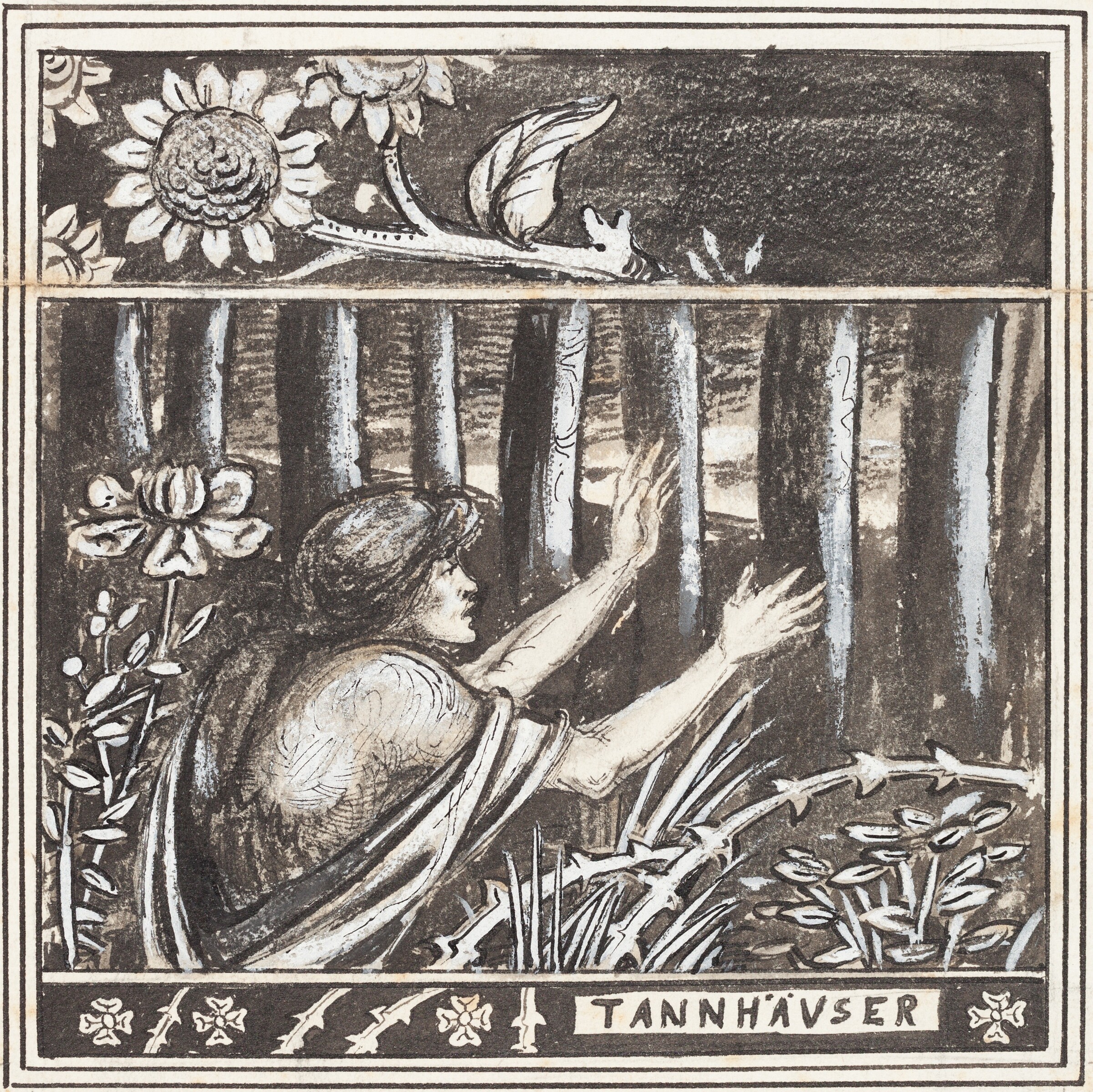
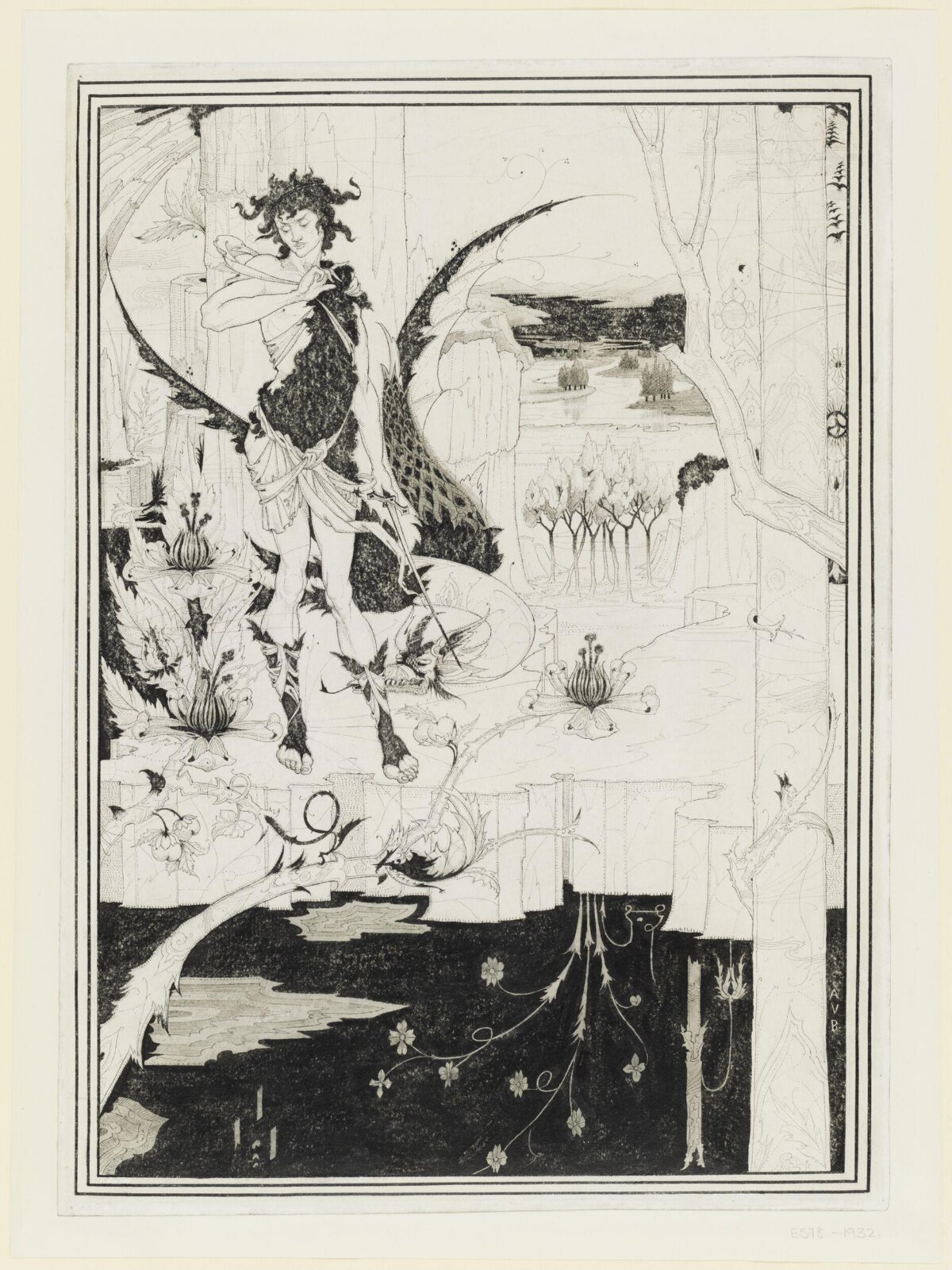
This drawing is an illustration relating to Act II of Richard Wagner's opera Siegfried. It was published in the first issue of the art magazine The Studio in April 1893. It is very finely detailed, and is characteristic of Beardsley's style at this period, with its so-called hairline calligraphic flourishes used for decorative effect. It demonstrates some of the many influences on Beardsley's distinctive drawings. These include reminiscences of prints by Andrea Mantegna and details from paintings by other Renaissance artists that Beardsley had seen in the National Gallery in London. It also carries echoes of the elongated figures and dense linear style characteristic of the work of Sir Edward Burne-Jones, who was an associate of the Pre-Raphaelite painters. Burne-Jones was an important mentor and inspiration for Beardsley, who presented him with this drawing. Beardsley was flattered when he hung it in his drawing room alongside prints and drawings by Albrecht Dürer and others.
Victoria and Albert Museum
Oplysninger
- Inventarnummer
- E.578-1932
Hvad det viser
I kataloget
Kilder
- Victoria and Albert Museum: museets åbne data · hentet for 12 dage siden
- Billede: Victoria and Albert Museum — © Victoria and Albert Museum, London
Imens i livet hos Aubrey Beardsley
Hele livet1891
Decides to become an artist
In 1891, on the advice of Edward Burne-Jones and Pierre Puvis de Chavannes, Beardsley resolved to make art his profession. Burne-Jones introduced him to Oscar Wilde and advised him to study medieval illumination.
1892
Trip to Paris
In 1892 Beardsley travelled to Paris, where he discovered the posters of Henri de Toulouse-Lautrec and the Parisian fashion for Japanese prints.
1892
Westminster School of Art
In 1892 Beardsley attended classes at the Westminster School of Art, then under Professor Fred Brown.
14 February 1892
Meets Robert Ross
Robert Ross recalled their first meeting: Beardsley was shy, nervous and self-conscious — nothing like the assured man he would be eighteen months later, when his success was unquestioned; after half an hour he relaxed and grew talkative.
1894
Art editor of The Yellow Book
In 1894 Beardsley, together with the American writer Henry Harland, became art editor of The Yellow Book; for its first four issues he produced the covers and many illustrations.
1894–1896
His health sharply declines
Between 1894 and 1896, at the height of his success, his health sharply deteriorated. “I know my illness is incurable,” he wrote to Raffalovich, “but I am sure measures can be taken to slow its course.”