Lourens Alma TademaHolland, 1836–1912
Sfinx
Kan det ses?
Ukendt
Hvor er »Sfinx« i dag? Samling: Rijksmuseum Amsterdam, Amsterdam. Ukendt.

Amsterdam, Holland
Ejeren er kendt; om værket er udstillet i dag, vides ikke.
- Kilde
- Museet
Om værket
Med museets ord — på nederlandsk
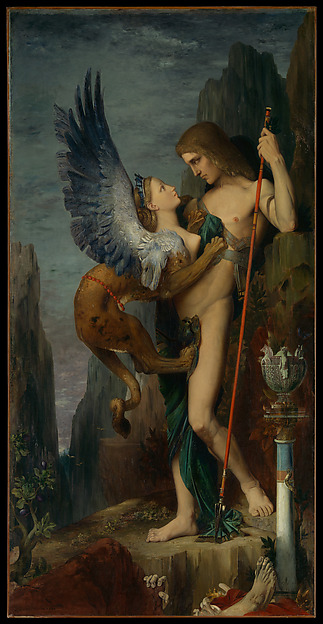
Een sfinx met op de achtergrond piramiden.
Rijksmuseum Amsterdam
Oplysninger
- Inventarnummer
- RP-P-1879-A-3269
Hvad det viser
I kataloget
Kilder
- Rijksmuseum Amsterdam
- Billede: Rijksmuseum Amsterdam — public domain
Imens i livet hos Lourens Alma Tadema
Hele livet1873
British denizenship by order of Queen Victoria
Queen Victoria in Council by letters patent made Alma-Tadema and his wife British denizens, with some limited special rights otherwise enjoyed only by British subjects; it was the last time the procedure was applied. After the spring exhibition of the same year he was admitted as an associate member of the Royal Society of Painters in Water Colours.
1873 · Udmærkelse
Knight of the Legion of Honour
1874
A gunpowder barge explosion wrecks the house by the canal
A barge loaded with gunpowder exploded on the Regent's Canal and destroyed Alma-Tadema's London house; the owners were visiting the poet William Bell Scott in Scotland, whose collection the artist was to illustrate. His daughters, who were at home, were thrown from the windows together with their beds but not seriously hurt, and not one painting was damaged, although the studio could no longer be used.
1874
Three canvases at the Royal Academy: “Joseph”
In 1874 he showed three canvases at the Royal Academy, among them “Joseph, Overseer of Pharaoh's Granaries” — an Egyptian and at the same time biblical subject that summed up the methods of his 1860s; the scene with geese was taken from the tomb of Nebamun.
1875–1876
A winter in Rome: a rented studio and Siemiradzki
The destruction forced him to rent a studio, and he spent the winter of 1875 in Rome and worked there again from January to April 1876; in Rome he met Henryk Siemiradzki and viewed his new painting “The Torches of Christianity (Nero's Torches)”. During these months of working as a graphic artist and watercolourist his own method took shape: a first sketch and studies made directly on the same canvas on which the final version was then painted.
1876
“An Audience at Agrippa's” at the Paris Salon
On the way back from Rome the couple took part in the Paris Salon of 1876, where they showed “An Audience at Agrippa's” — a picture unusually sharp for an artist who rarely noticed the dark sides of antiquity: bowing slaves with cropped hair and petitioners in the foreground. It was so popular that in 1879 Sir William Armstrong commissioned a repetition, but Alma-Tadema painted a different canvas, “After the Audience”, which the patron did not like.