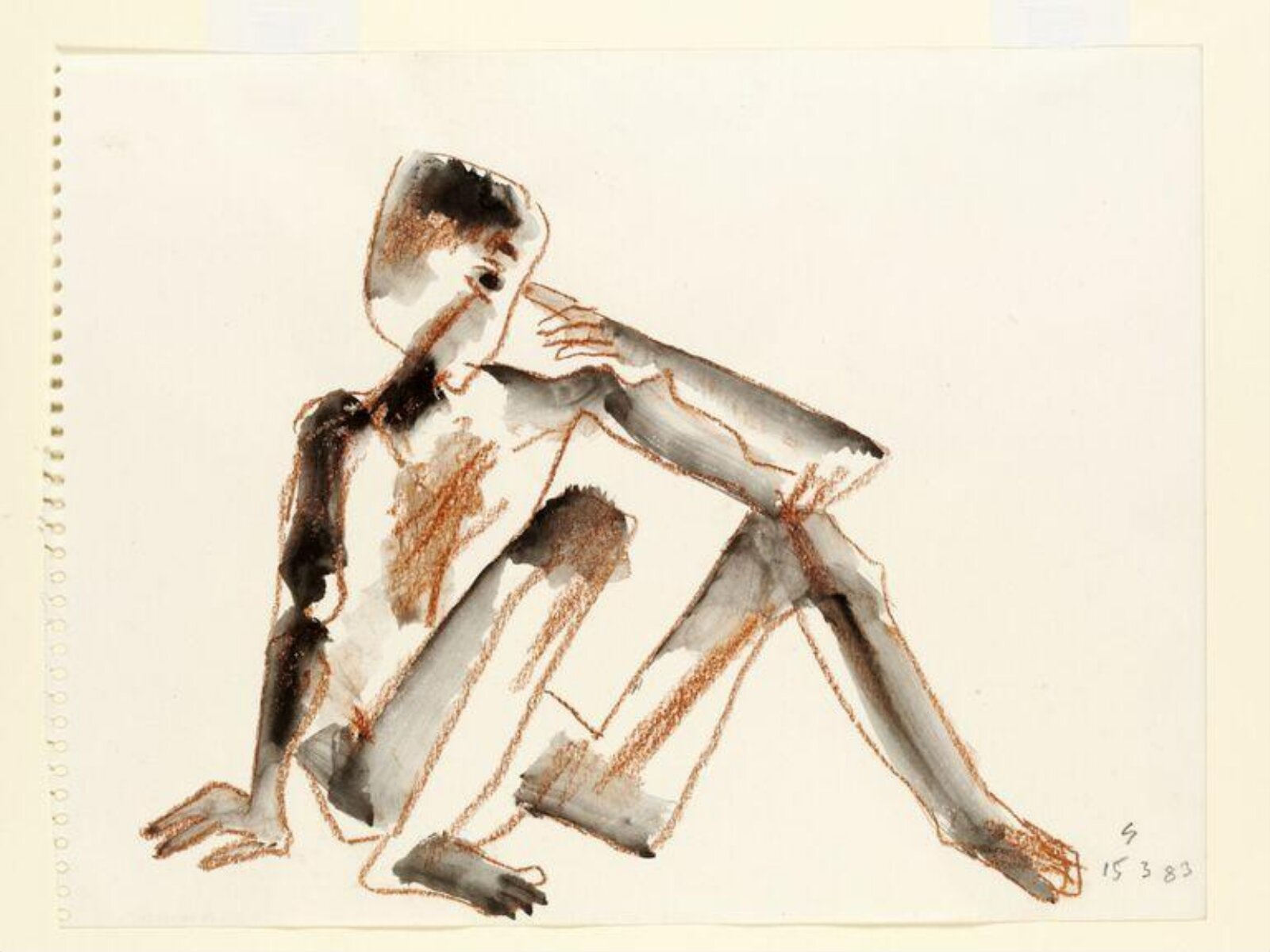
Seated Tribesman with Hand to Head
Kan det ses?
Ikke udstillet lige nu
Hvor er »Seated Tribesman with Hand to Head« i dag? Samling: Victoria and Albert Museum, London. Ikke udstillet lige nu. Kontrolleret 25. september 2026.

London, Storbritannien
Det hører til samlingen, men er ikke udstillet for tiden.
- Kontrolleret
- Uændret siden
- Kilde
- Museet
Om maleriet
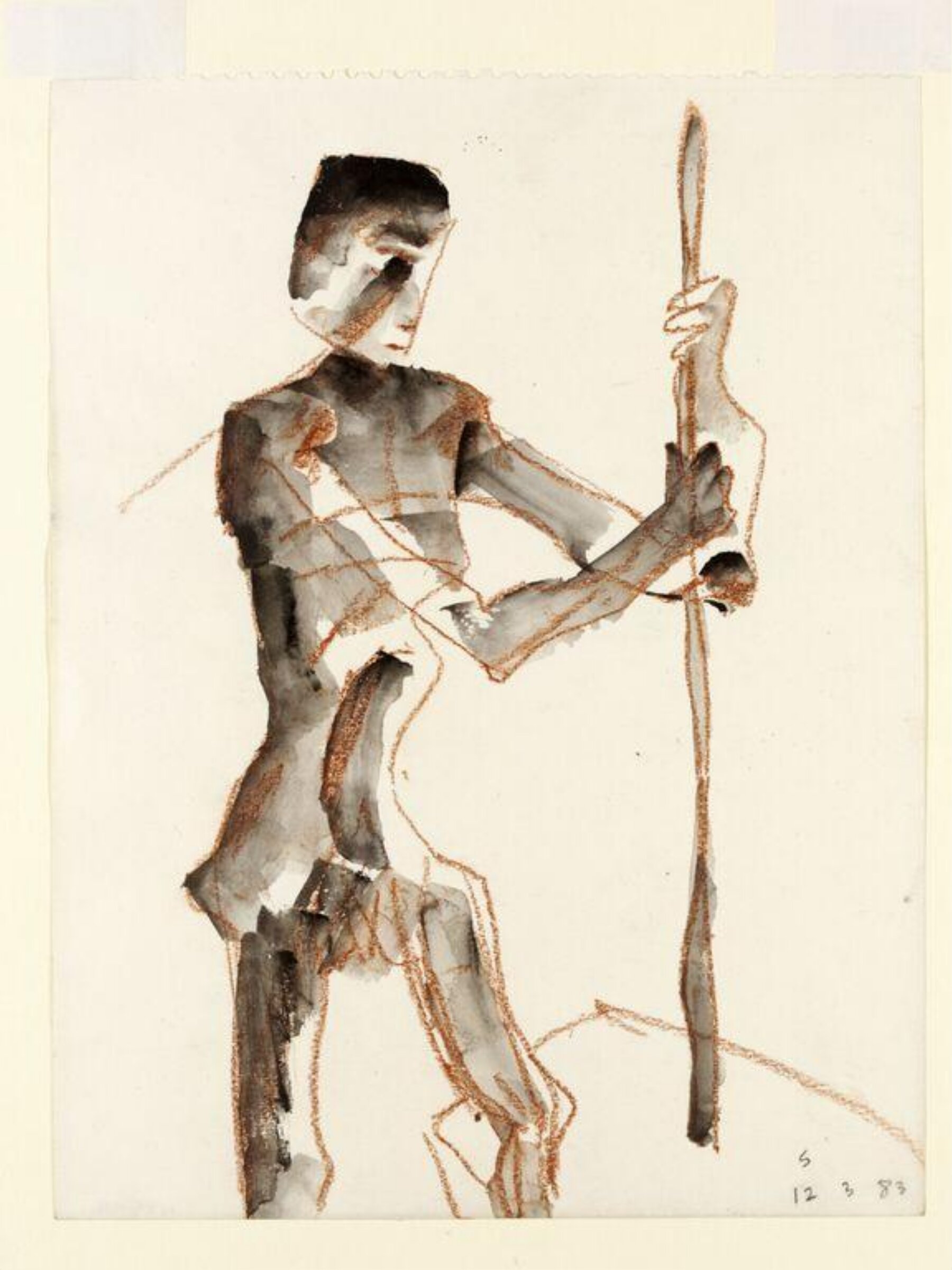
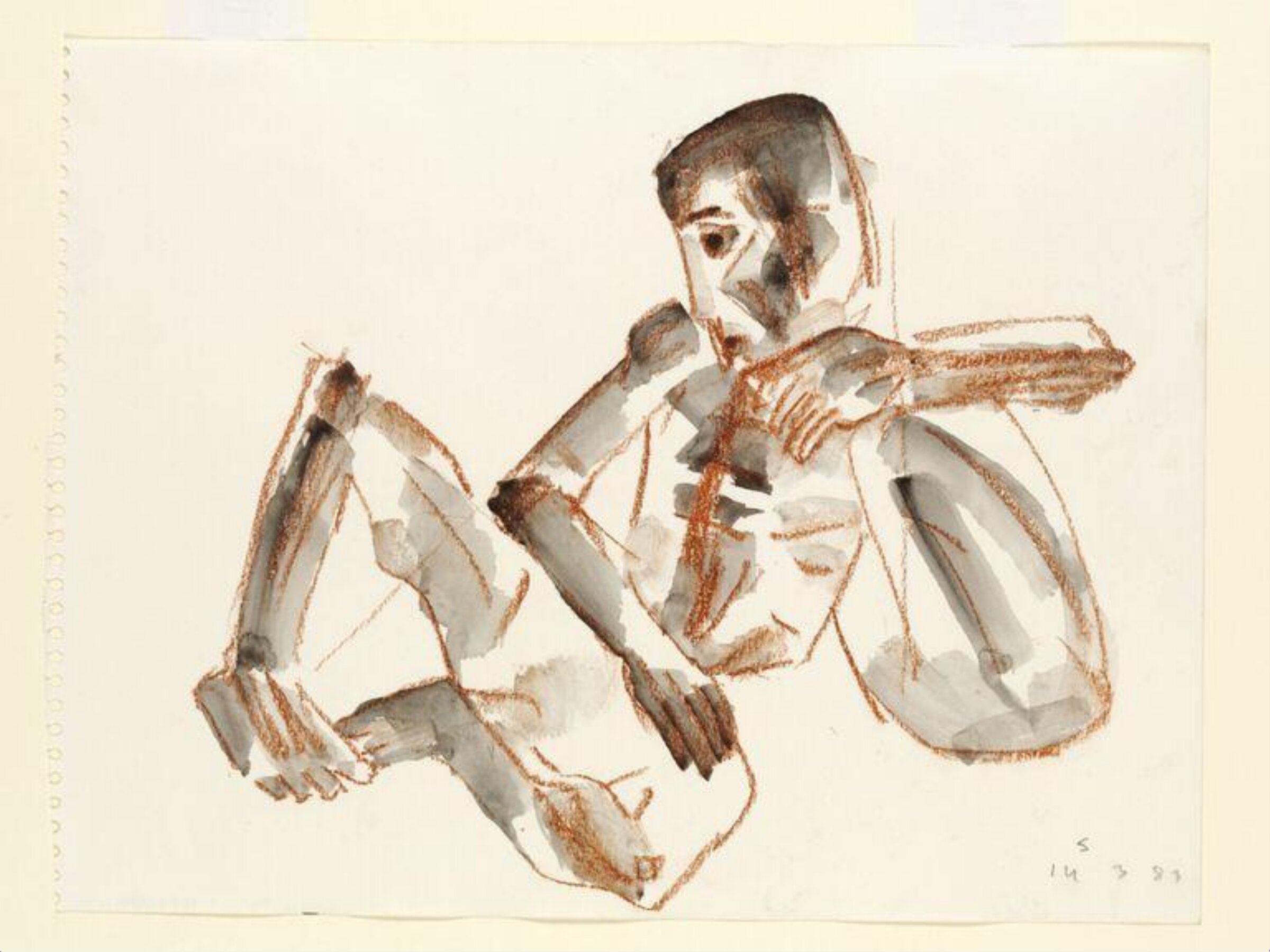
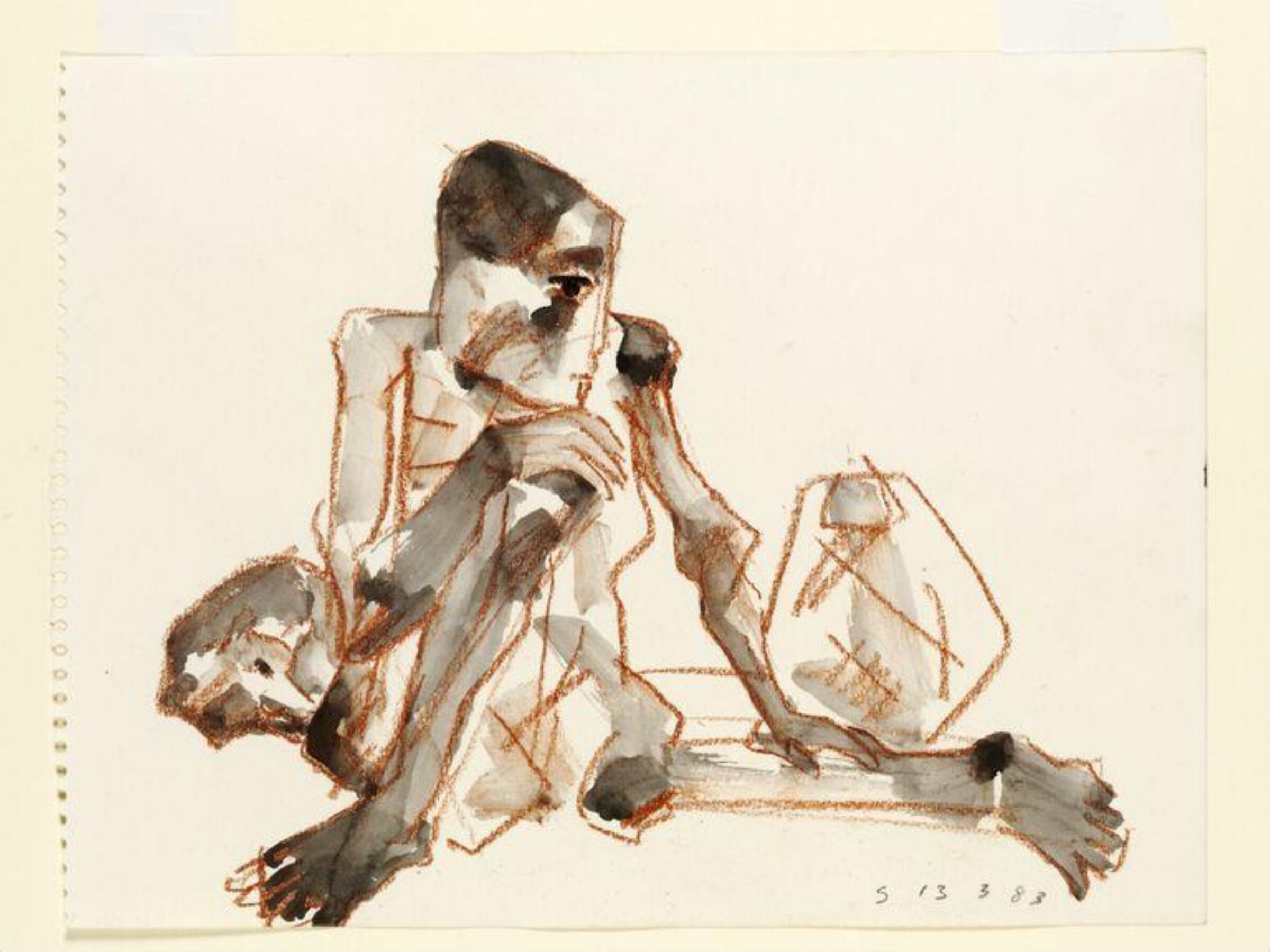
The work depicts a rapid sketch of a seated figure, his head lowered as if leaning against his hand resting on his raised left knee. The subject of this drawing is probably one of the tribal peoples inhabiting the hills above Shantiniketan where the artist lived.
Læs videre
Somnath Hore (1921-2006) was born in the village of Barama in Chittagong, now in Bangladesh. He started drawing at a very early age and took up painting more seriously around 1940 in Calcutta. He was an active member of the Communist Party of India (CPI) for the early part of his life. Hore was profoundly affected by the Bengal famine of 1943. Since his early personal experience of this man-made famine, in which over 3 million people died of starvation and malnutrition, his life-long concern has been the representation of human suffering. The accumulated effects of years of communal violence, World War II, the partition of India, and the violent and political conflicts of the 1970s, both at home and in Vietnam have influenced his work.
In this image the treatment of the figure is reminiscent of Hore's earlier sketches and drawings, published in 'Janayuddha' and the 'Peoples War' during the 40s. In these pencil sketches the artist depicted the hapless victims of famine, suffering and dying peasants, sick and infirm destitutes, portraits of tribals and peasants. Hore's human figures were always skeletal, with prominent thorax appearing as a cage of ribs. However, in this case, Hore has used a tonal element, represented by the red chalk, and more abstract watercolour contours, which give the figure a symbolic dimension.
Victoria and Albert Museum
Oplysninger
- Inventarnummer
- IS.26-1986
Hvad det viser
I kataloget
Kilder
- Victoria and Albert Museum
- Billede: Victoria and Albert Museum — © Victoria and Albert Museum, London