 Jacob van der UlftHolland, 1627–1689
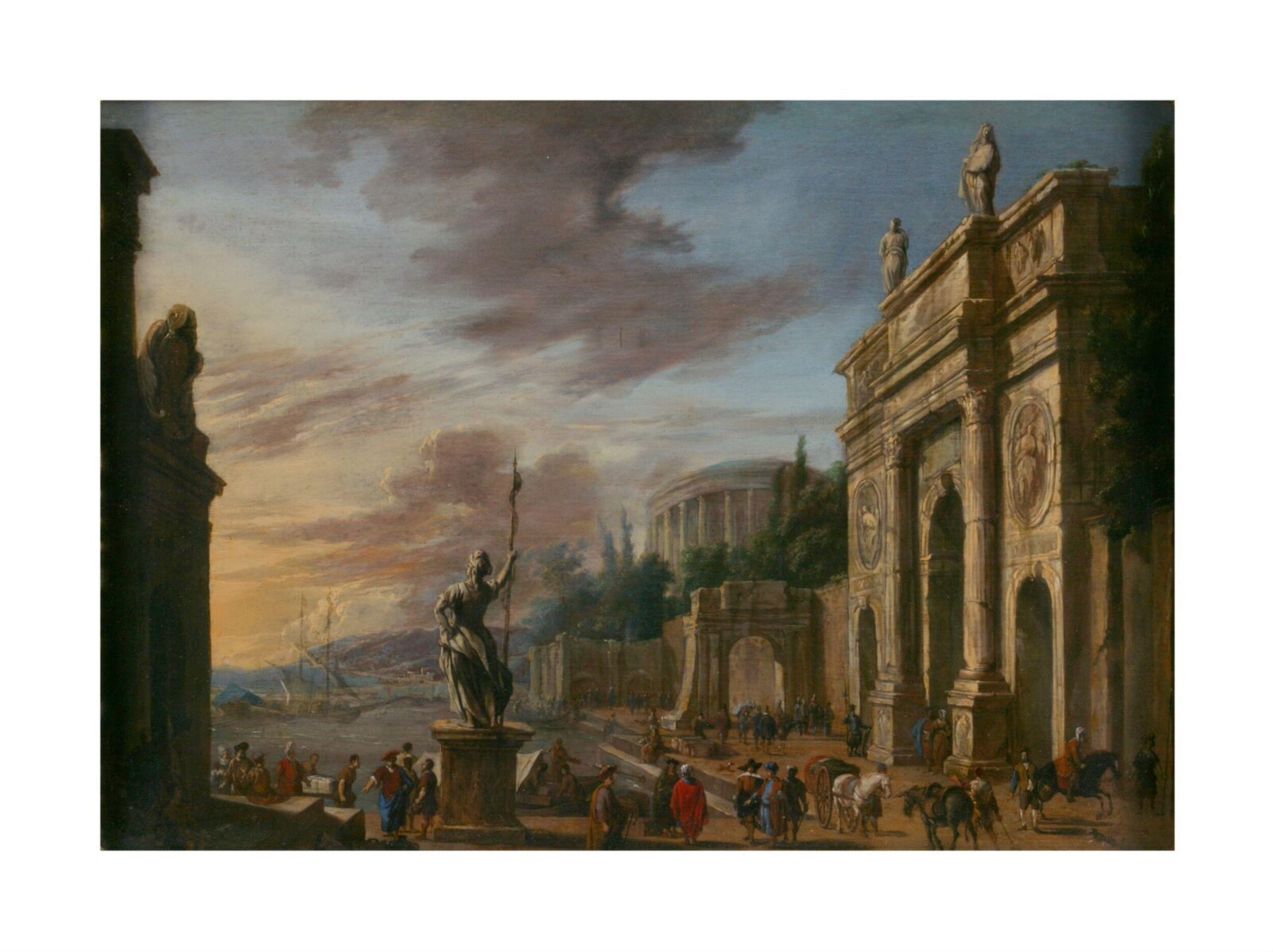
Seaport and Triumphal Arch
Kan det ses?
Ikke udstillet lige nu
Hvor er »Seaport and Triumphal Arch« i dag? Samling: Victoria and Albert Museum, London. Ikke udstillet lige nu. Kontrolleret 25. september 2026.

London, Storbritannien
Det hører til samlingen, men er ikke udstillet for tiden.
- Kontrolleret
- Uændret siden
- Kilde
- Museet
Om maleriet
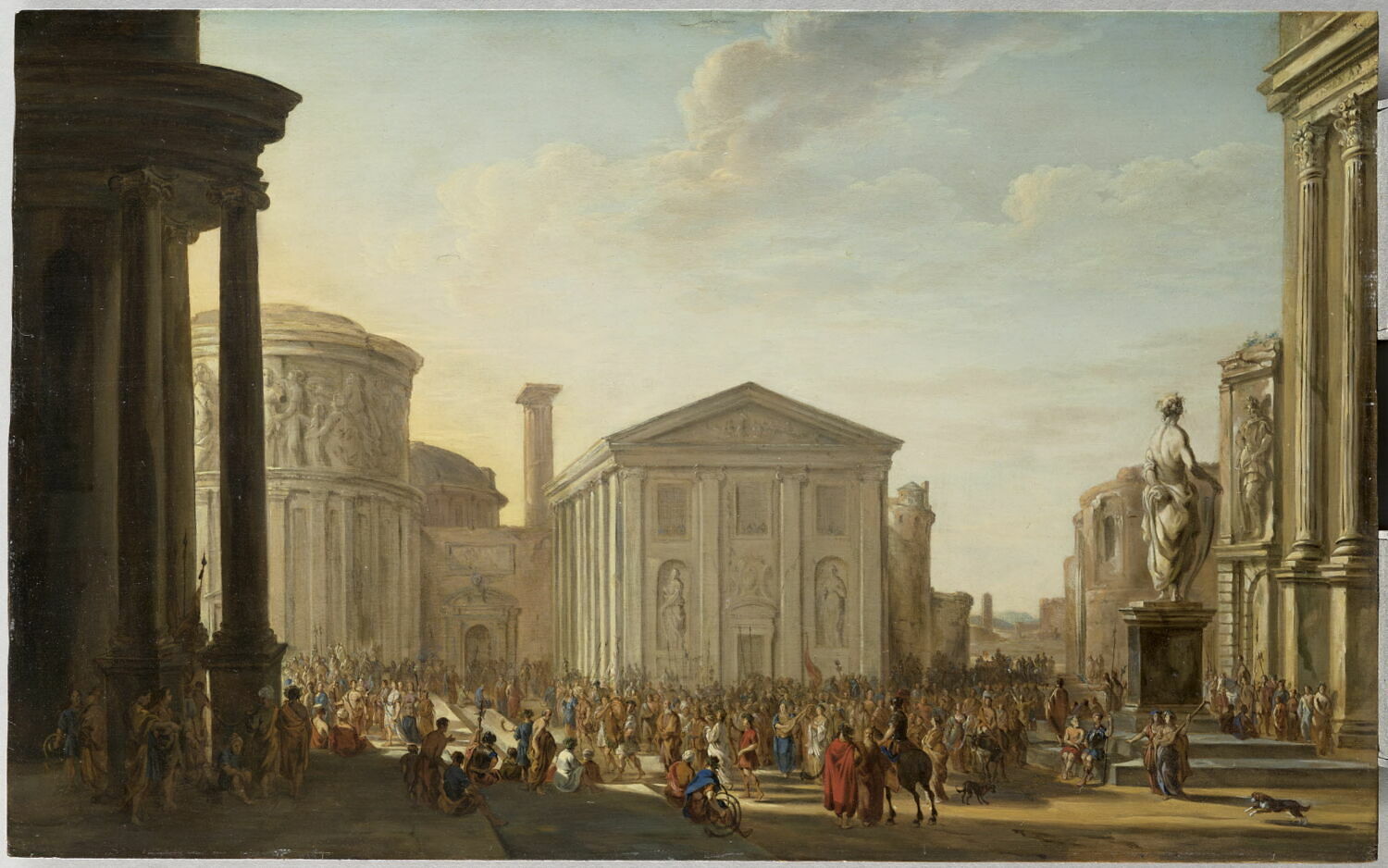
Jacob van der Ulft was born in Gorinchem in 1621 and died in 1689. He initally trained with his father as a glass painter but soon specialized in painting Italianate city views and harbours. Although he painted many city views of Amsterdam, the majority of his surviving works are depictions of imaginary views of Roman ruins in antique settings, or imaginary Mediterranean ports. Most of his works are dated to the early 1670s. In his imaginary compositions of Italianate views, van der Ulft characteristically used various classical elements in different combinations, often placed in a receding diagonal, starting in the foreground with a building at the left or right, and ending with a city or a harbour in the distance. He always included groups of figures, mostly ordinary citizens, such as market traders and harbour workers, in his city views.
Læs videre
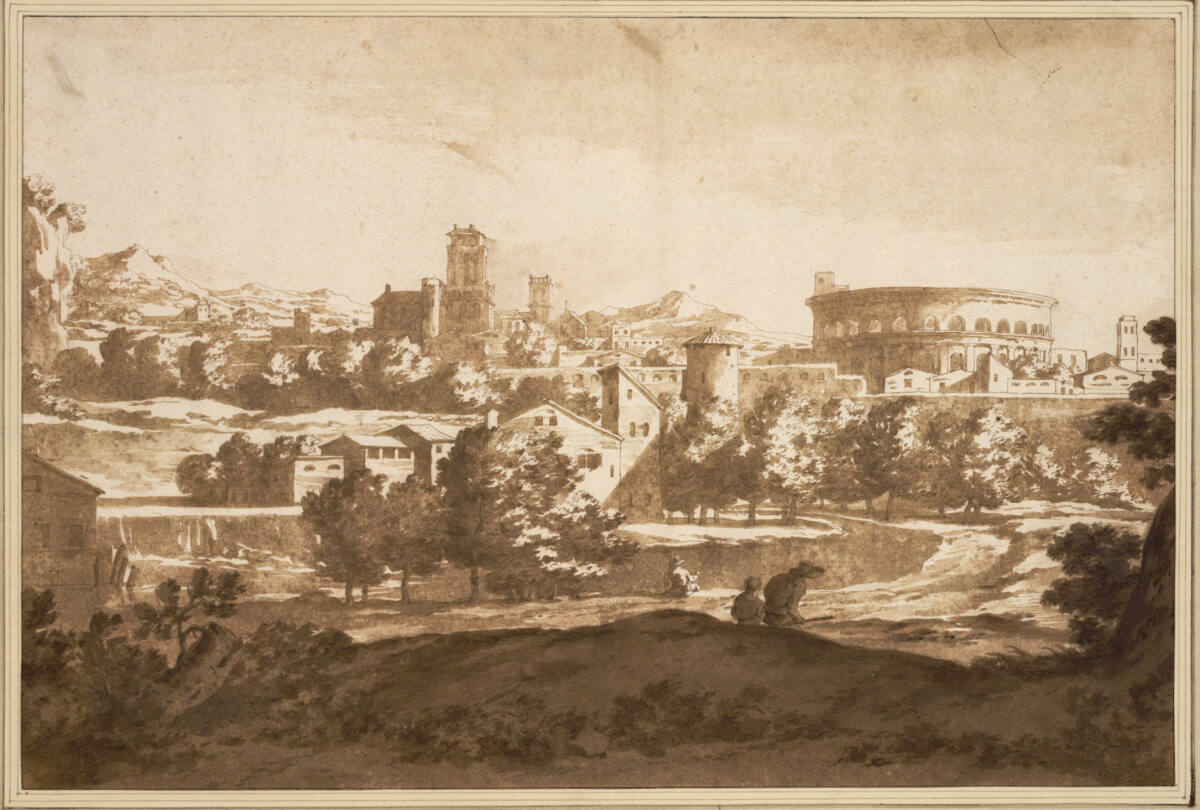
In addition to imaginary cities, he also sketched and painted actual cities, drawings in his sketchbook, for example, have inscriptions such as Napoli, Tivoli or Castel Gandolfo. A sketch of an Italianate harbour quite similar to 1366-1869 is visible for example in the Courtauld Collection (D.1952.RW.1919). There is however now evidence that van der Ulft ever travelled to Italy and he may therefore have derived details in his paintings from engravings or drawings by other artists who found inspiration in the Italian landscape and the southern golden sunlight. A Mediterranean atmosphere is evoked in 1366-1869 by the strong sunlight, bright colours, and azure sky. A similar composition An Italianate Capriccio in a Mediterranean Harbour was on the art market in 2010 (Gallery: Salomon Lilian BV) and a similar pair of paintings are now in the collection of the Rijksmuseum, Amsterdam (inv. nos. 419 and 420).
Victoria and Albert Museum
Oplysninger
- Inventarnummer
- 1366-1869
Hvad det viser
I kataloget
Kilder
- Victoria and Albert Museum
- Billede: Victoria and Albert Museum — © Victoria and Albert Museum, London