 Gustav KlimtØstrig, 1862–1918
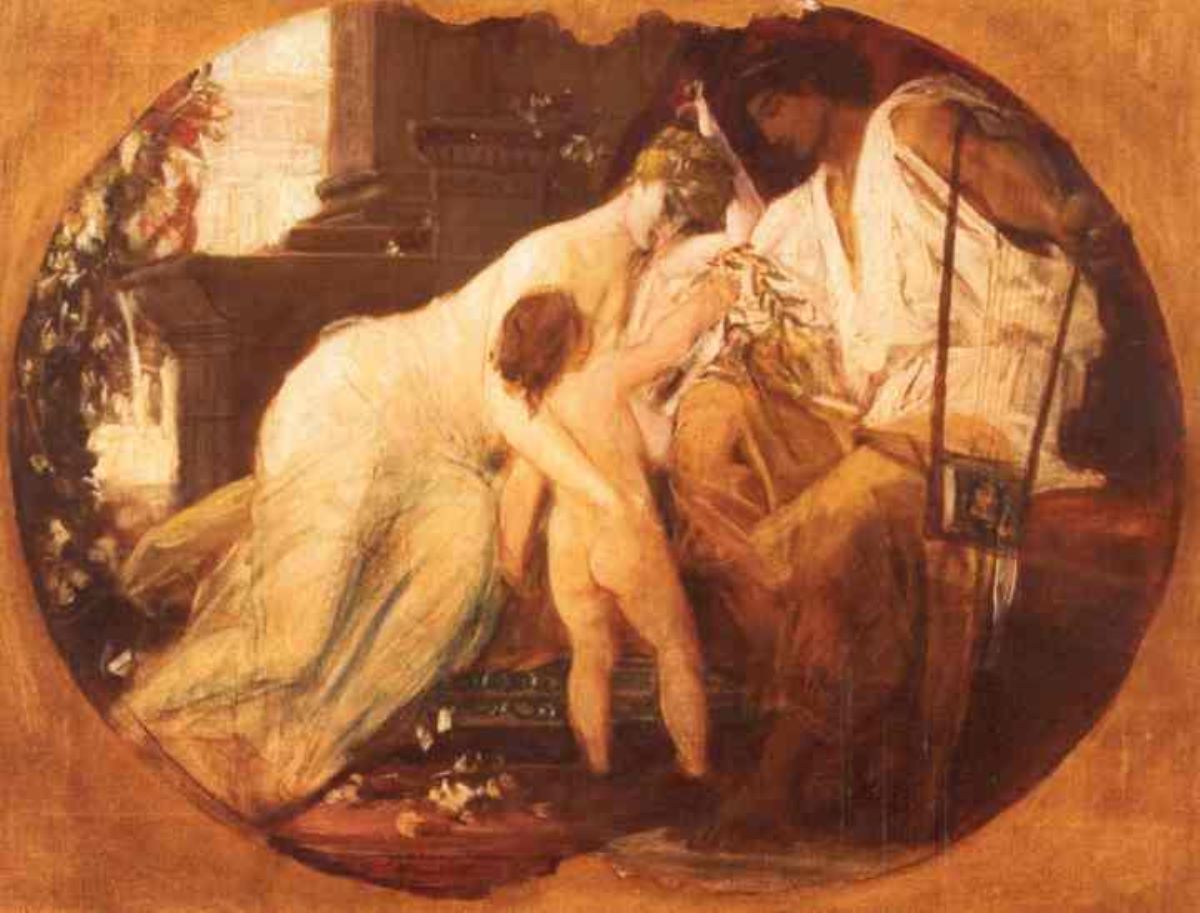
Scenă mitologică
Må man se det?
Ukendt

National Museum of Art of Romania
Bukarest, Rumænien
Ejeren er kendt; om værket er udstillet i dag, vides ikke.
- Uændret siden
- Kilde
- Museet
Om maleriet
Med museets ord — på rumænsk
Schiță de panou decorativ reprezentând o scenă mitologică.
National Museum of Art of Romania
Oplysninger
I kataloget
Kilder
- National Museum of Art of Romania
- Billede: National Museum of Art of Romania — CC BY-SA 4.0
Imens i livet hos Gustav Klimt
Hele livet1862–1884
A childhood of poverty and moves
Klimt's father often struggled to find work and the family lived in poverty: between 1862 and 1884 it had no fewer than five addresses, moving in search of cheaper lodgings.
1876–1883 · Uddannelse
University of Applied Arts Vienna
1876–1883
Teachers Laufberger and Berger; the example of Makart
Klimt studied architectural painting under Ferdinand Laufberger and, after Laufberger's death in 1881, under Julius Victor Berger. He revered Hans Makart, Vienna's foremost history painter, and aspired to repeat his success.
1883
A joint studio in Vienna
After leaving the school Gustav, Ernst and Matsch moved into a joint studio; among their early jobs were ancestral portraits based on engravings for Peleș Castle, the Romanian royal palace. In 1886 they painted the ceiling and curtain of the Karlsbad municipal theatre.
1884
Makart's death opens the way for the trio
The sudden death of Hans Makart, to whom every commission the Klimts and Matsch applied for had gone, opened opportunities to others. The trio's first inherited commission was the decoration of Empress Elisabeth's bedroom in the Hermesvilla with scenes from “A Midsummer Night's Dream”; the delighted patrons at once commissioned the villa's salon as well.