ART WIKI32.963 udstillet
KortSamlingKunstnereMuseerUdstillingerJournal
Log ind

ART WIKI

Hvor mesterværket hænger, og hvornår man bliver lukket ind.

Samlinger: Art Institute of Chicago, Det Russiske Museum, Eremitagen, Getty Villa, Harvard Art Museums, Hirshhorn Museum and Sculpture Garden, J. Paul Getty Museum, Louvre, Metropolitan Museum of Art, Minneapolis Institute of Art, Museum of Modern Art, National Gallery of Art, National Museum of Asian Art, National Portrait Gallery (Smithsonian), Pusjkinmuseet, Rijksmuseum Amsterdam, Smithsonian American Art Museum, Statens Museum for Kunst, The Cleveland Museum of Art, Tretjakovgalleriet, Victoria and Albert Museum, Whitney Museum of American Art, Ruslands statskatalog over museumsfonden (274 museer), Europeana (19 museer), Wikidata (6 museer), Paris Musées (12 museer) og Joconde, det franske kulturministeriums museumsdatabase (495 museer). Billederne tilhører deres rettighedshavere.

Afsnit

  • Kort
  • Søgning
  • Samling
  • Mesterværker
  • Udstillet nu
  • Kunstnere

Mere

  • Museer & gallerier
  • Udstillinger
  • Journal
  • Hvor data kommer fra
  • Privatliv & cookies
ForsideKortKatalog
  1. Samling/
  2. Eremitagen/
  3. Sappho and Phaon
Sappho and Phaon, Jacques-Louis David, 1809

Sappho and Phaon

1809 · Painting · 225.3 × 262 cm

Om maleriet

Sappho and Phaon is an 1809 neoclassical painting by the French painter Jacques-Louis David of Cupid, Sappho and her lover Phaon. It was commissioned by Prince Nikolai Yusupov for his Moika Palace and is now the only painting by David in the Hermitage Museum in Saint Petersburg.

Sappho and Phaon was the second of David's major paintings to take a mythological love story as its subject, after The Loves of Paris and Helen from 1788. It is visually very similar to that earlier work – the two paintings are sufficiently similar that a preparatory drawing for Sappho and Phaon was traditionally identified as being a sketch for Paris and Helen. It may also have recalled the painting Sappho Singing her Poetry and Accompanying Herself on the Lyre by David's painting tutor Joseph-Marie Vien, though that painting is now lost and no images of it survive.

Læs videre

Sappho is shown sitting in a chair at the foot of a bed in a classically decorated room with columns, a marble floor and a view to a rural landscape outside (with Venus's birds, doves, sitting on the doorstep). Phaon stands behind the chair holding a spear and bow. On her knee is a scroll with some of her verses in praise of Phaon and Cupid kneels in front of her, holding up her lyre, which she tries to play with her right hand whilst leaning her head back to let Phaon cradle her head in his left arm.

Wikipedia · CC BY-SA

Med museets ord — på russisk

Mere af Jacques-Louis David

Alle værker

I samme sal · Зал 303, Eremitagen

Museets side

Жак Луи Давид − основоположник и глава неоклассицизма, художественного течения, опиравшегося на античное наследие и господствовавшего в конце XVIII − начале XIX в. Картина «Сафо и Фаон» характерна для зрелого творчества Давида. В ней изображены Сафо и ее возлюбленный Фаон. Амур, протягивающий Сафо лиру, символизирует любвь как источник творческого вдохновения. Сафо − древнегреческая поэтесса конца VII − начала VI в. до н.э. с острова Лесбос. В одах Сафо не встречается имя Фаона, лодочника из Митилены, которого Венера наделила неувядаемой молодостью и пленительной красотой. Легенда о безответной любви поэтессы к прекрасному юноше, из-за которой она бросилась в море с Левкадской скалы, возникла много позднее. Впервые она появилась в «Левкадии» Менандра (ок. 343 − ок. 291 до н.э.).

Læs videre

Давид взял эту легенду за основу, что ощущается даже в деталях (гора, изображенная в глубине картины, вероятно, содержит намек на самоубийство Сафо). В качестве же главного сюжета художник выбрал эпизод, когда поэтесса слагает оду в честь своего возлюбленного. Появляющийся в этот момент Фаон нежно касается рукой ее лица. Сафо оставляет игру на лире, поддерживаемой Амуром. Ее поэтическое вдохновение сменяется любовным экстазом. По-видимому, Давиду были известны не только отдельные строки Сафо, но и так называемое письмо Сафо, адресованное Фаону и сочиненное Овидием («Героиды»). На свитке, лежащем на коленях Сафо, стихи на древнегреческом языке гласят: «Счастлив, кто подобится в блаженстве богам, / Кто близко от тебя сидит и по тебе воздыхает». Это первые строки I-й оды Сафо. Над текстом оды, поясняя сюжет, художник поставил имя Фаона.

Историко-археологическая достоверность в изображении античной одежды, обуви и деталей обстановки сочетается у Давида с идиллической интерпретацией любовной гармонии: томной негой поз, а также такими традиционными метафорами любви, как пара целующихся голубков и два дерева в пейзаже.

Eremitagen

Oplysninger

1809 · 61 år gammel
17481825
Inventarnummer
ГЭ-5668

Kilder

  • Eremitagen
  • Billede: Eremitagen — Museum open access
Jacques-Louis David, portrætJacques-Louis DavidFrankrig, 1748–1825

Må man se det?

Ja, det tager imod

Eremitagen

Sankt Petersborg, Rusland

Sal303

Udstillet for publikum. Hvem der står inde for det, står nedenfor.

Kontrolleret
29. aug. 2026
Uændret siden
30. aug. 2026
Kilde
Museet
På kortetMuseets side
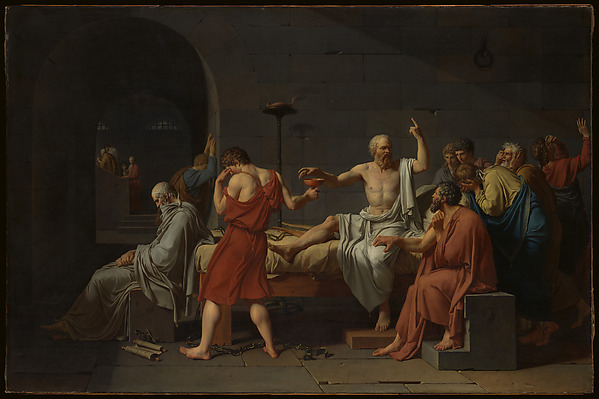
The Death of Socrates, Jacques Louis David, 1787

The Death of Socrates

1787 · Metropolitan Museum of Art

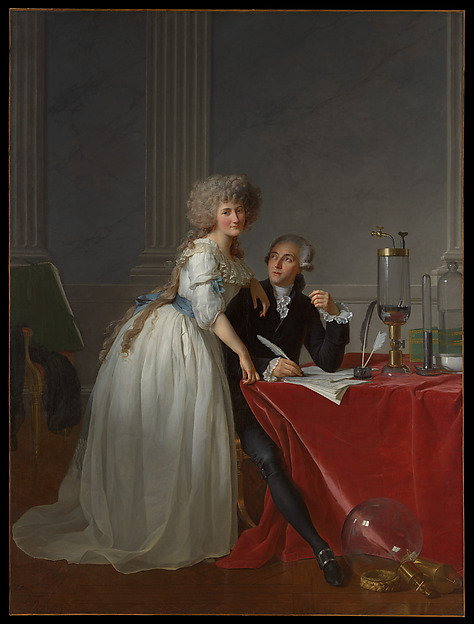
Antoine Laurent Lavoisier (1743–1794) and Marie Anne Lavoisier (Marie Anne Pierrette Paulze, 1758–1836), Jacques Louis David, 1788

Antoine Laurent Lavoisier (1743–1794) and Marie Anne Lavoisier (Marie Anne Pierrette Paulze, 1758–1836)

1788 · Metropolitan Museum of Art

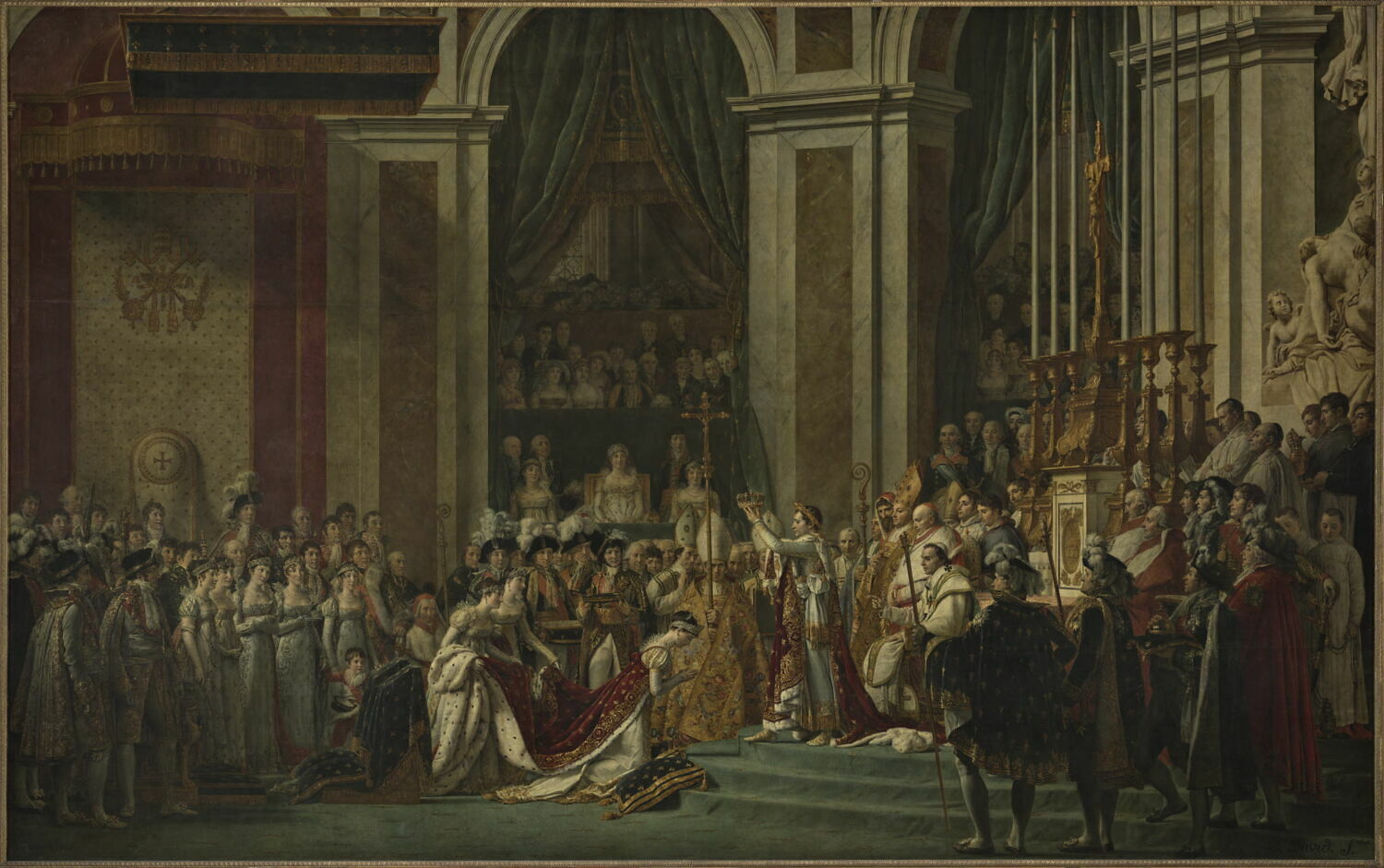
Le Couronnement de l'empereur Napoléon Ier et de l'impératrice Joséphine dans la cathédrale Notre-Dame de Paris, le 2 décembre 1804., David, Jacques-Louis, 1e quart du XIXe siècle (1807)

Le Couronnement de l'empereur Napoléon Ier et de l'impératrice Joséphine dans la cathédrale Notre-Dame de Paris, le 2 décembre 1804.

1e quart du XIXe siècle (1807) · Louvre

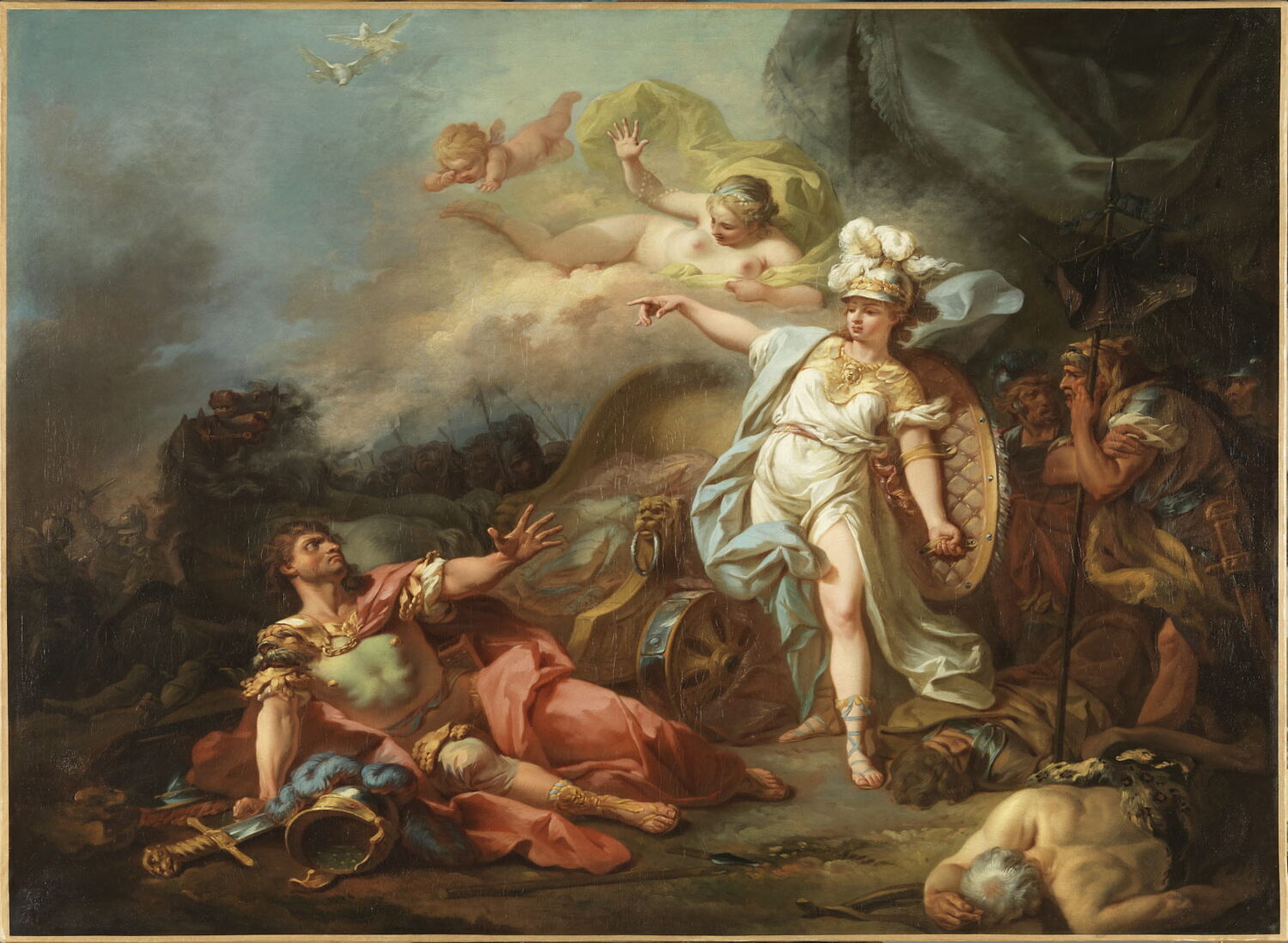
Combat de Minerve contre Mars, David, Jacques-Louis, 3e quart du XVIIIe siècle (1771)

Combat de Minerve contre Mars

3e quart du XVIIIe siècle (1771) · Louvre

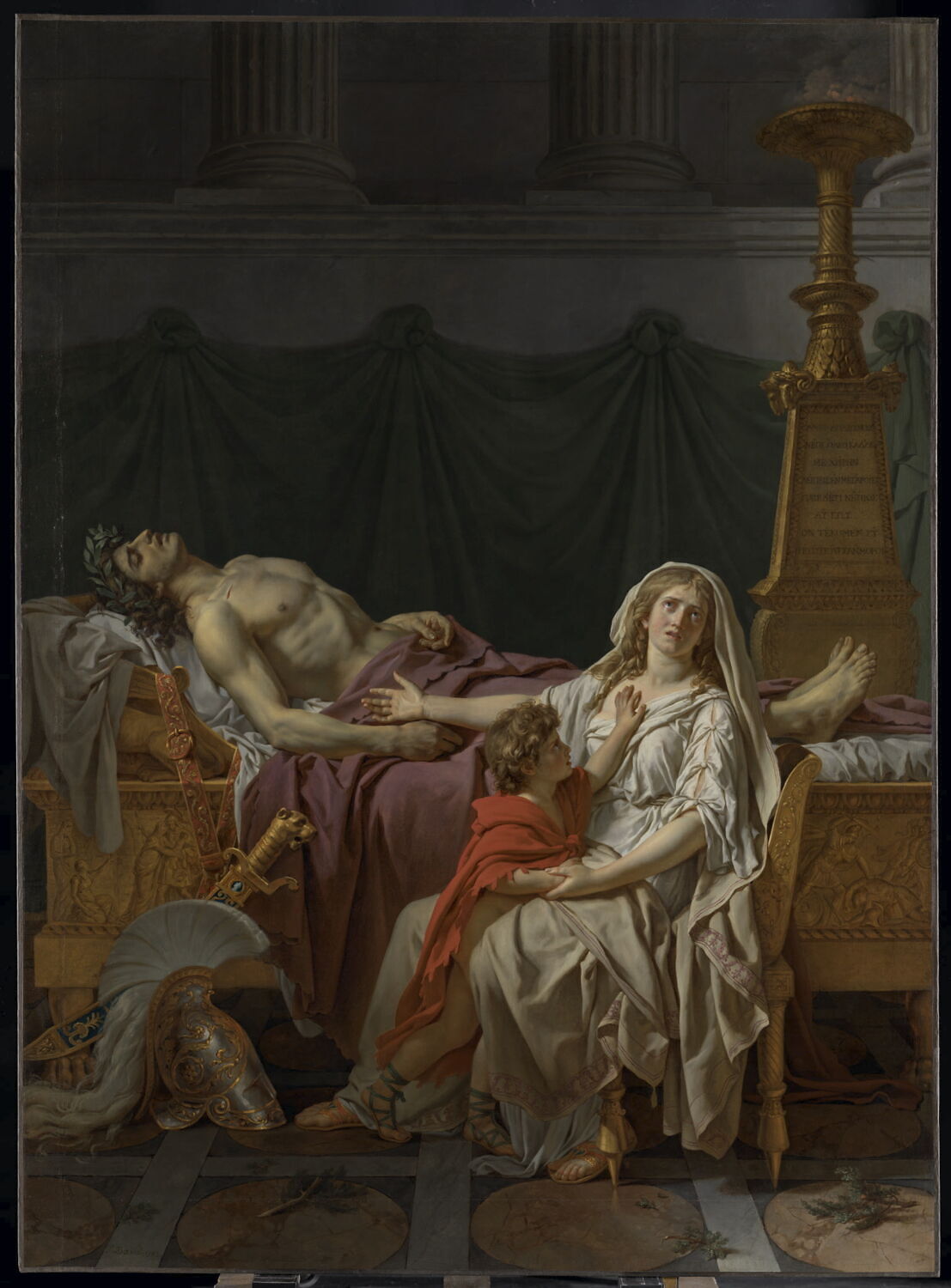
La douleur et les regrets d'Andromaque sur le corps d'Hector, David, Jacques-Louis, Fin du XVIIIe siècle (1783)

La douleur et les regrets d'Andromaque sur le corps d'Hector

Fin du XVIIIe siècle (1783) · Louvre

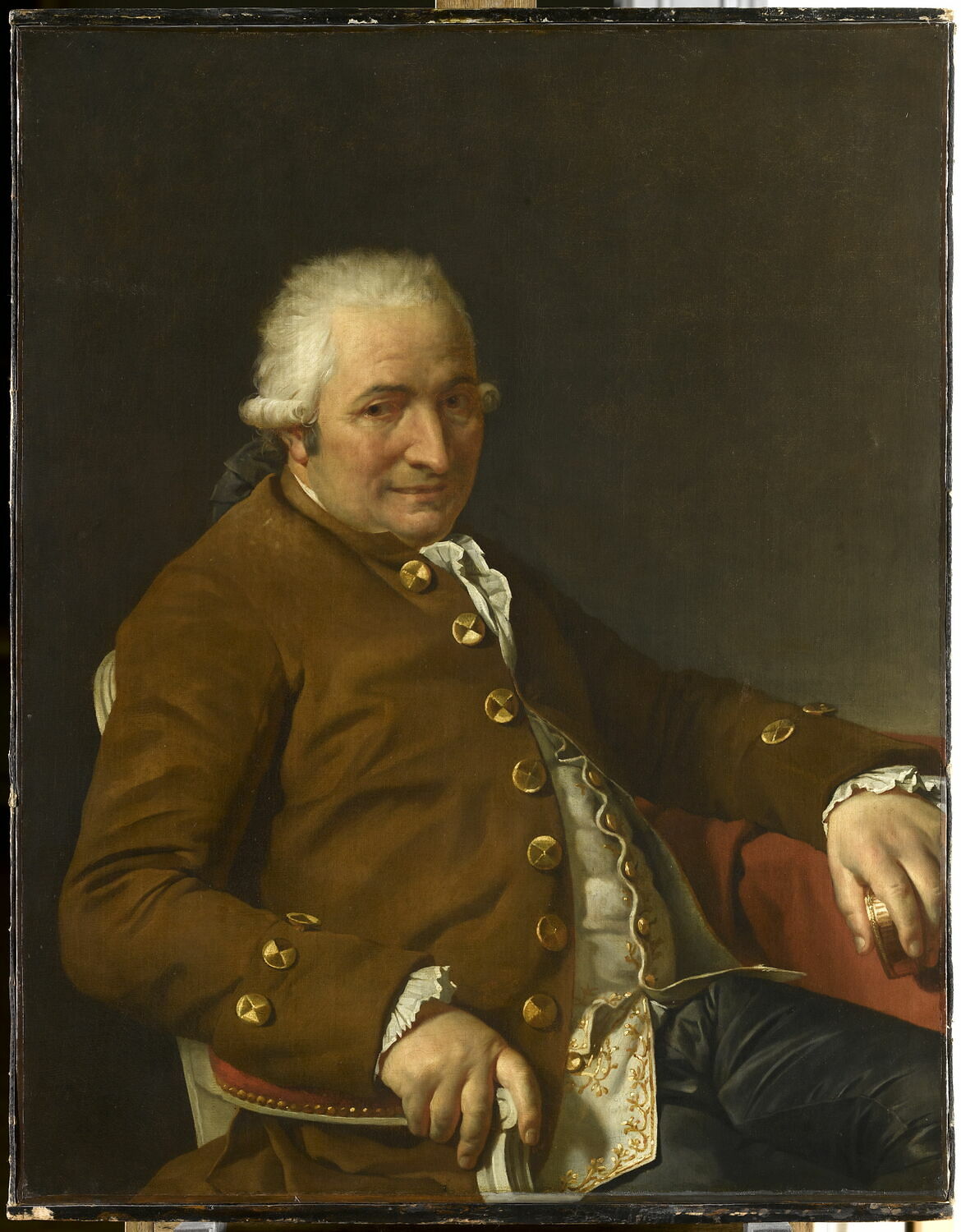
Portrait de Charles-Pierre Pécoul (1728-1794), beau-père de l’artiste, David, Jacques-Louis, 4e quart du XVIIIe siècle (1784)

Portrait de Charles-Pierre Pécoul (1728-1794), beau-père de l’artiste

4e quart du XVIIIe siècle (1784) · Louvre

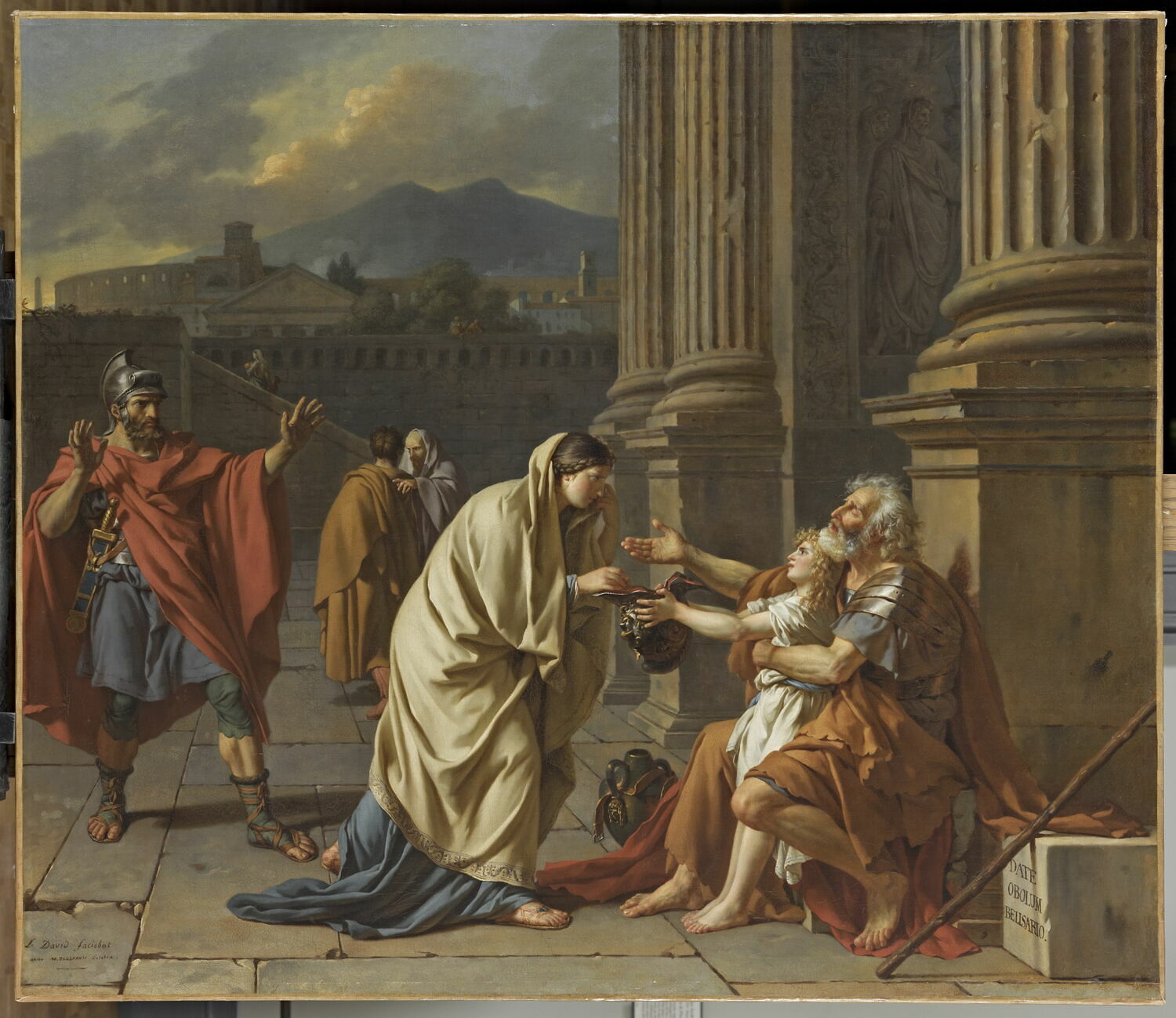
Bélisaire demandant l'aumône, David, Jacques-Louis, 4e quart du XVIIIe siècle (1784)

Bélisaire demandant l'aumône

4e quart du XVIIIe siècle (1784) · Louvre

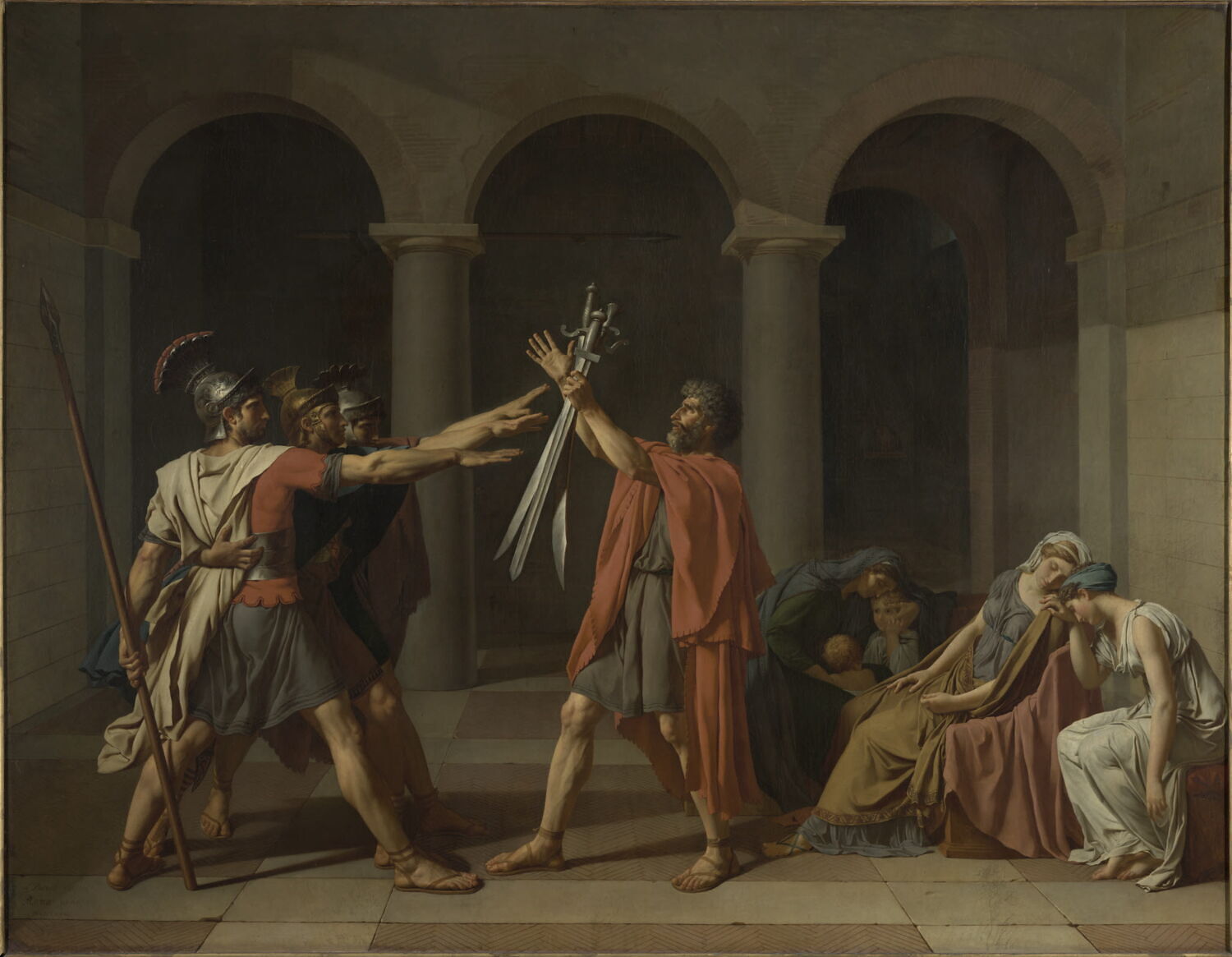
Le serment des Horaces, entre les mains de leur père, David, Jacques-Louis, 4e quart du XVIIIe siècle (1784)

Horatiernes ed

4e quart du XVIIIe siècle (1784) · Louvre

Portrait of Count Nikolay Guryev, Jean-Auguste-Dominique Ingres, 1821

Jean-Auguste-Dominique Ingres

Portrait of Count Nikolay Guryev, 1821

Portrait of Josephine de Beauharnais, François Gérard, 1801

François Gérard

Portrait of Josephine de Beauharnais, 1801

Bonaparte at the Pont d'Arcole, Antoine-Jean Gros, c. 1796

Antoine-Jean Gros

Bonaparte at the Pont d'Arcole, c. 1796

Morpheus and Iris, Pierre-Narcisse Guérin, 1811

Pierre-Narcisse Guérin

Morpheus and Iris, 1811

Innocence Preferring Love to Wealth, Pierre Prud'hon, 1804

Pierre Prud'hon

Innocence Preferring Love to Wealth, 1804

Napoleon on a Hunt in the Forest of Compiegne, Carle Vernet, 1811

Carle Vernet

Napoleon on a Hunt in the Forest of Compiegne, 1811

Death of Cato of Utica, Guillaume Guillon-Lethière, 1795

Guillaume Guillon-Lethière

Death of Cato of Utica, 1795

Henry IV and his Suite Hunting, Nicolas Antoine Taunay, c. 1804

Nicolas Antoine Taunay

Henry IV and his Suite Hunting, c. 1804

I kataloget

MalerierOlieFransk maleriKlassicismeRomantikken1800-talletFrankrig