 Jusepe de RiberaSpanien, 1591–1652
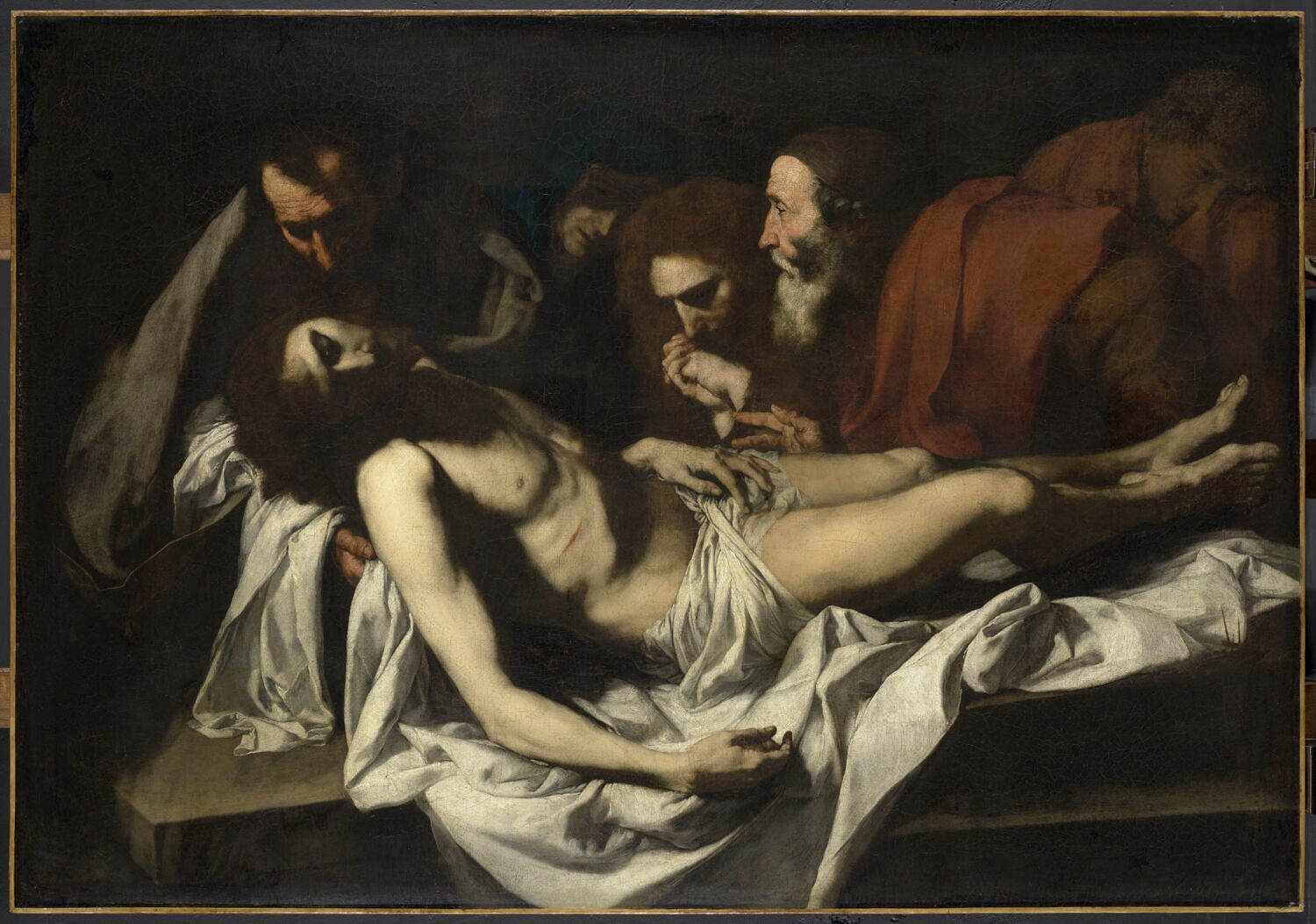
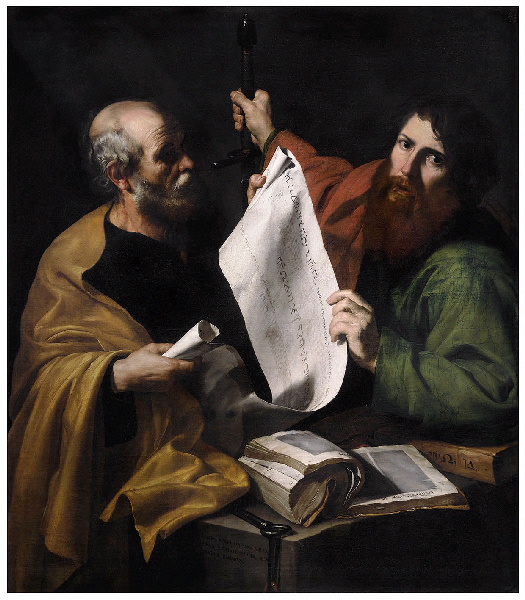
Saint Pierre et saint Paul
Kan det ses?
Ukendt
Hvor er »Saint Pierre et saint Paul« i dag? Samling: Musée des Beaux-Arts de Strasbourg, Strasbourg. Ukendt.
Strasbourg, Frankrig
Ejeren er kendt; om værket er udstillet i dag, vides ikke.
- Uændret siden
- Kilde
- Museet
Oplysninger
- Inventarnummer
- MBA 180 ; 44.R.99 (N° récolement)
Hvad det viser
I kataloget
Kilder
- Musée des Beaux-Arts de Strasbourg
- Billede: Musée des Beaux-Arts de Strasbourg — © Service photographique des Musées de Strasbourg, © BACHER, © PLISSON; Ministère de la Culture (France), base Joconde
Imens i livet hos Jusepe de Ribera
Hele livet1609–1616 · Virkested
Parma
1613–1616
Rome: fame, earnings and debts
According to Giulio Mancini, Ribera begins by working for daily wages in other artists' workshops, then wins a strong reputation and large profits; Guido Reni is among the admirers of his work, and a painter of his kind had not been seen in Rome for years. But he is lazy at times, spends extravagantly and falls into debt.
late 1616
The permanent move to Naples
In late 1616 Ribera moves to Naples, then ruled by Spain, for good — according to Mancini, to escape his creditors, since he lived beyond his means despite a high income. Many of his paintings will be taken back to Spain by returning Spaniards, but he himself never goes back.
after 1616
Viceroy Osuna and the signature “español”
Ribera quickly attracts the attention of the Viceroy, Pedro Téllez-Girón, Duke of Osuna, who gives him several major commissions showing the influence of Guido Reni. His Spanish nationality aligns him with the small Spanish governing class of the city, and from this point he signs his work “Jusepe de Ribera, español” — “Spaniard”.
1616
Marrying a Neapolitan painter's daughter
In November 1616 Ribera marries the sixteen-year-old Caterina Azzolino, daughter of the Sicilian-born Neapolitan painter Giovanni Bernardino Azzolino; her father's connections in the Neapolitan art world help establish Ribera at once as a major figure.
1616–1656 · Virkested
Naples