Apollinary Vasnetsov1856–1933
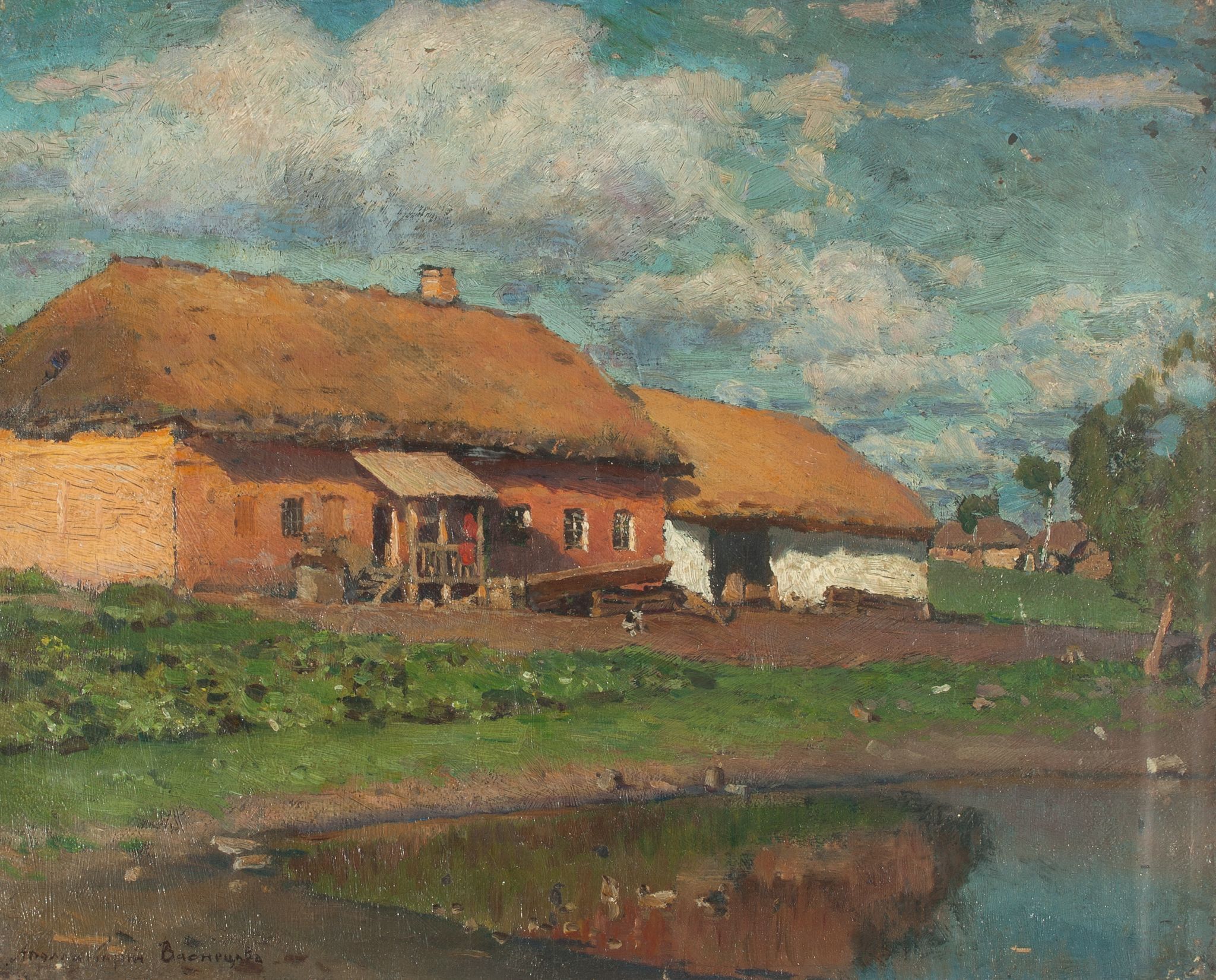
Речка Воря
Kan det ses?
Ukendt
Hvor er »Речка Воря« i dag? Samling: Abramtsevo, Abramtsevo. Ukendt.
Abramtsevo, Rusland
Ejeren er kendt; om værket er udstillet i dag, vides ikke.
- Uændret siden
- Kilde
- Museet
Om maleriet
Med museets ord — på russisk
Пейзаж. На первом плане, по диагонали, изображена часть реки, покрытой тиной серого цвета у берегов. На одном берегу слева - яркая зелень и осока. На втором плане изображены густые заросли деревьев коричневого и зеленого цвета, которые отражаются в реке. Слева внизу подпись автора: Ап. Васнецовъ.
Abramtsevo
Oplysninger
- Inventarnummer
- Ж 437
I kataloget
Kilder
- Ruslands statslige katalog over museumsfonden
- Billede: Abramtsevo — © Абрамцево · Госкаталог музейного фонда РФ
Imens i livet hos Apollinary Vasnetsov
Hele livet1878
Move to Moscow
He left the countryside for Moscow to join his brother Viktor, and from then on devoted himself entirely to art.
from 1882
The Abramtsevo Circle
From 1882 he spent every summer at his brother's dacha in the village of Akhtyrka near Abramtsevo, Savva Mamontov's estate, and associated closely with members of the Abramtsevo circle.
from 1883
Debut at the Peredvizhniki Exhibitions
He began showing his works at the exhibitions of the Peredvizhniki (Society for Travelling Art Exhibitions); he became a member of the Society in 1899.
1885–1914
Work as a Theatre Designer
He began working as a theatre designer in 1885 at Savva Mamontov's Private Russian Opera; in the early 1900s he created sets for operas including Rimsky-Korsakov's "Sadko" and "The Legend of the Invisible City of Kitezh" for the Mariinsky Theatre (1908) and the final scene of "A Life for the Tsar" for the Bolshoi Theatre (1914).
1886
"Motherland" at the 14th Peredvizhniki Exhibition
At the 14th Peredvizhniki exhibition in St. Petersburg the painting "Motherland" was shown, inspired by memories of his childhood in the village of Ryabovo in Vyatka Province.
1890
Journey through Northern Russia and the Urals
He made a journey through the north of the Russian Empire, recording views of Siberia and the Urals; it yielded "Forest on the Slopes of Mount Blagodat" and "Taiga in the Urals" (both 1890).