Kesav
Rani Durgavati
Må man se det?
Tager ikke imod for tiden

Victoria and Albert Museum
London, Storbritannien
Det hører til samlingen, men er ikke udstillet for tiden.
- Kontrolleret
- Uændret siden
- Kilde
- Museet
Om maleriet
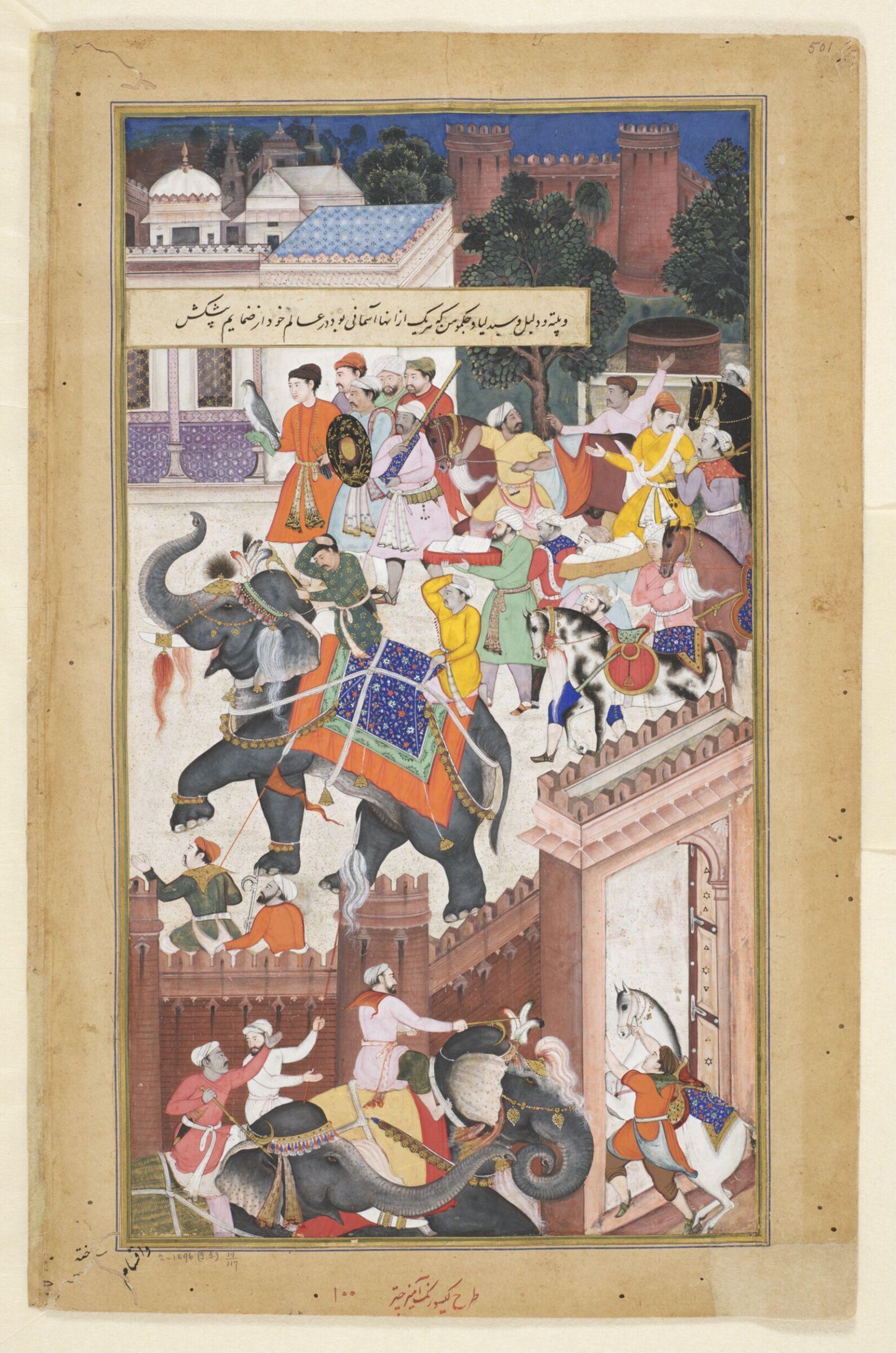
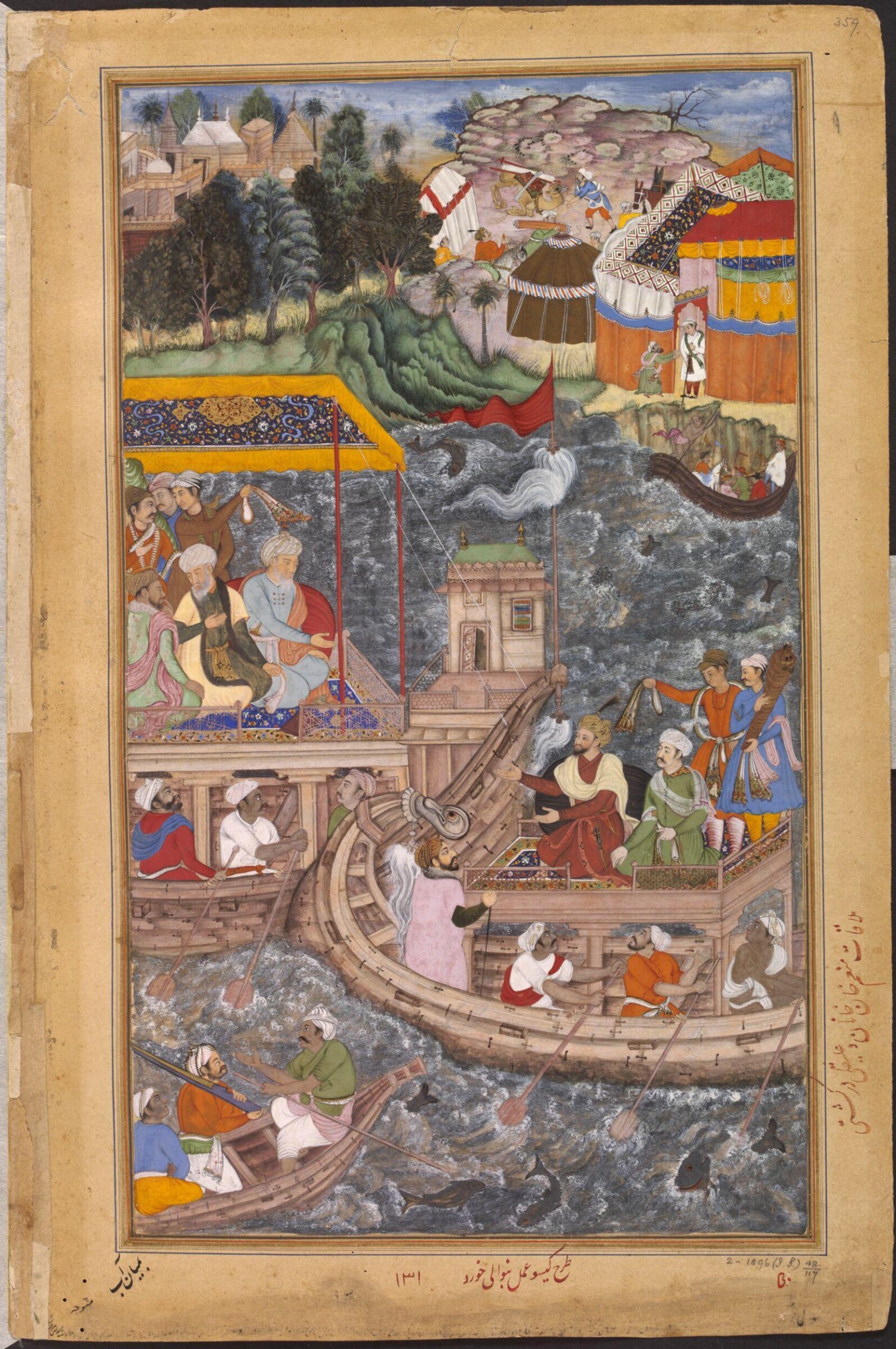
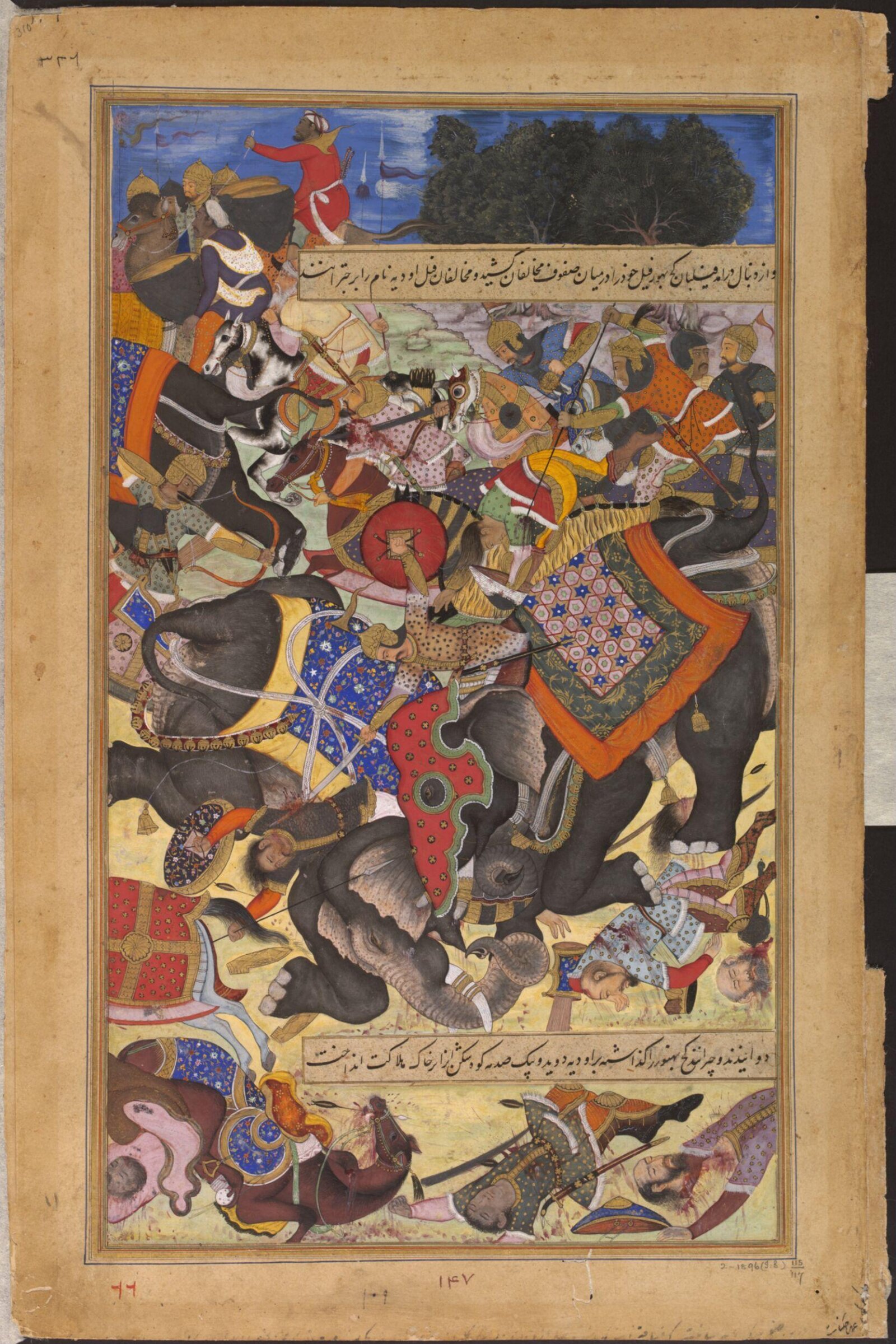
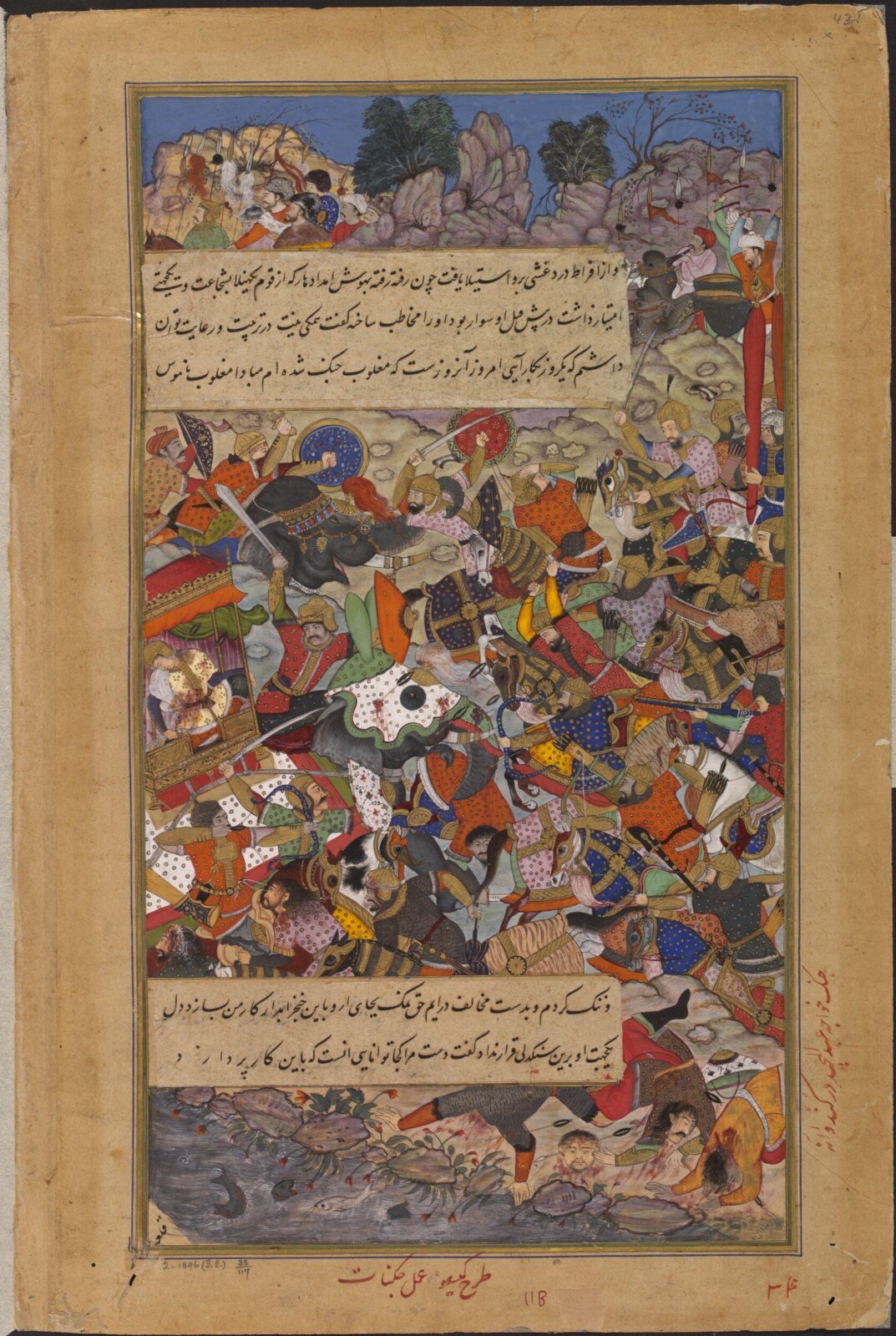
This painting by the Mughal court artists Kesav and Jagannath from the Akbarnama (Book of Akbar) depicts the heroic death in battle of Rani Durgavati, ruler of Garha Katanga in Central India from 1550 to 1564. She was a princess of the Chandel dynasty of Mahoba, and ruled as regent for her son Bir Narayan. She was a capable and benevolent ruler as well as being a courageous leader. Her army consisted of 20,000 cavalry and 1000 elephants, and had repelled other attacks on the kingdom, but her forces were easily defeated by the overwhelming size of the Mughal army. This painting shows her at centre left, struck by arrows. She pulled them out, but then killed herself rather than submit to Akbar. This painting is the right half of a double-page illustration, the left half being Museum no. IS.2:36-1896. The image is overlaid by two panels of text extending from the left-hand margin.
Læs videre
The Akbarnama was commissioned by the Mughal emperor Akbar (r.1556–1605) as the official chronicle of his reign. It was written in Persian by his court historian and biographer, Abu’l Fazl, between 1590 and 1596, and the V&A’s partial copy of the manuscript is thought to have been illustrated between about 1592 and 1595. This is thought to be the earliest illustrated version of the text, and drew upon the expertise of some of the best royal artists of the time. Many of these are listed by Abu’l Fazl in the third volume of the text, the A’in-i Akbari, and some of these names appear in the V&A illustrations, written in red ink beneath the pictures, showing that this was a royal copy made for Akbar himself. After his death, the manuscript remained in the library of his son Jahangir, from whom it was inherited by Shah Jahan.
The V&A purchased the manuscript in 1896 from Frances Clarke, the widow of Major General John Clarke, who bought it in India while serving as Commissioner of Oudh between 1858 and 1862.
Victoria and Albert Museum
Oplysninger
- Inventarnummer
- IS.2:35-1896
Hvad det viser
I kataloget
Kilder
- Victoria and Albert Museum
- Billede: Victoria and Albert Museum — © Victoria and Albert Museum, London