 El LissitzkyRusland, 1890–1941
Проун
Må man se det?
Ukendt: museet holder tæt

Tretjakovgalleriet
Moskva, Rusland
Ejeren er kendt. Om det er udstillet i dag, siger museet ikke, og at gætte har vi ikke lært.
- Uændret siden
- Kilde
- Museets egne samlingsdata
Om værket
In the museum's own words — the original
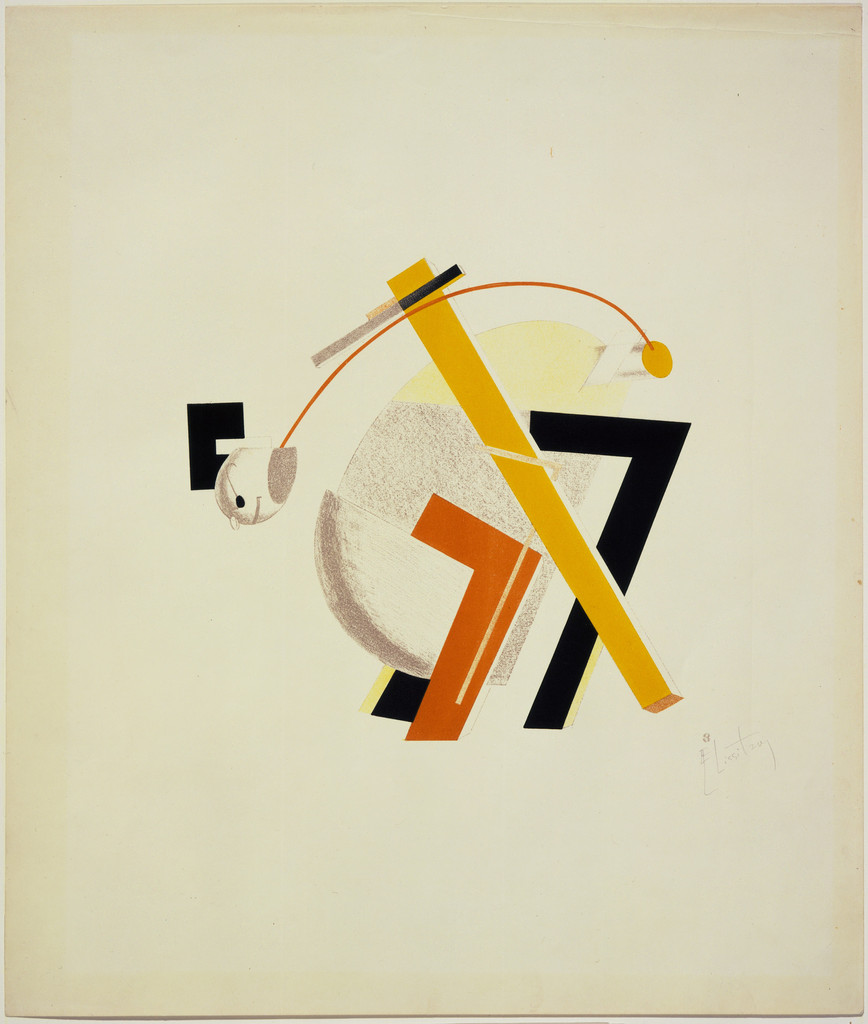
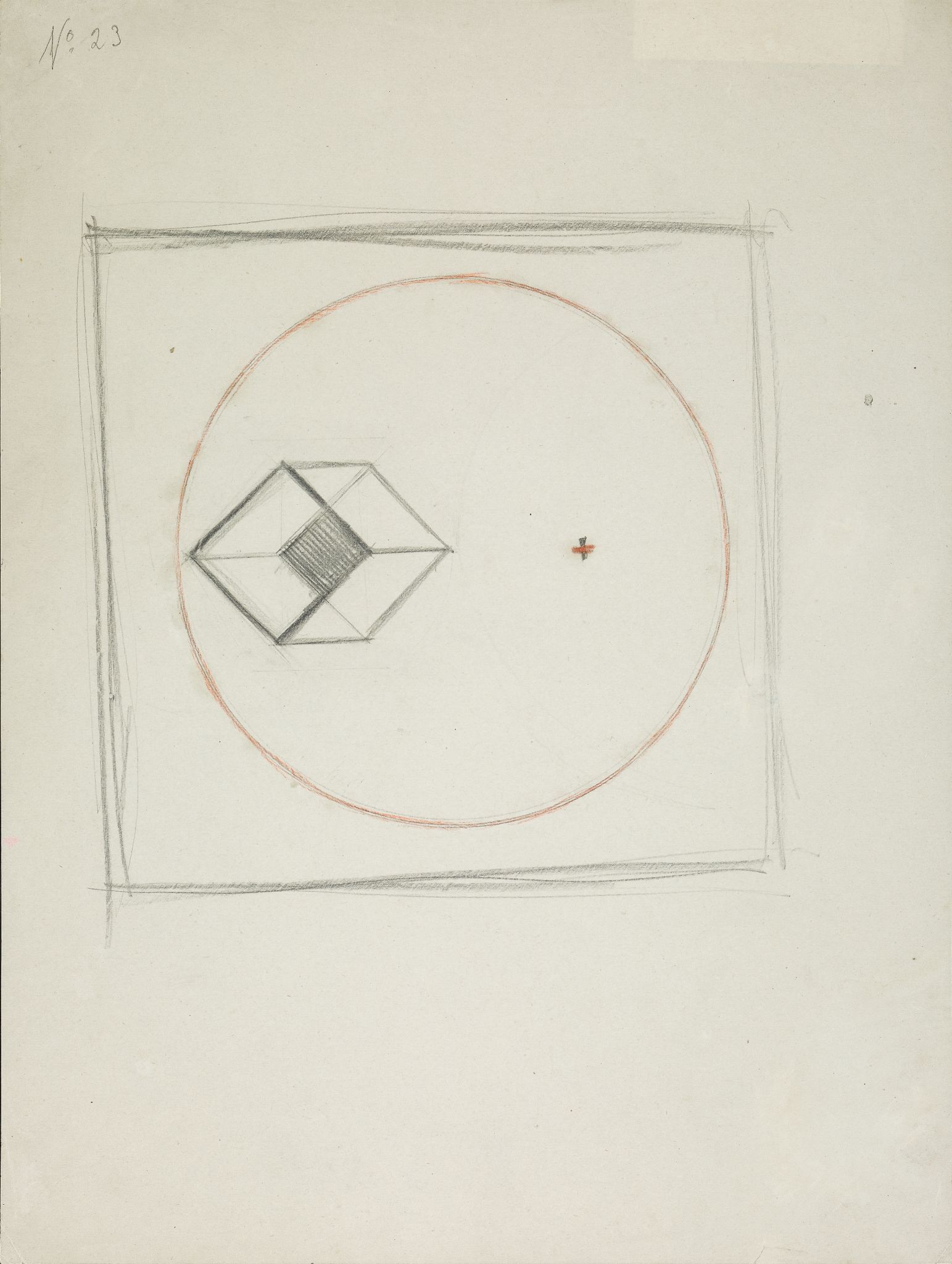
По этому наброску был создан живописный проун, он запечатлен на фотографии персональной выставки Лисицкого в Дрездене в 1925 году (местонахождение картины неизвестно).
На протяжении 1920‒1924 годов проуны претерпевают эволюцию. Их общая концепция не меняется, но если первые опыты Лисицкого декларировались им в качестве «пересадочной станции из живописи в архитектуру», то поздние работы гораздо больше тяготели к общим интернациональным принципам геометрической абстракции.
Из созданных в Германии проунов практически удаляется архитектурная составляющая; пафос востребованного в послереволюционной России строительства нового мира – «Города Коммуны» ─ в Европе теряет актуальность. В доведенных до рафинированности композициях акцент сместился в область общей пластической логики геометрической абстракции, холодной стерильной красоты безупречной конструкции.
Read on
Проуны больше не пытаются визуализировать приемы архитектурного проектирования, но становятся экспериментом с функциональностью чистой формы. В статье «Элемент и изобретение», посвященной задачам современной архитектуры, Лисицкий выделяет три основных элемента ─ куб, конус и шар, и определяет «изобретение» как «подбор само собой разумеющейся компоновки» этих элементов, в зависимости от назначенной им функции.
Tretjakovgalleriet
Oplysninger
- Inventarnummer
- РС-3770
I kataloget
Kilder
- Tretjakovgalleriet: the museum's own open data · hentet for 7 dage siden
- Billede: Tretjakovgalleriet — © State Tretyakov Gallery
Imens i livet hos El Lissitzky
Hele livet1920–1921
Moscow: INKhUK, a lecture on the Prouns, VKhUTEMAS
In 1920 Lissitzky leaves Vitebsk for Moscow and becomes a member of INKhUK (the Institute of Artistic Culture, also referred to as GINKhUK); on 23 September 1921 he gives a lecture there about his Prouns. In 1921 he also starts to teach at VKhUTEMAS but soon leaves Moscow for Germany.
1921
Leaving for Germany as a “cultural emissary”
In 1921, as UNOVIS declines and suprematism begins to fracture into a utopian, spiritual half and a utilitarian one, Lissitzky aligns with neither and leaves Vitebsk: he takes a job as a “cultural emissary” of Soviet Russia and moves to Weimar Berlin to establish contacts between Russian and German artists — what exactly he did in this role remains unclear. In 1921–1925 he lives in Germany and Switzerland.
1922
First solo exhibition in Hanover
The year after the publication of his first Proun series in 1921, Kurt Schwitters introduces Lissitzky to the Hanover gallery Kestnergesellschaft, where he holds his first solo exhibition. The second Proun series, printed in Hanover in 1923, is a success.
1923
The Proun Room at the Great Berlin Art Exhibition
In 1923, for the Great Berlin Art Exhibition, Lissitzky transforms a small room (about 3 by 3 by 2.5 m) into a single work of art, the Proun Room, which lets viewers “walk into an image” and become active participants. He violates the unwritten rule of rejecting the commercialization of art by putting price tags on three elements of the room; the price tags, together with his “half-dance” during the demonstration of the room, alienate his friend Theo van Doesburg.
1923–1924
Tuberculosis and a Swiss hospital
In 1923–1924 Lissitzky is severely ill with tuberculosis and stays in a Swiss hospital; at this time he is reported even to have considered suicide. He will die of tuberculosis in 1941.
1925
Return to the USSR
Lissitzky's years in Germany and Switzerland run from 1921 to 1925; it appears that in 1925 he returns to the Soviet Union.