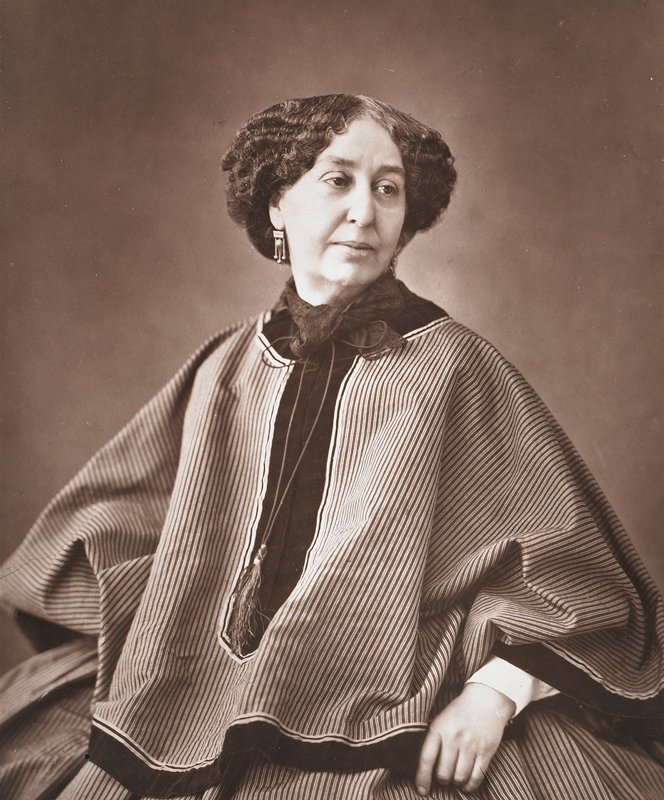
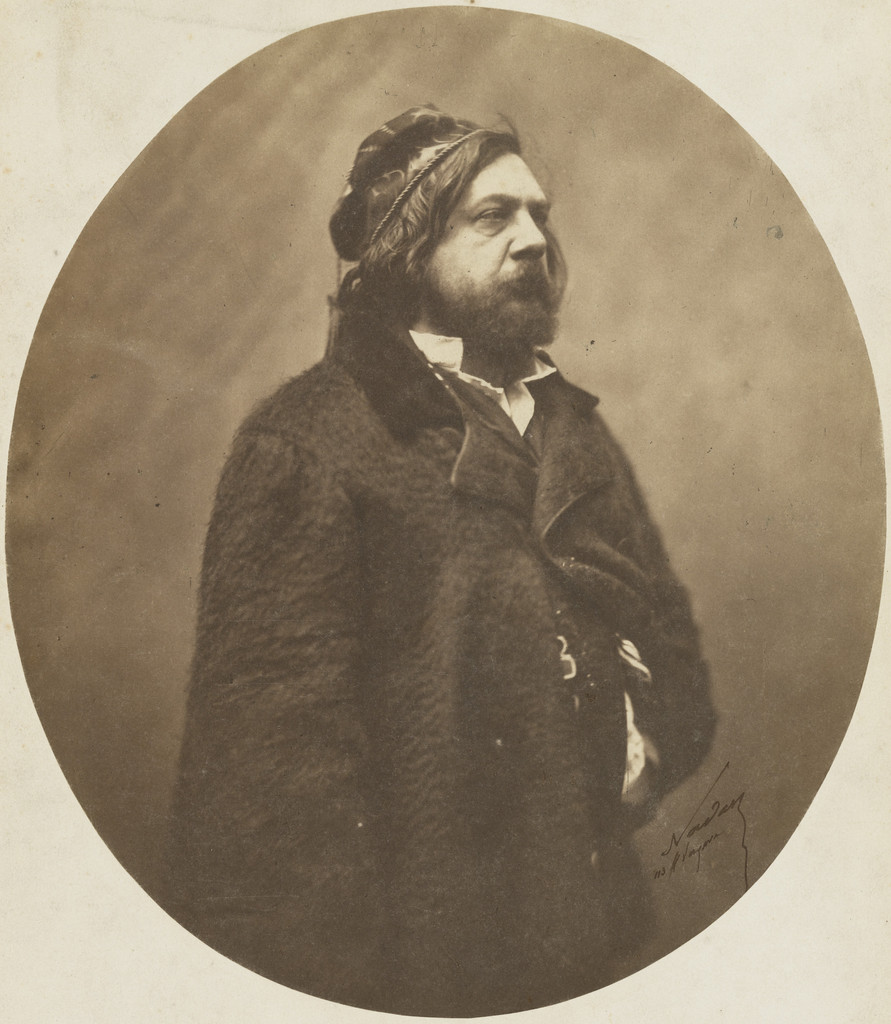
Félix NadarFrankrig, 1820–1910
Portret van Eugène Scribe
Må man se det?
Ukendt

Amsterdam, Holland
Ejeren er kendt; om værket er udstillet i dag, vides ikke.
- Kilde
- Museet
Oplysninger
- Inventarnummer
- RP-F-F25223-C
Hvad det viser
I kataloget
Kilder
- Rijksmuseum Amsterdam
- Billede: Rijksmuseum Amsterdam — public domain
Imens i livet hos Félix Nadar
Hele livet11. august 1854
Married: Ernestine Nadar
1855
Gold medal at the Exposition Universelle for the Pierrot series
The “Expressions of Pierrot” series was shown at the Exposition Universelle in Paris in 1855, where it won a gold medal.
1858
The world’s first aerial photographs
He became the first person to take aerial photographs, using the wet-plate collodion process: the plates had to be prepared and developed in the basket while aloft, and escaping gas ruined the images until Nadar invented a gas-proof cotton cover for his baskets. He also pioneered the use of artificial light in photography, working underground in the catacombs of Paris.
1860
A studio at 35 Boulevard des Capucines
In 1860 Nadar moved to 35 Boulevard des Capucines, where he photographed politicians (Guizot, Proudhon), stage actors (Sarah Bernhardt, Paulus), writers (Hugo, Baudelaire, Sand, Nerval, Gautier, Dumas), painters (Corot, Delacroix, Millet) and musicians (Liszt, Rossini, Offenbach, Verdi, Berlioz). In the studio he eschewed traditional sumptuous decors and unnecessary accessories and preferred natural daylight.
1863
Commissions the enormous balloon “Le Géant”
He commissioned the prominent balloonist Eugène Godard to build an enormous balloon, 60 metres high with a capacity of 6,000 cubic metres, named “Le Géant” (The Giant); it inspired Jules Verne’s “Five Weeks in a Balloon”.
1863
The crash of “Le Géant” near Hanover
During a flight in October 1863 a strong wind carried the balloon off towards Germany, and near Hanover “Le Géant” crashed, injuring Nadar and his wife Ernestine.