 Karl Bryullov1799–1852
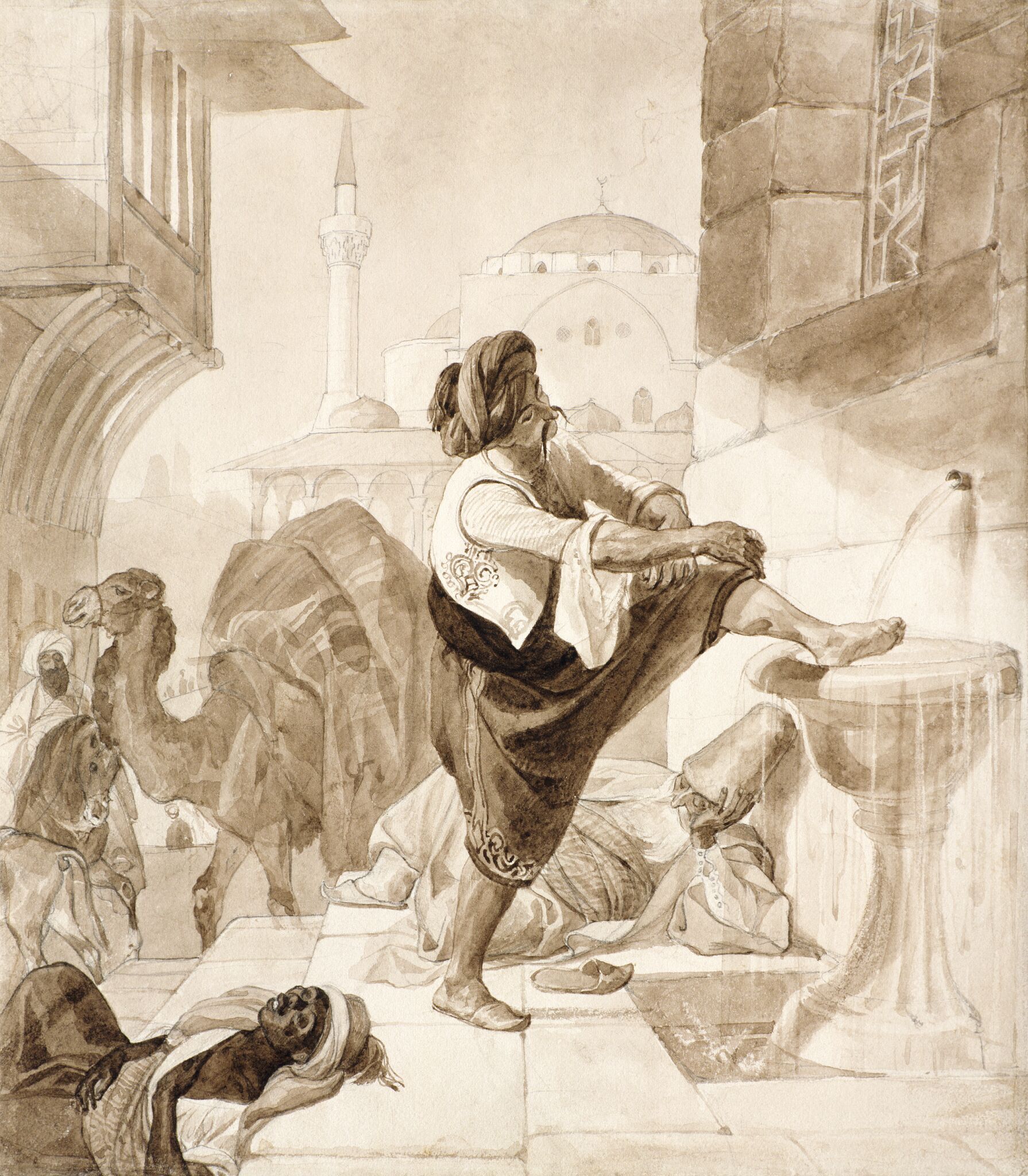
Полдень в караван-сарае
Kan det ses?
Ukendt
Hvor er »Полдень в караван-сарае« i dag? Samling: Tretjakovgalleriet, Moskva. Ukendt.

Moskva, Rusland
Ejeren er kendt; om værket er udstillet i dag, vides ikke.
- Uændret siden
- Kilde
- Museet
Om værket
Med museets ord — på russisk
Рисунок из серии жанровых композиций, исполненных Брюлловым в Константинополе. В мае 1835 года художник был приглашен участвовать в научной экспедиции в Грецию и Турцию, организованной В.П. Давыдовым. Но в Афинах Брюллов неосторожно искупался, получил солнечный удар, и, тяжело заболев, не смог продолжить путешествие. Из Афин в Смирну он приплыл на бриге «Фемистокл», где капитаном был В.П. Корнилов, будущий знаменитый адмирал. На корабле оказался друг Брюллова князь Г.Г .Гагарин, вместе с которым художник отправился в Константинополь.
Læs videre
Брюллов несколько месяцев прожил в Буюкдере, где находилась русская дипломатическая миссия. Он с интересом изучал незнакомый город, образ жизни его жителей. Эти наблюдения дали новые темы и сюжеты. В отличие от акварельных работ итальянского жанра художник обратился к технике сепии. Это натуральная краска, известная в Европе с середины XVIII века. Ее получали из чернильного мешка моллюсков-каракатиц, работали ею, как акварелью.
В сепии «Полдень в караван-сарае» художник погружает зрителя в атмосферу жизни восточного города. В центре колоритный турок моет ногу у городского фонтана. В причудливой позе сладко спит арап, растянувшись на каменных ступеньках. На дальнем плане лениво вышагивает верблюд с поклажей, виднеются очертания минарета. Условность коричневого тона сепии, виртуозность исполнения придают сцене характер нереального, сказочного зрелища, навеянного бытом и нравами Востока.
Tretjakovgalleriet
Oplysninger
- Inventarnummer
- 20043
I kataloget
Kilder
- Tretjakovgalleriet
- Billede: Tretjakovgalleriet — © State Tretyakov Gallery
Imens i livet hos Karl Bryullov
Hele livet1833
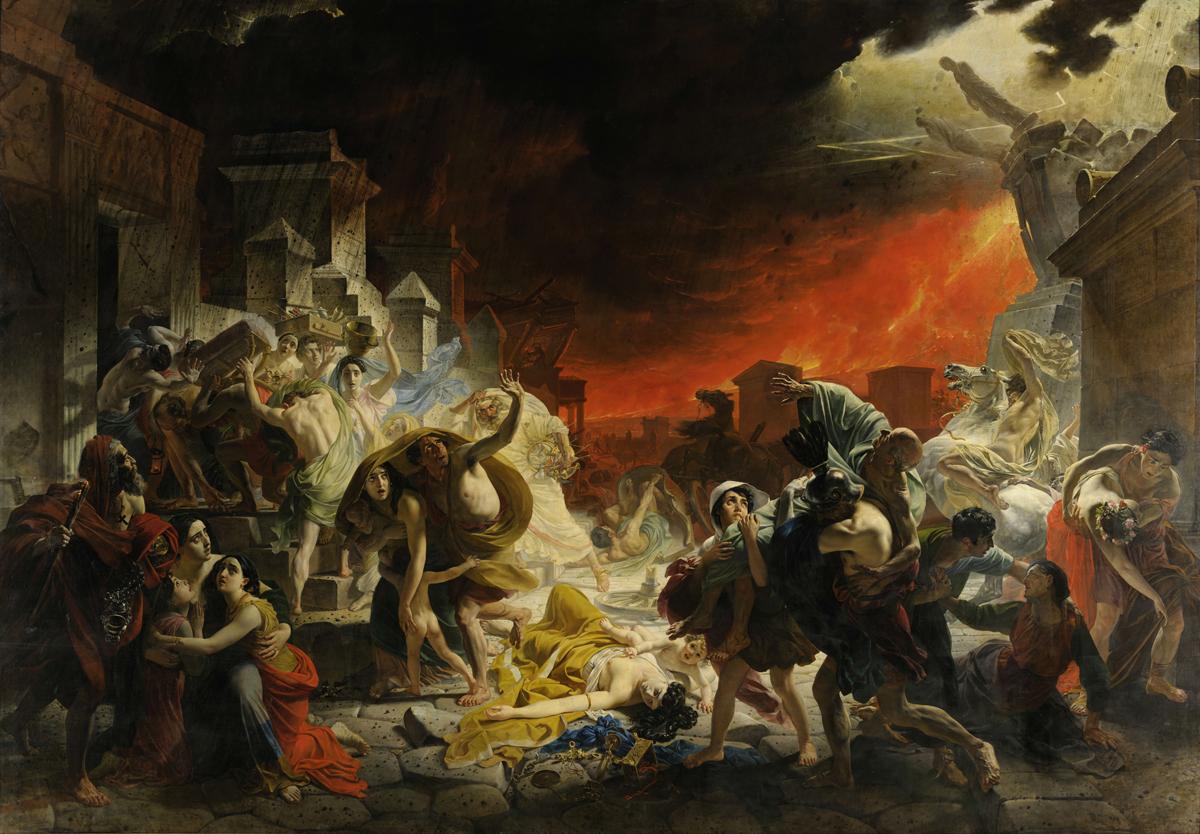
“The Last Day of Pompeii” causes a sensation in Europe and Russia
Completed in 1833, the painting caused a real sensation. What was new for Russian painting was the subject itself: not an outstanding individual but a whole people in the hours of tragedy.
1834
“Pompeii” in Paris: first prize at the Salon
In 1834 the painting was shown in Paris (the Louvre) and won first prize at the Salon, although the Paris critics received it coolly: it was already the age of Delacroix and French Romanticism.
1835
The emperor’s order: return and become a professor
In Constantinople the artist found a new order from the emperor to come to St Petersburg at once and take up a professorship at the Imperial Academy of Arts.
1835–1836
Meets Alexander Pushkin
At one of the Moscow receptions held in his honour Bryullov met Alexander Pushkin.
1836
Professor at the Academy and head of the history class
On his return to St Petersburg Bryullov was given the rank of junior (second-degree) professor and put in charge of the Academy’s history class (he taught until 1849); he was asked to paint a large picture on a theme from Russian history in order to earn the rank of senior professor.
1837
Zhukovsky’s portrait to buy out Shevchenko
Zhukovsky asked Bryullov to paint his portrait for the imperial family so that the proceeds could buy Taras Shevchenko out of serfdom; Bryullov gladly agreed, and with the help of Count M. Yu. Vielgorsky the portrait was raffled in a court lottery that raised 2,500 roubles.