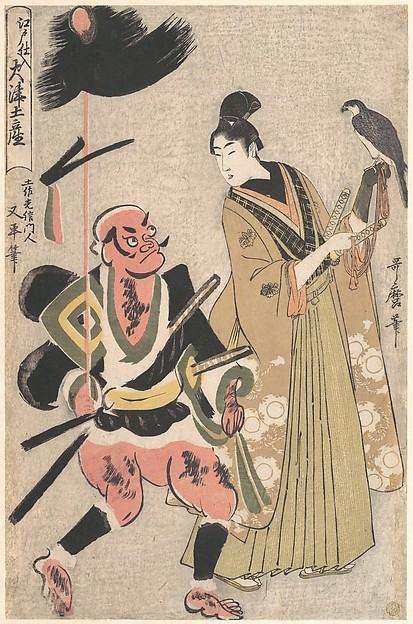
Kitagawa UtamaroJapan, 1754–1806
Poetry
Må man se det?
Ukendt

Amsterdam, Holland
Ejeren er kendt; om værket er udstillet i dag, vides ikke.
- Kilde
- Museet
Om værket
Med museets ord — på nederlandsk
Laatste en voorlaatste pagina met kyoka gedichten en uiterst links het colofon van het boek Fugenzo van Utamaro.
Rijksmuseum Amsterdam
Oplysninger
- Inventarnummer
- RP-P-1970-65-11
I kataloget
Kilder
- Rijksmuseum Amsterdam
- Billede: Rijksmuseum Amsterdam — public domain
Imens i livet hos Kitagawa Utamaro
Hele livetc. 1783 – 1788
Years in the publisher Tsutaya's house
Probably from 1783, Utamaro lives for about five years in the house of Tsutaya Jūzaburō and becomes one of the principal artists of the Tsutaya firm. Evidence of his prints from these years is sporadic: he mostly illustrates books of kyōka, “crazy verse”, a parody of the classical waka form.
1790–1801
Tightening censorship: seals on prints
From 1790 prints can be sold only with a censor's seal of approval; over the following decades censorship grows stricter, and violators can receive harsh punishments. From 1799 even preliminary drafts need approval, and in 1801 the works of a group of Utagawa-school offenders, including Toyokuni, are repressed.
c. 1791
Giving up book prints for half-length portraits of beauties
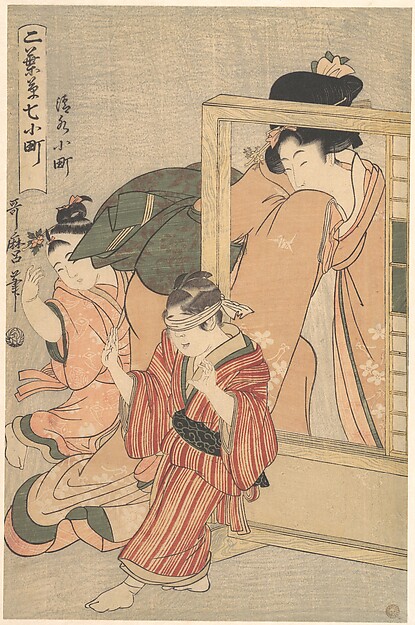
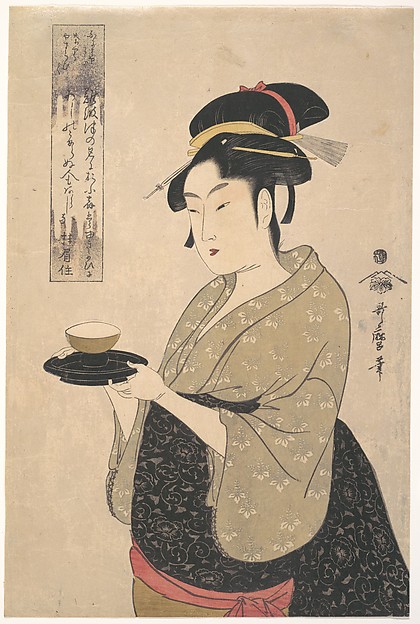
Around 1791 Utamaro gives up designing prints for books and concentrates on single portraits of women shown half-length, rather than the group scenes favoured by other ukiyo-e artists. He was the first in Japanese woodblock printing to use half-length compositions for women's portraits; none of his work from 1790–1792 has survived.