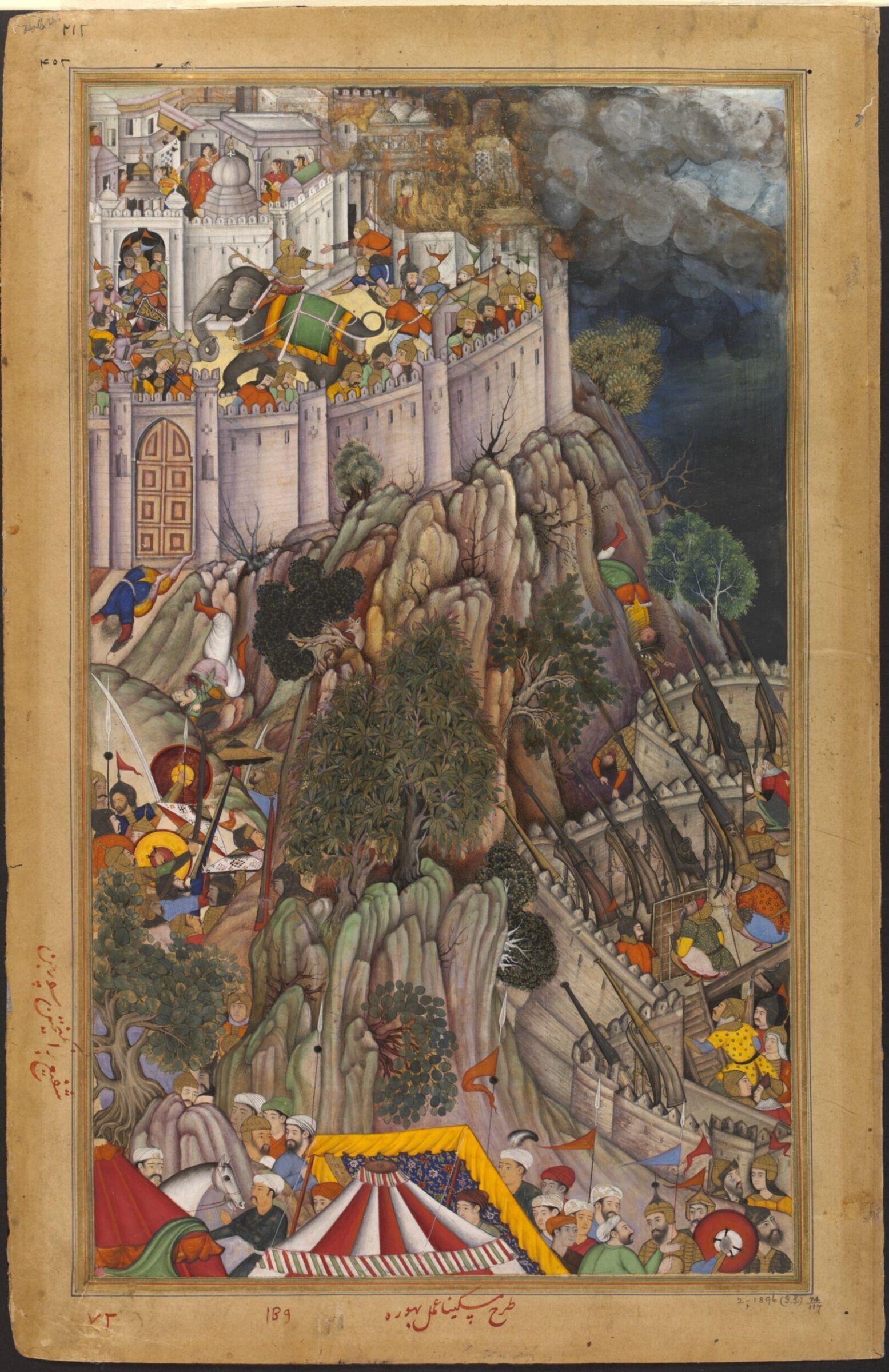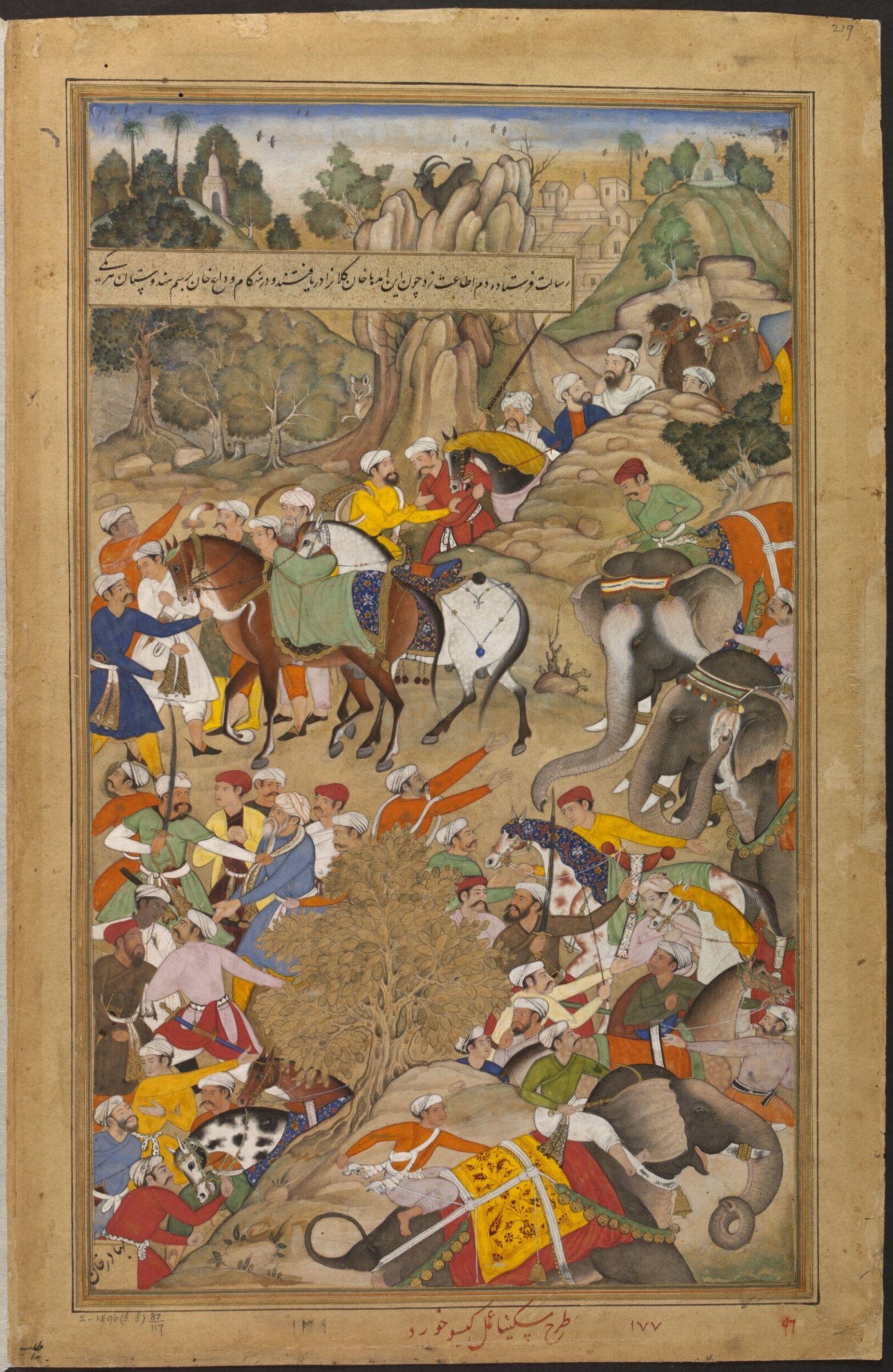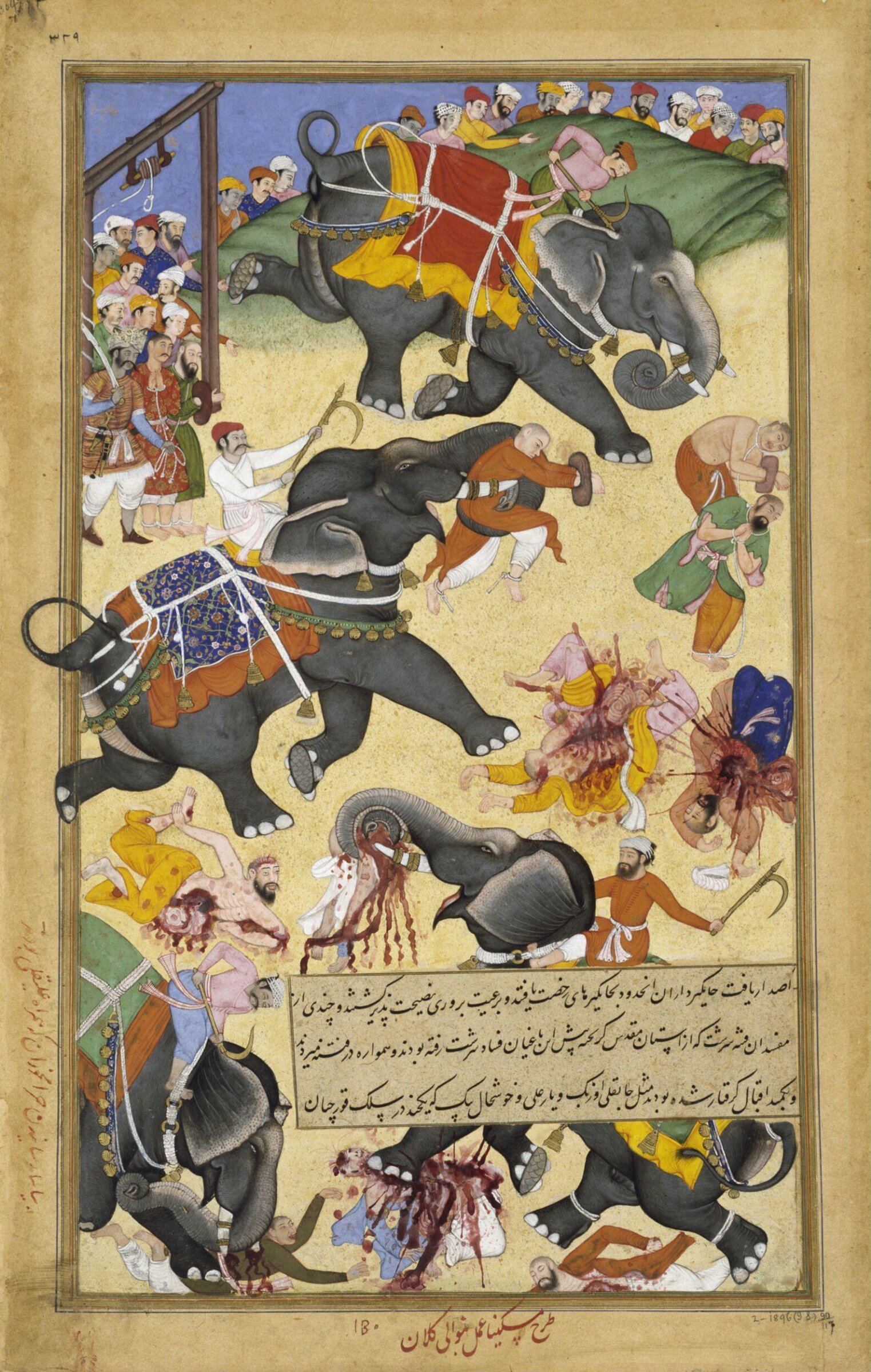
Miskina
Pir Muhammad Khan
Må man se det?
Tager ikke imod for tiden

Victoria and Albert Museum
London, Storbritannien
Det hører til samlingen, men er ikke udstillet for tiden.
- Kontrolleret
- Uændret siden
- Kilde
- Museets egne samlingsdata
About the painting
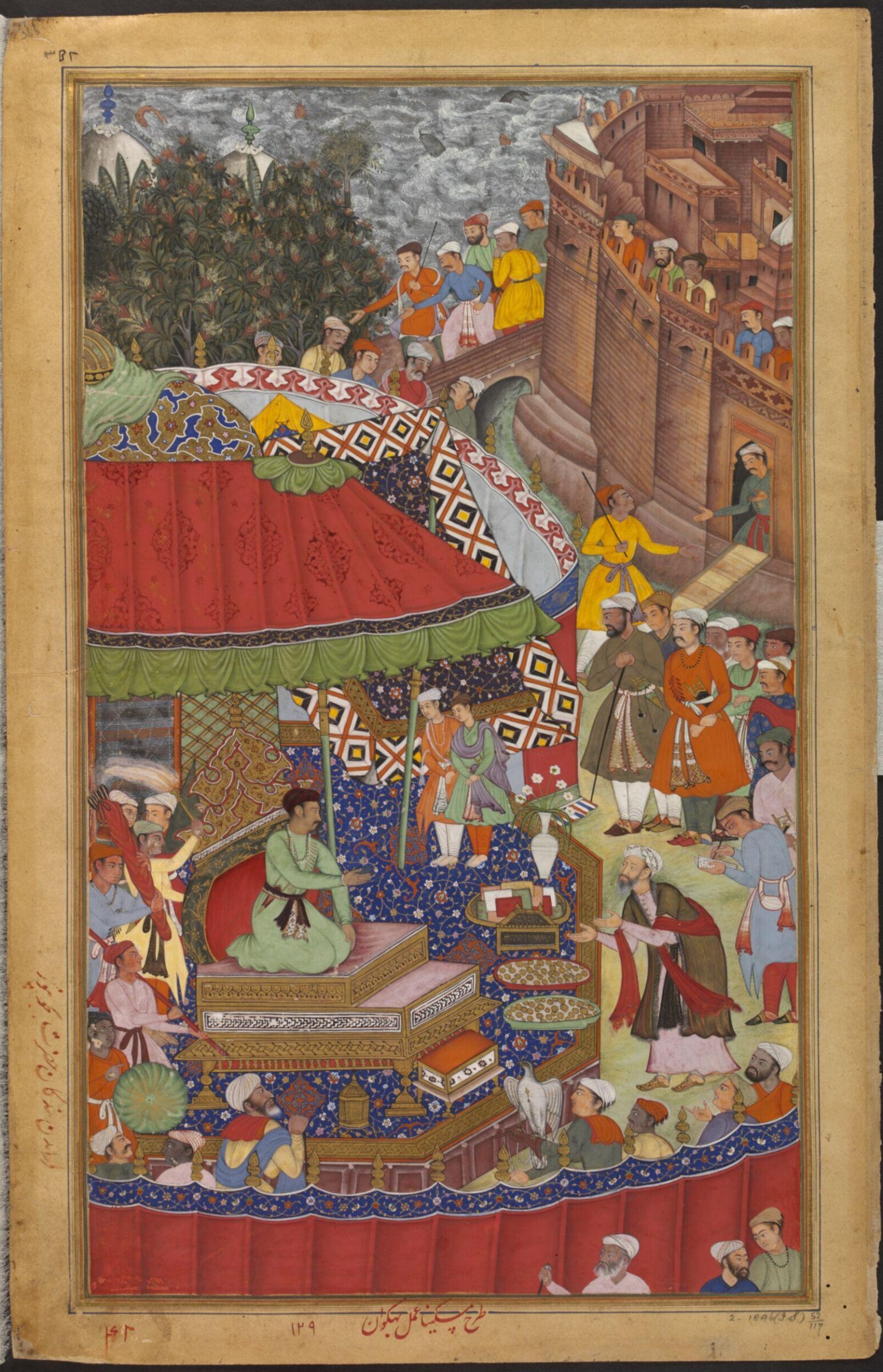
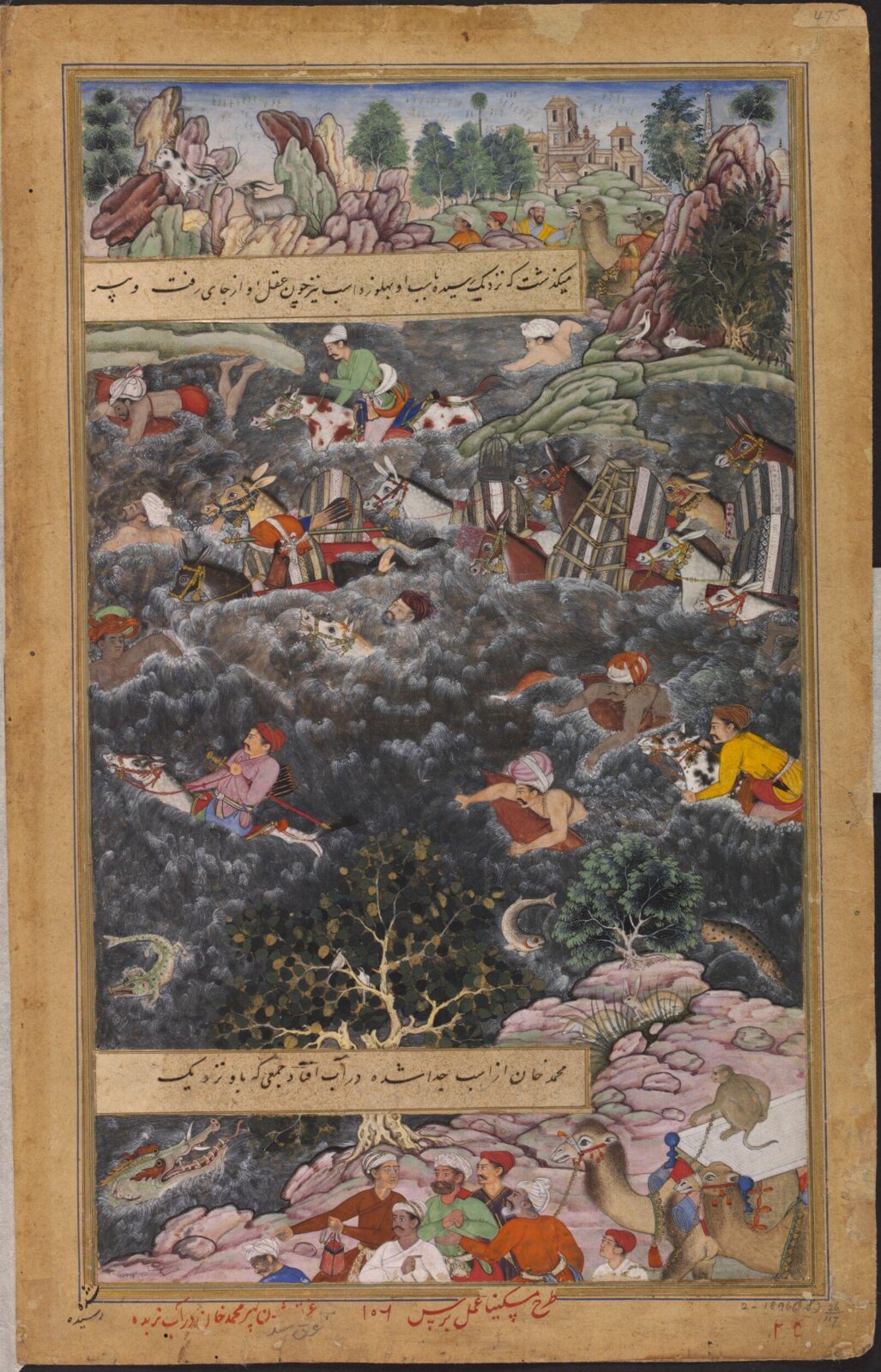
This illustration, composed by the Mughal court artist Miskina with details painted by Paras, is an illustration to the Akbarnama (Book of Akbar). It depicts the drowning of Pir Muhammad Khan, one of the generals of the Mughal emperor Akbar (r.1556–1605), in the Narbada River in central India in 1562. In the centre of the picture members of the imperial army and some of its bearers can be seen fording the river either on horseback or on inflated skins. Pir Muhammad Khan had attempted to cross the river as night fell, and did so at the same time as a train of heavily laden pack animals.One of them bumped against his horse, which then lost control and was swept into the raging waters of the river. Pir Muhammad Khan fell off, and those who were near him made no attempt to save him from drowning. Only his head, and that of his horse, are visible here.
Read on
The Akbarnama was commissioned by Akbar as the official chronicle of his reign. It was written in Persian by his court historian and biographer, Abu’l Fazl, between 1590 and 1596, and the V&A’s partial copy of the manuscript is thought to have been illustrated between about 1592 and 1595. This is thought to be the earliest illustrated version of the text, and drew upon the expertise of some of the best royal artists of the time. Many of these are listed by Abu’l Fazl in the third volume of the text, the A’in-i Akbari, and some of these names appear in the V&A illustrations, written in red ink beneath the pictures, showing that this was a royal copy made for Akbar himself. After his death, the manuscript remained in the library of his son Jahangir, from whom it was inherited by Shah Jahan.
The V&A purchased the manuscript in 1896 from Frances Clarke, the widow of Major General John Clarke, who bought it in India while serving as Commissioner of Oudh between 1858 and 1862.
Victoria and Albert Museum
Oplysninger
- Inventarnummer
- IS.2:26-1896
What it shows
I kataloget
Kilder
- Victoria and Albert Museum: the museum's own open data · hentet for 11 dage siden
- Billede: Victoria and Albert Museum — © Victoria and Albert Museum, London