PH-246
Kan det ses?
Ja, udstillet nu
Hvor er »PH-246« i dag? Art Institute of Chicago, Sal 398, Chicago. Ja, udstillet nu. Kontrolleret 16. november 2026.

Chicago, USA
Åbent nu· til kl. 17.00
Udstillet for publikum.
- Kontrolleret
- Uændret siden
- Kilde
- Museet
Om maleriet
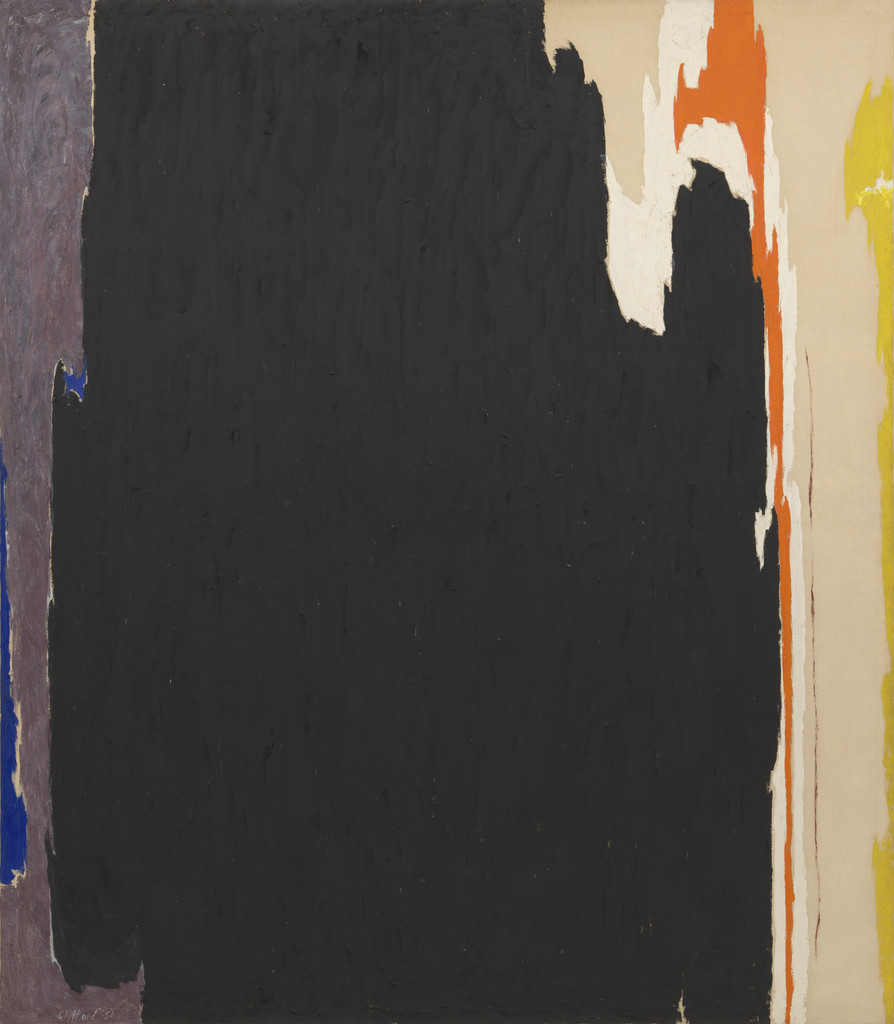
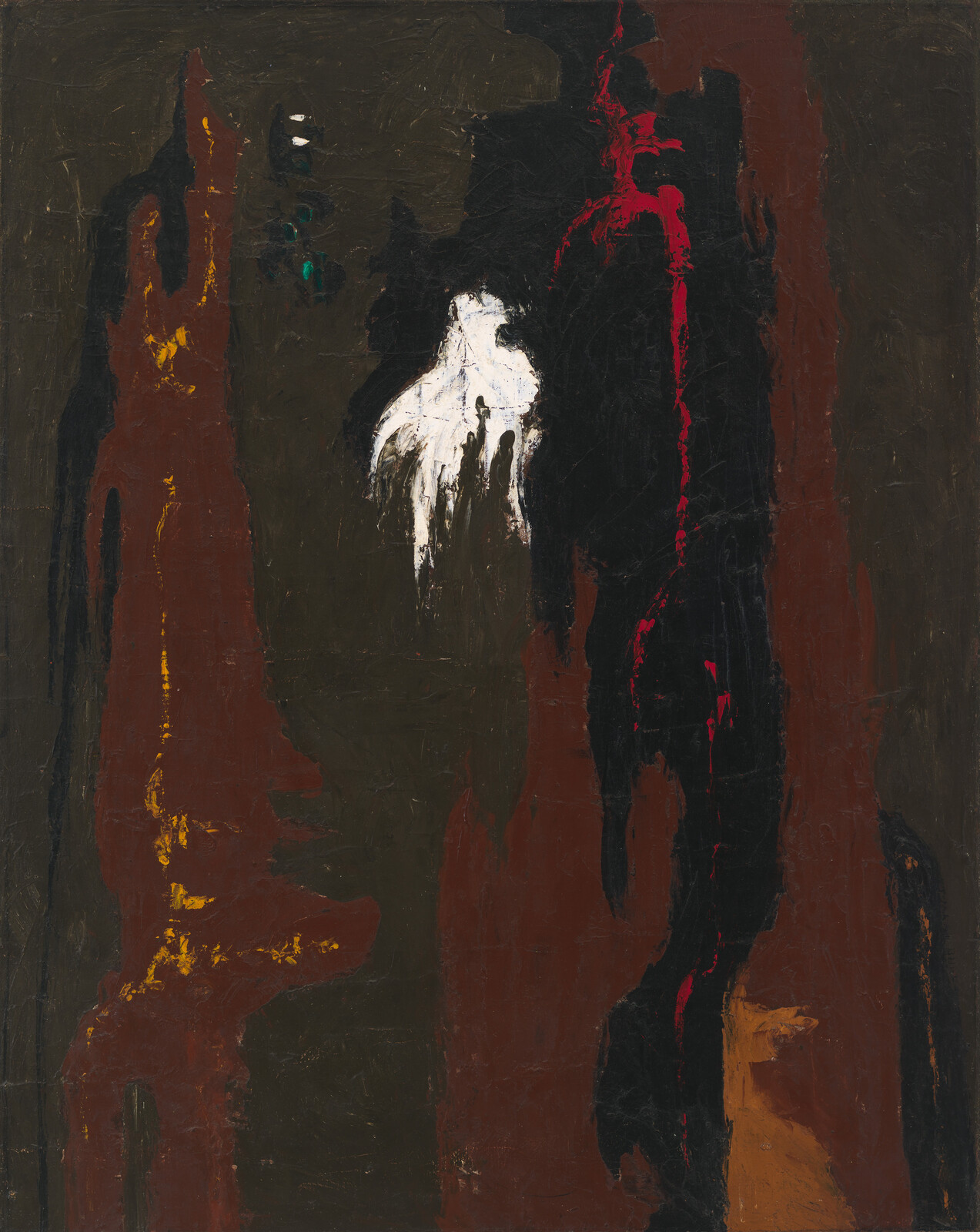
Clyfford Still’s PH-246, painted in 1951–52, is displayed in gallery 398 of the Art Institute of Chicago, Chicago. Almost the entire canvas is black. A white vertical line right of centre and a narrow red-orange streak at the left interrupt the field. Still applied paint with a palette knife, varying texture and finish rather than spreading a uniform thin coat. This handling distinguishes him from Newman and Rothko, with whom he helped establish colour-field painting in the late 1940s. Nearly monochrome black paintings are uncommon in his work.
Med museets ord
In the late 1940s, Clyfford Still, along with Barnett Newman and Mark Rothko, originated the type of Abstract Expressionism known as Field Painting, a term used to describe large canvases dominated by one uniform color or a few colors closely related in hue and value. In contrast to Newman and Rothko, who usually applied paint thinly and uniformly, Still used a palette knife, creating textural effects that give the surface a complex, nearly sculptural sense of materiality. Named after the years of its creation, 1951–52 is a rare, nearly all-black work in the artist’s oeuvre. A vertical white line to the right of center and a thin streak of red-orange along the left side provide the sole interruptions in the black field. The subtle modulations of texture and finish support the artist’s claim that "I do not oversimplify—in fact, I revel in the extra complex."
Art Institute of ChicagoCC BY 4.0
Oplysninger
- Inventarnummer
- 1962.906
Hvad det viser
I kataloget
Kilder
- Art Institute of Chicago
- Billede: Art Institute of Chicago — © the artist or rights holder