Frederick William Pomeroy
Perseus
Må man se det?
Ja, det tager imod

Victoria and Albert Museum
SalBritish Galleries, Room 122London, Storbritannien
Udstillet for publikum. Hvem der står inde for det, står nedenfor.
- Kontrolleret
- for 8 dage siden
- Uændret siden
- 25. sep. 2026
- Kilde
- Museets egne samlingsdata
About the sculpture
Object Type
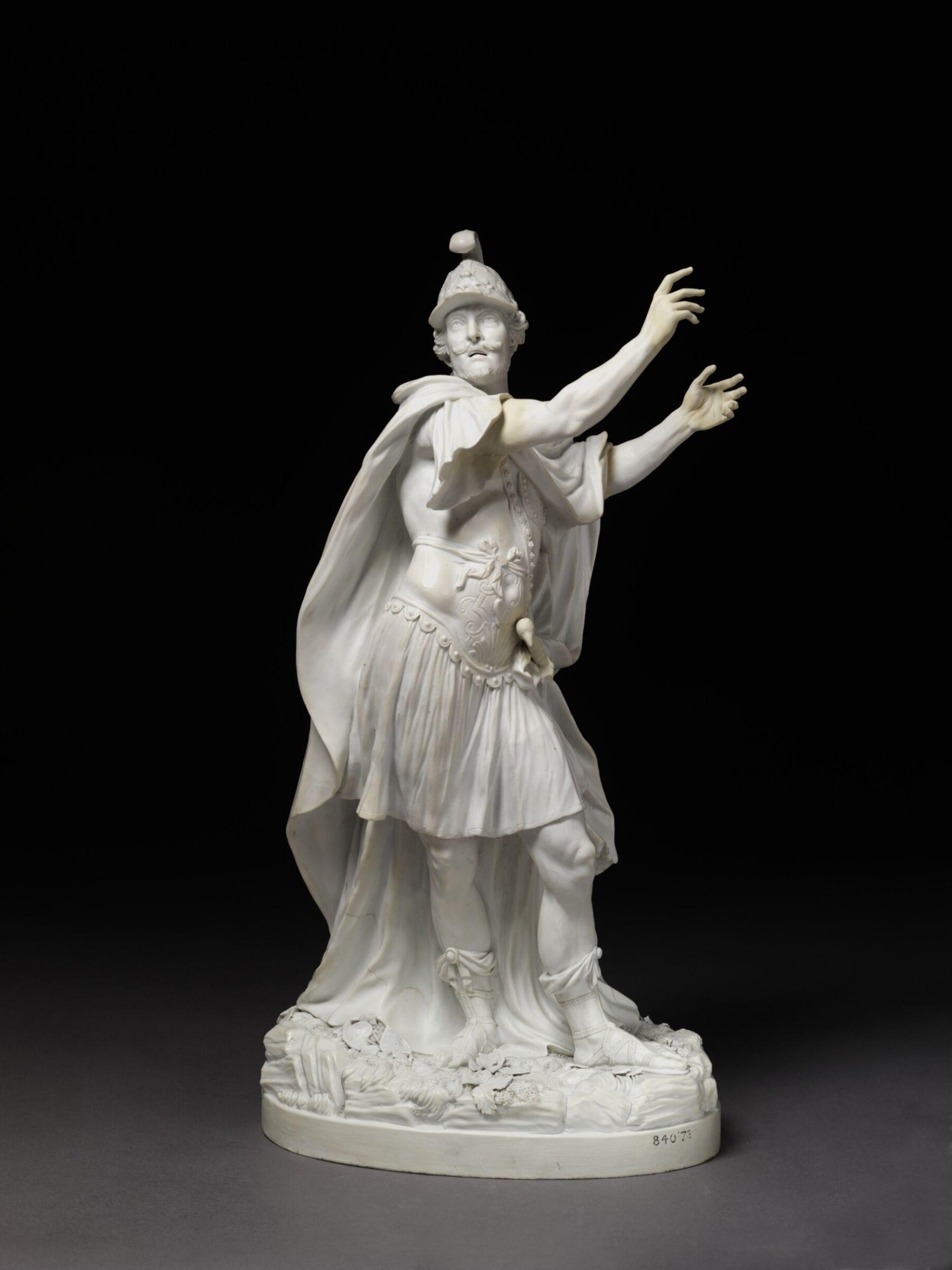
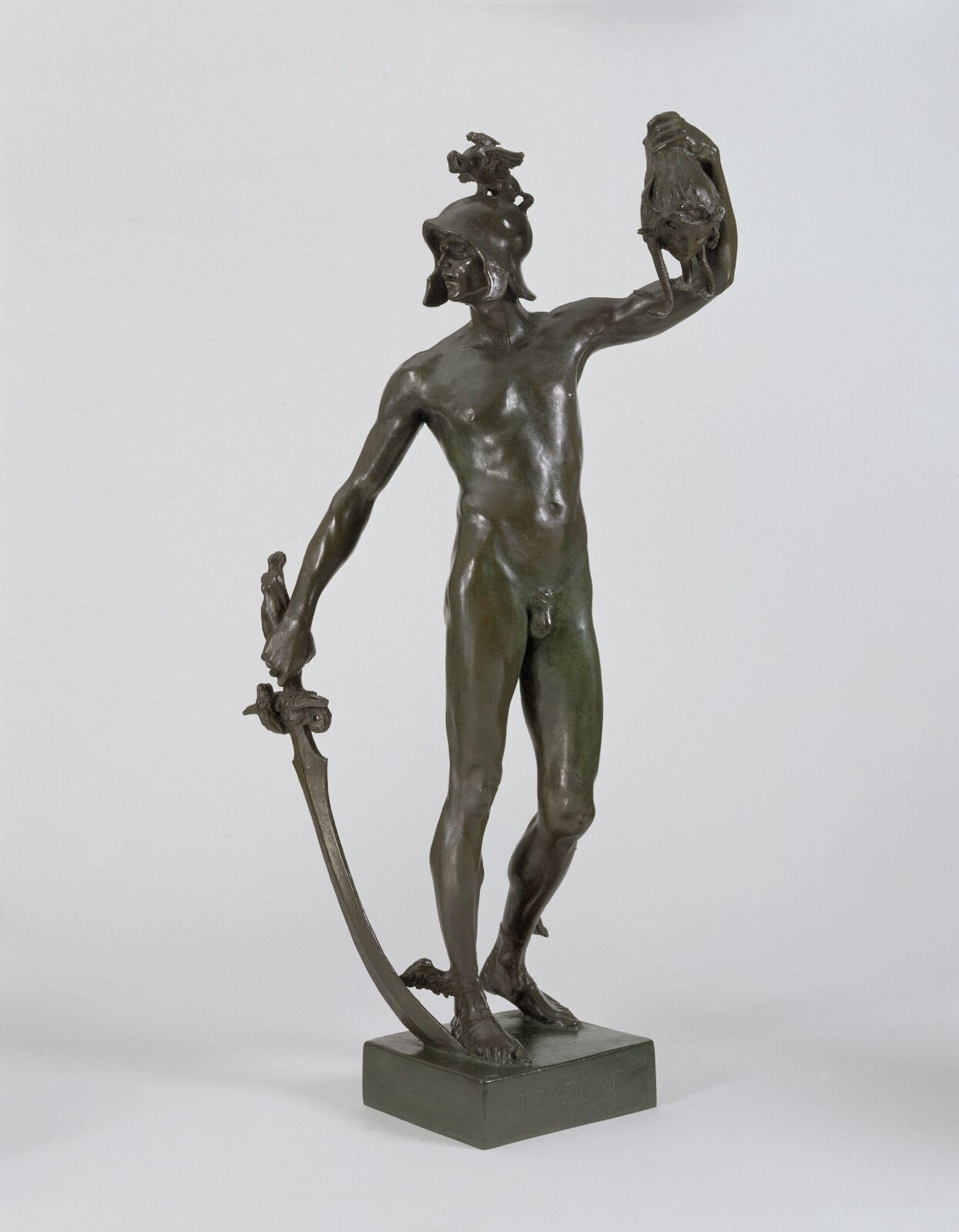
This statuette represents the Greek mythological hero Perseus and was made as a decorative item, perhaps to be displayed in a drawing room. Pomeroy had exhibited a full-size plaster version of this subject at the Royal Academy in 1898, and subsequently produced a series of smaller bronze figures. The present piece has a lively surface, and was probably produced using the lost-wax process. The composition is heavily reliant on the statue of 'David with the Head of Goliath' by the French sculptor Antonin Mercié (1845-1916), dating from the 1870s, which Pomeroy must have seen when he was studying in Paris.
People
Read on
Frederick William Pomeroy (1856-1924) was initially apprenticed to a firm of architectural carvers; he later attended the South London Technical Art School, where the French sculptor Jules Dalou (1838-1902) was master of the modelling class. Dalou's fluid and naturalistic style profoundly influenced Pomeroy. Thanks to Dalou's tutelage, the young British artist was able to enrol at the Royal Academy Schools, where he won a travelling scholarship which enabled him to travel to Paris. There he studied under Mercié and later toured Italy. He became a Royal Academician in 1917.
Subjects Depicted
The Greek hero Perseus, son of Danae and Jupiter, slew Medusa, one of the snake-haired Gorgons, whose gaze turned onlookers to stone, by looking at her reflection in his polished shield, presented to him by the goddess of wisdom, Minerva, his protectress. Here he holds her head aloft, whilst turning away from the sight. He holds a curved sword, a gift from the god Mercury, and wears a helmet and winged sandals. A miniature image of his winged horse, Pegasus surmounts the helmet. Perseus's name is inscribed in Greek lettering on the front of the integral socle.
Victoria and Albert Museum
Oplysninger
- Inventarnummer
- A.9-1972
What it shows
I kataloget
Kilder
- Victoria and Albert Museum: the museum's own open data · hentet for 8 dage siden
- Billede: Victoria and Albert Museum — © Victoria and Albert Museum, London