Jasper JohnsUSA, 1930
Perilous Night
Må man se det?
Tager ikke imod for tiden

Art Institute of Chicago
Chicago, USA
Det hører til samlingen, men er ikke udstillet for tiden.
- Kontrolleret
- i forgårs
- Uændret siden
- 19. aug. 2026
- Kilde
- Museets egne samlingsdata
Om værket
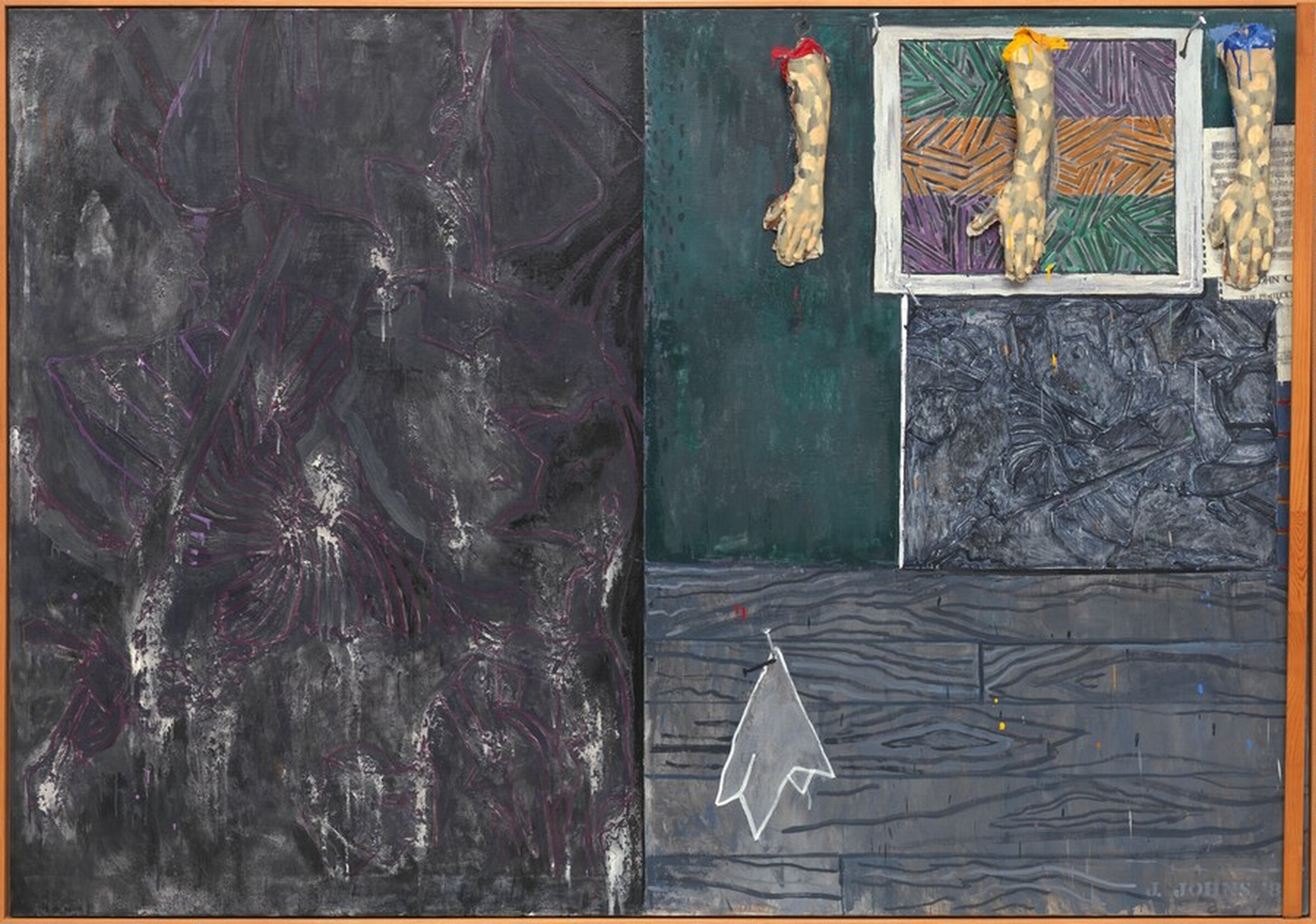
Jasper Johns began his career in the mid-1950s by re-creating, with great precision, such familiar images as targets, letters, numbers, and flags. Although his subject matter has become less commonplace, he continues to “borrow” from the public domain. Perilous Night, for instance, owes its title to a pivotal and expressive piece of music written by the American composer John Cage (1912–1992) in 1945. Both score and cover sheet are rendered on the right-hand side of the drawing with Johns’s characteristically fluid handling of ink. On the sheet’s left side is a freehand rendition—abstracted, reversed, and turned ninety degrees—of a single, terror-stricken soldier from the Resurrection panel of Matthias Grünewald’s sixteenth-century masterwork the Isenheim Altarpiece (Unterlinden Museum, Colmar).
Read on
Between the soldier and the musical score is a black imprint of Johns’s right arm, evidence perhaps of the creative power that can merge two disparate images into a cogent statement. The overcome soldier witnessing the Resurrection of Christ and a piece of music marking a key transition in a composer’s career both point to “perilous nights” that can change the course of a human life. Characteristically, Johns also explored the same subject in different media. This somberly colored drawing derives from a painting of the same name (1982; National Gallery of Art, Washington, DC).
Art Institute of ChicagoCC BY 4.0
Oplysninger
- Inventarnummer
- 1989.82
What it shows
I kataloget
Kilder
- Art Institute of Chicago: the museum's own open data · hentet for 6 dage siden
- Billede: Art Institute of Chicago — © the artist or rights holder
Imens i livet hos Jasper Johns
Hele livet1967–1980
Artistic adviser to the Merce Cunningham Dance Company
Johns had long supported the Merce Cunningham Dance Company, helping to raise funds and attention and assisting Rauschenberg with set and costume designs in the 1950s, and from 1967 to 1980 he served as its artistic adviser.
1973–1987
A farmhouse with a glass-walled studio at Stony Point
From 1973 to 1987 Johns kept a rustic 1930s farmhouse with a glass-walled studio in Stony Point, New York.
1980
The Whitney buys “Three Flags” for $1 million
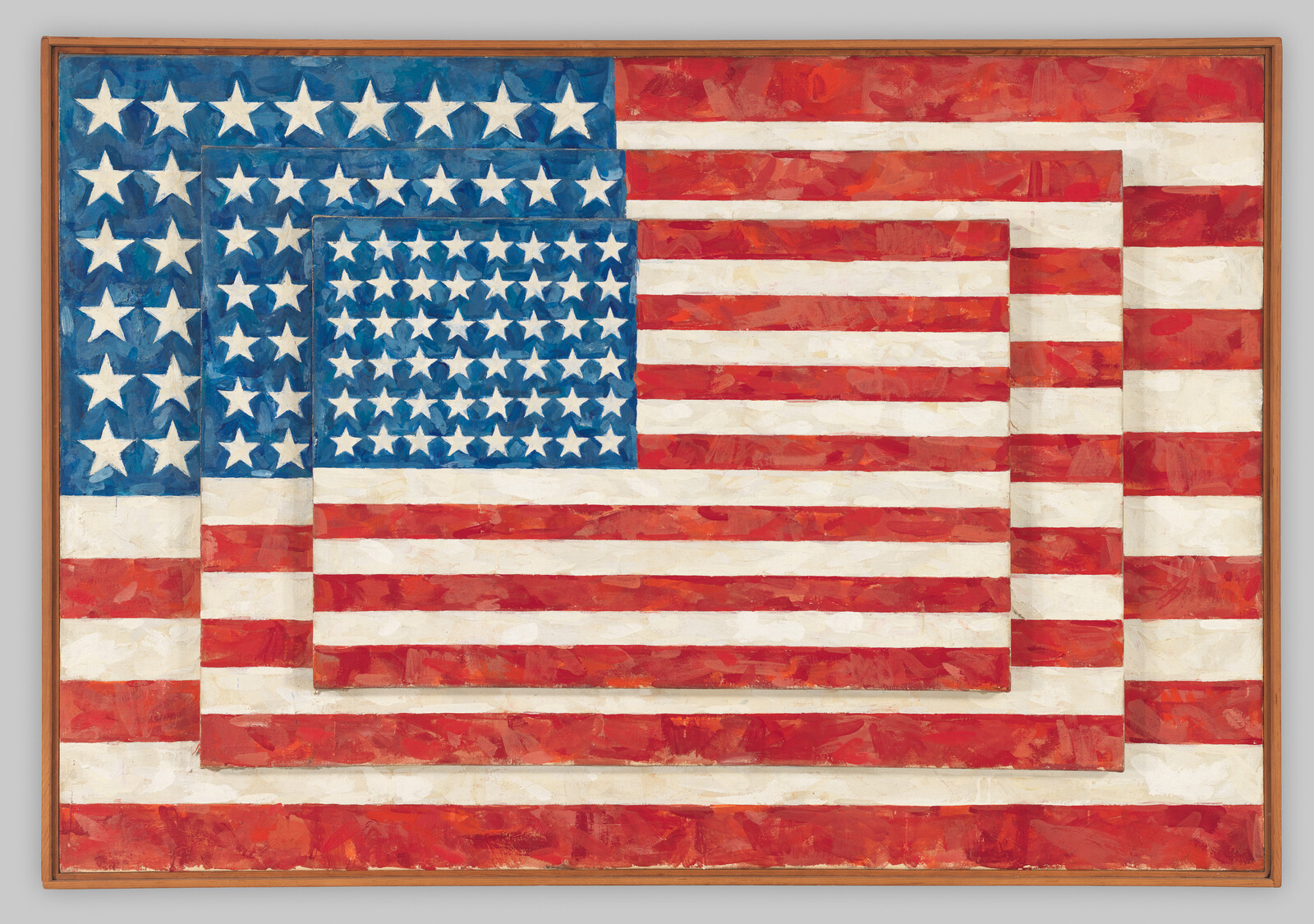
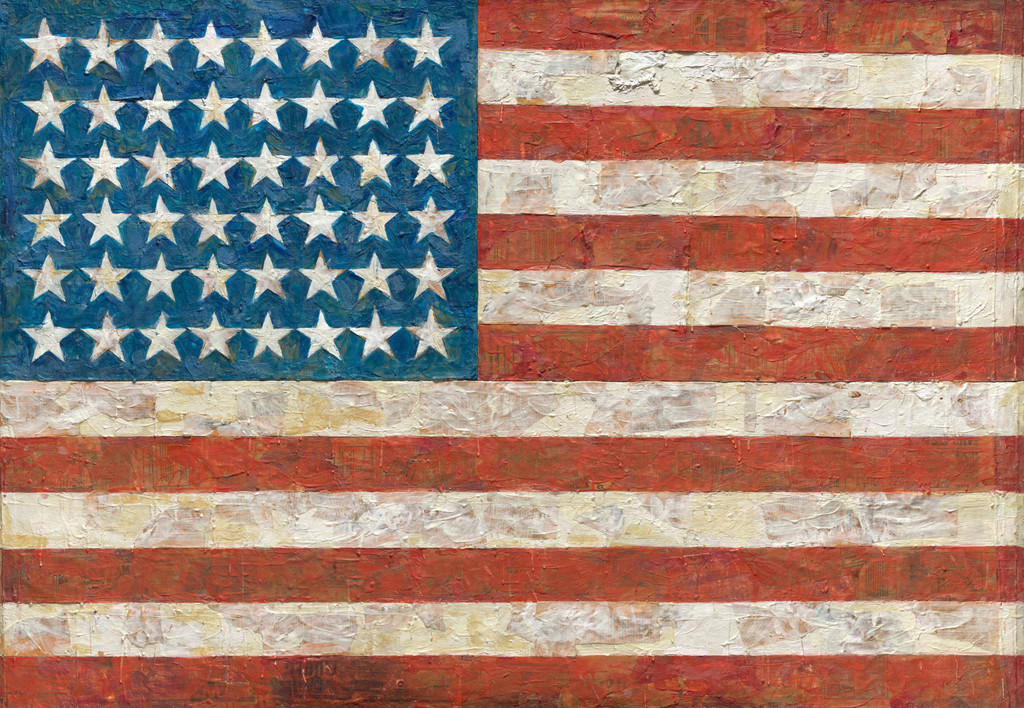
In 1980 the Whitney Museum of American Art paid $1 million for Three Flags (1958), then the highest price ever paid for the work of a living artist.
![Flags II [trial proof], Jasper Johns, 1967-1970](https://api.nga.gov/iiif/9f010b4d-1f11-4448-bf9a-ccc0c4ba4a2a/full/!2400,2400/0/default.jpg)