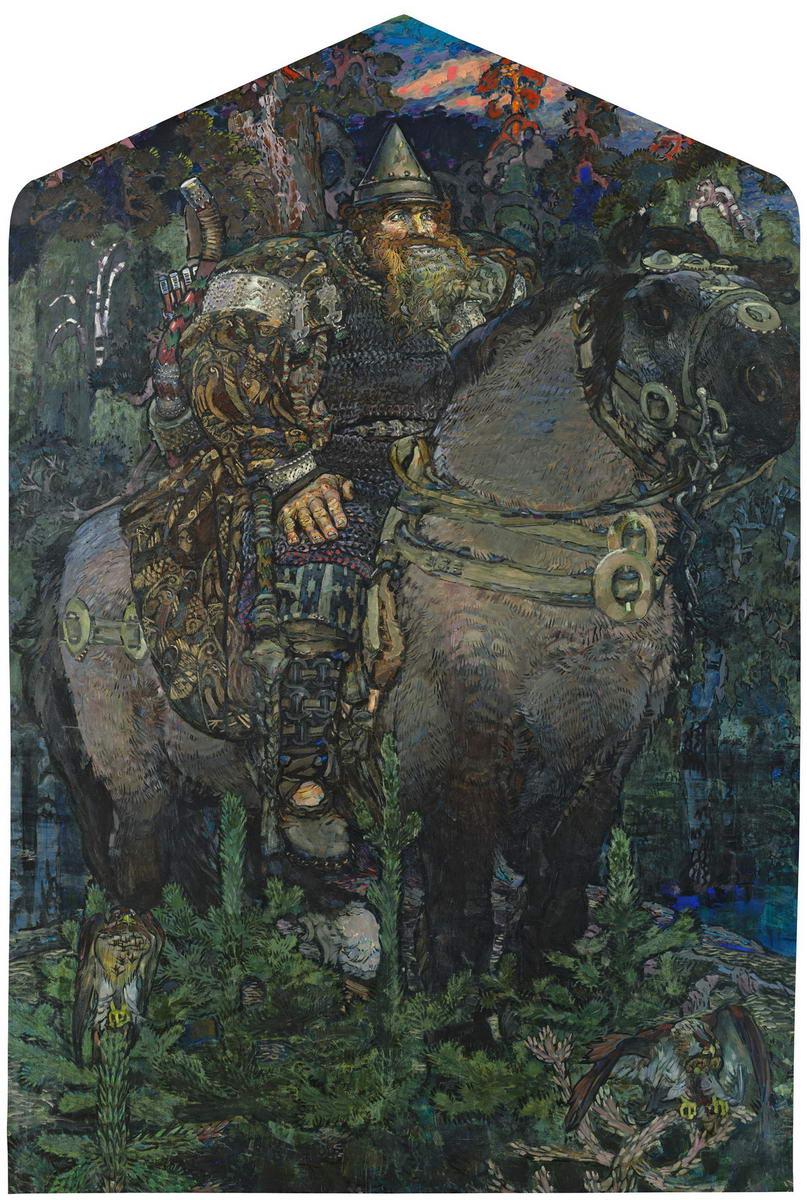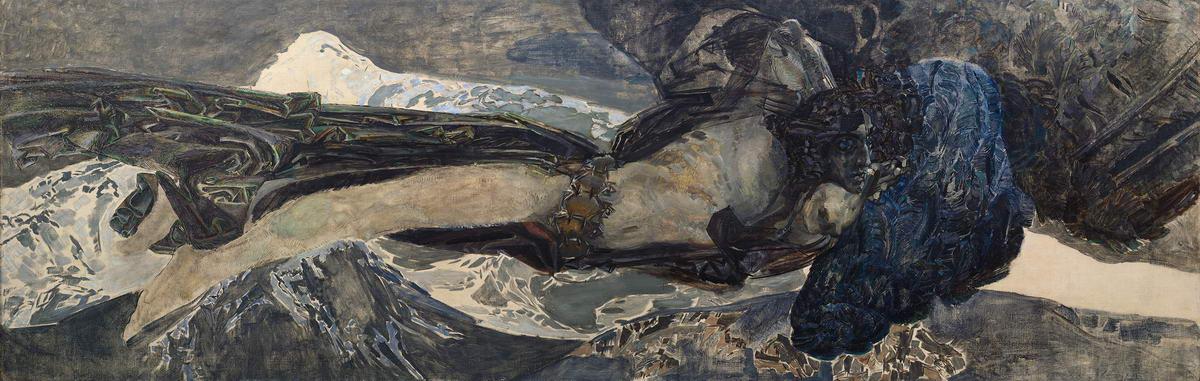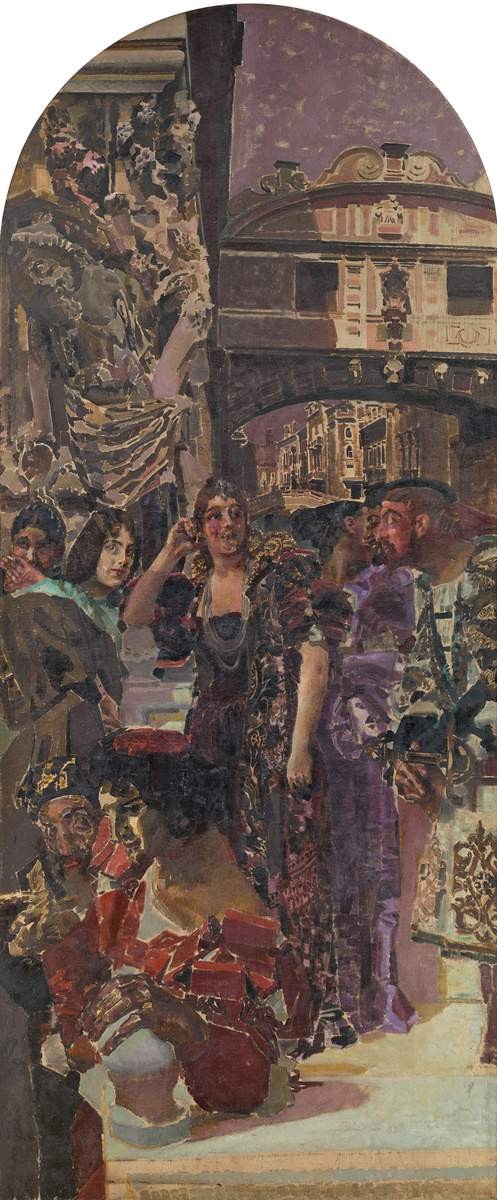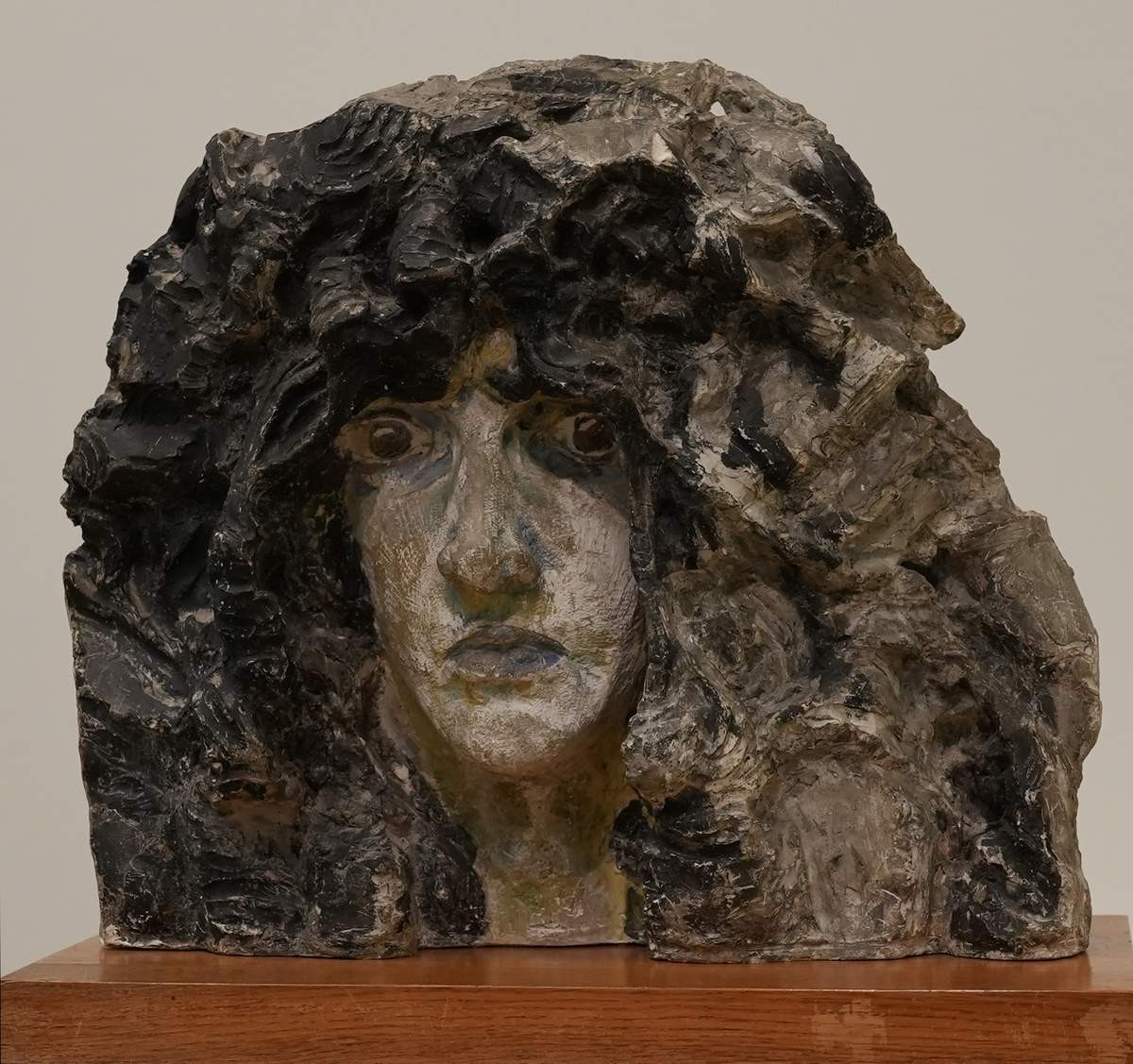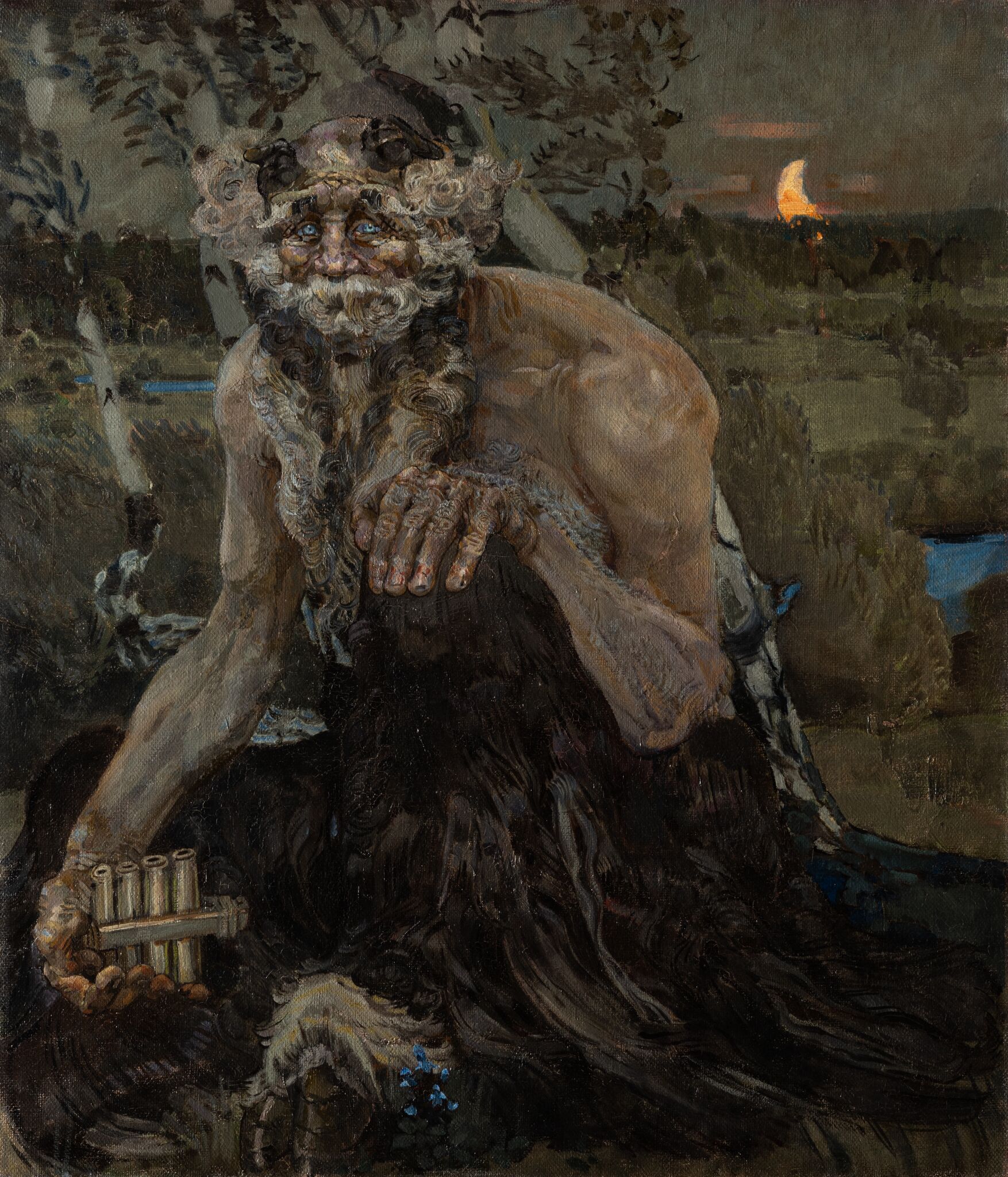
 Mikhail Vrubel1856–1910
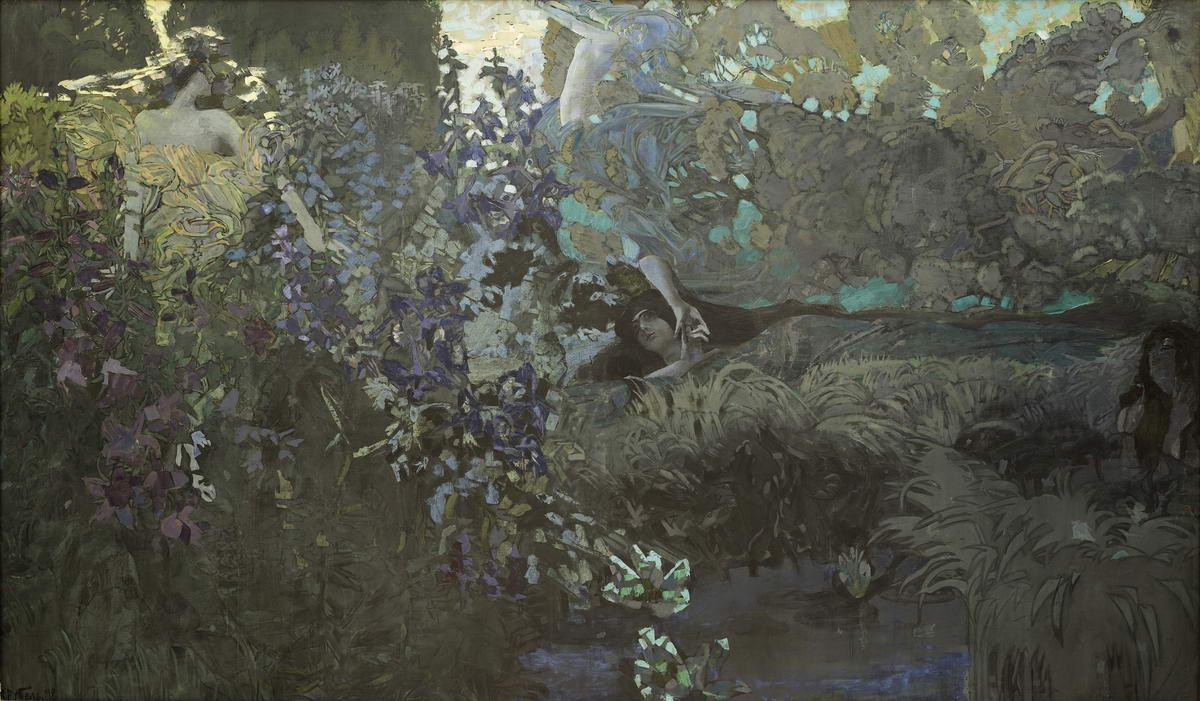
Пан
Må man se det?
Ukendt: museet holder tæt

Tretjakovgalleriet
Moskva, Rusland
Ejeren er kendt. Om det er udstillet i dag, siger museet ikke, og at gætte har vi ikke lært.
- Kilde
- Museets egne samlingsdata
Oplysninger
- Inventarnummer
- 1461
Kilder
- Tretjakovgalleriet: the museum's own open data · hentet for 5 dage siden
- Billede: Tretjakovgalleriet — © State Tretyakov Gallery
Imens i livet hos Mikhail Vrubel
Hele livetsummer 1898
First symptoms of illness
During a summer stay in Ukraine the first symptoms of his future illness appeared: his migraines grew so severe that he took phenacetin in huge quantities — up to 25 grains or more, according to his sister-in-law. A previously unknown irritability set in too, especially when someone disagreed with his opinion of a work of art.
1898
Meeting Rimsky-Korsakov
When Zabela was invited to Mamontov’s Russian Private Opera, which had resumed its Moscow seasons, the Vrubels came to know Nikolai Rimsky-Korsakov personally; in Nina Dmitrieva’s view, the finest works of the Moscow period were owed to Zabela and her devotion to his music. Vrubel heard “Sadko”, in which his wife sang Princess Volkhova, at least 90 times, finding ever new delight in the orchestra, “especially the sea”.
January 1898
“Morning” at Diaghilev’s exhibition
In St Petersburg Ilya Repin advised Vrubel not to destroy his panel “Morning”, which a client had turned down, but to show it at an exhibition. So the canvas went into Sergei Diaghilev’s exhibition of Russian and Finnish artists at the museum of the Stieglitz School.
summer 1900
A gold medal at the Paris World’s Fair
In midsummer the Vrubels learned that he had won a gold medal at the Exposition Universelle for the fireplace “Volga Svyatoslavich and Mikula Selyaninovich”; his ceramics and majolica were shown in the Handicrafts Pavilion. Serov won the Grand Prix that year, and Korovin and Malyavin gold medals.
1 September 1901
Birth of his son Savva
Nadezhda Zabela-Vrubel gave birth to a son, Savva — a sturdy baby with a cleft lip; for his sake she left the stage for a time, and the family’s keep fell entirely on Vrubel. In the thick of his work on the “Demon” the artist painted a large watercolour portrait of his six-month-old son in a pram.