 Joseph WiltonStorbritannien, 1722–1803
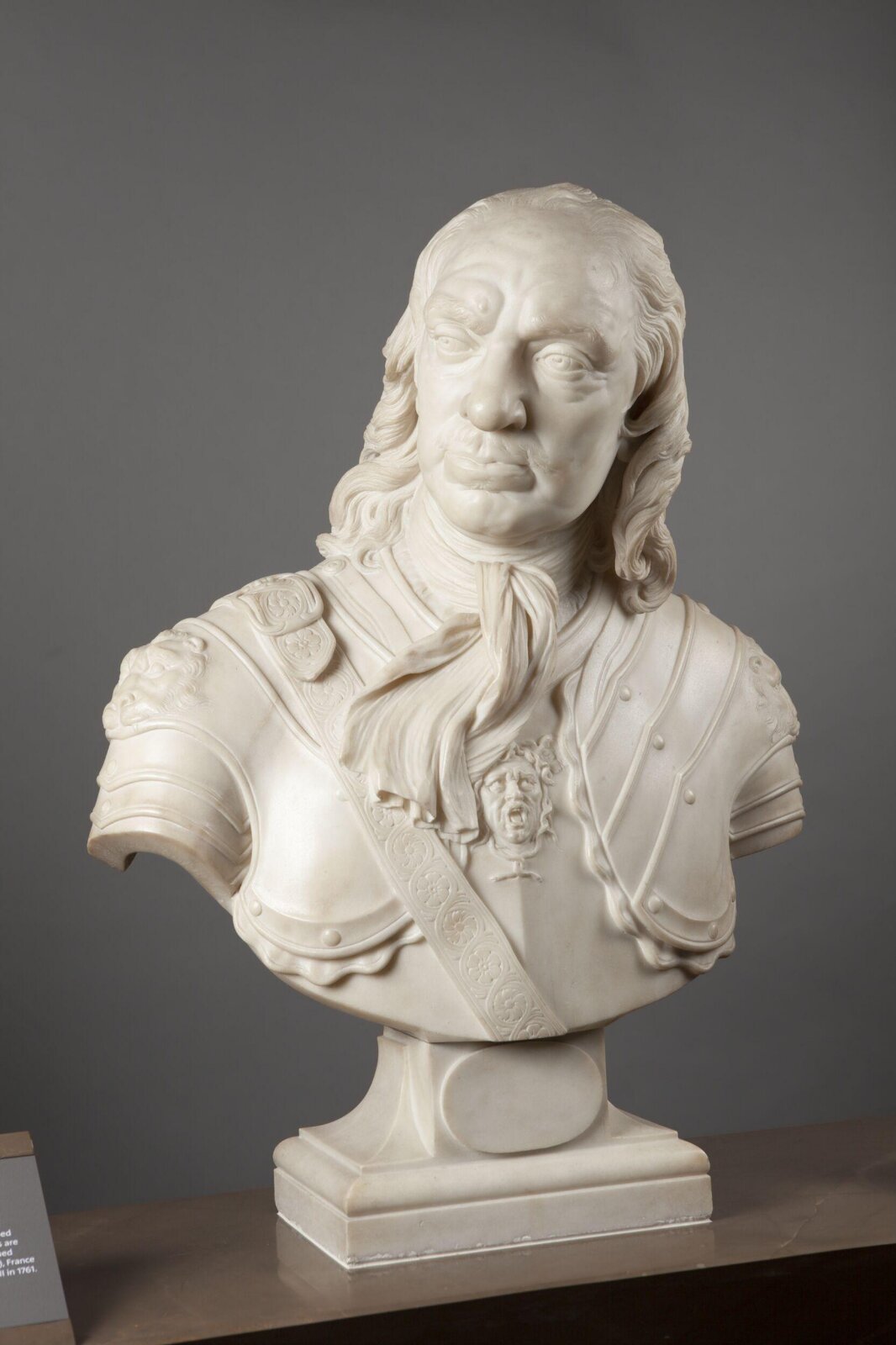
Oliver Cromwell (1599–1658)
Kan det ses?
Ja, udstillet nu
Hvor er »Oliver Cromwell (1599–1658)« i dag? Victoria and Albert Museum, Sculpture, Room 24, The Dorothy and Michael Hintze Galleries, London. Ja, udstillet nu. Kontrolleret 25. september 2026.

London, Storbritannien
SalSculpture, Room 24, The Dorothy and Michael Hintze Galleries
Åbent nu· til kl. 17.45
Udstillet for publikum.
- Kontrolleret
- Uændret siden
- Kilde
- Museet
Om skulpturen
Oliver Cromwell (1599-1658) was often represented in 18th-century British sculpture because of his central role in British history. This bust is probably based on a plaster cast of his face, made for his funeral effigy. It also shows Wilton's interest in and understanding of ancient Roman sculpture, which he had studied in Italy.
Cromwell is here represented as a military man with a breastplate ornated with lions and a Medusa head. The Medusa head was a common ornament on armours. It recalls the legend of Perseus killing the fearsome monster, Medusa, whose gaze had turned her enemies to stone. Perseus presented Medusa's head to Athena, Goddess of War, who fixed it to her shield so that it faced her enemies.
Læs videre
Joseph Wilton (1722-1803) was born in London, but trained in the Netherlands, France and Italy from 1744 to 1755. He was appointed Statuary to His Majesty George III in 1761, and in 1768 became a founder member of the Royal Academy. However in the same year he inherited a large legacy from his father and neglected sculpture thereafter; he went bankrupt in 1793.
Victoria and Albert Museum
Oplysninger
- Inventarnummer
- A.32-1930
Hvad det viser
I kataloget
Kilder
- Victoria and Albert Museum
- Billede: Victoria and Albert Museum — © Victoria and Albert Museum, London