 Gian Lorenzo BerniniItalien, 1598–1680
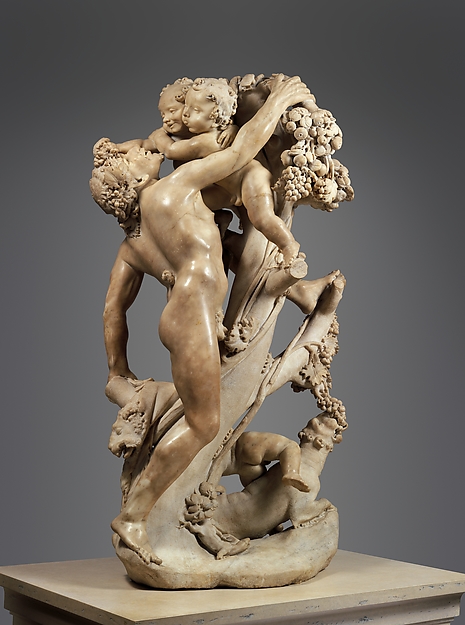
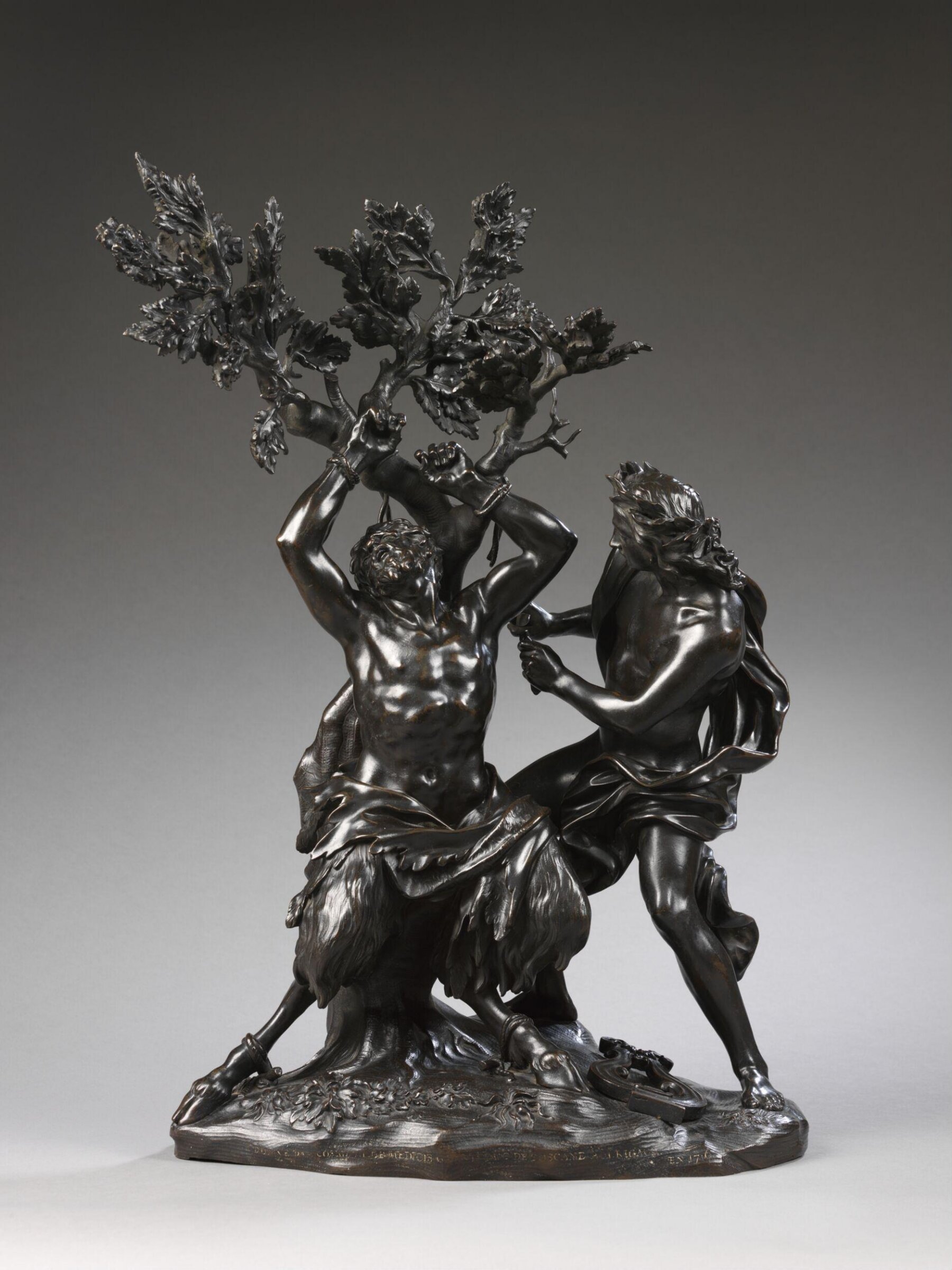
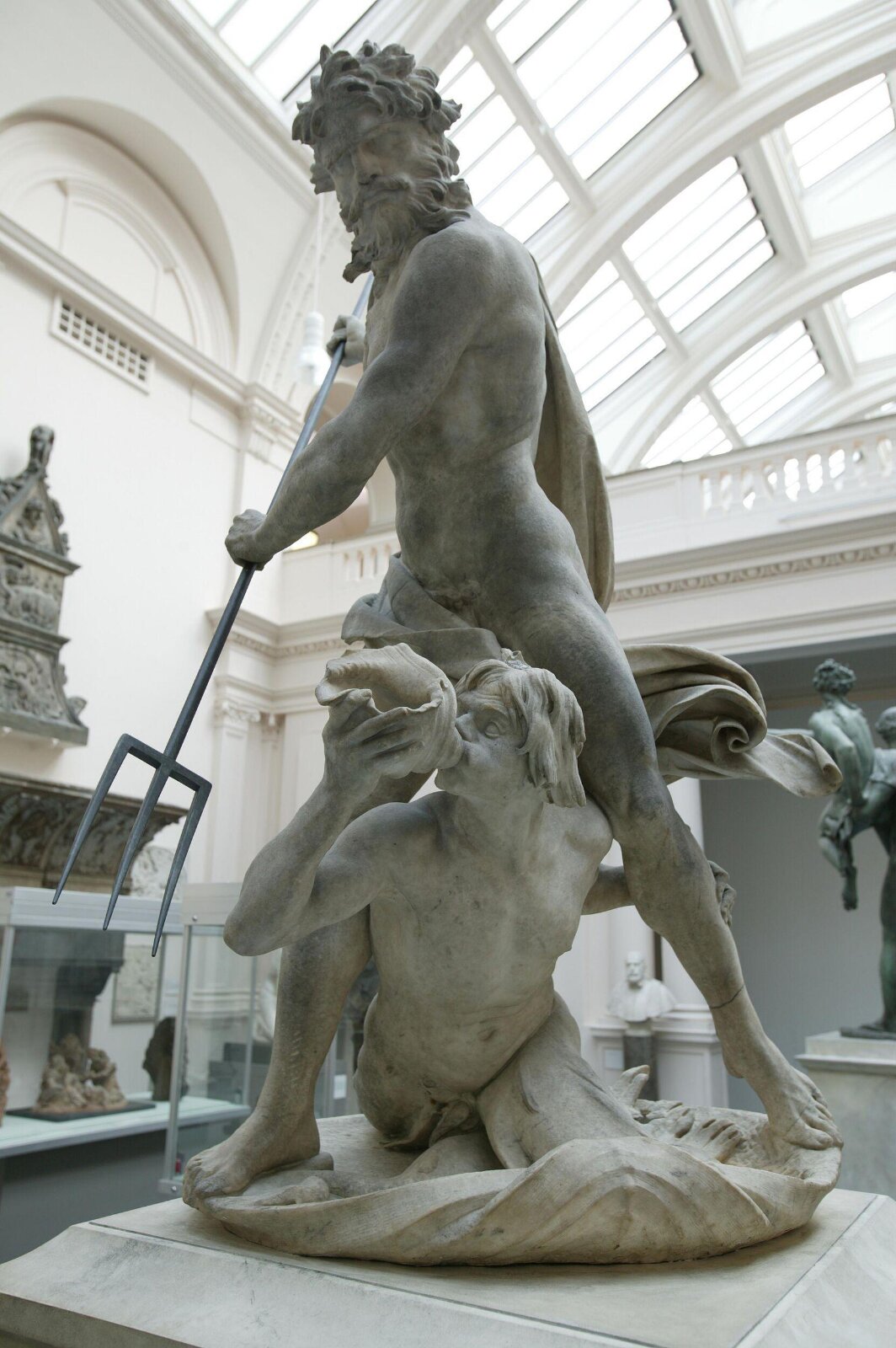
Neptune and Triton
Kan det ses?
Ja, udstillet nu
Hvor er »Neptune and Triton« i dag? Victoria and Albert Museum, Europe 1600-1815, Room 7, The Sheikha Amna Bint Mohammed Al Thani Gallery, London. Ja, udstillet nu. Kontrolleret 25. september 2026.

London, Storbritannien
SalEurope 1600-1815, Room 7, The Sheikha Amna Bint Mohammed Al Thani Gallery
Åbent nu· til kl. 17.45
Udstillet for publikum.
- Kontrolleret
- Uændret siden
- Kilde
- Museet
Om skulpturen
The group was commissioned from the leading Italian Baroque sculptor, Gianlorenzo Bernini, by Alessandro Peretti, Cardinal Montalto, for the garden of the Villa Montalto in Rome, and carved within a year in 1622-23. In the seventeenth and eighteenth centuries the group was one of the most celebrated sights in Rome, and a number of engravings show it in its original position, standing at the upper end of the large fish-pond, known as the Peschiera or Peschierone, in the Montalto garden. This impressive group originally formed the centrepiece of a complex system of fountains and cascades. It projected a single jet of water through the conch-shell held by Triton, who was misidentified as 'Glaucus' (the fisherman who, according to mythology, turned into a merman - half man, half fish) in some engravings and references.
Læs videre
In classical mythology Neptune ruled over the seas and its inhabitants. His son Triton was a merman. Neptune and Triton are portrayed with great vitality as they command the seas, which we are to be imagined around the base of the group. The composition may be based on Ovid's account of the Flood (Metamorphoses, Book 1, 330-42), in which Triton is ordered by Neptune to blow his conch-shell to summon the waters to retreat. However, it is also often associated with the Quos Ego ('Whom I'), Neptune's unfinished threat to the winds to cease stirring the seas, from Virgil's Aeneid (Book 1, 135).
Victoria and Albert Museum
Oplysninger
- Inventarnummer
- A.18:1-1950
Hvad det viser
I kataloget
Kilder
- Victoria and Albert Museum
- Billede: Victoria and Albert Museum — © Victoria and Albert Museum, London
Imens i livet hos Gian Lorenzo Bernini
Hele livet1606–1642 · Bopæl
House of Pietro and Gianlorenzo Bernini (Rome)
1620s
Serious work as a painter
Encouraged by Urban VIII, who wanted him to paint the Loggia of the Blessings in St Peter's, Bernini began to develop his skill as a painter in earnest; according to early biographers he finished at least 150 canvases, mostly in 1620–1630, but only some 35–40 surviving paintings can be confidently attributed to him.
1621
Gregory XV makes him a knight
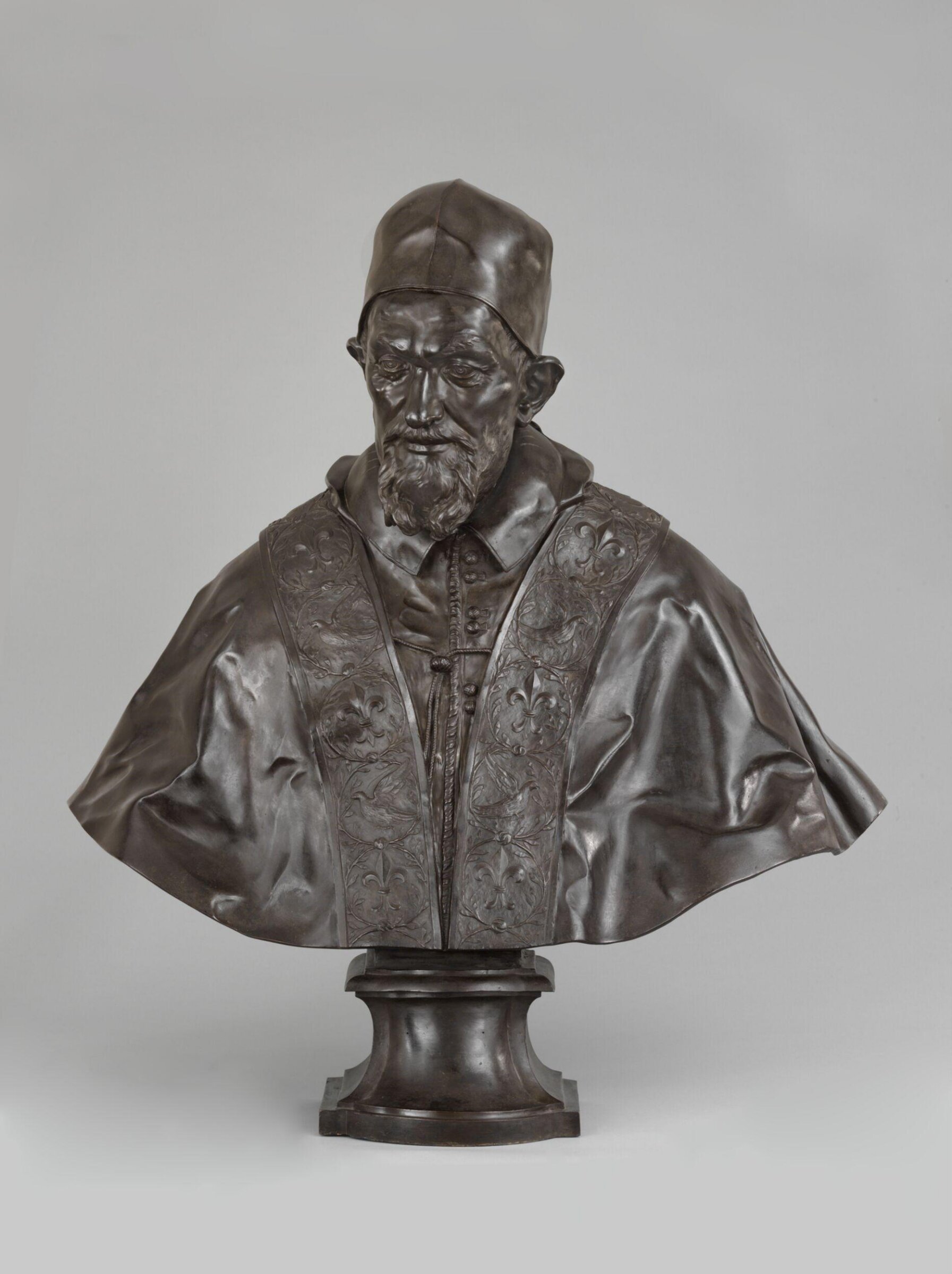
Paul V's successor Gregory XV (Alessandro Ludovisi), who reigned only briefly, commissioned portraits of himself from Bernini in marble and bronze and conferred on him the honorary rank of Cavaliere, by which he was habitually called for the rest of his life.
1623
Urban VIII becomes pope: the Barberini years
Bernini's old friend and former tutor Cardinal Maffeo Barberini became Pope Urban VIII and, until his death in 1644, gave the artist near-monopolistic patronage; Bernini was made curator of the papal art collection, director of the papal foundry at Castel Sant'Angelo and commissioner of the fountains of Piazza Navona.