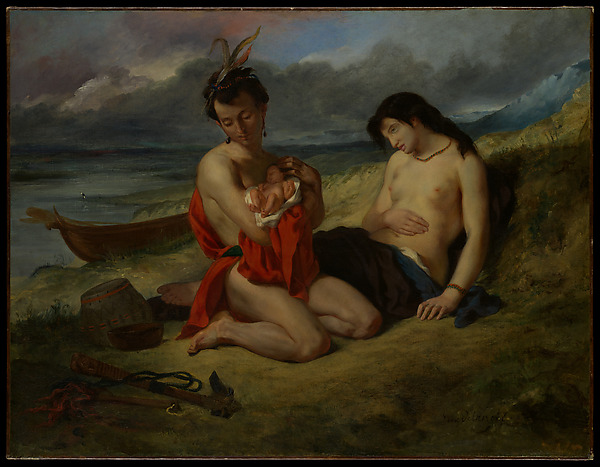
Alfred StieglitzUSA, 1864–1946
My Father
Kan det ses?
Ikke udstillet lige nu
Hvor er »My Father« i dag? Samling: National Gallery of Art, Washington, D.C. Ikke udstillet lige nu. Kontrolleret 29. september 2026.

Washington, D.C., USA
Det hører til samlingen, men er ikke udstillet for tiden.
- Kontrolleret
- Uændret siden
- Kilde
- Museet
Oplysninger
- Inventarnummer
- 1949.3.227
Hvad det viser
I kataloget
Kilder
- National Gallery of Art
- Billede: National Gallery of Art — © the artist or rights holder
Imens i livet hos Alfred Stieglitz
Hele livet1897
First issue of Camera Notes
Stieglitz turned the Camera Club's newsletter into a magazine, Camera Notes, with full control over it; the first issue appeared in July 1897, and it was soon considered the finest photographic magazine in the world. The critic Sadakichi Hartmann wrote that artistic photography, the Camera Club and Alfred Stieglitz seemed to him three names for one and the same thing.
1902
Founds the Photo-Secession
In December 1901 Charles DeKay of the National Arts Club invited Stieglitz to put together an exhibition with “full power to follow his own inclinations”. Within two months he had assembled prints from a close circle of friends and, in homage to the Munich photographers, called the group the Photo-Secession, a secession not only from the artistic restrictions of the era but from the official oversight of the Camera Club.
25 November 1905
The 291 gallery opens on Fifth Avenue
On November 25, 1905, the Little Galleries of the Photo-Secession opened at 291 Fifth Avenue with one hundred prints by thirty-nine photographers; Edward Steichen had encouraged Stieglitz to lease the three rooms across from his own apartment. The gallery was an instant success, with almost fifteen thousand visitors in its first season and print sales of nearly $2,800, more than half of them Steichen's work.
1907
Paris: Gertrude Stein and a turn to painting
In Paris in 1907 Stieglitz met Gertrude Stein and was captivated by Rodin, Matisse, Toulouse-Lautrec, Cézanne and Rousseau. He decided to turn his photography gallery into a full art gallery to introduce the conservative American public to the newest European art.
January – May 1916
Meets Georgia O'Keeffe
In January 1916 the suffragist Anita Pollitzer showed Stieglitz a set of charcoal drawings by Georgia O'Keeffe, and he decided to exhibit them at 291 without meeting her or asking her permission. In late May O'Keeffe heard of it from a friend and came to the gallery to chastise him, which is how they met; by the summer of 1917 they were writing each other their most private thoughts.
1918
O'Keeffe comes to New York; he leaves his family
In early June 1918 O'Keeffe moved to New York from Texas after Stieglitz promised her a quiet studio. Within a month his wife Emmy came home during one of the first nude photography sessions in the family apartment and told him to stop seeing O'Keeffe or get out; Stieglitz left and immediately found a place in the city where he and O'Keeffe could live together.


![Ginevra de' Benci [obverse], Leonardo da Vinci, c. 1474/1478](https://api.nga.gov/iiif/8f29e3c9-a289-4d53-abf0-31a66e9e98fa/full/!2400,2400/0/default.jpg)
![Wreath of Laurel, Palm, and Juniper with a Scroll inscribed Virtutem Forma Decorat [reverse], Leonardo da Vinci, c. 1474/1478](https://api.nga.gov/iiif/ff62e8d0-45c4-498f-ad36-6358de827e04/full/!2400,2400/0/default.jpg)


![[Die Rückkehr des verlorenen Sohnes; The Return of the Prodigal Son; Le retour de l'enfant prodigue], Rembrandt, 1636](https://diglib.hab.de/varia/haum/rembrandt-ab3-0108/max/000001.jpg)