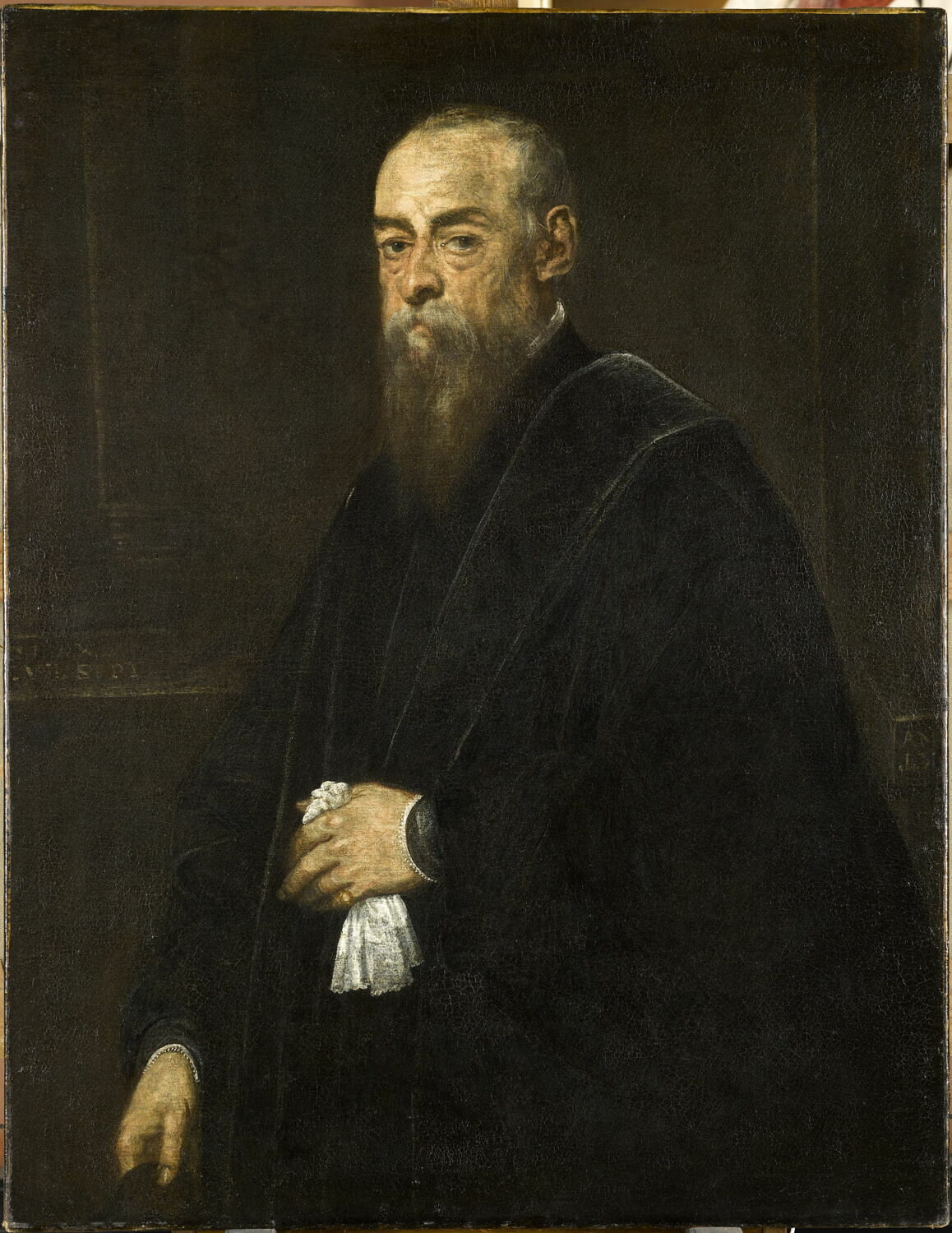
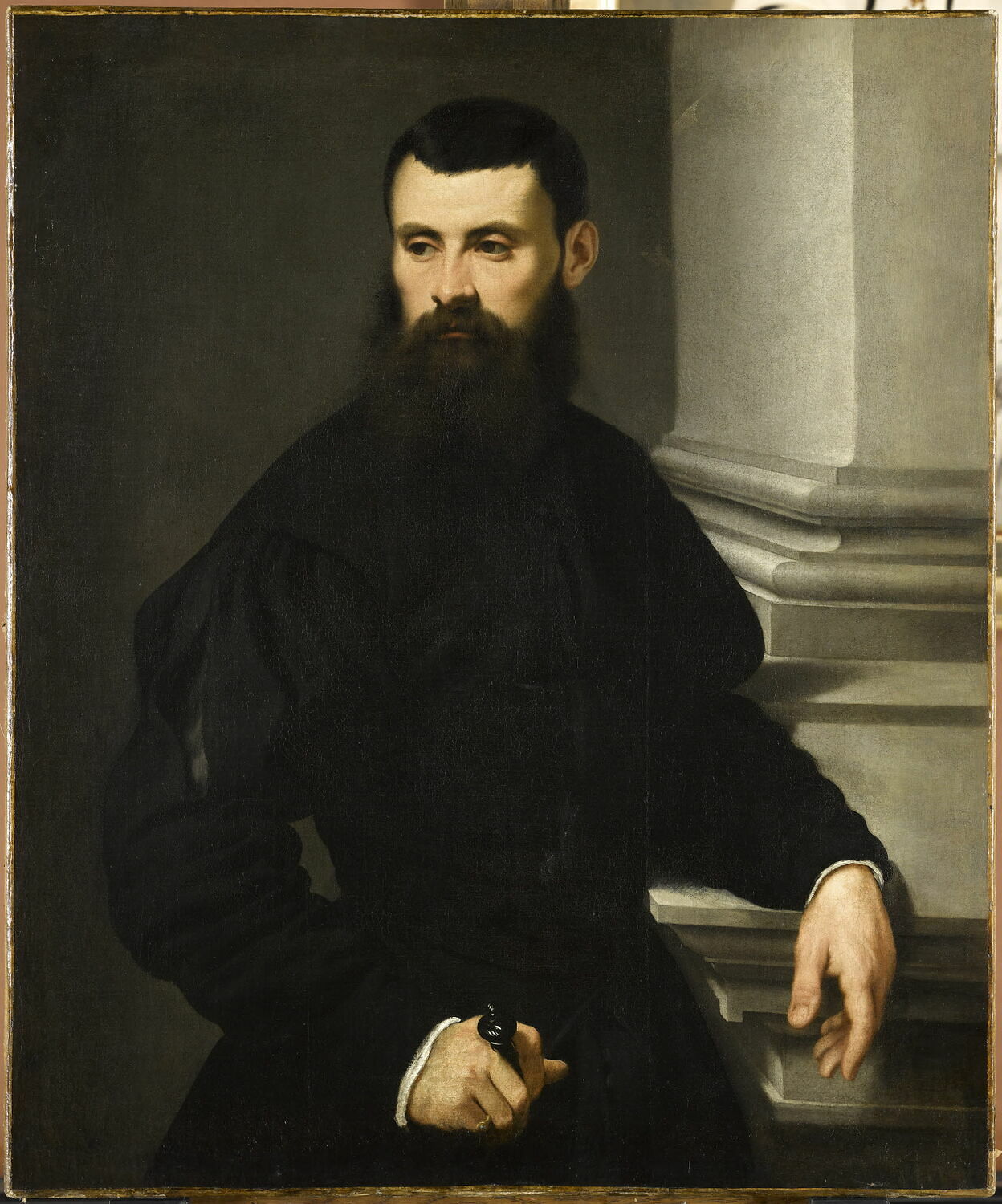
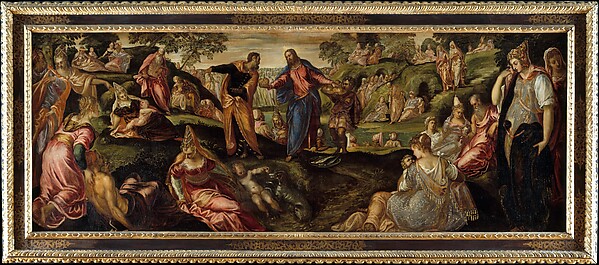
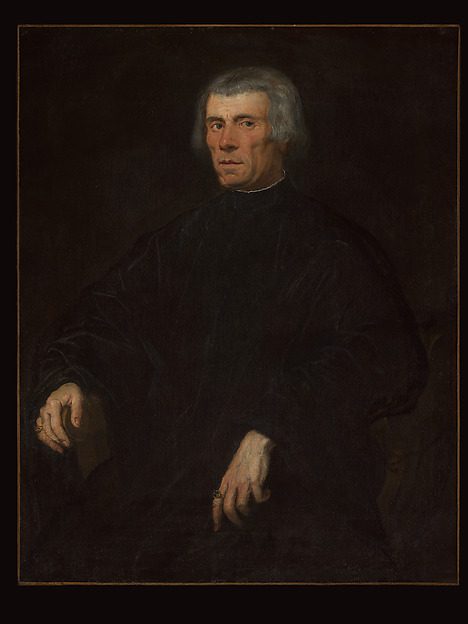
Jacopo TintorettoItalien, 1518–1594
Muse with Lute
Må man se det?
Ukendt

Amsterdam, Holland
Ejeren er kendt; om værket er udstillet i dag, vides ikke.
- Kilde
- Museet
Om maleriet
Med museets ord — på nederlandsk
Een zittende muze spelend op de luit. Waarschijnlijk een fragment een oorspronkelijk grotere voorstelling van de negen muzen.
Rijksmuseum Amsterdam
Oplysninger
- Inventarnummer
- SK-A-4010
Hvad det viser
I kataloget
Kilder
- Rijksmuseum Amsterdam
- Billede: Rijksmuseum Amsterdam — public domain
Imens i livet hos Jacopo Tintoretto
Hele livet1530
Ten days in Titian’s studio
Noticing his son’s extraordinary talent for painting, his father placed him in Titian’s studio in 1530, but Jacopo spent no more than ten days there (by another version, a few weeks): according to legend Titian did not want to keep a future dangerous rival. From then on the two artists’ relations remained hostile, although Tintoretto went on admiring Titian; many scholars deny the “apprenticeship” altogether.
1539
Becomes an independent master
A notarised document shows that in 1539 Tintoretto already had the status of an “independent artist” known under that name; his very first works have not survived.
c. 1560
Begins work in the Doge’s Palace
It was probably then that he began his numerous paintings for the Doge’s Palace; the first there was a portrait of the Doge Girolamo Priuli.
1564
The San Rocco competition: a finished ceiling instead of a sketch
Of the four finalists (Tintoretto, Federico Zuccaro, Giuseppe Salviati and Paolo Veronese) invited to submit models for a ceiling painting of Saint Roch in Glory for the Sala dell’Albergo, Tintoretto produced no sketch: he secretly installed a full-sized finished painting on the ceiling and on the day of the competition offered it as a gift — perhaps aware that a bylaw prohibited rejecting any gift. The ruse has been called “the most notorious incident” of his career.
1577
The contract: the whole Scuola for 100 ducats a year
In November 1577 he offered to execute the works for the whole scuola and the church of San Rocco at 100 ducats a year, with three pictures due each year; the proposal was accepted and punctually fulfilled, only the painter’s death preventing some ceiling subjects from being executed. The whole sum paid for the scuola was 2,447 ducats; the scuola and the church contain fifty-two memorable paintings.
31. maj 1594
Died