 Anne Seymour DamerStorbritannien, 1748–1828
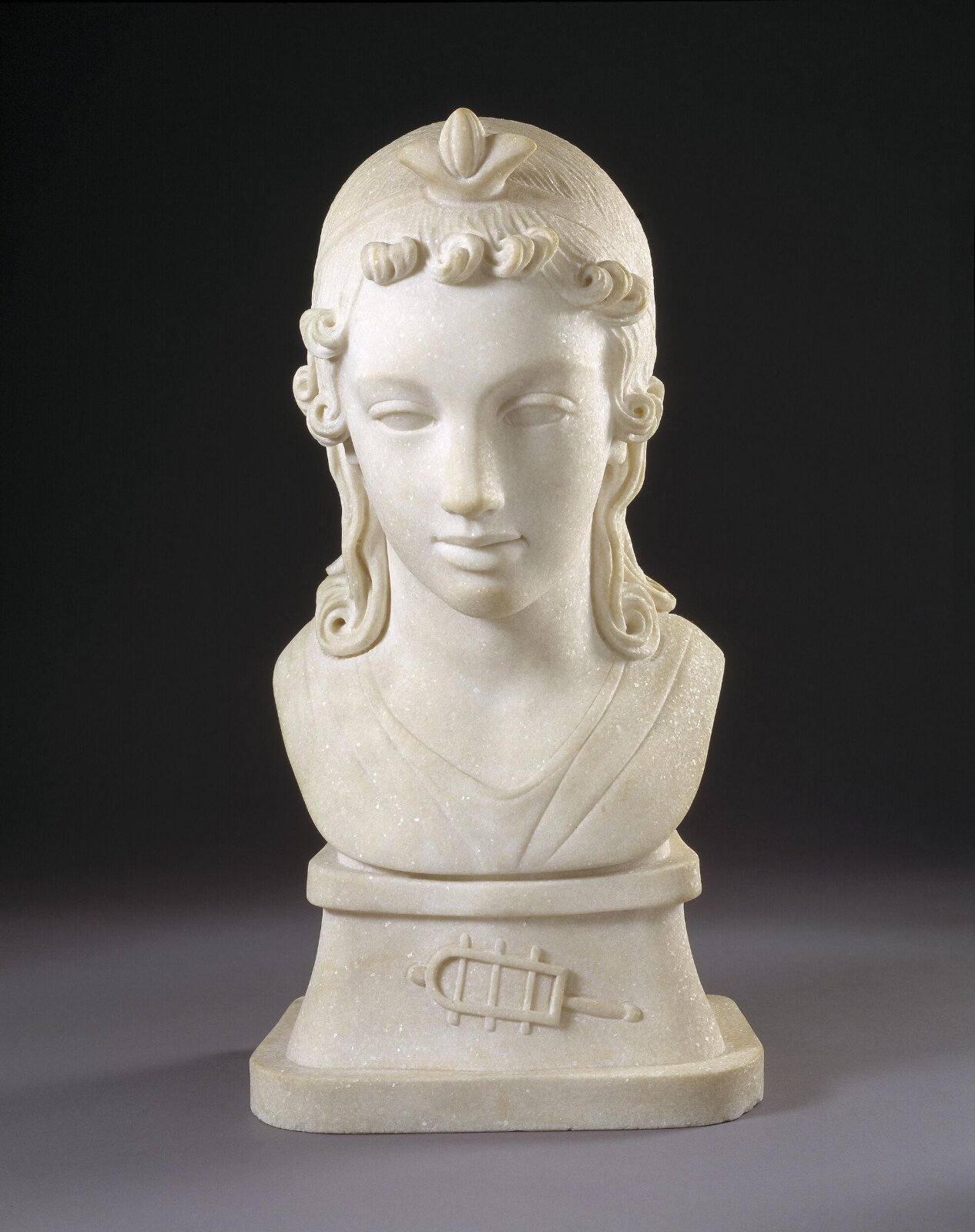
Mrs Freeman as Isis
Kan det ses?
Ja, udstillet nu
Hvor er »Mrs Freeman as Isis« i dag? Victoria and Albert Museum, British Galleries, Room 120, The Wolfson Galleries, London. Ja, udstillet nu. Kontrolleret 25. september 2026.

London, Storbritannien
SalBritish Galleries, Room 120, The Wolfson Galleries
Åbent nu· til kl. 17.45
Udstillet for publikum.
- Kontrolleret
- Uændret siden
- Kilde
- Museet
Om skulpturen
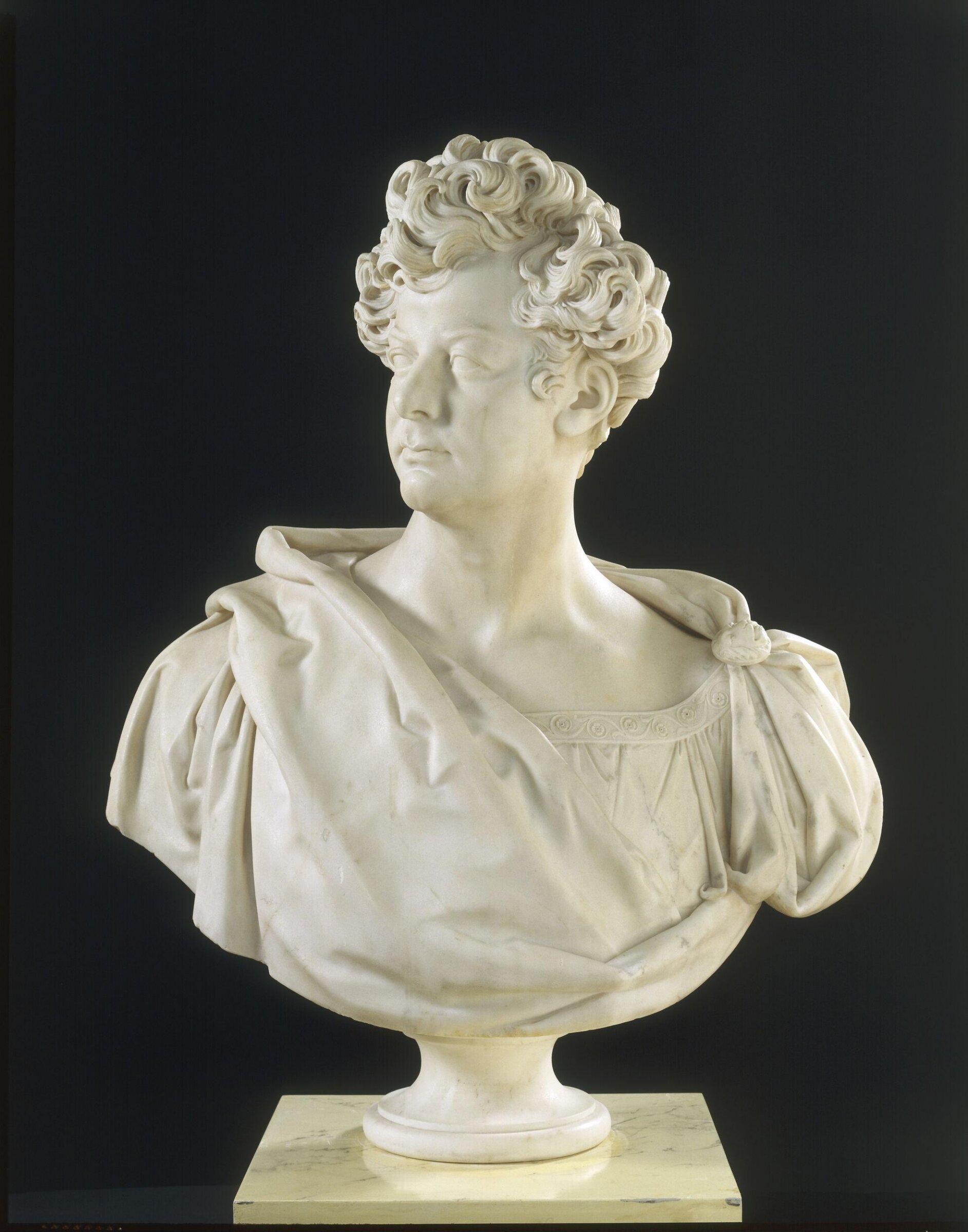
This slightly under life-size bust is both a portrait of Mrs Freeman, nee Elizabeth Strickland (d. 1821), the sculptor's intimate friend who lived at nearby Fawley Court, Buckinghamshire, and an allegorical depiction of a priestess of the Egyptian god Isis. The musical instrument carved on the socle, a sistrum, was peculiar to ancient Egypt. The sculptor, Anne Seymour Damer (1748-1828) however, signed the bust in Greek lettering, which can be translated as 'ANNA S. DAMER THE LONDONER MADE IT'. In addition to other portrait busts, Damer carved the river masks of the rivers Isis and the Thames in 1785 to serve as keystones for the bridge at Henley-on-Thames, Oxfordshire. Anne Seymour Damer, née Conway, had married the Hon. John Damer in 1767, but, following his suicide, trained as a sculptor.
Læs videre
She was a cousin of Horace Walpole (1717-1797), who warmly encouraged her, and who declared her on one occasion (perhaps half in jest) to be the equal of Praxiteles. Damer practised as an amateur, being an aristocratic woman, and for this reason was not perhaps always accorded the recognition she deserved. She exhibited at the Royal Academy from 1784 to 1818, executing a variety of subjects in terracotta or stone, and occasionally bronze. She was also a novelist and stage performer.
This bust was originally in the collection of Thomas Hope (1769-1831), whose house, Deepdene, near Dorking in Surrey, was renowned for its art collections. One of the rooms there was known as the Egyptian Room, and this bust may well have been displayed there. It was sold from the Hope Collection in 1930; it was subsequently given to the V&A by Dr W. L. Hildburgh, FSA, who had presumably purchased it at the sale.
Victoria and Albert Museum
Oplysninger
- Inventarnummer
- A.31-1931
Hvad det viser
I kataloget
Kilder
- Victoria and Albert Museum
- Billede: Victoria and Albert Museum — © Victoria and Albert Museum, London