Vasily Polenov1844–1927
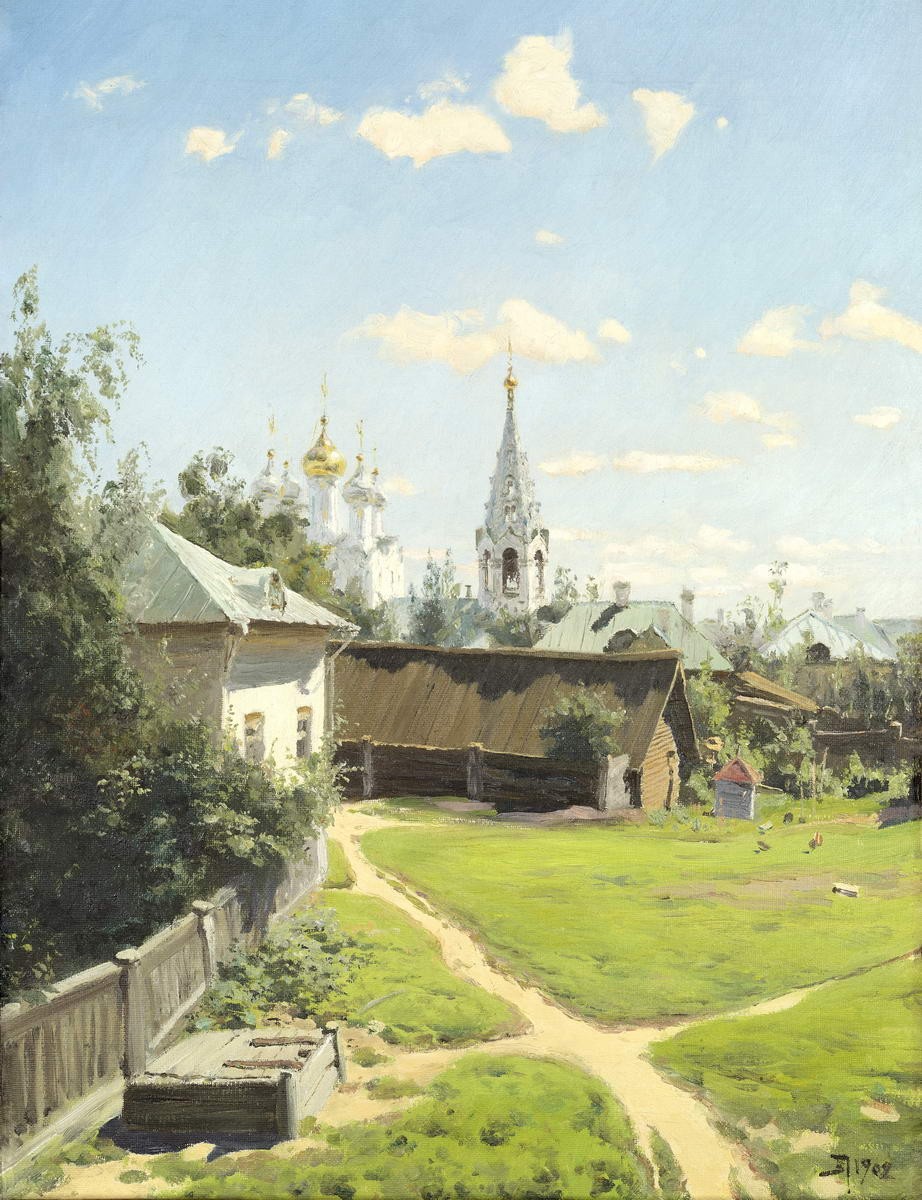
Moscow courtyard
Kan det ses?
Ukendt
Hvor er »Moscow courtyard« i dag? Samling: Tretjakovgalleriet, Moskva. Ukendt.

Moskva, Rusland
Ejeren er kendt; om værket er udstillet i dag, vides ikke.
- Kilde
- Museet
Om maleriet
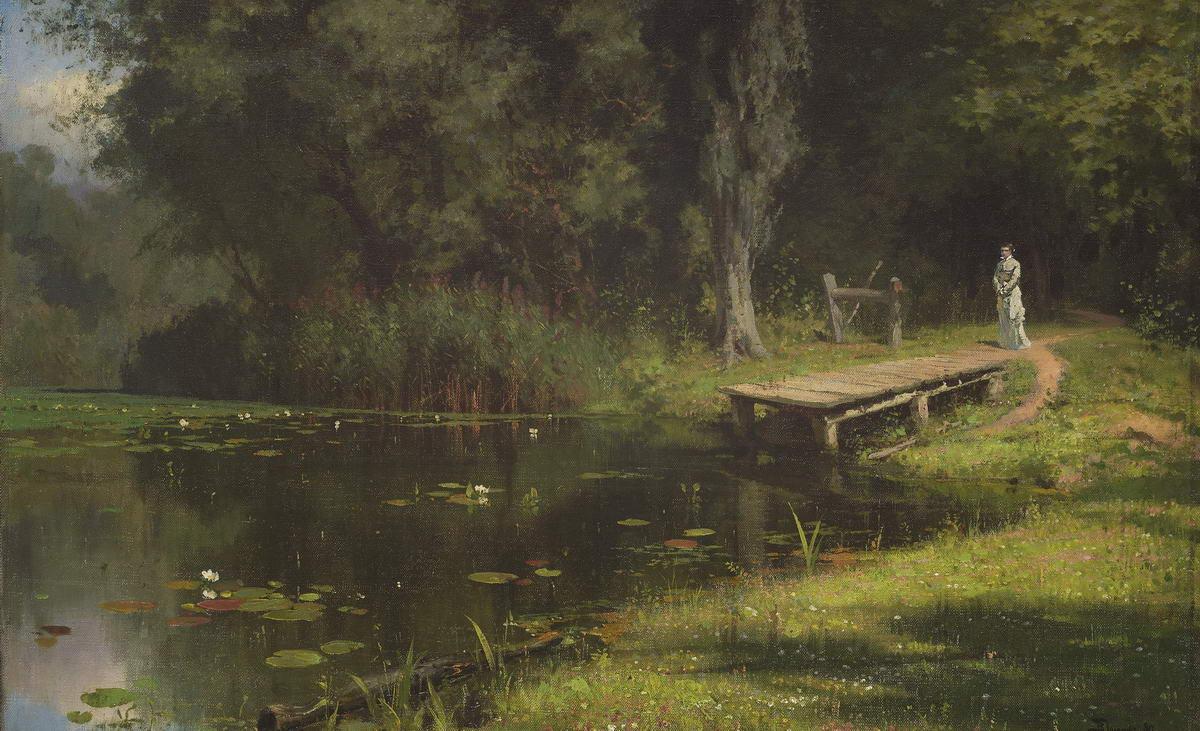
Moscow Courtyard is a landscape painting by the Russian artist Vasily Polenov (1844–1927), completed in 1878. It belongs to the State Tretyakov Gallery (inventory 2670). Its dimensions are 64.5 × 80.1 cm. Together with two other works by Polenov from the late 1870s: the paintings Grandmother's Garden and Overgrown Pond, the canvas Moscow Courtyard has been attributed to "a kind of lyrical and philosophical trilogy of the artist".
The painting depicts the courtyard of a house at the intersection of Durnovsky and Trubnikovsky Streets, in the wing of which Polenov rented an apartment in 1877–1878. Behind the courtyard and the adjacent buildings is the Church of the Transfiguration on the Sand, and in the right part of the canvas are the outlines of the Church of St. Nicholas the Wonderworker in Plotniki. The work organically combines landscape and genre motifs.
Læs videre
The painting "Moscow Courtyard" was presented at the Moscow part of the 6th Exhibition of the Society for Traveling Art Exhibitions ("Peredvizhniki"), which was held in May 1878. It became Polenov's first work presented at the traveling exhibitions. Pavel Tretyakov bought that canvas directly from the exhibition.
According to art historian Alexei Fedorov-Davydov, the painting Moscow Courtyard is "full of simple and clear heartfelt poetry" and this work by Polenov "was a new word in Russian landscape painting and played a great role in it". Art historian Tamara Yurova noted that this canvas was among the "pearls of the Russian school of painting" and became "a milestone in the history of Russian landscape painting". Art historian Vitaly Manin called Moscow Courtyard a "masterpiece of landscape art" and wrote that "one such painting is enough to go down in history".
Med museets ord — på russisk
На картине «Московский дворик» Василий Поленов изобразил двор и торец дома на углу Трубниковского и Дурновского переулков во владении Николая Баумгартена, во флигеле которого художник снимал квартиру с июня 1877 по июль 1878 года. Усадьба располагалась у церкви Спаса Преображения «что на Песках» (ок. 1711).
Læs videre
Лирическое восприятие художником непритязательного мотива городского пейзажа с буднями людей, живущих в согласии с окружающей природой, роднит искусство Поленова с творчеством Алексея Саврасова, с его прославленной работой «Грачи прилетели» (1871). Сближала их эмоциональная наполненность картин, простота избранного мотива, поэтичность обоих произведений, использование художниками образов древнерусского зодчества, сочетание этих памятников с бытовыми постройками. Но именно эта близость позволяет при сравнении выявить своеобразие Поленова, то новое, что вносится им в поэтику русского пейзажа.
Мастерски воспроизводя свои ощущения от увиденной сцены в залитом солнечным светом дворике, свое изумление перед возможностью существования такого почти деревенского пейзажа в центре Москвы, Поленов открывает новую тему и новую интонацию в русской живописи. С «Московским двориком» в нее полноправно входит тема радости обыденной жизни простых людей, а также пленэр с его возможностью глубоко и точно передавать всё богатство природы, изменение цвета под воздействием солнечного света.
На пути преобразования «Арбатского уголка» – авторское название первого варианта картины «Московский дворик» 1877 года – в «Московский дворик» 1878 года Поленов усилил роль архитектуры. Он увеличил формат полотна по горизонтали. В поле зрения справа теперь попала еще одна церковь с колокольней – Николы в Плотниках. Церковь Спаса Преображения он выдвинул ближе к центру. Чередование архитектуры домов, церквей, служебных построек создает своеобразный ритм, которому вторят тонко найденные цветовые отношения, отсутствие сильных световых контрастов. Ярким цветовым аккордом горят лишь золотые купола церкви Спаса на Песках на фоне прозрачной голубизны неба. Все остальные цвета приглушены голубовато-серыми и розовато-палевыми рефлексами солнечного июльского утра, объединены мягким световоздушным флёром. Благодаря красоте живописи обыденный пейзаж приобретает праздничное настроение.
«Московский дворик» стал крупной вехой в развитии русской живописи на пути создания пейзажа настроения. Картина была показана на 6-й выставке Товарищества передвижников в 1878 году в Москве. Ее приобрел Павел Третьяков, и с этого времени она стала любимейшим произведением многих поколений зрителей.
Tretjakovgalleriet
Oplysninger
- Inventarnummer
- 2670
I kataloget
Kilder
- Tretjakovgalleriet
- Billede: Tretjakovgalleriet — Museum open access
Imens i livet hos Vasily Polenov
Hele livet1876
Volunteer in the Serbian-Turkish War
Returning to Russia in 1876, Polenov went off to the Serbian-Montenegrin-Turkish War in the army of General Chernyayev; for his part in the fighting he was awarded the Serbian Medal for Bravery and the Order of the Cross of Takovo.
1876
Title of Academician
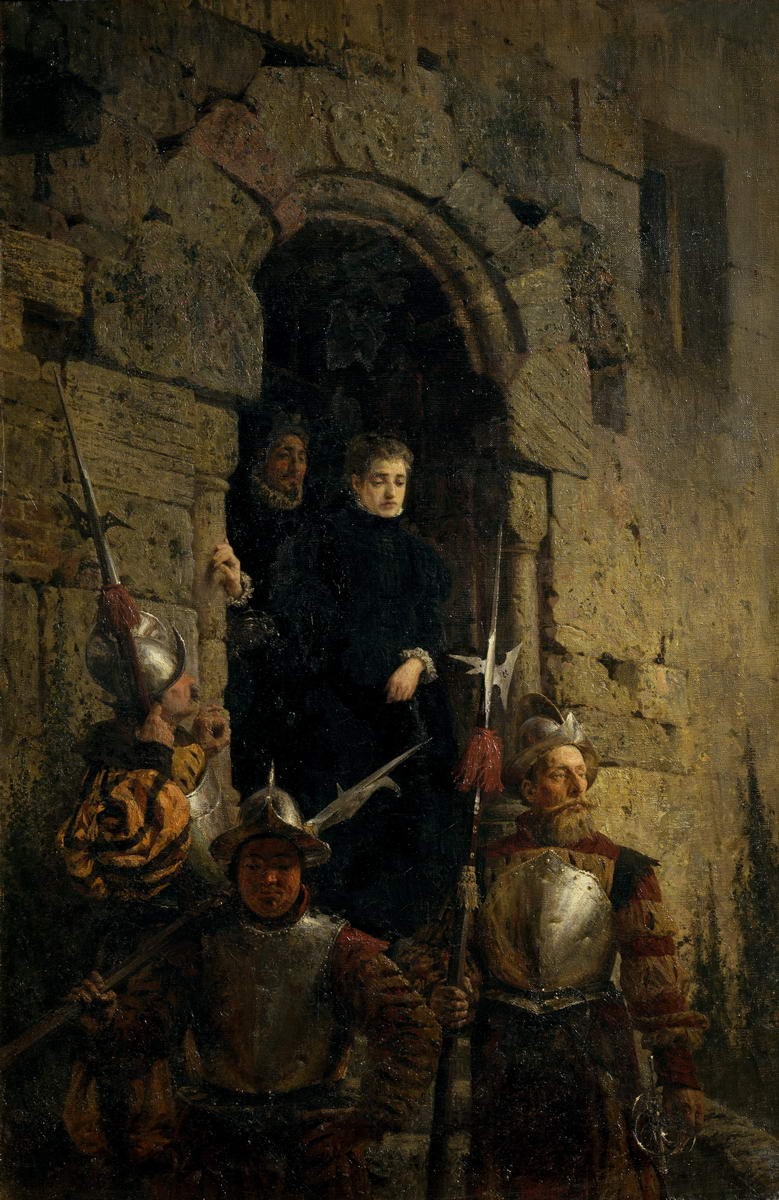
The painting The Arrest of the Comtesse d'Etremont, painted in Paris, secured Polenov the title of academician of the Imperial Academy of Arts in 1876.
1877
Artist in the Russo-Turkish War
In 1877, during the Russo-Turkish War, Polenov was attached to the staff of the Ruse detachment under the command of the tsesarevich, the future Alexander III; he sent sketches and studies to the illustrated magazine Pchela (The Bee).
1877
Move to Moscow
In 1877 Polenov settled in Moscow; from June 1877 to July 1878 he rented an apartment in a wing of the Baumgarten estate at the corner of Trubnikovsky and Durnovsky lanes, where he found the motif of Moscow Courtyard.
1878
Moscow Courtyard at the 6th Peredvizhniki Exhibition
The painting Moscow Courtyard was shown at the 6th exhibition of the Peredvizhniki in Moscow in 1878 and acquired by Pavel Tretyakov; it became a major milestone in the development of Russian painting on the path toward the mood landscape.
from 1879
Full Member of the Peredvizhniki
From 1879 Polenov was a full member of the Society for Travelling Art Exhibitions (Peredvizhniki); he gained fame as a master of the epic landscape.