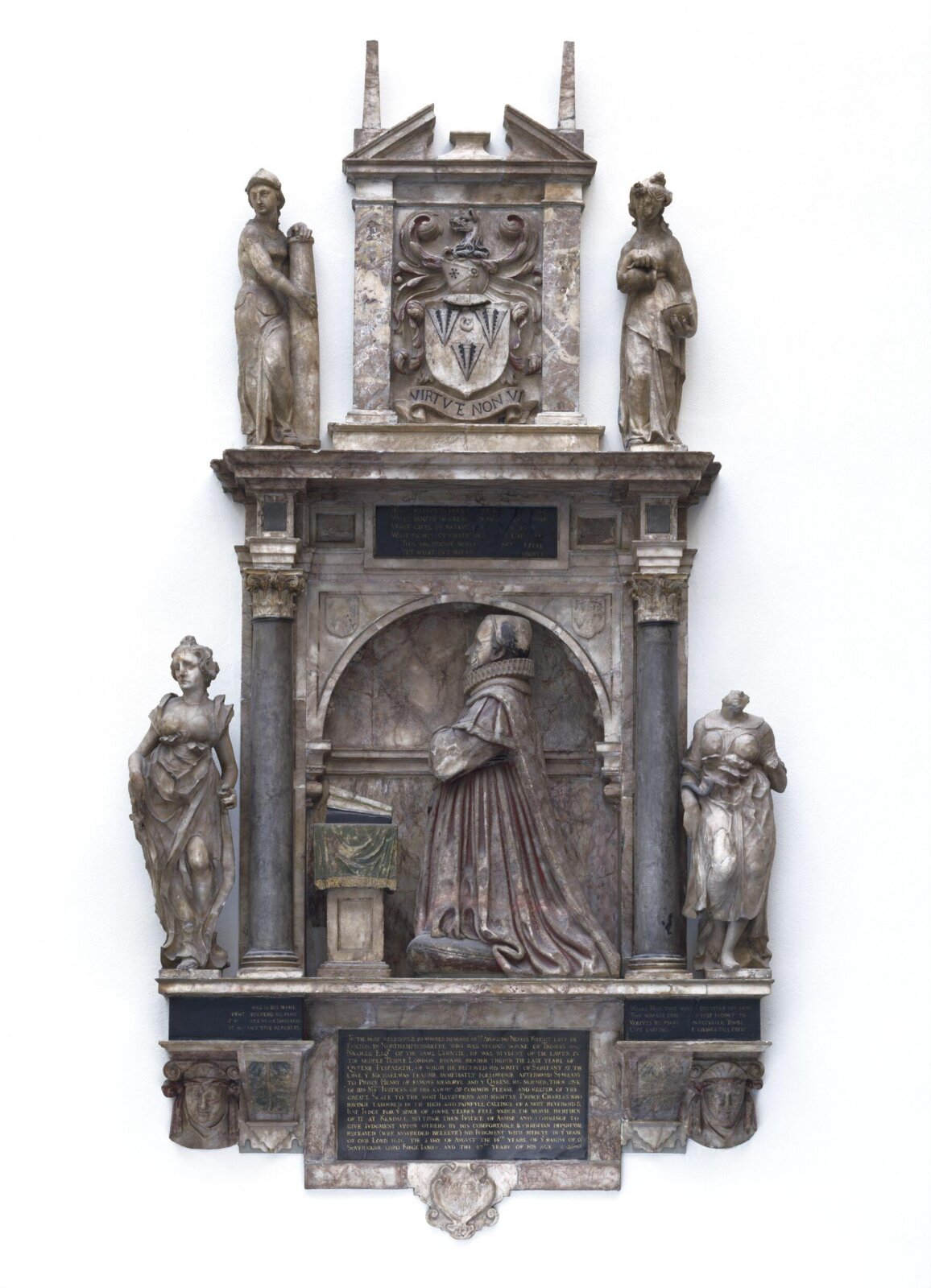
Monument to Sir Augustine Nicolls
Kan det ses?
Ja, udstillet nu
Hvor er »Monument to Sir Augustine Nicolls« i dag? Victoria and Albert Museum, British Galleries, Room 58, London. Ja, udstillet nu. Kontrolleret 25. september 2026.

Lukket· åbner i morgen kl. 10.00
Udstillet for publikum.
- Kontrolleret
- Uændret siden
- Kilde
- Museet
Om skulpturen
Object Type
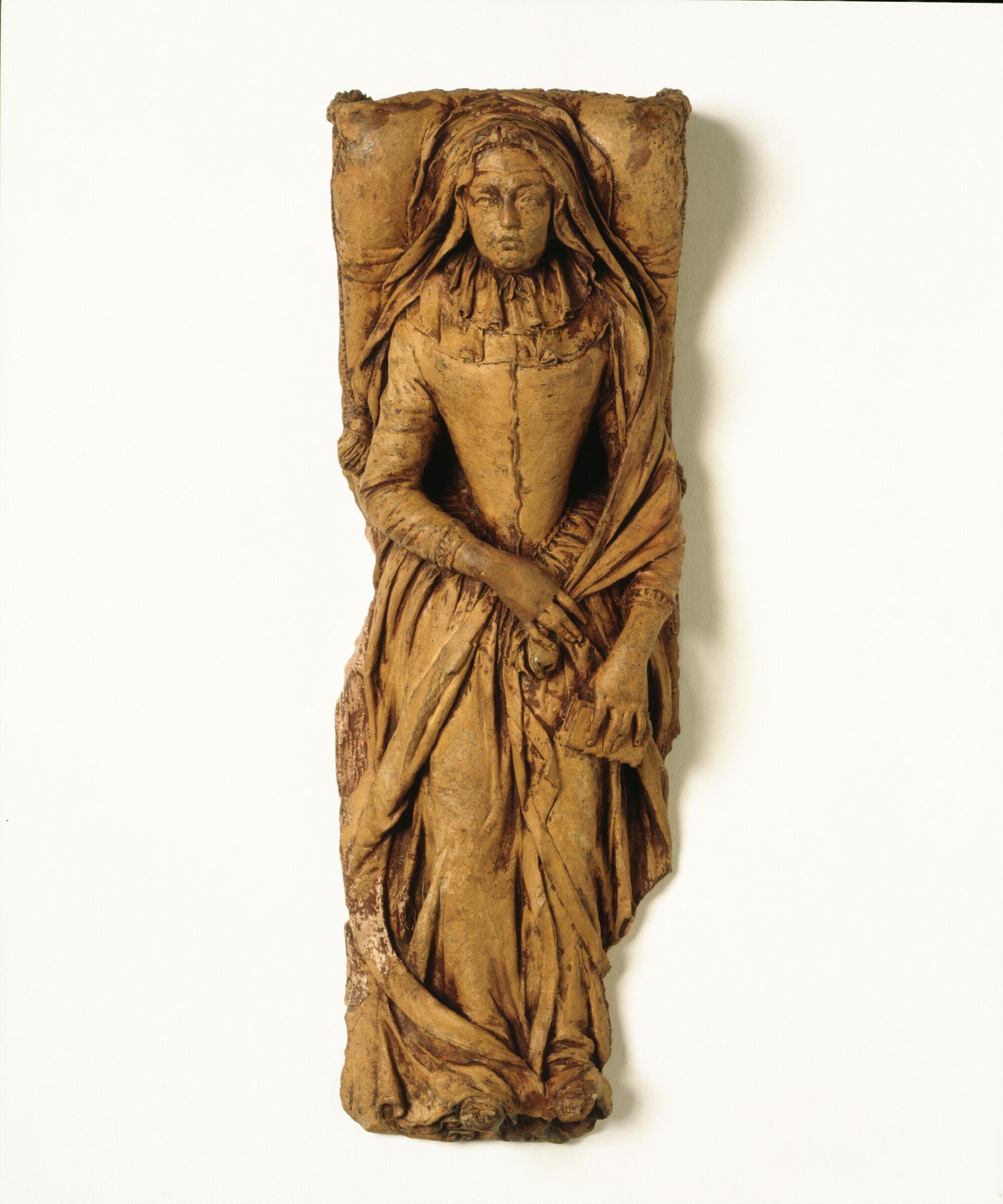
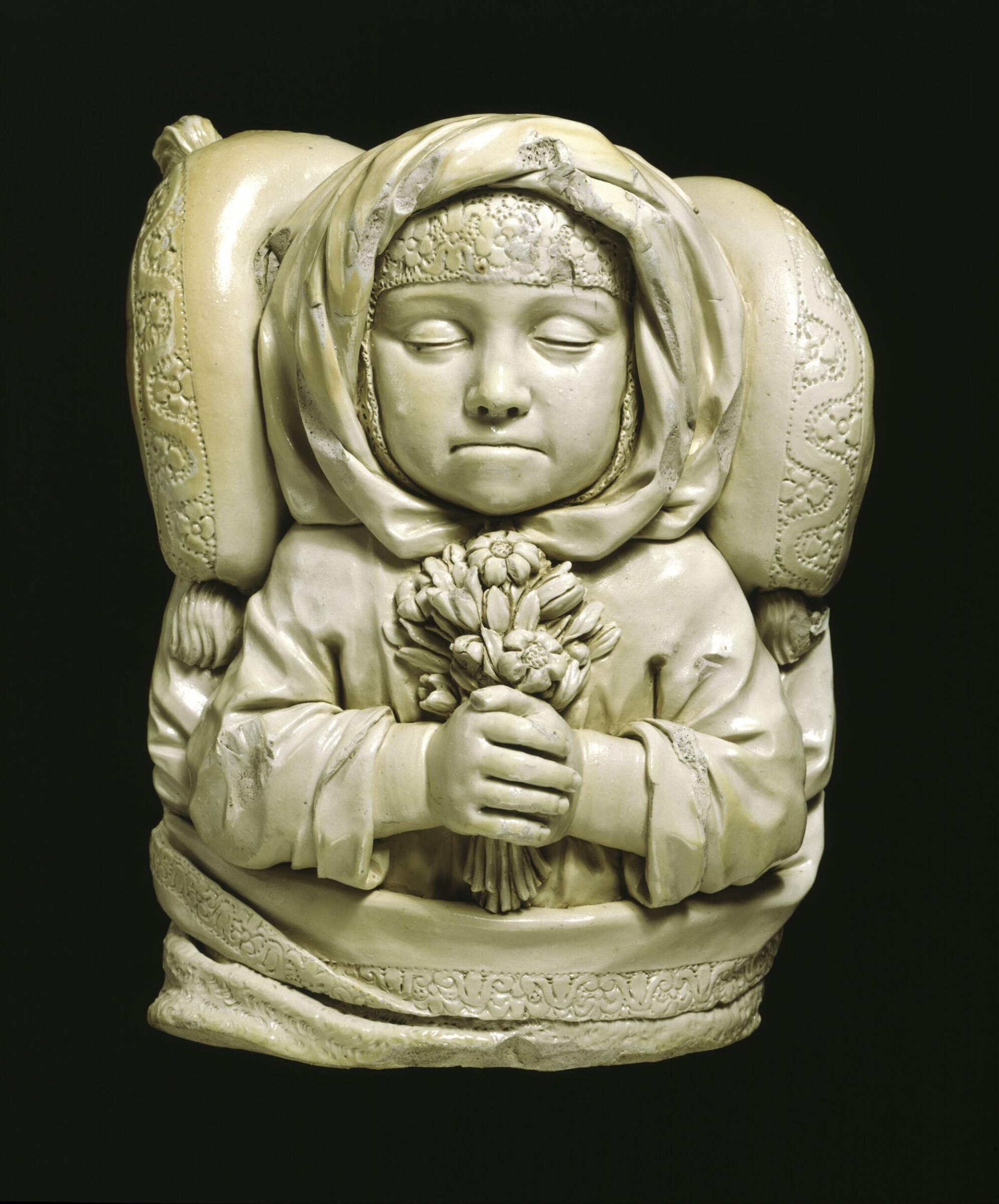
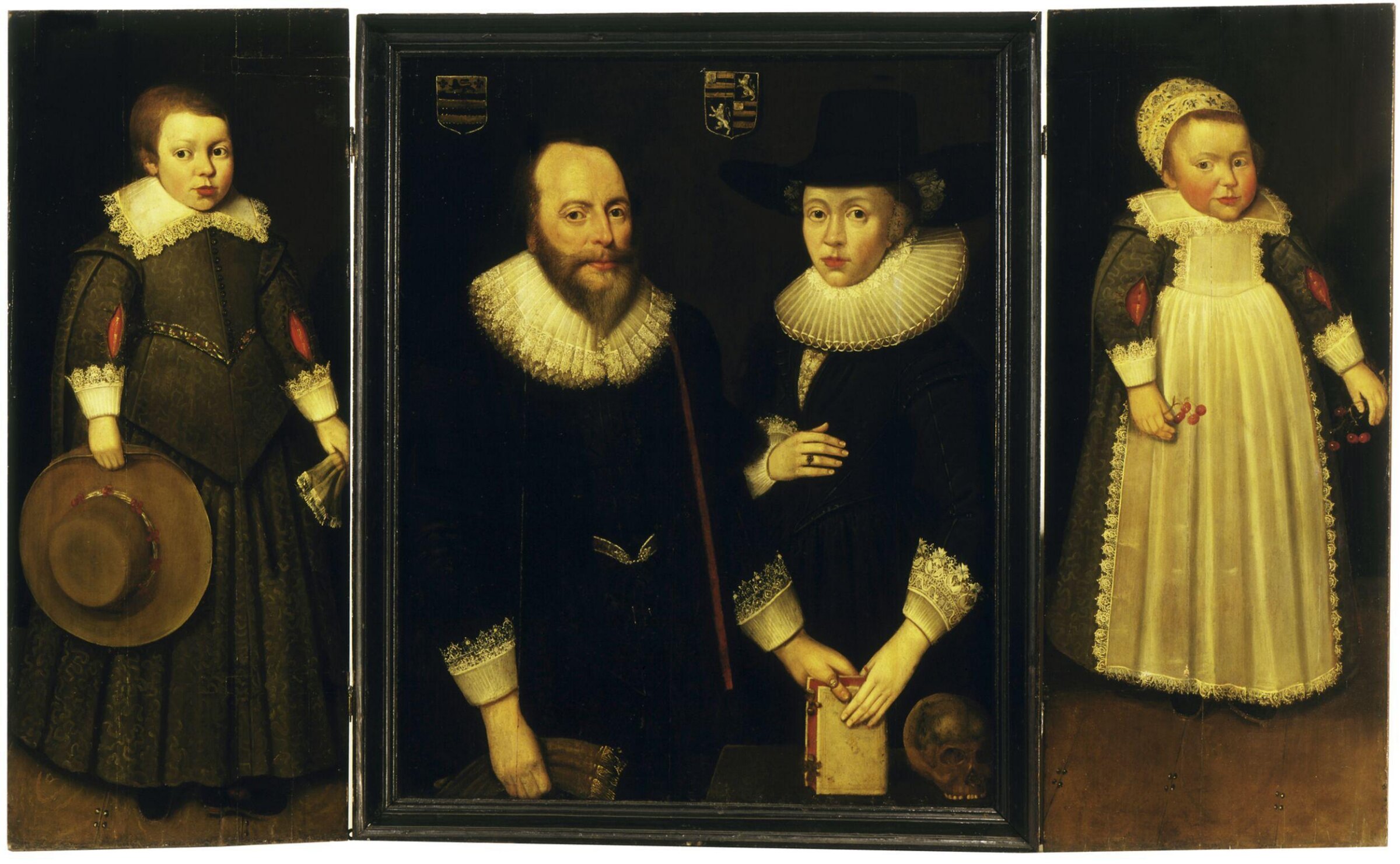
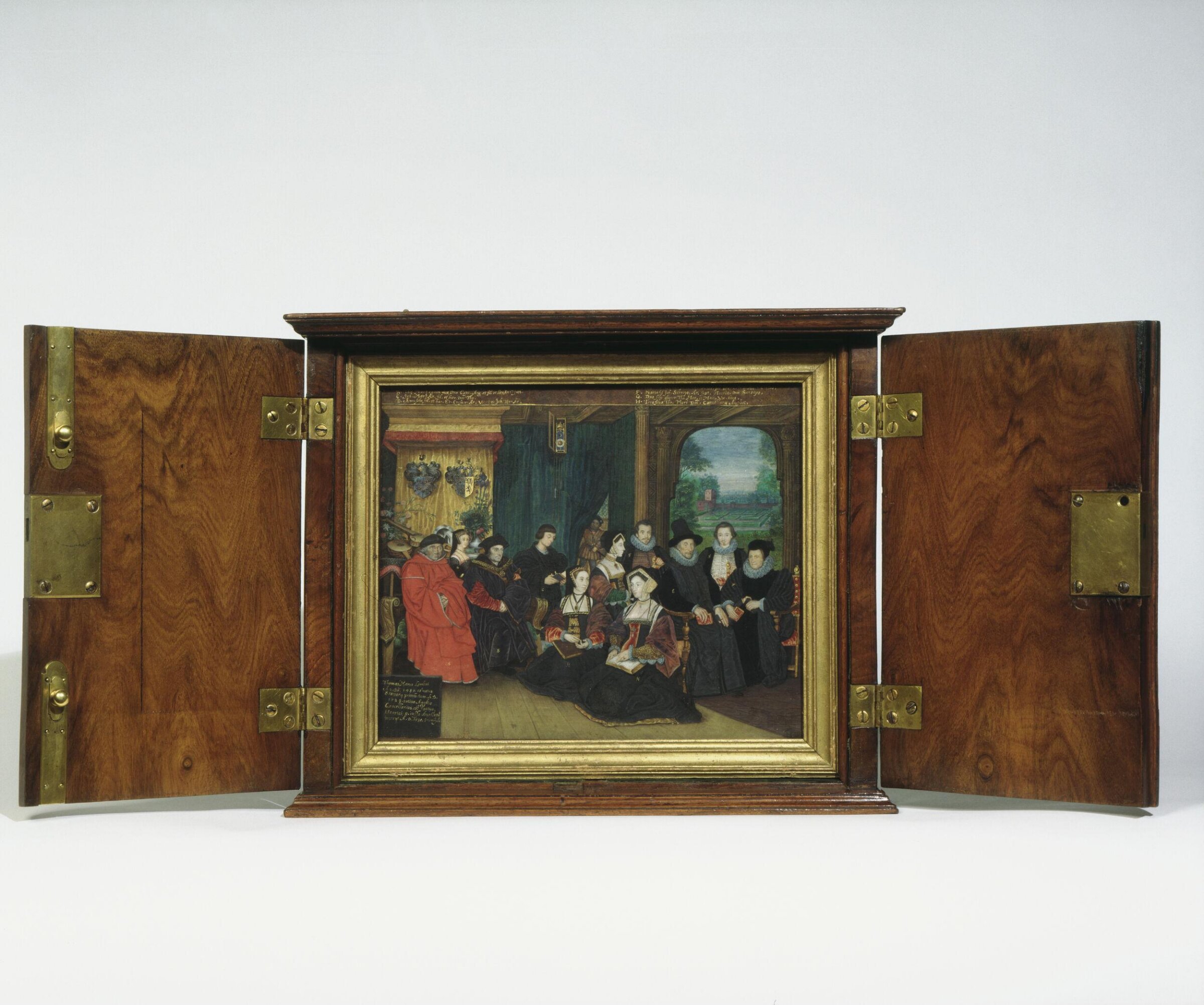
This wall monument is made of alabaster (a soft stone, a form of gypsum, that is easy to carve) and black marble. It was originally installed in the church of St Denis, Faxton, Northamptonshire, along with other funerary monuments to members of the Nicholls family. Sir Augustine Nicolls (1559-1616) is shown in his judge's robes kneeling on a cushion in full profile to the left, before a prie-dieu (praying desk or kneeling desk) with books. He is flanked by figures representing Justice and Prudence, virtues appropriate for a judge. Between the two figures representing Fortitude and Temperance above is the Nicolls coat of arms.
Later History
Læs videre
The church of Faxton in Northamptonshire fell into disrepair during the 20th century, the hamlet of Faxton itself having long since disappeared. It was in a remote position, two miles north-east of Lamport. In 1958 the church was demolished, the monuments having been removed to the stables of Lamport Rectory. In 1965 the V&A agreed to accept the monuments in the stables as a gift. By then they were in poor condition, and a good deal of conservation work was undertaken by the Museum's Conservation Department.
People
Nicholas Stone (born about 1587, died 1647) was the most important English sculptor of the first half of the 17th century. He trained in The Netherlands, in the workshop of Hendrik de Keyser (1565-1621) in Amsterdam, from about 1607. He married de Keyser's daughter and returned to London in 1613. Although Stone was also active as an architect (he was appointed Master Mason and Architect at Windsor Castle, Berkshire, in 1626), he is best remembered for the fine marble and alabaster tombs he erected during the 1620s and 1630s. He appears to have stopped work with the outbreak of the Civil War in 1642.
Alabaster
The carving of alabaster, mostly quarried in Tutbury and Chellaston near Nottingham, took on industrial proportions in England between the middle of the 14th and the early 16th centuries. The market for altarpieces and smaller devotional images was a large one. It included not only religious foundations but also the merchant classes. Many hundreds of English alabasters were exported, some as far afield as Iceland and Santiago de Compostela in north-west Spain.
Victoria and Albert Museum
Oplysninger
- Inventarnummer
- A.9-1965
Hvad det viser
I kataloget
Kilder
- Victoria and Albert Museum
- Billede: Victoria and Albert Museum — © Victoria and Albert Museum, London