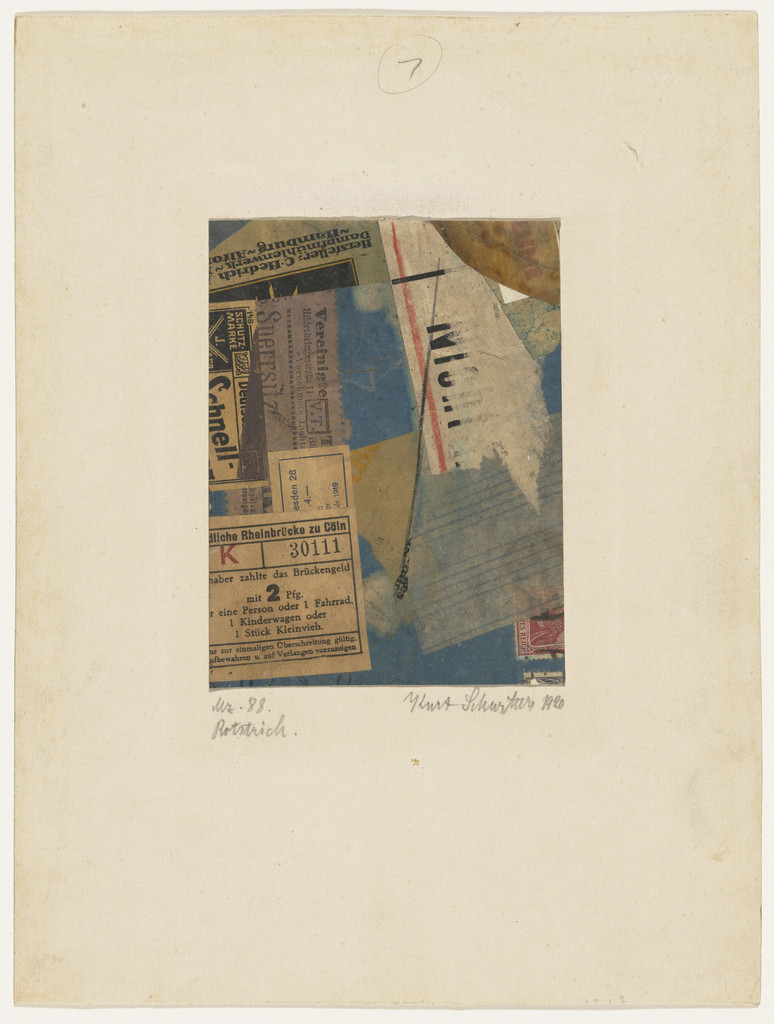
 Kurt SchwittersTyskland, 1887–1948
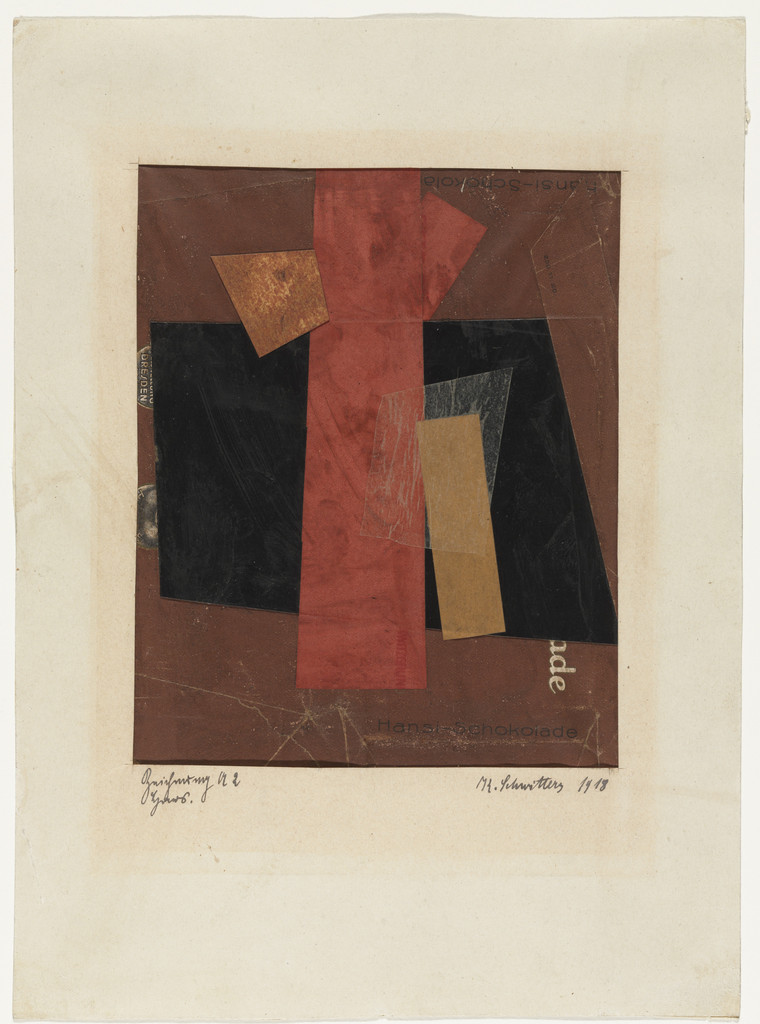
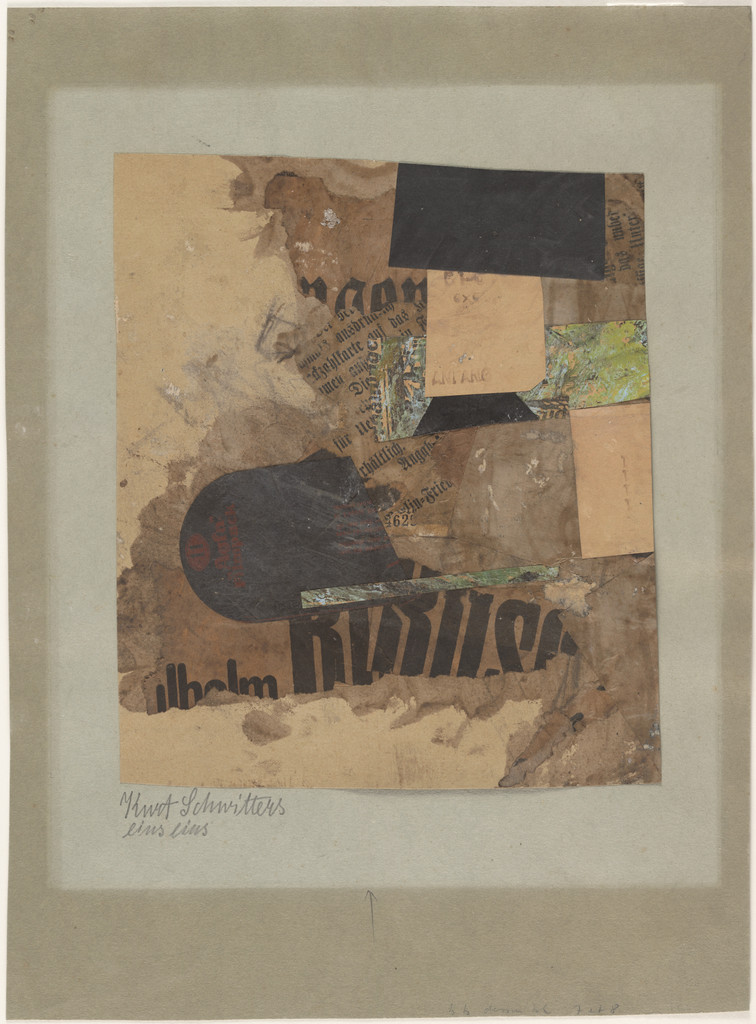
Merz 88. Red Stroke
Må man se det?
Tager ikke imod for tiden

New York City, USA
Det hører til samlingen, men er ikke udstillet for tiden.
- Kontrolleret
- Kilde
- Museet
Oplysninger
- Inventarnummer
- 648.1967
I kataloget
Kilder
- Museum of Modern Art
- Billede: Museum of Modern Art — © the artist or rights holder
Imens i livet hos Kurt Schwitters
Hele livet1918
Germany’s collapse transforms his art
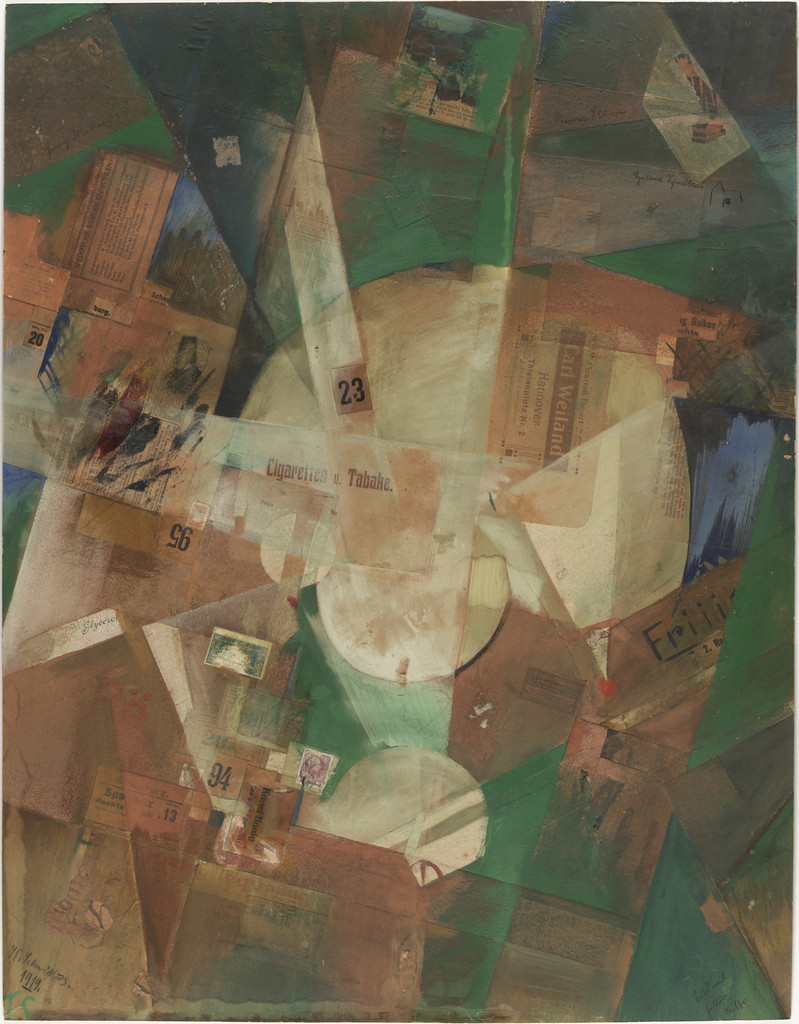
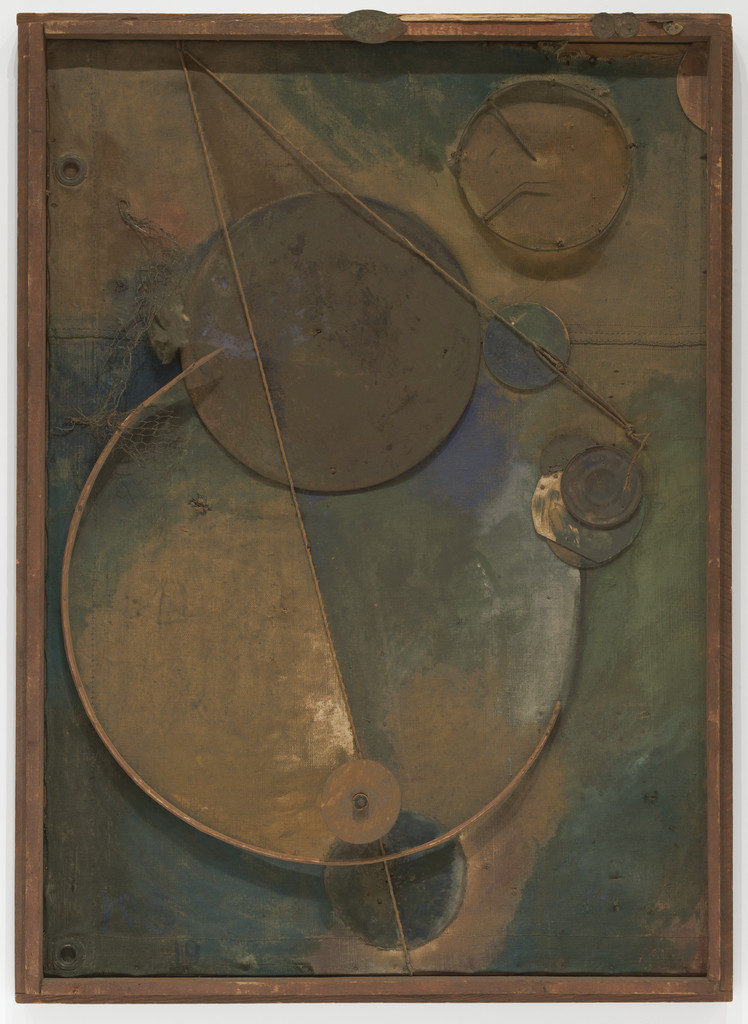
Germany’s economic, political and military collapse at the end of the First World War changes his art dramatically: by his own account, what he had learned at the academy was of no use and new things had to be made out of the fragments — this is Merz, like a revolution within him.
1918
Hanover Secession show and contact with Walden
After showing Expressionist paintings at the Hanover Secession, Schwitters comes into contact with Herwarth Walden, whose gallery Der Sturm is in Berlin.
1918
Two ‘Abstractions’ at the Der Sturm gallery
At Walden’s gallery in Berlin he shows two ‘Abstraktionen’, semi-abstract Expressionist landscapes.
autumn 1918
Meets the Berlin avant-garde
He meets Raoul Hausmann, Hannah Höch and Jean Arp; Hausmann recalled how Schwitters introduced himself at the Café des Westens: ‘I’m a painter,’ he said, ‘and I nail my pictures together.’ He remains close to Höch and Hausmann for the rest of his career.
1919
First solo exhibition at Der Sturm
His first solo exhibition opens at the Der Sturm gallery in Berlin in June 1919; together with the poem published that August, it makes him a well-known artist by the end of the year.
August 1919
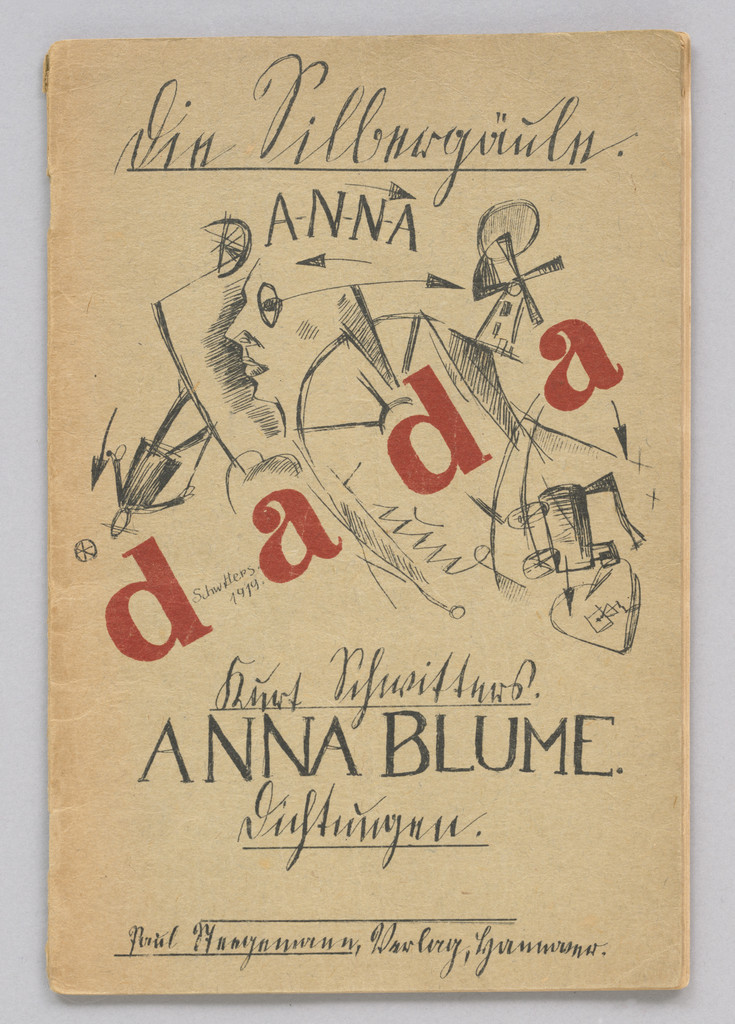
The poem ‘An Anna Blume’ is published
The Dadaist, nonsensical love poem ‘An Anna Blume’ is published in August 1919, with the word ‘Dada’ on its cover.